 Ferndale Roofing
 Siding That Has to Work Against a Marine Climate, Not Just Sit There
Cordata sits close enough to the Salish Sea and the low-lying farmland around Ferndale that its homes take on a specific mix of weather stress: salt-tinged air rolling in off the water, wind-driven rain that hits siding sideways instead of straight down, and a shoulder season that can stretch from October to May where surfaces rarely get a chance to fully dry out. Siding here isn't just cosmetic. It's the first line of defense against moisture getting into the wall assembly, and in Whatcom County's climate, that defense has to hold up twelve months a year, not just during a dry August.
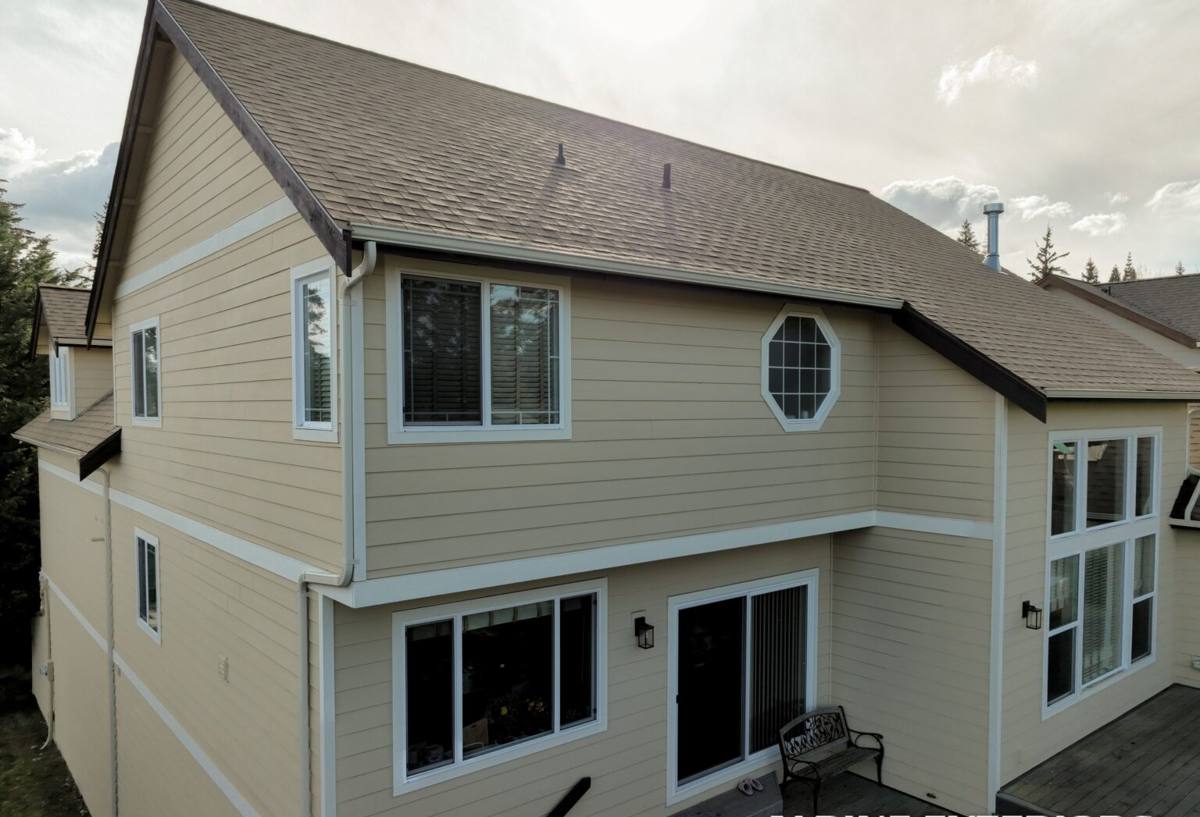
We install fiber cement siding for homeowners throughout the Cordata area because it's one of the few siding materials engineered specifically to handle this combination of salt exposure, sustained dampness, and biological growth. This page covers what that actually means for a Cordata home, what a correctly done installation looks like, and why the details matter more here than they would in a drier inland climate.
What Cordata's Climate Actually Does to Siding
Salt Air and Slow Corrosion
Homes closer to the water pick up airborne salt that settles on exterior surfaces and accelerates the breakdown of fasteners, trim, and lower-quality siding materials over time. Fiber cement itself doesn't corrode, but every component of a siding system — nails, flashing, trim caps — has to be chosen with that salt exposure in mind, or the siding ends up failing at its weak points long before the panels themselves wear out.
Driving Rain and Wall Moisture
Whatcom County storms frequently come with real wind behind them, which pushes rain sideways into lap joints, butt seams, and anything that isn't properly lapped, caulked, or flashed. A siding job that would hold up fine in a calmer climate can leak here if the installer treated water management as an afterthought instead of the main design problem.
A Long Moss and Algae Season
Extended damp periods with limited direct sun — common on shaded or north-facing walls in Cordata's tree-lined lots — create ideal conditions for moss and algae to take hold on siding surfaces. Porous or absorbent materials stay damp longer and give organic growth more to cling to, which is a maintenance headache most homeowners don't realize they've signed up for until a few winters in.
Why We Only Install James Hardie Fiber Cement Here
We standardized on James Hardie products for every siding job we do, including in Cordata, because fiber cement is engineered to resist the exact conditions listed above without the moisture sensitivity or maintenance burden of wood-based or vinyl alternatives. Hardie's boards are non-combustible, dimensionally stable in changing humidity, and manufactured with a climate-specific formulation — the HZ5 product line used across the Pacific Northwest — built for regions that see both sustained moisture and occasional freeze-thaw cycles, which describes Whatcom County well.
On top of the base material, Hardie's ColorPlus Technology applies a factory-baked finish that resists fading and holds up better against the kind of UV and moisture cycling that strips paint off site-finished materials. For a marine climate like this one, that factory finish is doing real work — it's one less seam where moisture and salt air can get a foothold, and it's backed by a stronger warranty than a field-applied paint job typically gets.
What a Correct Fiber Cement Installation Involves
Water Management Comes First
Before a single piece of siding goes up, the wall needs a properly lapped weather-resistive barrier, correctly flashed windows and doors, and attention to every penetration — hose bibs, vents, light fixtures — where water could otherwise find its way behind the cladding. This is the part of the job that's invisible once the siding is on, and it's also the part that determines whether the wall stays dry for the next 30 years or starts rotting from the inside in five.
Installing to Manufacturer Spec, Not Just "Close Enough"
James Hardie publishes specific requirements for fastener spacing, clearances above grade and roofing, gaps at butt joints, and caulking at trim — all of which affect both performance and warranty coverage. Skipping these details doesn't usually cause an obvious problem on day one; it shows up two or three winters later as a callback, and by then it's a much bigger repair than doing it right the first time would have cost.
Trim and Flashing Details for Wet Climates
Around windows, corners, and roof-to-wall intersections, we use flashing details sized for a climate that gets real, sustained rain rather than occasional showers. That includes kick-out flashing where a roofline meets a wall — a detail that's easy to skip and is one of the most common sources of hidden water damage we find on older homes in wet coastal counties.
Our Process for Cordata Siding Projects
- On-site assessment — we look at the existing siding, sheathing condition where accessible, and any trouble spots specific to the home's exposure (shaded walls, wind-facing elevations, low-clearance areas).
- Scope and product selection — HardiePlank lap siding, HardiePanel, or a mix with trim board, chosen based on the home's style and the areas taking the most weather.
- Tear-off and substrate check — removing existing siding gives us a direct look at the sheathing and framing underneath, which is often the only chance to catch hidden moisture damage before it's covered again.
- Weather barrier and flashing installation — done to spec before any siding goes up, since this is the layer that actually keeps water out.
- Siding installation — fastened, lapped, and caulked per James Hardie's published guidelines, with attention to every trim and penetration detail.
- Final walkthrough — reviewing the completed work with the homeowner and cleaning up the site.
Signs Your Cordata Home May Need New Siding
Siding problems in this climate tend to show up gradually, which is exactly why they're easy to miss until they're expensive. Watch for:
- Persistent moss or dark streaking that comes back soon after cleaning
- Soft or spongy spots when you press on the siding, especially near the bottom edge
- Paint that's peeling, bubbling, or chalking faster than it used to
- Visible warping, cupping, or gaps opening up at seams and corners
- Rising energy bills that suggest the wall assembly isn't insulating or sealing the way it should
- Interior signs like peeling paint or musty smells on exterior-facing walls
Any one of these on its own isn't necessarily an emergency, but they're worth having looked at before the next wet season adds to the damage.
What Affects the Cost of a Siding Project
Every home is different, so we don't quote a project without seeing it, but these are the factors that generally move the price up or down:
| Factor | Why It Matters | Typical Impact |
|---|---|---|
| Tear-off vs. install over existing | Removing old siding reveals and lets us fix hidden sheathing or moisture damage | Adds labor, can reduce risk of costly future repairs |
| Home size and wall complexity | More corners, gables, and dormers mean more cutting, trim, and flashing detail | Higher per-square-foot cost on complex homes |
| Siding profile chosen | Lap width, panel style, and trim detailing vary in material and labor cost | Moderate variation |
| Existing damage found underneath | Rotted sheathing or framing has to be repaired before new siding goes on | Can add meaningfully to project cost if discovered |
| Trim and accent work | Custom trim, board-and-batten accents, or color combinations add labor | Modest to moderate increase |
Why Hiring a Crew That Already Works Cordata Matters
A crew that regularly works in and around Ferndale and Cordata already knows how this climate behaves on real houses — which elevations take the worst weather, how quickly moss establishes on shaded walls, and what kind of moisture issues tend to hide behind older siding in this part of Whatcom County. That's not something you get from a general contractor who occasionally does a siding job between other work, or from a crew driving in from outside the region for a one-off bid.
It also means we're accountable locally. If a detail needs a second look after a hard winter storm, we're not far away, and we're not disappearing after the final payment clears. For a siding system that's supposed to last decades, that kind of local, ongoing accessibility is worth factoring into who you hire, not just what they quote.
Maintaining Fiber Cement Siding in a Wet, Salt-Air Climate
One of the practical advantages of fiber cement over wood-based siding is how little upkeep it actually needs once it's installed correctly. It doesn't require repainting on the same schedule as wood, it won't absorb water and swell the way engineered wood products can, and it holds up to the freeze-thaw swings this region occasionally sees. That said, a periodic gentle rinse to knock off salt residue, pollen, and early moss growth — especially on shaded, north-facing walls — goes a long way toward keeping the finish looking good for the life of the ColorPlus warranty. Avoid pressure washing directly at seams and edges, since forcing water where it isn't meant to go is a more common cause of problems than the siding material itself.
If your Cordata home's siding is showing its age, or you're planning ahead of a renovation and want to understand your options before committing to anything, we're happy to take a look and talk through it honestly. Use the form below to request a free, no-pressure estimate.