 Ferndale Roofing
 Siding Repair for Cordata Homes Near Ferndale
Cordata sits in the stretch of Whatcom County where Ferndale's residential growth meets the edge of the Bellingham metro area, and homes here take on the same weather challenges as the rest of our coastal service area: salt-tinged air rolling in off Bellingham Bay and the Strait of Georgia, long stretches of driving rain from fall through spring, and a moss and algae season that can run most of the year in shaded, north-facing exposures. Siding here isn't decorative trim — it's the first and most continuously tested line of defense a house has against moisture.
When we get called out to Cordata for a siding repair, the job is rarely just "replace the broken piece." It's figuring out why that piece failed, whether the failure is isolated or a symptom of something happening behind the cladding, and repairing it in a way that holds up through the next twenty Whatcom County winters — not just the next inspection.
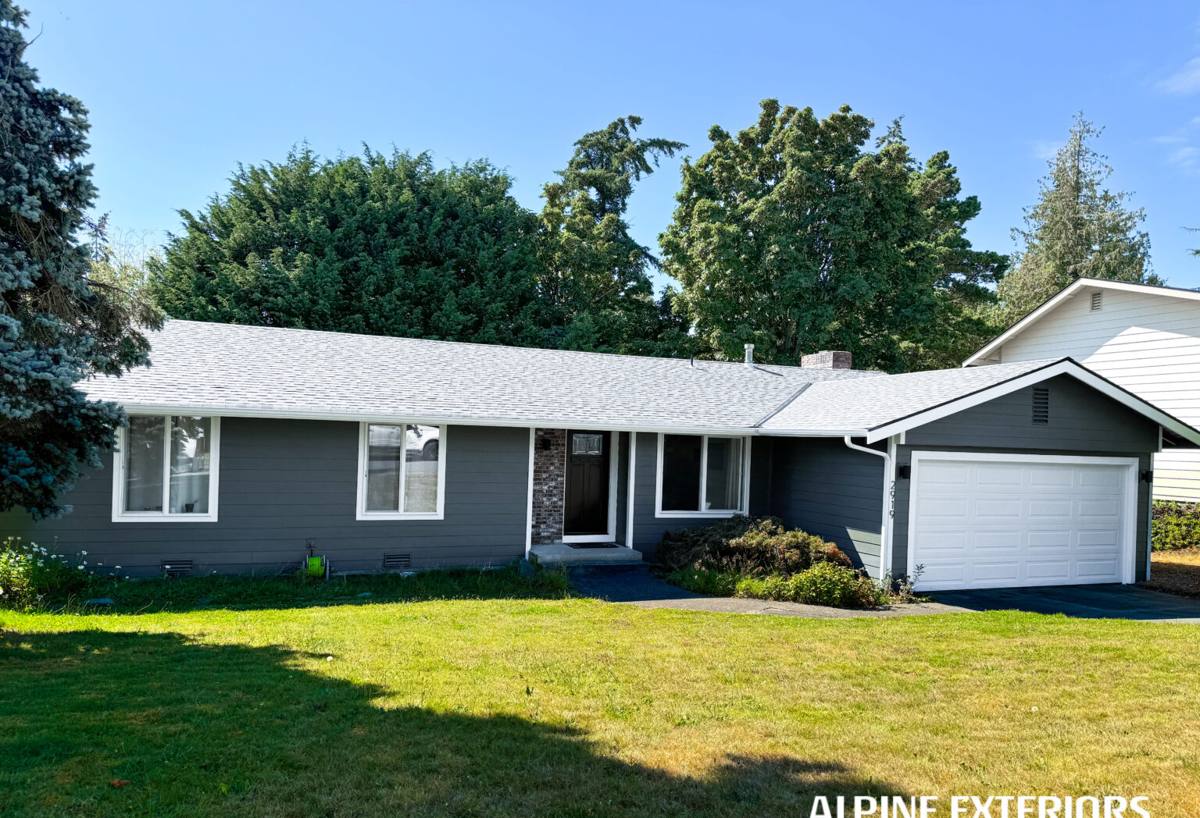
What This Climate Does to Siding Over Time
Every siding material reacts differently to sustained moisture and airborne salt, and Cordata's mix of newer subdivisions and older established streets means we see a wide range of siding ages and conditions in the same service radius.
Salt Air and Metal Fasteners
Proximity to the bay means a slow, steady exposure to salt-laden moisture in the air. Over years, this accelerates corrosion in exposed or improperly coated fasteners and trim flashing, which shows up as rust streaking, loosened panels, or small failure points that let water behind the siding long before the siding itself looks obviously damaged.
Driving Rain and Wind-Driven Moisture
Whatcom County storms frequently come with sideways rain, not just vertical rainfall. That matters because siding systems are engineered to shed water moving downward — driving rain pushes moisture up and under laps, seams, and trim joints that were never designed to be submerged or pressure-tested from that angle. Repeated exposure without proper flashing detail is one of the most common root causes behind repair calls we see in this area.
Moss, Algae, and Prolonged Dampness
Shaded exposures — under mature trees, on north-facing walls, in the gap between closely spaced homes — stay damp for extended stretches. Moss and algae growth on siding is often dismissed as cosmetic, but the sustained moisture retention underneath that growth softens caulk, breaks down paint film, and on wood-based products can start actual substrate decay well before a homeowner notices.
Signs a Repair Call Is Overdue
Most siding problems give warning signs long before there's a hole in the wall. Homeowners in Cordata should treat any of the following as a reason to get a professional look, not a wait-and-see item:
- Soft, spongy, or visibly warped sections when pressed by hand
- Persistent dark streaking or moss growth that returns quickly after cleaning
- Paint that's bubbling, peeling, or failing faster than the rest of the house
- Visible gaps, cracks, or separation at seams, corners, and trim joints
- Cracked or missing caulk around windows, doors, or penetrations
- Any musty smell or interior wall staining near an exterior wall
- Panels that have visibly bowed, buckled, or pulled away from the wall
What a Correct Siding Repair Actually Involves
A repair that just swaps a damaged board for a new one, caulks the edges, and calls it done is a temporary fix at best. A correct repair addresses the whole assembly, not just the visible surface.
Diagnosing the Real Cause
Before anything gets replaced, we look at what's underneath: is the house wrap or moisture barrier intact, is flashing properly lapped at windows and penetrations, is there evidence of ongoing water intrusion versus a one-time event like impact damage. Replacing siding over an unresolved moisture problem just hides the issue for another season.
Matching Material and Profile
Patchwork repairs that don't match the existing siding's profile, reveal, or finish stand out and can also create new water-shedding problems at the transition. Where we're repairing James Hardie fiber cement, matching the correct HZ product line, plank width, and ColorPlus finish keeps the repair both structurally sound and visually seamless.
Flashing and Water Management First
Any repair around a window, door, deck ledger, or roofline needs correct flashing and lap sequencing before a single piece of siding goes back on. This is the step that's most often skipped in a rushed repair, and it's the reason the same spot fails again a year or two later.
Fastening and Sealing to Spec
Fiber cement has specific fastener spacing, penetration depth, and gapping requirements from the manufacturer. Repairs that ignore these specs can void warranty coverage and create the exact stress points that lead to cracking or premature failure in a wet, freeze-thaw-prone climate like ours.
Why We Repair With James Hardie Fiber Cement — Not Vinyl, LP, or Wood
We install and repair with James Hardie fiber cement exclusively. That's a deliberate standard, not a default, and it matters most in repair situations because the material you patch with determines how the wall performs afterward.
Wood and Primed Spruce
Wood and primed spruce siding look good on day one, but they're organic material in a climate that stays damp for months at a time. Once moisture gets behind a wood panel — which happens even with careful installation — rot can spread quietly, and a repair often reveals more decayed material than the original damage suggested. We won't warranty a wood patch into a wall we can't fully verify is dry behind it.
Vinyl Siding
Vinyl is inexpensive and low-maintenance in mild conditions, but it expands and contracts significantly with temperature swings, can crack in impact or cold snaps, and fades unevenly over time — which makes matching an old panel to a repair patch difficult years down the road. It also doesn't offer the same non-combustible profile as fiber cement.
LP SmartSide
LP SmartSide is an engineered wood product, and like other wood-based systems, its long-term performance depends heavily on sealed edges and consistent maintenance. In a climate with Cordata's rain volume and humidity, engineered wood carries more ongoing maintenance risk than fiber cement, particularly at cut edges and butt joints — exactly the areas most often involved in a repair.
James Hardie Fiber Cement
Hardie's fiber cement is non-combustible, dimensionally stable, and engineered in HZ5 formulations specifically for wetter, colder climates like the Pacific Northwest. The factory-applied ColorPlus finish resists the fading and peeling that plague field-painted materials, and Hardie's transferable warranty gives homeowners real, documented coverage — not just a verbal assurance. When we repair a section, we're tying it into a system built to handle exactly the conditions Cordata sees.
Material Comparison for Siding Repairs
| Material | Moisture Behavior | Repair Match Difficulty | Maintenance Burden |
|---|---|---|---|
| James Hardie Fiber Cement | Dimensionally stable, engineered for wet climates | Low with correct HZ line and finish match | Low — factory finish, no repainting cycle needed |
| Vinyl | Doesn't absorb moisture but traps it behind panels if flashing fails | Moderate — color fading makes old/new match hard | Low, but limited lifespan in impact/cold events |
| LP SmartSide / Engineered Wood | Vulnerable at cut edges and joints if sealant fails | Moderate to high | Moderate — needs consistent sealing and paint upkeep |
| Cedar / Primed Spruce | Absorbs moisture, prone to rot without diligent upkeep | High — grain, weathering vary board to board | High — regular painting/staining and inspection |
Our Siding Repair Process
- Inspection and diagnosis: We assess the damaged area and check surrounding sections, flashing, and the moisture barrier behind the siding, not just the obvious problem spot.
- Root-cause identification: We determine whether the issue is isolated impact damage, a flashing or sealant failure, or a broader moisture intrusion problem that needs to be resolved before new material goes on.
- Repair plan and material match: We identify the correct Hardie product line, plank profile, and ColorPlus color to match the existing siding as closely as possible.
- Correct installation: Repairs follow manufacturer fastening, gapping, and flashing specifications — the same standards we hold new installations to.
- Cleanup and final check: We clean the work area and do a final water-management check around the repaired section before calling the job done.
Why Hiring a Crew Familiar With Cordata and the Ferndale Area Matters
Siding repair isn't one-size-fits-all, and the right answer for a home in a dry climate isn't always the right answer here. A crew that regularly works Whatcom County's coastal exposure understands how salt air behaves against fasteners and trim, how long moss season actually runs on shaded north walls, and how much driving rain a wall assembly needs to be built to shed — not just guess at from a manual. That local familiarity shows up in fewer callbacks and repairs that are diagnosed correctly the first time, instead of a patch that looks fine for one dry summer and fails again the following winter.
It also matters for response time and follow-through. A local crew can get to a Cordata home quickly when a storm causes damage, and stands behind the repair because they're still working in the neighborhood next season, not three counties away.
Cost Factors to Expect
Siding repair costs vary based on a few honest factors, and any contractor worth hiring should be able to walk you through them before starting work:
| Factor | Why It Affects Cost |
|---|---|
| Extent of hidden moisture damage | Rot or water intrusion behind the visible damage may require sheathing repair, not just a siding swap |
| Number and location of damaged sections | Repairs near rooflines, second stories, or tight side yards take more time and access equipment |
| Material matching | Matching an older Hardie installation's exact profile and color may require special ordering |
| Flashing and trim work required | Proper water management at windows, doors, and penetrations adds labor but prevents repeat failures |
We don't quote a number over the phone without seeing the damage — a straightforward panel swap and a repair that turns out to involve rotted sheathing behind it are very different jobs, and we'd rather give you an honest number after a real look than a low estimate that grows once we open the wall.
Get a Straight Answer on Your Siding
If you're seeing warning signs on a Cordata-area home — soft spots, persistent moss, failing caulk, or streaking that keeps coming back — it's worth having someone look before it turns into a bigger repair. We'll give you a straightforward, no-pressure assessment of what's going on and what it would take to fix it right. Use the form below to request a free estimate.