 Ferndale Roofing
 Deck Repair Built for Cordata's Weather, Not Just the Deck
A deck in Cordata doesn't fail the way a deck in a dry climate fails. Out here in Whatcom County, the damage is slower and sneakier — moisture works into wood from underneath, ledger boards trap water against the house, and moss quietly holds dampness against boards for months at a time. By the time a homeowner notices soft spots or a wobble in the railing, the problem has usually been building for a couple of seasons already.
We repair decks throughout the Ferndale area, and Cordata's mix of mature trees, shaded yards, and steady coastal moisture creates a fairly predictable pattern of wear. Knowing that pattern is what separates a repair that lasts from one that just covers up the symptom.
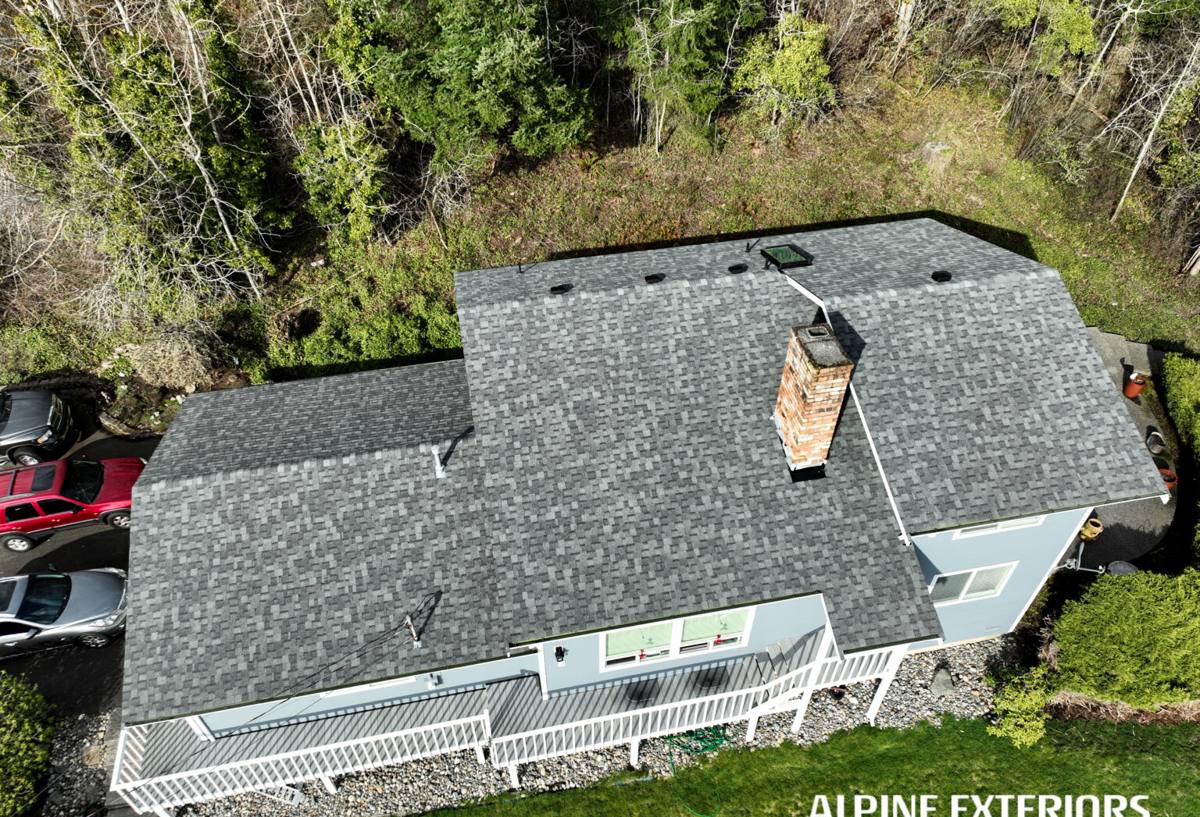
What Whatcom County's Climate Does to a Deck Over Time
Three things drive most of the deck repair calls we get in this area, and they compound each other:
- Driving rain and long wet stretches: Western Washington doesn't just get rain — it gets weeks of low-intensity rain that gives water plenty of time to find its way into end grain, fastener holes, and any spot where two boards meet.
- Moss season: Shaded decks, north-facing yards, and tree cover common around Cordata let moss establish on decking and framing. Moss holds moisture against the wood surface long after the rain has stopped, which accelerates rot far more than rain alone.
- Salt-influenced air: Being close to the water in Whatcom County means metal fasteners, brackets, and hardware corrode faster than they would further inland. Corroded hardware is one of the most common hidden causes of a deck that feels "loose" even though the boards look fine.
None of these are dramatic on their own. Together, over five, ten, or fifteen years, they're the reason a deck that looked fine at a glance can have real structural weakness underneath.
Why This Matters More Than the Age of the Deck
We get calls about decks that are only eight or nine years old and already need real structural repair, and calls about twenty-year-old decks that are still solid. Age matters less than how the deck was built, how it drains, and how much shade and moss exposure it's had. A deck tucked under trees with poor airflow will age faster than one in full sun, even if they were built the same year.
Signs a Deck Needs Repair — And What They Usually Mean
| What you notice | What's likely happening underneath |
|---|---|
| Boards feel spongy or spring back slowly | Moisture has broken down the wood fibers; rot is likely already through part of the board thickness |
| Railings wobble or flex | Post connections or ledger fasteners have loosened, often from corrosion or rot at the connection point |
| Dark streaking or green film on boards | Moss or algae growth holding moisture against the surface longer than normal drying time |
| Gaps opening between boards near the house | Ledger board attachment or flashing may be failing where the deck meets the siding |
| Nails or screw heads popping up | Wood movement from repeated wet/dry cycles, or corrosion pushing fasteners out |
| Deck feels bouncy when walked on | Joists may be undersized, spaced too wide, or weakened by rot at the ends |
Any one of these on its own might be minor. Two or three together, especially near the ledger board or stair stringers, usually means it's worth a real inspection rather than a patch job.
Repair or Replace? How We Actually Decide
Homeowners often assume any deck trouble means a full tear-out. Most of the time it doesn't. The honest answer depends on where the damage is and how much of the structure it's reached.
- Surface-level damage — worn boards, moss staining, minor splintering — is almost always repairable by replacing individual boards or sections.
- Fastener and hardware failure — loose railings, popped screws, corroded joist hangers — is a repair job, but one that needs to be done right the first time or it recurs.
- Ledger board or framing rot — this is the threshold question. If rot is contained to a few joists or a section of ledger, targeted structural repair makes sense. If it's spread through most of the framing, patching individual members stops making financial sense compared to rebuilding the substructure.
- Footing and post issues — settling, cracking, or rot at ground contact points — usually calls for replacing those specific posts and footings rather than the whole deck.
We'll tell you plainly when a deck is a good repair candidate and when you'd be spending real money to delay a rebuild by only a year or two. That call should be based on what we find when we pull a few boards and look at the framing, not a guess from the surface.
What a Correct Deck Repair Actually Involves
1. Inspection Below the Surface
We start by pulling boards in the affected area, not just looking at the top. That means checking joists, the ledger connection, flashing, and any hardware for rust or wood contact damage. A repair that only replaces the visible board without checking what's underneath is a repair that gets called back out in a year or two.
2. Structural Fixes First
If joists, beams, or the ledger board show rot or fastener failure, that gets addressed before any decking goes back down. Cosmetic repair over a compromised structure is the single most common shortcut we see from past work — and it's the reason some "recently repaired" decks still feel unsafe.
3. Hardware and Fastener Upgrades
Given how hard local air and moisture are on metal, we replace corroded fasteners and hangers with corrosion-resistant hardware rated for exterior and ground-contact use, not just whatever matches what was there originally.
4. Drainage and Airflow Corrections
A lot of repeat failures come down to water having nowhere to go. Where we can, we improve board spacing, ledger flashing, or under-deck drainage so the repair doesn't just fix today's damage but reduces how fast the next round of wear sets in.
5. Matching and Finishing
New boards get sealed or finished to match the existing deck as closely as possible, and any exposed cut ends — the most vulnerable spot on any deck board — get properly sealed before installation.
Materials: Honest Trade-Offs for This Climate
We get asked often whether composite decking is worth switching to during a repair, or whether to stick with wood. There's no universally right answer — it depends on the homeowner's priorities.
| Material | Where it holds up well | What to weigh |
|---|---|---|
| Pressure-treated lumber | Framing and structural repairs; cost-effective board replacement | Needs periodic sealing to perform well through Whatcom County's wet stretches |
| Cedar | Natural rot resistance, good look for partial repairs matching existing cedar decks | Still needs maintenance; cost has risen compared to treated lumber |
| Composite boards | Low maintenance surface, resists moss staining better than bare wood | Higher upfront cost; framing underneath is still wood and needs the same structural attention |
Our standard is to match the repair material to the existing deck when that makes structural and visual sense, and to recommend an upgrade only when it genuinely solves a recurring problem — not simply because it's a newer product.
Our Deck Repair Process in Cordata
- Free on-site assessment — we walk the whole deck, not just the area you called about, since related wear often hides nearby.
- Straight talk on scope — repair, partial rebuild, or full replacement, explained in plain terms with the reasoning behind it.
- Written estimate — clear on materials, scope, and timeline before any work starts.
- Repair work — structural fixes first, then decking, railings, and finishing.
- Final walkthrough — we check the repaired area is solid and talk through any maintenance that will help it last.
Maintenance Checklist for a Repaired Deck
- Sweep leaves and debris off the deck regularly, especially in shaded areas where moss takes hold fastest
- Rinse or gently brush off moss buildup before it spreads across boards
- Check railings and stair connections for movement a couple of times a year
- Keep an eye on the ledger board area where the deck meets the house — this is the highest-risk spot for hidden moisture
- Reseal or refinish wood decking on the schedule appropriate for the product used
- Watch for standing water after heavy rain — pooling anywhere on the deck usually points to a drainage or slope issue worth addressing early
Why Local Experience with Cordata Decks Matters
A deck repair crew that mostly works drier climates will often underestimate how much moss and prolonged rain affect a structure here. We work decks across Ferndale and the surrounding Whatcom County area regularly, so we're used to checking the specific spots — ledger connections, shaded joist bays, hardware exposed to coastal air — that tend to fail first in this environment. That means less guessing during the inspection and a repair scope that reflects what actually happens to decks in this part of Washington, not a generic checklist.
If you're noticing soft spots, a wobbly railing, or just want a second opinion on a deck that's starting to show its age, we're happy to take a look. The estimate is free, there's no pressure, and you'll get a straight answer about whether it's a repair job or something bigger — just fill out the form below to get started.