 Ferndale Roofing
 Siding Built for Cordata's Coastal-Influenced Weather
Cordata sits in the corridor between Ferndale and Bellingham, close enough to Bellingham Bay and the Strait of Georgia that homes here deal with the same marine-influenced weather pattern that defines exterior work across Whatcom County. That means siding decisions in this area aren't just cosmetic. A wall assembly that isn't built to handle salt-tinged air, sideways rain, and months of shade-driven moss growth will show it within a few years, usually as soft trim, peeling paint, or siding that never quite dries out between storms.
When we replace siding on a Cordata-area home, we're working against a specific climate, not a generic one. That shapes which products we'll install, how we detail the water-resistive barrier, and what we tell homeowners to watch for as the house ages. This page covers what that looks like in practice.
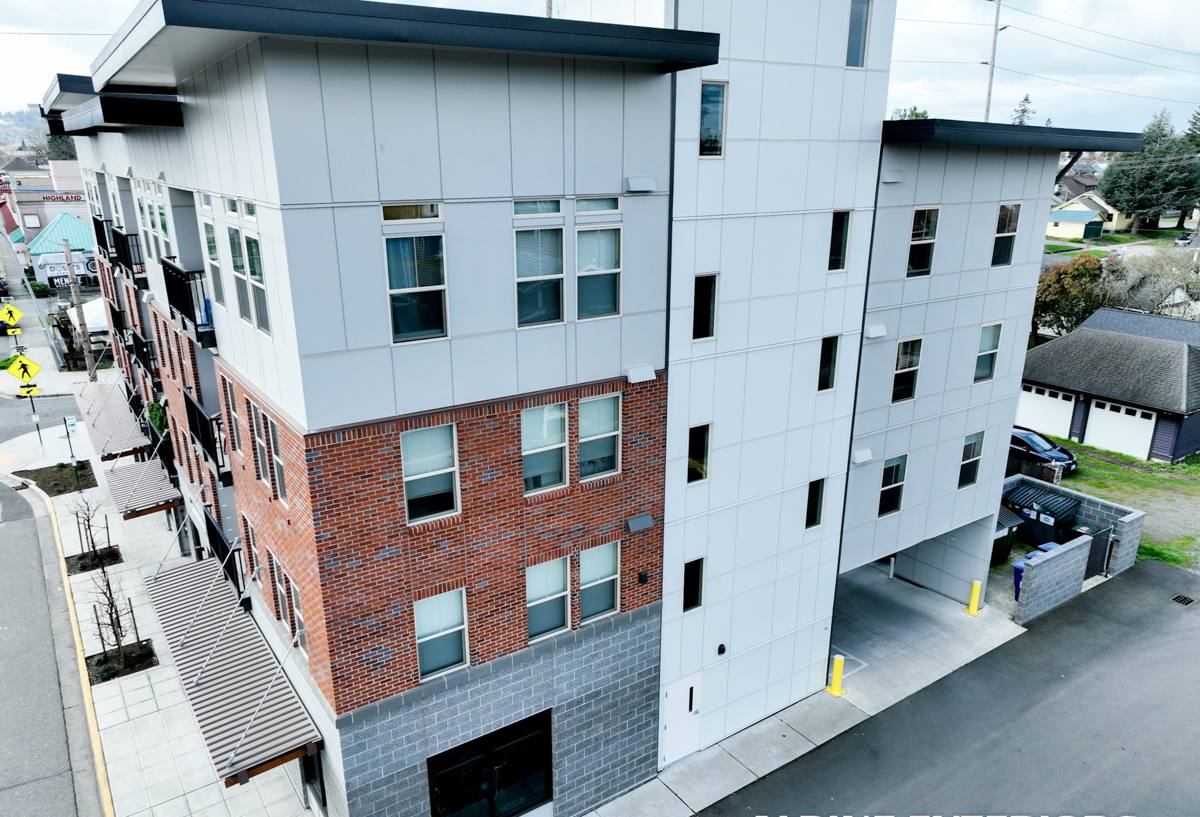
What Driving Rain, Salt Air, and a Long Moss Season Actually Do to Siding
Wind-Driven Rain and Wall Assemblies
Whatcom County doesn't just get a lot of rain — it gets rain that arrives sideways, pushed by wind off the water. That matters because siding isn't the only thing keeping water out of a wall; it's the first layer in a system that includes flashing, a water-resistive barrier, and properly lapped seams. Driving rain finds every gap in that system. Products or installations that rely on caulk and paint alone to stay watertight tend to fail here faster than they would in a drier climate.
Salt-Influenced Marine Air
Homes closer to the water carry a fine load of salt in the air, and even a few miles inland that influence doesn't disappear entirely. Salt-laden moisture accelerates corrosion on fasteners and trim hardware, and it degrades some paint and coating systems faster than inland weather would. It's a slow, cumulative effect — not something that shows up in year one, but something that separates siding systems that hold their finish for decades from ones that chalk, fade, or lift early.
A Long Moss and Algae Season
Between the tree cover common in this part of Whatcom County and the sheer number of overcast, damp days each year, north-facing and shaded walls stay wet longer than they do almost anywhere else in the state. That's ideal growing conditions for moss and algae. Siding that absorbs moisture gives that growth something to root into; siding that sheds water and dries quickly limits it. This is one of the biggest practical differences between siding materials in a Cordata-area installation.
Why We Only Install James Hardie Fiber Cement Here
We standardized on James Hardie fiber cement siding for every project we take on, including siding replacement in Cordata, and we don't install vinyl, LP SmartSide, Cemplank, Allura, or wood siding like primed spruce or cedar. Fiber cement doesn't absorb water the way wood-based products can, and it's non-combustible, which matters more each year as wildfire smoke and dry-season fire risk become a bigger part of Pacific Northwest summers. Hardie's ColorPlus factory finish is baked on and warranted against fading and cracking, and the HZ5 product line is engineered specifically for climates with sustained moisture exposure — which describes this region well. It's a fair amount more upfront than some alternatives, but for a house that has to survive decades of this specific weather pattern, it's the product we're willing to put our name behind.
What a Correct Siding Replacement Actually Involves
Tear-Off and Sheathing Inspection
Replacement starts with full removal of the old siding, not installation over top of it. That's the only way to actually see the sheathing underneath. In older homes, this is often where hidden problems surface — soft or delaminated sheathing, rot around window and door openings, or trim that's been quietly failing behind the old siding for years. Any of that has to be repaired before new siding goes on; covering it up just hides the problem for the next owner.
Water-Resistive Barrier and Flashing Details
A new water-resistive barrier goes on the sheathing, with flashing detailed at every window, door, and penetration so water is directed out and down instead of behind the siding. This step doesn't show once the job is done, but it's the single biggest factor in whether a siding system actually performs over 20-plus years of Whatcom County weather. Rushed or skipped flashing detail is the most common cause of the moisture problems we get called to diagnose.
Installation to Manufacturer Spec
James Hardie publishes specific requirements for fastener spacing, plank overlap, clearance from grade and roofing, and caulking at joints. Installing outside of spec can void the manufacturer's warranty even if the product itself is right. We install to that spec as a baseline, not an upgrade.
A properly executed siding replacement should include:
- Complete removal of old siding and trim, not an overlay
- Inspection and repair of sheathing and framing before anything new goes on
- A continuous, properly lapped water-resistive barrier
- Correct flashing at every window, door, and roof-to-wall transition
- Manufacturer-spec fastening and clearances (grade, roofline, other trim)
- Factory-finished siding and trim, caulked and touched up per Hardie's guidelines
- A final walkthrough where the crew points out what was done and what to expect long-term
Signs a Cordata-Area Home May Be Due for Siding Replacement
Some of these show up gradually enough that homeowners get used to them before recognizing what they mean:
| What You're Seeing | What It Usually Means | How Urgent |
|---|---|---|
| Persistent moss or dark streaking on shaded walls | Siding is staying wet too long between rain events | Worth an inspection soon |
| Soft spots or visible warping in siding panels | Moisture has gotten behind the siding or into the material itself | Address promptly |
| Paint that's peeling or bubbling rather than just fading | Often a sign of trapped moisture, not just age | Address promptly |
| Cracked or separating caulk joints | Normal aging, but an entry point for water if left alone | Monitor, repair when found |
| Siding that's simply original to a much older home | Older wood or early composite products are past their realistic service life | Plan for replacement |
Our Process, Start to Finish
- On-site assessment — we walk the exterior with you, look at the current siding and any trouble spots, and talk through what we're seeing.
- Product and options discussion — we explain Hardie's lines, profiles, and colors relevant to your home, and answer questions honestly, including the cost trade-offs.
- Written estimate — a clear, itemized scope so you know what's included before committing to anything.
- Scheduling — we plan around the wetter months where possible, since fiber cement and sheathing repairs go on best with a reasonable weather window.
- Tear-off and prep — old siding comes off, sheathing gets inspected and repaired as needed, and the water-resistive barrier and flashing go in.
- Installation — Hardie siding and trim installed to manufacturer spec, with attention to the details that matter most in this climate.
- Final walkthrough — we go over the completed work with you and provide warranty documentation.
Cost Factors for Siding Replacement in This Area
There's no honest way to quote a flat price without seeing the house, but the variables that actually move the number are consistent:
| Factor | Why It Affects Cost |
|---|---|
| Extent of sheathing or framing repair needed | Hidden damage found during tear-off adds labor and material beyond the base siding job |
| Home size and wall complexity | More corners, gables, and trim detail mean more cutting, fitting, and labor time |
| Siding profile and trim selection | Hardie offers multiple plank widths, textures, and trim styles at different price points |
| Accessibility of the site | Steep grades, limited staging area, or multi-story walls affect equipment and labor needs |
| Existing paint or coating removal | Some older siding systems require extra prep or disposal handling |
Why Hiring a Crew That Already Works in Cordata Matters
Siding installation isn't identical everywhere, and a crew that mostly works drier inland climates can make reasonable-looking decisions that don't hold up here. Working regularly in Ferndale and the surrounding Whatcom County communities means we're already familiar with local permitting expectations, the moisture patterns specific to this area, and the pace of home construction typical to Cordata and nearby neighborhoods. It also means we're not disappearing after the job is done — if a warranty question or a caulking touch-up comes up two years down the road, we're still working in your neighborhood.
That local familiarity shows up in small decisions throughout a project: how much clearance to leave at grade given local drainage patterns, which walls need extra attention to moss and shade exposure, and how to sequence a job around the region's wetter stretches instead of fighting them.
If your Cordata-area home needs new siding, we're happy to take a look and give you a straightforward, no-pressure estimate — no obligation, just an honest read on what your home needs. Use the form below to get started.