 Ferndale Roofing
 Why Sandy Point Windows Wear Out Faster Than You'd Expect
Sandy Point sits close enough to the water that salt air is part of daily life, not an occasional nuisance. That changes how windows age. Salt-laden moisture works into weep holes, hardware, and weatherstripping in ways that inland Whatcom County homes never deal with. Add Ferndale's long wet season, driving rain off the Strait, and months of overcast, moss-friendly humidity, and you've got a climate that finds every weak point in a window system — corroded hardware, soft frame corners, fogged glass, drafts around the sash.
None of that means windows in Sandy Point need to be replaced constantly. It means the products and installation details that work fine in a drier, more sheltered part of the county aren't automatically the right call here. A window that's rated "energy efficient" on paper still has to survive the specific conditions on your lot — wind exposure, how close you sit to the water, which direction your prevailing weather comes from.
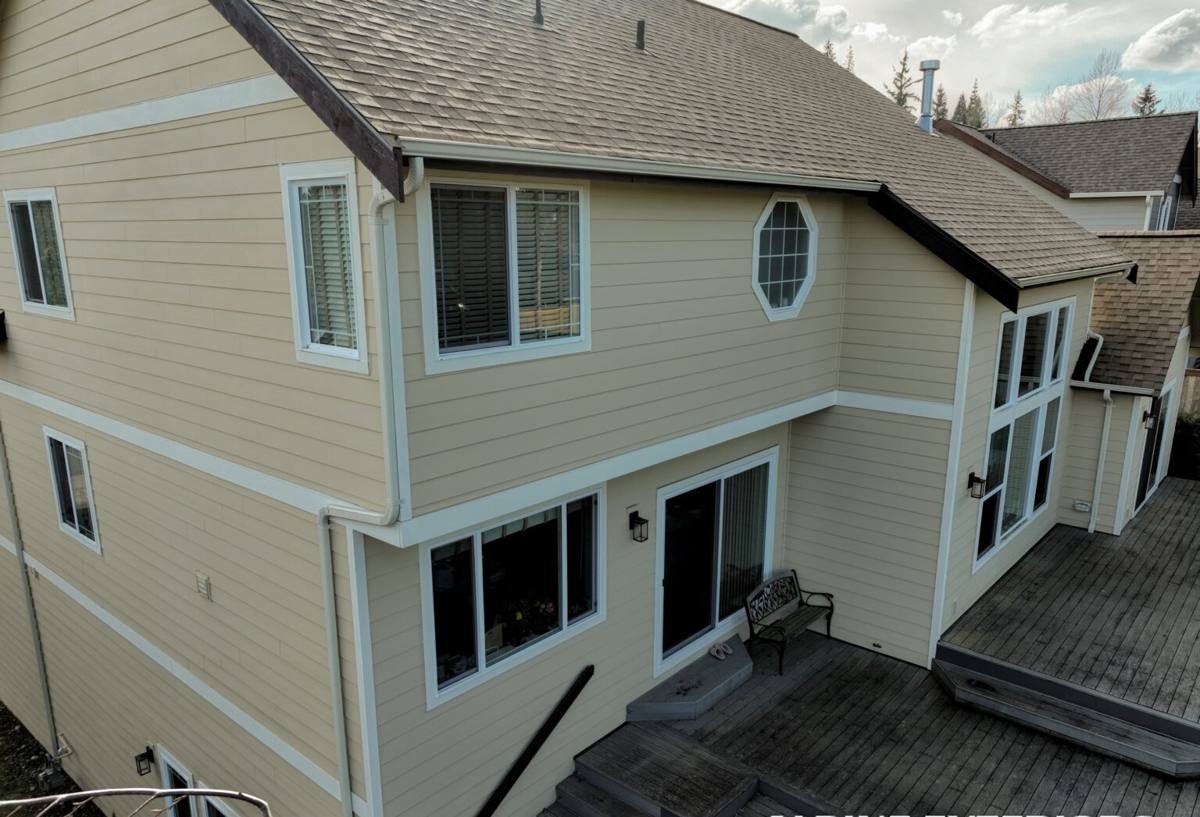
What "Energy-Efficient" Actually Means for a Window
Energy efficiency in a window comes down to three things working together: how well the frame and glass resist heat transfer, how well the unit is sealed, and how well it's installed. A high-performance window with a sloppy install will still leak air and moisture. A modest window installed correctly will often outperform it. We look at both sides of that equation on every job.
The Numbers That Actually Matter
- U-factor — how much heat escapes through the window. Lower is better. This is the number that matters most for our heating-season climate.
- SHGC (Solar Heat Gain Coefficient) — how much solar heat passes through the glass. Matters more on south- and west-facing water-view walls.
- Air leakage rating — how much air moves through the assembly when closed. Directly tied to drafts and to how hard your HVAC system has to work.
- Condensation resistance — how well the unit resists interior fogging in cold, humid stretches, which is common near the water.
Look for the NFRC label on any window you're considering. It's an independent rating, not a marketing number, and it lets you compare products on equal footing.
Frame Materials: What Actually Holds Up in Salt Air
Frame material matters more in Sandy Point than in most of Ferndale, because the material has to resist corrosion and moisture intrusion, not just insulate.
Vinyl
Good value, no painting required, and modern multi-chamber vinyl frames insulate well. The trade-off is that lower-grade vinyl can become brittle over time with UV and salt exposure, so we're selective about which vinyl lines we install this close to the water.
Fiberglass
Our default recommendation for exposed, water-facing walls. Fiberglass doesn't corrode, expands and contracts at close to the same rate as glass (which keeps seals intact longer), and holds paint well if you want a custom color. It costs more up front than vinyl.
Wood and Wood-Clad
Wood has real appeal for older or character homes, but bare wood exposed to salt air and driving rain needs consistent maintenance to avoid rot at joints and sills. Clad wood (aluminum or vinyl exterior over a wood interior) is a reasonable middle ground if you want the wood look inside without the exterior upkeep.
Frame Material Comparison for Coastal Exposure
| Material | Salt/Moisture Resistance | Maintenance | Typical Cost Position |
|---|---|---|---|
| Vinyl (quality multi-chamber) | Good | Low — occasional cleaning | Lower |
| Fiberglass | Excellent | Low | Higher |
| Wood (bare) | Fair — needs upkeep | High — refinishing needed | Mid to higher |
| Wood-clad | Good (exterior protected) | Moderate | Higher |
Glass and Coatings That Earn Their Keep Here
Double-pane, Low-E, argon-filled units are the baseline we recommend for Sandy Point — the argon fill slows heat transfer and the Low-E coating reflects heat back where you want it, either in or out depending on the coating type used. Triple-pane glass adds another layer of insulation and a meaningful bump in condensation resistance, which matters on a property that sees more humidity and temperature swings than an inland lot. It costs more and adds weight, so we talk through whether it's worth it for your specific walls and budget rather than selling it as a blanket upgrade.
Warm-edge spacers (as opposed to older aluminum spacers) also matter more here than most homeowners realize — they reduce the cold spot at the glass edge where condensation and, eventually, seal failure tend to start.
Installation Details That Make or Break Performance
This is where most of the real difference happens, and it's the part homeowners can't see once the job is done. In a driving-rain, salt-air environment, the installation has to manage water that will find its way behind the trim eventually — the question is whether it has somewhere to go.
- Flashing sequenced correctly — sill pan, side flashing, and head flashing layered so water sheds outward at every level, never trapped against the sheathing.
- Sealant chosen for the exposure — not all exterior sealants hold up the same way to salt air and UV; we use products rated for it, not whatever's cheapest.
- Corrosion-resistant fasteners and hardware — standard fasteners can start rusting within a couple seasons this close to the water.
- Shimming and squaring — an out-of-square frame stresses the seals and glass unit, which is often how a "good" window starts failing early.
- Interior air sealing — foam or backer rod around the frame perimeter, not just caulk at the trim, to actually stop drafts.
A window with a strong energy rating installed without this level of attention will still leak air, fog, or let moisture into the wall cavity — and on a coastal lot, that damage tends to show up faster than it would elsewhere in Whatcom County.
Our Process for a Sandy Point Window Job
1. On-Site Assessment
We look at wind and water exposure on your specific elevations, condition of existing frames and sills, signs of past moisture intrusion, and how your current windows are actually performing — drafts, condensation, difficulty operating.
2. Product Recommendation
We walk through frame material, glass package, and hardware options against your budget and exposure, being upfront about where a cheaper option is genuinely fine and where it isn't worth the risk on a water-facing wall.
3. Installation
Old units removed, opening inspected for hidden rot or moisture damage before anything new goes in, proper flashing and sealing sequence followed, new units set square and shimmed correctly.
4. Final Check
Operation tested on every window, sealant lines inspected, site cleaned up, and a walkthrough so you know what to watch for and what routine maintenance looks like in your specific setting.
Maintenance in a Moss-Prone, Salty Environment
Energy-efficient windows still need upkeep, and in Sandy Point that upkeep is a bit more frequent than it would be a few miles inland. A little routine attention goes a long way toward protecting the investment.
- Rinse frames and glass periodically to clear salt residue, especially after storms with onshore wind.
- Keep weep holes at the base of the frame clear of debris, moss, and dirt so water can actually drain.
- Check and refresh exterior caulk lines where they show cracking or gaps — small gaps let in the moisture that causes bigger problems.
- Watch north-facing and shaded sills for moss or algae growth, which holds moisture against the frame longer than a clean, dry surface would.
- Operate hardware (locks, cranks, hinges) a few times a season even on windows you rarely open, so corrosion doesn't set in unnoticed.
Why Hiring a Crew That Already Works Sandy Point Matters
A window installer who mostly works drier, more sheltered parts of Ferndale or inland Whatcom County isn't wrong about windows in general — they just haven't had to solve for this specific combination of salt air, wind-driven rain, and moss season on a daily basis. That shows up in small decisions: which sealant actually holds up here, how aggressively to flash a water-facing wall, which fastener won't be rusting in two years. Those aren't things you can shortcut around after the fact.
We work on homes throughout Ferndale and the surrounding Whatcom County coastline, and Sandy Point's exposure is something we plan for specifically rather than treat as an afterthought.
Getting Started
If your windows are drafty, fogging between the panes, or just past their working life, we're happy to take a look and give you a straightforward assessment of what's going on and what your realistic options are. There's no pressure and no obligation — just a clear read on your windows and a free estimate using the form below.