 Ferndale Roofing
 Windows Built for a Waterfront Whatcom County Climate
Sandy Point sits close enough to the water that its homes take a different kind of weather beating than houses a few miles inland in Ferndale. Salt-laden air, wind-driven rain coming off the Strait, and a long, damp moss season put steady stress on anything with a seal, a seam, or exposed hardware. Windows are one of the first places that stress shows up — long before most homeowners notice it on the roof or siding.
We've worked on enough homes in this stretch of Whatcom County to know that "standard" window advice doesn't always apply here. What holds up on a dry, sheltered lot inland can fail early on a waterfront or near-waterfront property. This page is about what Sandy Point homes actually need from their windows, what a correct installation looks like in this environment, and how our process works when you bring us in.
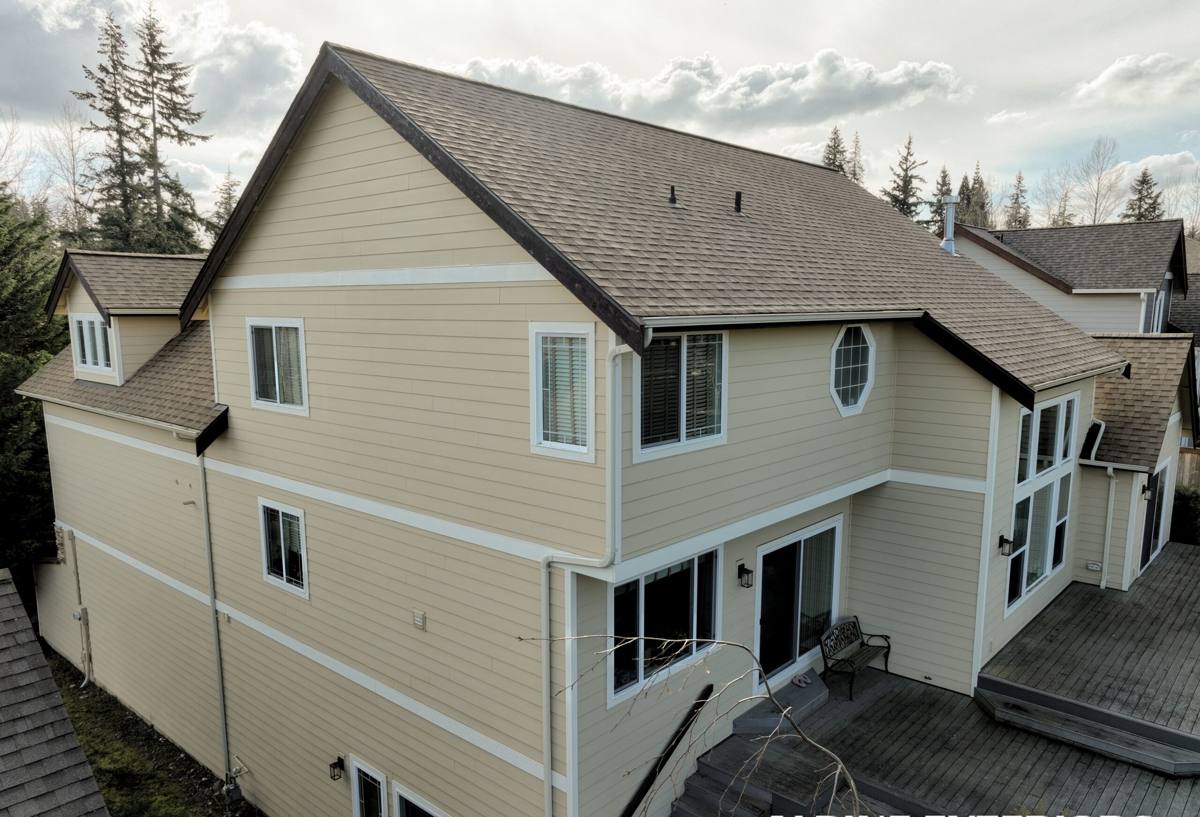
Why Salt Air and Driving Rain Change the Equation
Salt Air
Airborne salt is corrosive to a lot of the hardware inside a window — hinges, locks, balance mechanisms, and screws — especially anything not rated for coastal exposure. It also degrades certain finishes and coatings faster than an inland environment would, which is why material choice and hardware quality matter more here than in a typical suburban install.
Driving Rain
Wind-driven rain doesn't just hit a window — it gets pushed sideways and upward into gaps that would never see water in a calm rain. That means flashing, sill pans, and sealant work have to be done correctly the first time. A window that's watertight in a still rainstorm can still leak in a Sandy Point wind event if the flashing details were rushed.
Moss Season
The long wet season in this part of Washington keeps moss and mildew growing on north-facing and shaded surfaces for months at a time. Around windows, that moisture holds against trim, sills, and seals longer than it would in a drier climate, which accelerates wood rot and breaks down caulking and weatherstripping faster than the manufacturer's rated lifespan would suggest.
What "Custom" Means for a Sandy Point Home
Custom window work isn't just about style — it's about fitting real conditions. A few things come up regularly on homes in this area:
- Older or non-standard rough openings that don't match current off-the-shelf window sizes
- Homes with additions or remodels where openings were framed slightly out of square
- Waterfront or view-facing elevations that take the brunt of wind and rain, versus more sheltered sides of the same house
- A need to match sightlines and trim details across a mix of original and previously replaced windows
- Community or neighborhood design expectations that some waterfront areas maintain for exterior appearance
Custom, in practice, usually means measuring and building to the actual opening rather than forcing a stock size to fit, and it means choosing different specs for a storm-facing window than for one tucked under an eave on the sheltered side of the house.
Choosing the Right Frame Material
Frame material is one of the biggest factors in how a window holds up near salt water. There's no single "best" answer for every home — it depends on exposure, budget, and how much maintenance you want to take on.
| Material | How It Handles Salt Air & Rain | Maintenance | General Cost Range |
|---|---|---|---|
| Vinyl | Doesn't rust or rot; performs well in coastal air when hardware is corrosion-rated | Low — occasional cleaning | Lower |
| Fiberglass | Very stable in temperature swings and moisture; strong resistance to warping | Low | Mid to upper |
| Wood-clad | Good insulating value; the exterior cladding protects the wood, but any breach lets moisture into the core | Moderate to high — needs monitoring at joints and sills | Upper |
| Aluminum | Strong but prone to corrosion in salt air unless specifically coated/rated for marine use | Moderate | Mid |
For homes with direct water exposure, we generally steer people toward vinyl or fiberglass with marine-rated hardware, simply because they hold up with less upkeep. Wood-clad windows can still work well on more sheltered elevations where they're not taking constant wind and salt spray, especially when the look matters for a period-style home.
What a Correct Installation Actually Involves
The window unit itself is only part of the job. In a climate like this, the installation details are what determine whether a window leaks in year two or holds up for decades.
Flashing and Sill Pans
A properly flashed opening directs any water that gets past the window itself back out and away from the framing, rather than letting it pool at the sill. This is one of the most common places we find shortcuts on prior installs.
Sealant Selection and Placement
Not all sealants are rated for the same movement, UV exposure, or salt exposure. We use products suited to exterior marine-adjacent conditions, and we're deliberate about where sealant goes versus where a weep path needs to stay open — sealing everything shut can trap water instead of letting it drain.
Weep Holes and Drainage
Weep holes exist to let incidental water out of the window frame. In a driving-rain environment, keeping these clear and correctly positioned is more important than it would be in a drier region — a blocked weep path turns a well-built window into a slow leak.
Insulation Around the Frame
Gaps around the frame need to be filled with the right material and the right amount — overpacking can bow the frame, and underfilling leaves cold spots and air infiltration.
Signs Your Current Windows Are Struggling
Because moisture damage from driving rain and salt air can develop behind the trim before it's visible on the surface, it helps to know what to watch for:
- Fogging or condensation between panes on double- or triple-glazed units
- Soft or discolored wood trim, especially on north-facing or storm-exposed walls
- Windows that are harder to open, close, or lock than they used to be
- Visible corrosion on hinges, latches, or cranks
- Persistent moss or dark staining on the sill or surrounding trim
- Drafts or a noticeable temperature difference near the window on windy days
- Paint or finish that's peeling or bubbling around the frame
Any one of these on its own isn't necessarily an emergency, but a few together on the same window usually means moisture has already gotten past the seal.
How Our Process Works
1. On-Site Assessment
We walk the exterior and, where relevant, the interior trim to look at exposure on each elevation, the condition of existing openings, and whether we're dealing with a straightforward replacement or an opening that needs correction.
2. Recommendations by Elevation
We don't assume every window on the house needs the same spec. A storm-facing window may call for a different glass package or hardware than one on a sheltered side, and we'll walk you through why.
3. Written Estimate
You get a clear breakdown of materials, labor, and scope before anything is ordered — no surprise add-ons once work is underway.
4. Installation
Old units are removed, openings are inspected and corrected as needed, and new windows go in with proper flashing, sealant, and insulation detail — not just set into the existing hole.
5. Final Check
We check operation, seal integrity, and cleanup before calling the job done.
Living With Windows in a Marine Climate
Even a well-installed, well-chosen window benefits from a little seasonal attention in this environment:
- Rinse salt residue off exterior frames periodically, especially after storms
- Clear moss and debris from sills and tracks before it holds moisture against the frame
- Check weatherstripping and hardware operation once a year
- Watch for early signs of trim discoloration on shaded, moss-prone elevations
None of this is heavy maintenance — it's mostly about catching small issues in the wet season before they become bigger ones by spring.
Why a Crew That Already Works in Sandy Point Matters
A contractor who mainly works inland can still install a window correctly on paper and still get it wrong for this environment — the wrong sealant, hardware that isn't corrosion-rated, or flashing details that assume calmer weather than this stretch of coastline actually sees. Working regularly in Sandy Point and the surrounding Ferndale area means we've already seen how salt air, wind direction, and moss buildup behave on homes here, and we spec and install accordingly rather than guessing.
If you're weighing a window project on a Sandy Point home, we're glad to come take a look and give you a straightforward, no-pressure estimate — what we'd recommend, why, and what it would cost, with the form below.