 Ferndale Roofing
 Sandy Point Takes a Different Kind of Beating
Sandy Point sits right on the water, and that changes what "storm damage" actually means for a roof out here compared to a roof a few miles inland in Ferndale. You're not just dealing with rain totals — you're dealing with wind that has a straight, unbroken run across the Strait before it hits your shingles, and salt-laden air that works on metal and fasteners every single day, storm or not. A roof built or repaired without that context in mind tends to fail in the same predictable spots, over and over.
We work on homes in this neighborhood regularly, which means we're not guessing at what Sandy Point roofs need — we've seen which details hold up to a winter of southwesterly blows and which ones don't. This page covers what storm damage actually looks like out here, what a correct repair involves, and how we handle the job from first look to final cleanup.
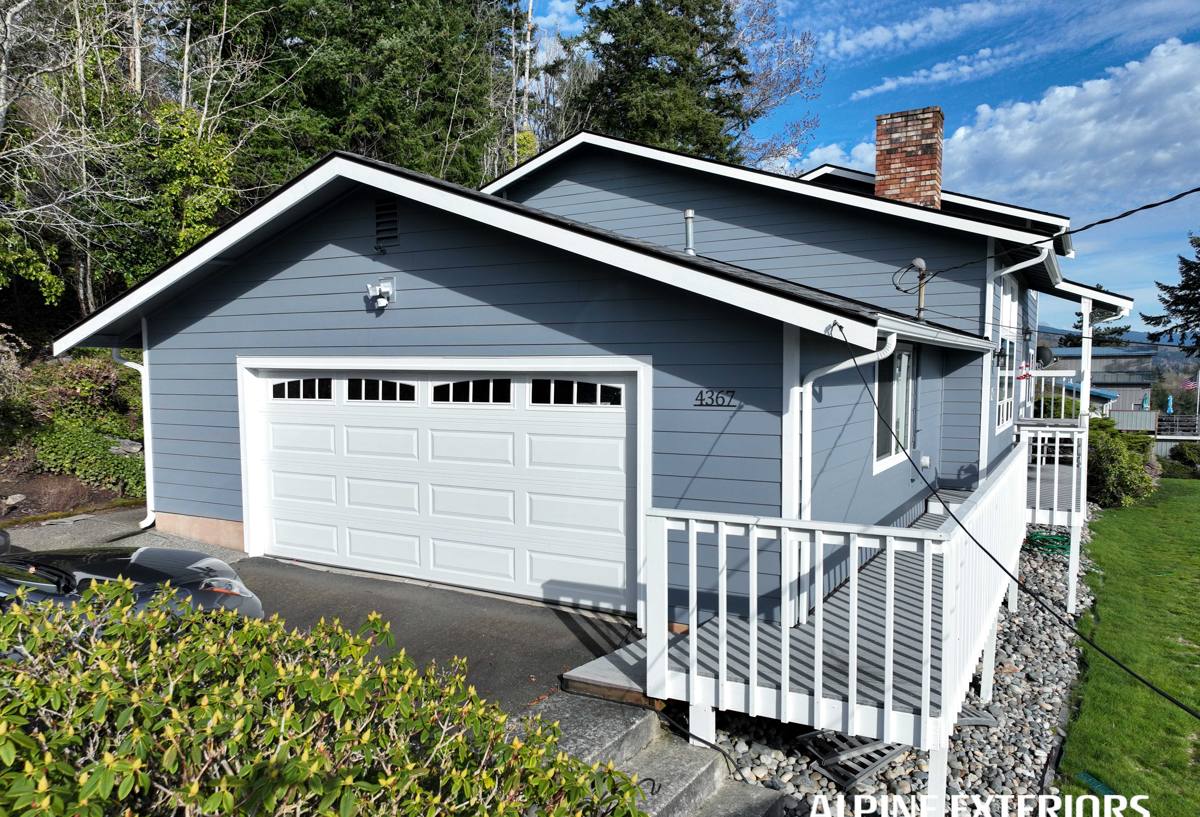
What Storm Damage Actually Looks Like on a Sandy Point Roof
Wind off the water doesn't just push rain sideways — it gets up under the leading edge of shingles and shakes at anything that isn't fully sealed down. After a windstorm, the damage isn't always obvious from the ground. Here's what we look for:
- Lifted or creased shingle tabs along the windward slopes, especially the edges facing open water
- Torn or missing shingles where sealant strips never fully bonded, or where age has already weakened adhesion
- Granule loss from wind-driven rain acting almost like sandblasting on exposed slopes over time
- Flashing separation around chimneys, vents, and roof-to-wall transitions, where wind gusts work fasteners loose
- Corroded or backed-out nails — salt air accelerates this, and a few compromised fasteners are usually what let a whole section of shingles go in the next storm
- Moss-clogged valleys and gutters that turn a normal rain event into standing water and backup under the shingle edge
Some of this is storm damage in the strict sense — wind that happened last week. Some of it is storm damage in progress — deterioration from salt exposure and moss that a storm simply exposed or finished off. Both matter, and both get documented the same way when it's time to talk repair.
Salt Air, Wind, and Moss: The Three Things Working Against You
Salt Air
Coastal salt air is corrosive to exposed metal — nail heads, flashing, gutter hardware, even some fastener coatings — at a pace that homes further inland in Whatcom County just don't experience. A fastener that would last decades in Bellingham's east side can show real corrosion in a fraction of that time a few hundred feet from the water. This is the single biggest reason a generic repair doesn't hold up as well here as a repair specced for the shoreline.
Wind
Open water means open wind. There's less tree cover and fewer windbreaks between the Strait and a Sandy Point roofline than you'd find on a lot of interior lots. That uninterrupted exposure is exactly what finds the weak point in a roof — the one shingle with a bad seal, the one flashing joint that was never quite tight.
Moss
Western Whatcom County has a long, damp moss season, and Sandy Point's tree cover and constant moisture give moss plenty to work with. Moss holds water against the roof surface, works its way under shingle edges, and clogs valleys and gutters right when you need them clear the most — during a storm. A roof that's been neglected on the moss front is more vulnerable to wind and water damage than a clean one, full stop.
How We Handle a Storm Damage Repair
1. Inspection First, Not Assumptions
We get on the roof (or use a ladder and binoculars if conditions don't allow safe access right after a storm) and look at every slope, not just the side that's obviously damaged. Wind damage often shows up on more than one plane, and we'd rather catch it all in one visit than have you calling back in a month.
2. Emergency Protection When Needed
If there's an active leak or exposed decking, we tarp or dry-in the area before anything else. That's a stopgap, not a repair — but it buys time to do the actual fix correctly instead of rushing it in bad weather.
3. Documentation
We photograph and note the damage clearly, in a form that's useful if you're filing an insurance claim. We're not adjusters and we don't speak for your insurer, but a clear, honest record of what happened and what it will take to fix makes that conversation a lot smoother on your end.
4. The Actual Repair
Depending on the damage, this might mean replacing a handful of shingles, resealing and refastening lifted tabs, rebuilding a flashing detail, or a larger section replacement. We match materials as closely as possible and use fasteners and flashing appropriate for a salt-air environment — more on that below.
5. Cleanup and Walkthrough
We clear debris, check gutters and valleys while we're up there, and walk you through exactly what was done and what to watch going forward.
Repair or Replace? What Actually Drives That Decision
Not every storm-damaged roof needs full replacement, and not every roof that "just needs a patch" is actually a good candidate for one. Here's how we think through it:
| Factor | Leans Toward Repair | Leans Toward Replacement |
|---|---|---|
| Roof age | Under 12–15 years, otherwise sound | Nearing or past expected lifespan |
| Damage extent | Isolated to one or two areas | Spread across multiple slopes |
| Underlying decking | Dry, solid, undamaged | Soft, rotted, or water-stained |
| Fastener/flashing condition | Localized corrosion only | Widespread corrosion from long salt exposure |
| Moss/algae history | Minimal, well-maintained | Long-term buildup affecting multiple areas |
| Prior repairs | Few or none | Multiple patches already in place |
We'll always tell you honestly which side of that table your roof falls on. A patch on a roof that's structurally sound is money well spent. A patch on a roof that's already compromised in several places just delays a bigger bill and risks interior water damage in the meantime.
Materials That Actually Hold Up Near the Water
Our standard for a Sandy Point repair isn't the same as our standard for a repair five miles inland, because the environment isn't the same. A few specifics:
- Corrosion-resistant fasteners — standard galvanized nails can start showing surface corrosion faster in salt air than most homeowners expect; we favor fasteners rated for coastal or high-moisture exposure
- Flashing metal choice — some flashing metals handle salt exposure better than others over the long run, and we account for that when a flashing section needs rebuilding rather than just resealing
- Sealant compatibility — the wrong sealant on the wrong flashing metal or shingle type can fail early in a marine environment; we match products to the application rather than grabbing whatever's fastest
- Proper fastening pattern — under-nailing (or nailing in the wrong spot on the shingle) is a common cause of wind lift, and it's an easy thing to get wrong if a crew isn't used to high-wind exposure sites
None of this is about one brand being bad — it's about matching materials and installation technique to a coastal environment instead of treating every roof the same.
Reducing Storm Damage Before the Next One Hits
A lot of what we get called out for after a storm was preventable, or at least manageable, with some attention beforehand. A simple pre-storm-season checklist for a Sandy Point home:
- Clear moss and debris from valleys, gutters, and downspouts before the wet season sets in
- Have loose or lifted shingle edges resealed or refastened before wind gets under them
- Check flashing around chimneys, skylights, and roof-to-wall joints for gaps or corrosion
- Trim back overhanging branches that can whip against the roof surface in high wind
- Confirm attic ventilation is working — trapped moisture accelerates decking rot and moss growth alike
- Keep an eye on fastener condition on older roofs, especially anything installed before corrosion-resistant hardware was standard
None of these are difficult on their own, but skipping them for a few seasons in a row is exactly how a minor wind event turns into an emergency tarp job.
Insurance Claims: What to Expect
Wind and storm damage is often covered under homeowners' policies, but coverage details, deductibles, and what counts as "storm damage" versus "wear and tear" vary by policy and insurer. We're happy to provide a written estimate and photo documentation that you can hand to your adjuster, and we can walk your roof with you or the adjuster if that's useful. What we won't do is inflate a scope of work to chase a bigger payout — our estimate reflects what the roof actually needs, which tends to hold up better under an adjuster's review anyway.
Why It Matters That We Already Work Sandy Point
A crew that's never worked this stretch of shoreline is starting from zero on things that matter: how exposed a given lot is to prevailing wind off the water, how access and staging work on the narrower waterfront lots, what Whatcom County permitting looks like for this area, and which failure points show up again and again on homes built to older coastal-adjacent standards. We've already done that homework here. That's not a marketing line — it's the difference between a repair that's specced generically and one that's specced for the specific conditions your roof actually faces every day.
Ferndale's broader climate — long wet stretches, moss-friendly shade in the tree-covered lots, and enough wind events over a typical winter to test every weak seam on a roof — already asks a lot of a roofing system. Sandy Point's waterfront exposure adds salt air and open-water wind on top of that. A roof repair that accounts for both is worth more than one that only accounts for the general Whatcom County climate.
Get a Straight Answer on What Your Roof Needs
If you've had storm damage — or you're not sure whether what you're seeing is storm damage, moss damage, or just an aging roof — we're glad to take a look. We'll give you a clear, no-pressure estimate and an honest read on whether you're looking at a repair or something bigger, no upsell. Use the form below to request a free estimate for your Sandy Point property.