 Ferndale Roofing
 Why Sandy Point Homes Call for a Different Roofing Approach
Sandy Point sits close enough to the water that its homes take on weather most inland Whatcom County properties never see. Salt-laden air moves off the water and settles on every exposed surface, wind-driven rain finds its way under anything that isn't properly sealed, and the shaded, moisture-heavy stretches of the year keep moss and algae active for months at a time. A roof out here isn't just shedding water — it's holding up against a steady combination of salt, moisture, and organic growth that wears down the wrong materials faster than most homeowners expect.
Metal roofing has become a common answer for these conditions, but "metal roofing" covers a wide range of products, coatings, and installation methods. Not all of them are suited to a shoreline-adjacent property, and the difference between a system that lasts decades and one that corrodes early usually comes down to material choice and installation detail — not the fact that it's metal at all.
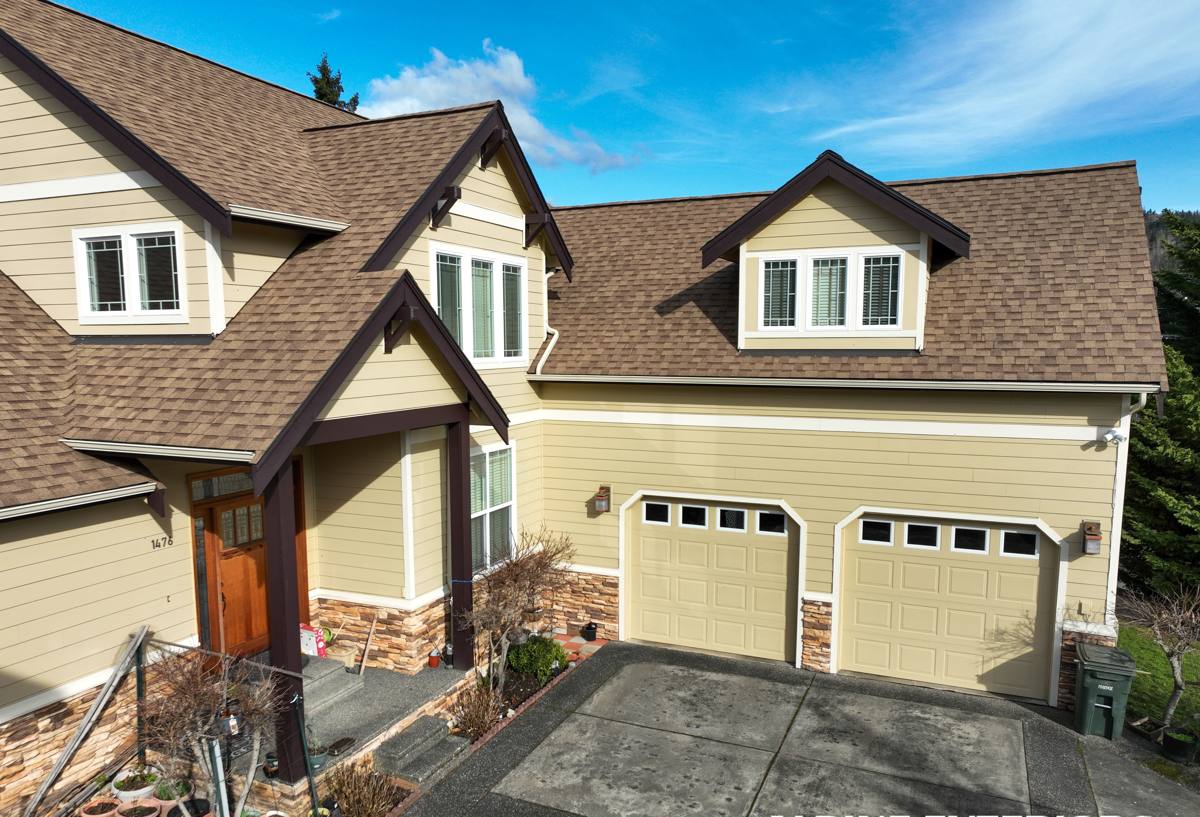
What Salt Air and Coastal Exposure Actually Do to a Roof
Salt in the air isn't dramatic — it doesn't show up as a sudden problem. It works slowly, settling into fastener heads, cut edges, and any spot where a protective coating has been scratched or worn thin. Over time this leads to:
- Corrosion starting at exposed fastener heads and panel cut edges, long before the panel field itself shows any wear
- Galvanic reaction where dissimilar metals touch — mismatched flashing, trim, or fasteners can corrode a roof from the inside out
- Coating breakdown on lower-grade finishes, which shows up first as chalking or dulling near the coastline-facing side of the roof
- Accelerated wear on any steel that isn't properly coated for marine or near-marine exposure
None of this means metal is a poor choice near the water — it's one of the better performers for salt exposure when the right alloy coating and finish are specified. It does mean the product selection matters more here than it would on a roof twenty miles inland.
Choosing a Metal Roofing System That Matches This Environment
The two most common categories homeowners weigh are standing seam panels and exposed-fastener metal panels. Both are legitimate systems, but they behave differently in a coastal-influenced climate like Sandy Point's.
| Factor | Standing Seam | Exposed-Fastener Panel |
|---|---|---|
| Fastener exposure | Concealed clips, no exposed fastener heads | Fasteners penetrate the panel face directly |
| Long-term maintenance | Very low — no gaskets to monitor | Gaskets and fasteners need periodic checks |
| Salt air performance | Strong, since corrosion-prone points are hidden and sealed | Good with quality fasteners, but exposed points are the first to show wear |
| Upfront cost | Higher | More budget-friendly |
| Best fit | Full exposure to wind, rain, and salt | Lower-exposure sections, outbuildings, secondary roofs |
We don't push one system on every home. A house with a fully exposed elevation facing the water is a different situation than a home tucked behind trees or a rise that breaks the wind. Part of our job is walking the property with you and being honest about which system earns its cost on your specific roof.
Coating and Finish Matter as Much as Panel Type
Whatever panel profile you choose, the metal's coating is what actually stands between the steel and the salt air. We specify coatings rated for coastal exposure and avoid cutting corners here — it's the single factor most likely to determine whether a metal roof looks and performs the same in year fifteen as it did in year one.
What a Correct Metal Roof Installation Involves
Metal roofing rewards correct installation and punishes shortcuts more visibly than asphalt shingles do. A few details we treat as non-negotiable on every job:
- Underlayment rated for the panel type and climate, not a generic felt that wasn't built for the temperature swings under metal
- Fastener spacing and torque set to manufacturer spec — overdriven or underdriven fasteners are one of the most common causes of early leaks
- Flashing and transitions at valleys, walls, and penetrations detailed to shed wind-driven rain, not just vertical rainfall
- Compatible metals throughout, so flashing, trim, and fasteners don't set up galvanic corrosion against the panel
- Ventilation sized correctly so moisture doesn't get trapped under the deck, which invites rot and, indirectly, the moss and mildew that thrive in damp, poorly ventilated attics
None of these are exotic requirements — they're standard trade practice. But they get skipped often enough, especially by crews used to asphalt shingle work who treat metal as a drop-in substitute rather than a different system with its own rules.
Moss, Moisture, and What Long-Term Maintenance Looks Like
Whatcom County's wet season keeps roofs damp for extended stretches, and shaded or north-facing sections of a roof can stay wet long after the rest has dried. Moss doesn't damage a properly installed metal panel the way it damages shingles, but it can still hold moisture against flashing, clog valleys, and creep into gaps where debris has collected. On a metal roof, the maintenance conversation shifts from "moss is eating the roofing material" to "moss and organic debris are trapping moisture in the wrong places."
Practical upkeep for a metal roof in this environment is lighter than for other materials, but it isn't zero:
- Clearing needles, leaves, and debris from valleys and gutters before they compact and hold water
- Rinsing accumulated grime off panels periodically, especially on shaded elevations
- Checking fastener heads and sealant points every couple of years rather than waiting for a visible leak
- Keeping overhanging branches trimmed back so shaded sections get some sun and airflow
Our Process for Sandy Point Projects
Because Sandy Point properties vary — some fully exposed to the water, others set back with more tree cover — we don't quote from a template. Our process typically looks like:
1. On-Site Assessment
We walk the roof and the property, note exposure direction, existing ventilation, and any signs of past moisture problems, and take real measurements rather than estimating from a satellite photo.
2. System Recommendation
Based on that walk-through, we recommend a panel type and coating suited to the exposure level of your specific roof, and explain the trade-offs in plain terms — we'd rather you understand the "why" than just accept a spec sheet.
3. Written, Itemized Quote
You get a clear breakdown of material, labor, and scope before any work starts, with no vague allowances hiding in the total.
4. Installation to Manufacturer Spec
Fastener spacing, flashing details, and ventilation are installed to the manufacturer's requirements, which is also what keeps any material warranty valid.
5. Final Walkthrough
We go over the finished roof with you before calling the job done, so nothing gets discovered after the crew has left.
What Drives the Cost of a Metal Roof Here
| Cost Factor | Why It Matters in Sandy Point |
|---|---|
| Panel type | Standing seam costs more upfront but reduces long-term maintenance on exposed elevations |
| Coating grade | Marine-rated finishes cost more but resist salt-driven corrosion significantly longer |
| Roof complexity | Valleys, dormers, and multiple planes add flashing work and labor time |
| Tear-off vs. overlay | Removing an old roof adds cost but lets us inspect and correct the deck and ventilation underneath |
| Access and site conditions | Waterfront lots with limited staging area or steep grades can affect labor time |
We won't quote a number without seeing the roof — anyone who does is guessing. What we can say honestly is that the cheapest bid on a coastal-exposed roof is rarely the cheapest option over twenty years, once you factor in coating grade and installation quality.
Signs Your Current Roof May Need Attention
- Rust streaking near fasteners, flashing, or panel edges
- Moss or dark staining concentrated on shaded or north-facing sections
- Soft or discolored ceiling spots after heavy wind-driven rain
- Visible gaps or lifted seams at valleys and wall transitions
- Granule buildup in gutters if your current roof is asphalt and showing its age
- Daylight visible through the attic deck at any penetration point
If any of these sound familiar, it's worth having someone look before the next storm season, not after.
Why Local Experience with Sandy Point Homes Matters
A crew that only works inland doesn't always think about salt exposure, fastener corrosion, or the way wind-driven rain behaves differently on a shoreline-facing elevation. We work throughout Ferndale and Whatcom County, including waterfront and near-waterfront properties like those in Sandy Point, and we specify materials and details with that exposure in mind from the start — not as an afterthought once a homeowner asks about rust.
If you're weighing metal roofing for a Sandy Point property, we're happy to take a look and give you a straightforward, no-pressure assessment of what your roof actually needs. Use the form below to request a free estimate.