 Ferndale Roofing
 Why Windows Wear Out Faster in Sandy Point
Sandy Point sits right up against the water, and that location is exactly what makes window replacement here a different job than it is a few miles inland in Ferndale. Homes facing the Strait of Georgia take a steady diet of salt-laden air, wind-driven rain, and long stretches of damp, shaded weather that Whatcom County is known for. None of that is dramatic on its own, but stacked up year after year, it's hard on window frames, hardware, and seals in ways that inland homes just don't experience at the same rate.
Salt Air and Corrosion
Airborne salt doesn't just affect boats and railings. It settles on window frames, tracks, and hardware, and over time it accelerates corrosion on anything metal — hinges, cranks, screws, and aluminum components. Once corrosion sets in on the moving parts of a window, it doesn't smooth back out. Windows get harder to open, locks stop seating properly, and finishes chalk and pit faster than the manufacturer's warranty ever accounted for.
Wind-Driven Rain and Water Intrusion
Storms coming off the water don't fall straight down — they get pushed sideways into the building envelope. That matters because a window doesn't just need to shed rain, it needs to resist rain being forced sideways and upward at the frame edges. A lot of window failures we see in waterfront neighborhoods aren't glass problems at all. They're flashing and sealant problems that let wind-driven rain work its way behind the trim and into the wall cavity, often for years before anyone notices a stain or a soft spot.
Shade, Moisture, and Moss Season
Sandy Point has plenty of tree cover and homes tucked in close to vegetation, which means a lot of window exteriors stay damp and shaded for long stretches, especially through the fall and winter. That's the same combination of moisture and low sunlight that drives moss and algae growth on roofs, and it does the same thing to window sills, tracks, and wood trim. Moss and organic growth hold moisture against the frame, which is bad news for wood components and for the caulking and sealant lines that are supposed to keep water out.
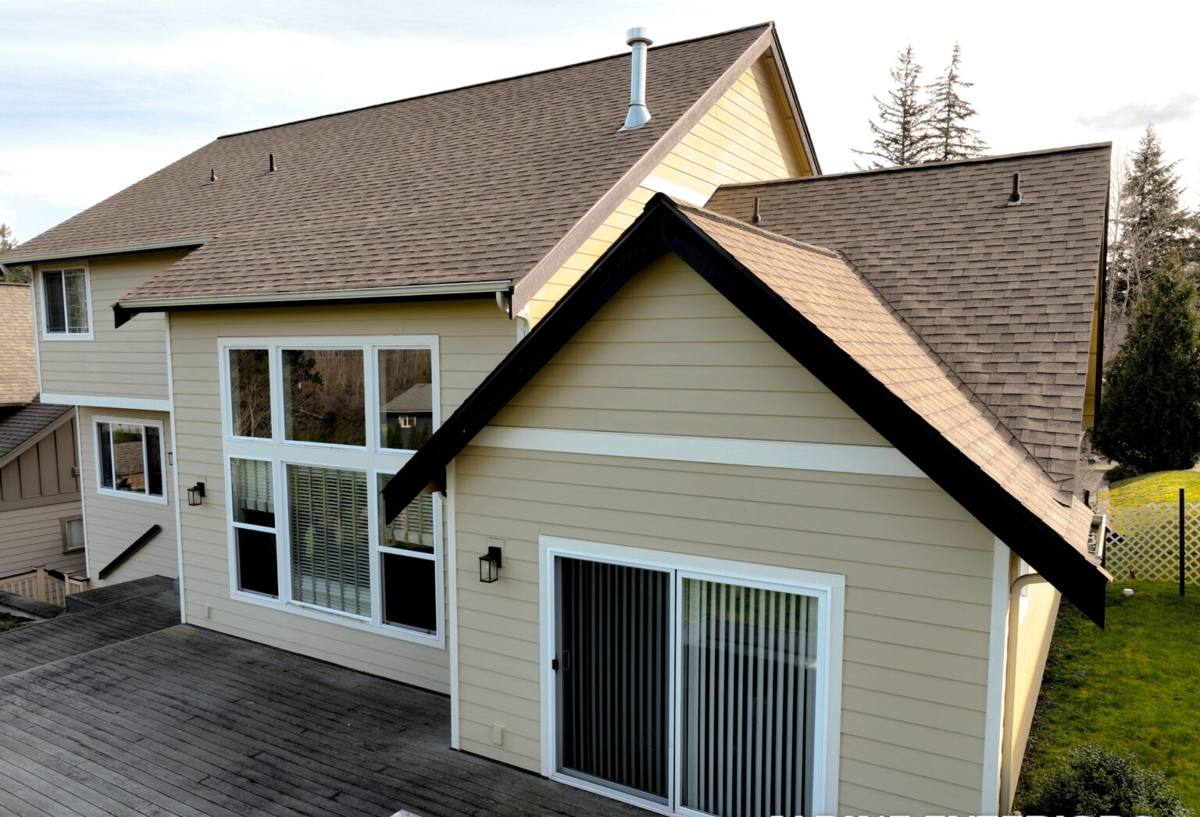
Signs Your Sandy Point Home Needs New Windows
Not every issue means a full replacement, but if you're seeing more than one or two of these, it's worth having someone take a real look rather than waiting it out:
- Windows that are difficult to open, close, or lock, especially after damp weather
- Visible corrosion or pitting on hinges, cranks, or metal frame components
- Soft, discolored, or spongy wood trim or sill areas
- Moss, algae, or black staining building up on sills and lower frame edges
- Fogging or moisture between panes on double-pane units (a sign the seal has failed)
- Noticeable drafts or cold spots near the frame in winter
- Peeling or bubbling paint around the window opening, inside or out
- Higher heating bills than similar-sized homes without an obvious cause
What a Correct Window Replacement Involves
Window replacement looks simple from the outside — old window out, new window in — but the details underneath the trim are what determine whether the job lasts fifteen years or fails in three. In a location like Sandy Point, those details matter more than usual because the building envelope is under constant pressure from moisture and salt.
Full-Frame Replacement vs. Insert Replacement
There are two basic approaches. An insert (or "pocket") replacement keeps the existing frame in place and fits a new window inside it — faster and less invasive, and a reasonable option when the existing frame is sound, square, and dry. A full-frame replacement removes the window down to the rough opening, which lets us inspect and, if needed, repair the framing, sheathing, and flashing underneath. On homes exposed to driving rain and salt air, we're more inclined to recommend full-frame work whenever there's any sign of past water intrusion, because an insert installed over a compromised frame just seals the problem back up out of sight.
Flashing and Water Management
This is the part of the job that doesn't show once the trim goes back on, and it's also the part most likely to be rushed by a crew that isn't used to working this close to the water. Correct flashing means the window opening is built to shed water downward and outward at every layer — sill pan flashing, side flashing that laps correctly with the house wrap, and head flashing that directs water out and away rather than letting it pool. Done right, water that gets past the window's own weatherstripping still has nowhere to go but back outside.
Air Sealing and Insulation
The gap between the new window frame and the rough opening needs to be sealed and insulated properly — not just stuffed with fiberglass, which settles and loses its air-sealing value over time, and not oversprayed with expanding foam, which can bow a frame out of square. A low-expansion foam or backer rod and sealant approach, applied carefully around the full perimeter, keeps the window both airtight and able to move slightly with temperature changes without cracking the seal.
Choosing the Right Window for a Salt-Air, High-Moisture Climate
Frame material matters more here than in a lot of other parts of Whatcom County, because whatever you choose is going to be dealing with salt air and near-constant humidity for the life of the window. There's no single "correct" answer for every home — it depends on budget, the look you're going for, and how much frame maintenance you're willing to do.
| Frame Material | How It Handles Salt Air & Moisture | Maintenance |
|---|---|---|
| Vinyl | Won't corrode or rot; performs consistently in coastal air | Low — occasional cleaning |
| Fiberglass | Very stable in temperature swings and moisture; strong long-term option | Low |
| Wood-clad | Good insulator, but the interior wood is vulnerable if the exterior cladding or seals are ever breached | Higher — periodic inspection and finish upkeep |
| Aluminum | Most exposed to salt-driven corrosion of the materials listed here unless it's a marine-grade, well-finished product | Moderate to higher |
Glass Packages Worth Considering
Beyond frame material, the glass package makes a real difference in comfort and condensation control. A quality dual-pane unit with a low-E coating and an argon or krypton gas fill will outperform older single or basic dual-pane glass in both energy efficiency and resistance to interior condensation — which matters in a marine climate where indoor humidity tends to run higher through the fall and winter months. For homes with direct water exposure, we also look at the strength of the weatherstripping and the quality of the lock hardware, since those are the components salt air affects first.
What Window Replacement Typically Costs
Every home is different, and the honest answer is that pricing depends on window size, frame material, glass package, and whether the job is an insert or full-frame replacement. As a general guide:
- Insert replacement, standard window: generally the lower end of the range — good value when the existing frame is sound
- Full-frame replacement: costs more due to added labor, trim work, and any framing repair, but it's the right call whenever there's evidence of past water damage
- Upgraded glass packages and premium frame materials add cost up front but typically pay back in comfort and reduced maintenance over the life of the window
- Larger or specialty openings (bay windows, oversized picture windows, custom shapes) cost more than standard-size double-hungs or sliders
We'll always give you a specific, written number for your home rather than a vague estimate — but the ranges above should help you plan before that conversation.
How We Work in Sandy Point
- On-site assessment. We look at every window being replaced, plus the surrounding trim, sill, and siding, to catch any water damage or framing issues before we quote the job.
- Straightforward proposal. You get a clear breakdown of insert vs. full-frame recommendation, materials, and pricing — no pressure, no upsell games.
- Careful removal. Old windows come out cleanly, with attention to protecting interior finishes and existing siding or trim.
- Proper flashing and sealing. This is where we don't cut corners, especially on this stretch of coastline — every opening gets flashed and sealed to shed water, not just caulked and hoped for.
- New window installation and finish work. Windows are set square and level, insulated correctly, and trimmed out to match your home.
- Final walkthrough. We test every window — open, close, lock — and walk the job with you before we call it done.
Why Hire a Crew That Already Works This Area
A window that's a fine choice in a dry, inland neighborhood isn't automatically the right choice a few hundred yards from the water. Crews that mostly work away from the coast sometimes underestimate how much salt exposure and wind-driven rain change the calculus on flashing details, hardware selection, and frame material. Working regularly in Sandy Point and the surrounding Ferndale and Whatcom County waterfront means we're not guessing at how a given product or installation method holds up here — we've seen what lasts and what doesn't in this exact kind of exposure, and we build accordingly. If your property is part of a private community or association with its own design or exterior guidelines, we're also happy to work within whatever review process applies before work begins.
If your windows are showing their age — sticking, drafting, fogging, or just letting in more cold and noise than they used to — we're glad to come take a look. Reach out for a free, no-pressure estimate on window replacement for your Sandy Point home using the form below.