 Ferndale Roofing
 Why Sandy Point Decks Wear Differently Than Decks Inland
Sandy Point sits right on the water, which means every deck out here deals with a combination of stresses that a deck five or ten miles inland in Ferndale simply doesn't see. Salt-laden air carries fine mineral particles that settle into wood grain, fastener heads, and any gap in a finish. Add Whatcom County's long wet season — months of driving rain off the Strait, followed by a slow, shaded moss season on north-facing and low-airflow areas — and you get a deck environment that's genuinely more demanding than a typical suburban backyard.
None of this means composite decking is a bad fit for Sandy Point. It's actually one of the better answers to this exact combination of problems. But "composite decking" isn't one product installed one way — the difference between a deck that holds up for decades and one that develops soft spots, staining, or fastener corrosion within a few years almost always comes down to what's underneath the boards and how the job was framed, not the boards themselves.
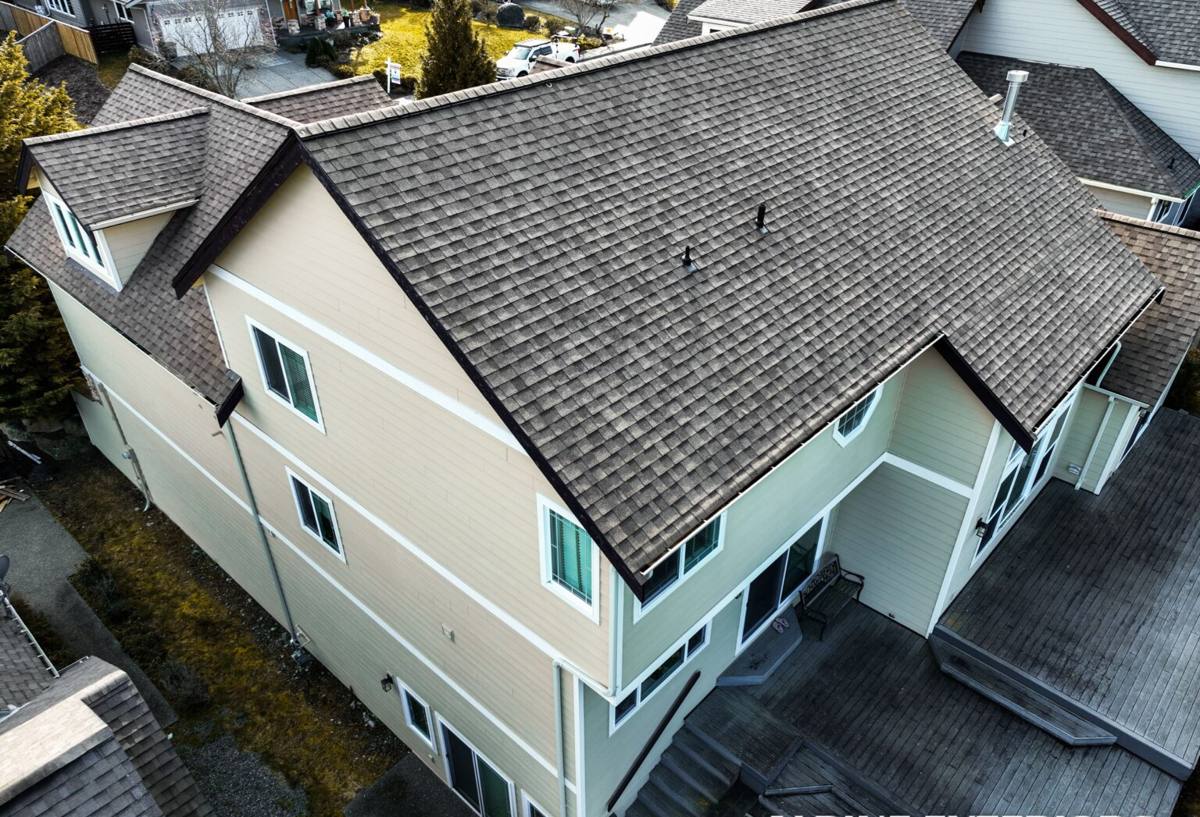
What Salt Air and Moss Actually Do to a Deck
Salt Air
Airborne salt is corrosive to metal. On a waterfront deck, this shows up first in fasteners, joist hangers, post bases, and any hardware that isn't rated for coastal exposure. A screw head that rusts and streaks isn't just cosmetic — it's a sign the fastener itself is degrading, and once hardware starts failing, the structure above it is only as good as what's holding it together. Salt film also holds moisture against surfaces longer than plain rainwater does, which slows drying time on boards, railings, and framing after every storm.
Moss and Algae
Composite decking doesn't rot, but it isn't immune to surface growth. Any shaded, low-airflow deck in this part of Whatcom County — under overhangs, against fences, in the shadow of a house — will collect moss spores and algae over a wet winter the same as a wood deck would. The difference is that composite doesn't need to be replaced because of it; it needs to be cleaned correctly and, more importantly, installed with enough airflow underneath and between boards that moisture doesn't sit and give moss a head start in the first place.
Driving Rain
Wind-driven rain off the water doesn't just fall straight down — it gets pushed sideways into ledger connections, stair stringers, and the house-to-deck attachment point. This is the single area where a poorly built deck fails fastest, composite decking or not, because water intrusion at the ledger can damage the structure of the house itself, not just the deck.
What a Correct Composite Deck Install Includes in This Climate
A composite deck built for Sandy Point should include a few things as standard, not as upgrades:
- Corrosion-resistant fasteners and hardware rated for coastal or marine-grade exposure, not standard exterior-grade hardware
- Proper joist spacing and blocking sized to the specific composite product being used — composite boards flex differently than wood and manufacturers publish spacing requirements for a reason
- Flashing at the ledger board where the deck meets the house, installed to shed water away from the structure, not just caulked
- Adequate clearance and airflow underneath the deck so moisture doesn't sit trapped against framing
- Hidden fastener systems or properly spaced face screws that allow for the board's expansion and contraction without buckling
- Post bases and footings set to handle the ground conditions common near the water, including proper drainage away from posts
Skipping any one of these doesn't usually show up on day one. It shows up in year three or four, as squeaking, soft framing, streaked hardware, or boards that have started to cup or separate at the seams.
Composite vs. Wood vs. PVC: What Actually Makes Sense on the Water
Homeowners in Sandy Point often ask us to weigh in on decking material, since the coastal exposure changes the math compared to a typical inland yard. Here's how the three common options generally compare in this specific environment.
| Material | Salt Air Behavior | Moisture & Moss | Ongoing Maintenance |
|---|---|---|---|
| Wood (cedar/pressure-treated) | Fasteners and hardware corrode faster near salt air; wood itself needs sealing to resist salt-driven drying and cracking | Absorbs moisture, feeds moss and algae growth, prone to rot in shaded or low-airflow areas | Annual sealing/staining recommended; sanding and spot repairs over time |
| Composite | Board material itself doesn't corrode; hardware quality still matters | Doesn't rot, but surface growth still needs periodic cleaning in shaded spots | Occasional washing; no sealing or staining required |
| PVC/Cellular PVC | Fully inert to salt exposure | Doesn't rot; still needs cleaning where shaded | Low maintenance; typically higher upfront cost than composite |
We install composite decking as our standard recommendation for most Sandy Point homes because it strikes a practical balance: it handles the coastal moisture and salt exposure well, it doesn't carry the annual sealing burden that wood does, and it's more accessible in cost than full PVC systems for most budgets. We're candid that PVC has its place for homeowners who want the lowest possible long-term maintenance and are comfortable with the higher upfront cost — that's a legitimate trade-off, not a knock on either product.
Our Process for a Sandy Point Composite Deck
- On-site assessment — we look at sun/shade exposure, prevailing wind and rain direction relative to the house, existing framing condition if this is a rebuild, and drainage around the footprint.
- Framing plan — joist layout, spacing, and hardware are specified to the composite product going down, not treated as generic wood-deck framing.
- Ledger and flashing detail — the house connection is flashed and sealed to keep wind-driven rain from reaching the structure.
- Fastener and hardware selection — corrosion-resistant components throughout, not just at the visible surface.
- Board installation — spacing set to allow for thermal movement, with attention to airflow underneath.
- Final walkthrough — we go over basic maintenance expectations specific to a waterfront property, including what moss/algae buildup will look like and when to clean it.
Maintenance Reality for a Waterfront Composite Deck
Composite decking is genuinely low-maintenance compared to wood, but "low-maintenance" doesn't mean "no maintenance," especially this close to the water. A realistic maintenance rhythm for a Sandy Point deck includes periodic washing to remove salt film and organic buildup, more frequent attention to shaded or low-airflow sections where moss gets a foothold first, and an annual look at fasteners, railings, and stair connections since hardware is the part of the deck most affected by salt air. None of this is heavy work, but skipping it entirely for years at a stretch is how a well-built deck starts looking neglected before it actually is.
Cost Factors for a Composite Deck in This Area
Every deck is priced on its own footprint, framing needs, and site conditions, so we won't quote a number without seeing the property. What we can tell you is which factors tend to move the price on a Sandy Point job specifically:
| Factor | Why It Affects Cost |
|---|---|
| Height off grade / need for railings and stairs | More structure, more hardware, more code requirements |
| Existing framing condition | Rebuilding corroded or water-damaged framing adds scope beyond just decking |
| Ledger and flashing complexity | Proper waterproofing at the house connection takes more time to do right |
| Board tier and color | Composite products range from entry-level to premium capped boards |
| Site access | Waterfront lots with limited access can add labor time for material staging |
Why Hiring a Crew That Already Works Sandy Point Matters
A contractor who mostly builds decks inland can still build a technically fine deck — but they may not default to marine-grade hardware, they may not think about wind-driven rain direction off the water, and they may not know which shaded corners of a Sandy Point lot are going to grow moss fastest. Those aren't exotic details; they're just things you learn from building and maintaining decks in this specific spot on the coast, year after year, and seeing what holds up and what doesn't. As a Ferndale-based crew, this is our home ground — we're working in Whatcom County's coastal conditions regularly, not occasionally.
Before you hire anyone for a composite deck on a waterfront lot, it's worth asking a few direct questions:
- What fastener and hardware grade do you use, and is it rated for coastal/salt exposure?
- How do you flash and seal the ledger where the deck meets the house?
- What joist spacing and blocking do you use for the specific composite product I'm choosing?
- Have you built decks elsewhere on the water in Whatcom County, and can you speak to how they've held up?
- What does routine maintenance look like for the deck you're proposing?
A contractor who answers these clearly and specifically, without hedging, is one who's actually thought about this environment.
If you're planning a new composite deck or replacing an aging one in Sandy Point, we're happy to come take a look and walk you through what your specific site needs. The estimate is free, there's no pressure, and you'll get a straight answer about what a correct build looks like for your home — just fill out the form below to get started.