 Ferndale Roofing
 Siding on the Water Takes a Different Kind of Beating
Sandy Point sits close enough to the water that its homes deal with a combination of stresses most inland Ferndale properties never see. Salt-laden air moves through constantly, wind-driven rain comes in sideways off the Strait during winter storms, and the long stretch of gray, damp months between fall and spring keeps siding surfaces wet for days at a time. Add in the moss and algae that thrive in that kind of shade and moisture, and you've got an exterior envelope that has to work harder than the siding on a similar house ten miles inland.
We've done enough siding work in and around Sandy Point to know this isn't a place where a generic siding job holds up. The product choice, the installation details, and the maintenance plan all need to account for the exposure. This page is specifically about fiber cement siding for Sandy Point properties — what the climate demands, what correct installation looks like here, and why we only install James Hardie products to meet it.
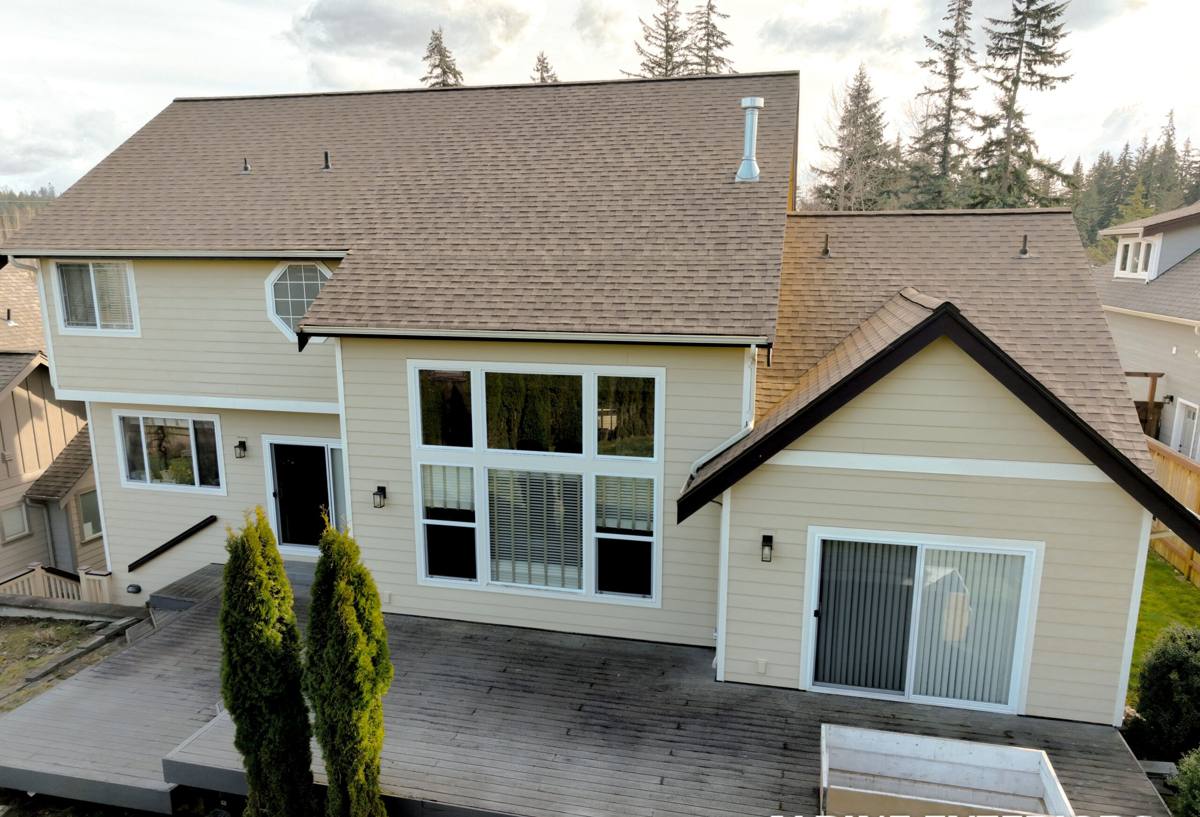
What Salt Air, Wind-Driven Rain, and Moss Actually Do to Siding
Salt Air
Airborne salt is corrosive to metal fasteners, flashing, and trim, and it accelerates the breakdown of finishes that aren't formulated to resist it. Paint film on wood or engineered wood siding tends to chalk and fail faster in a salt-air environment, which opens the door to moisture getting behind the cladding. Fiber cement itself isn't harmed by salt the way metal is, but every component in the system — fasteners, trim caps, flashing — has to be chosen with that exposure in mind.
Wind-Driven Rain
Rain that's being pushed sideways by wind off the water behaves differently than rain falling straight down. It gets forced up under laps, into gaps at trim and penetrations, and behind poorly caulked joints. A siding system that's fine in a sheltered inland yard can leak at Sandy Point if the flashing details and clearances weren't built for that kind of driven moisture.
The Long Moss Season
Whatcom County's wet season runs long, and waterfront lots with mature tree cover or north-facing walls stay damp even longer. Moss and algae need shade and moisture to establish, and once they take hold on a wall they hold water against the siding surface, which is bad news for any material that isn't dimensionally stable when wet.
Why Fiber Cement Is the Right Material for This Exposure
Fiber cement is cement, sand, and cellulose fiber — it doesn't rot, it doesn't feed insects, and it doesn't swell and shrink with moisture the way wood-based products do. That matters directly for a Sandy Point home:
- It holds its shape when wet, so caulked joints and butt seams stay tight instead of opening up as the material moves.
- It's non-combustible, which matters on properties with dry grass or brush nearby during summer months.
- A factory-applied finish (rather than field-applied paint) resists the fading and chalking that salt air and UV accelerate.
- Properly installed, it doesn't require the repainting cycle that wood or fiber-board sidings do in a marine climate.
None of that means fiber cement is maintenance-free or install-proof. It means the material itself isn't the weak link — the installation details are what determine whether a Sandy Point siding job lasts fifteen years or forty.
Why We Only Install James Hardie — Not Other Fiber Cement or Alternatives
"Fiber cement" isn't one uniform product across brands, and for a waterfront property the differences matter. We install James Hardie exclusively — not Cemplank, not Allura, not LP SmartSide (which is an engineered wood product, not fiber cement), not vinyl, and not primed spruce or cedar. Here's the reasoning specific to an exposure like Sandy Point's:
Climate-Engineered Product Lines
Hardie's HZ product system is engineered by climate zone, and the Pacific Northwest falls under their HZ5 specification, built around resistance to moisture and freeze-thaw cycling rather than just heat and humidity. That's a meaningful distinction for a wet, coastal county like Whatcom.
ColorPlus Factory Finish
Hardie's ColorPlus finish is baked on at the factory under controlled conditions, with a warranty backing the finish itself — not just the substrate. In a salt-air environment where field-applied paint tends to fail early, a factory finish rated for the coating, not just the board, is worth the difference in material cost.
Warranty Structure
Hardie backs its products with a long, transferable limited warranty on the substrate and a separate finish warranty on ColorPlus products. Vinyl and engineered wood alternatives typically carry shorter or more conditional coverage, and warranty claims tied to "proper maintenance" clauses are harder to make good on with a product that's already showing wear.
We're not going to tell you other fiber cement brands or vinyl siding are junk — plenty of installations of those products hold up fine in the right conditions. Our position is narrower and more practical: for the exposure Sandy Point homes deal with, we've standardized on the one product system we're confident will perform to spec, and we'd rather install one thing well than several things adequately.
What a Correct Installation Actually Involves Here
Fiber cement siding fails at the installation, not the material, more often than people expect. On a wind- and salt-exposed property, a few details matter more than usual.
Clearances and Rain Screen Drainage
Hardie's specifications call for minimum clearances from grade, roofing, and decks, plus a drainage plane behind the siding so any moisture that does get past the cladding has somewhere to go besides sitting against the wall sheathing. On a Sandy Point lot with limited setback from grade or hardscape, hitting those clearances sometimes takes more planning than a straightforward inland install.
Fastening and Flashing
Fastener type and placement affect both wind performance and long-term corrosion resistance. Flashing at windows, doors, and any wall penetration needs to be layered correctly — over the drainage plane, under the siding, lapped in the right order — so wind-driven rain sheds outward instead of finding a path inward.
Caulking and Joint Treatment
Hardie's own installation guidance is specific about which joints get caulked and which are designed to be left as engineered gaps for movement. Over-caulking a system that's designed to breathe and drain can trap moisture just as easily as under-caulking a joint that needed a seal.
Fastener and Trim Material Choice
In a salt-air zone we pay closer attention to fastener corrosion resistance and trim material than we would inland, since that's where marine exposure shows up first — usually as staining or early corrosion at fastener heads, long before the siding field itself shows any wear.
Our Process for a Sandy Point Siding Project
- On-site assessment — we look at wall orientation relative to wind and water, existing moisture damage, moss/algae staining patterns, and clearance issues before quoting anything.
- Tear-off and sheathing check — removing the old siding lets us inspect the sheathing underneath for rot or existing moisture intrusion, which is common to find on older wood-sided waterfront homes.
- Weather-resistive barrier and drainage plane — installed to current code and Hardie spec, sized for the wall's actual exposure.
- Flashing at all penetrations — windows, doors, vents, and any other wall penetration get flashed before a single piece of siding goes up.
- Hardie siding installation — fastened, spaced, and clearanced to manufacturer spec for the HZ5 zone.
- Trim, caulking, and final detailing — joint treatment done per Hardie's guidance, not a one-size-fits-all approach.
- Walkthrough — we go over what was done and what routine maintenance looks like going forward.
Comparing Siding Options for a Sandy Point Exposure
| Factor | James Hardie Fiber Cement | Vinyl | Engineered Wood (e.g. LP SmartSide) |
|---|---|---|---|
| Salt air / finish durability | Factory-cured ColorPlus finish resists fading and chalking | Can become brittle and fade faster under UV/salt exposure | Field or factory paint film subject to weathering, needs recoating over time |
| Moisture behavior | Dimensionally stable when wet; won't swell | Doesn't absorb water but can warp/buckle with heat or impact | Wood-based core is moisture-sensitive if finish is compromised |
| Fire resistance | Non-combustible | Combustible, can melt/deform near heat | Combustible |
| Typical warranty | Long transferable substrate + finish warranty | Varies widely by manufacturer and grade | Typically shorter, often maintenance-contingent |
| Maintenance | Periodic wash-down; no repainting cycle if undamaged | Low maintenance but limited repair options if damaged | Requires ongoing coating maintenance to prevent moisture entry |
Living With a Long Moss Season: Realistic Maintenance
Correctly installed fiber cement siding is low-maintenance, not no-maintenance. In a place like Sandy Point, a little seasonal attention goes a long way toward keeping moss and algae from taking hold:
- Rinse siding periodically, especially on shaded or north-facing walls, to keep organic growth from establishing.
- Keep gutters clear so overflow isn't running down the wall face and keeping it wet longer than it should be.
- Trim back vegetation and tree cover that's shading a wall and slowing its dry-out time after rain.
- Check caulked joints annually for cracking or separation, particularly on wind-exposed elevations.
- Have fastener heads and trim inspected periodically for early corrosion staining, especially closest to the water.
- Address any impact damage promptly — a small chip that's caught early is a simple repair; one left open to moisture for a season is not.
Why It Matters That We Already Work in Sandy Point
A crew that's installed siding across Ferndale and its waterfront neighborhoods already understands things a first-time-in-the-area contractor has to learn on your job: how exposure varies house to house depending on orientation to the water, what clearance and access challenges tend to show up on tighter waterfront lots, and how the wet season affects scheduling and drying time between steps. That local familiarity shows up in fewer surprises mid-project and a crew that isn't guessing at how the coastal exposure should change the installation approach.
It also means we're not learning Whatcom County's permitting and inspection process on your project — we already know what's expected before we show up.
If you're weighing a siding replacement on a Sandy Point property, we're happy to take a look and give you a straight assessment of what your home's exposure calls for. Reach out for a free, no-pressure estimate — there's a form right below this page to get started.