 Ferndale Roofing
 Siding Built for the Way Sudden Valley Weather Actually Behaves
Homes around Sudden Valley take a specific kind of beating year-round. Moisture-laden air moves in off the water and settles into tree-shaded lots, driving rain comes in sideways during fall and winter storms, and the shoulder seasons stay damp long enough for moss and algae to get a foothold on anything that holds moisture. None of that is unusual for Whatcom County, but it adds up differently depending on what's actually on the wall. Siding that shrugs off a dry summer can still fail on the north side of a house that never quite dries out between rain events.
That's the lens we use when we talk about siding installation in this area. It's not just about picking a color and a plank profile — it's about choosing a material and installation method that hold up to sustained moisture exposure, resist the organic growth that thrives in shaded, damp conditions, and don't need constant babysitting to look right five and ten years down the road.
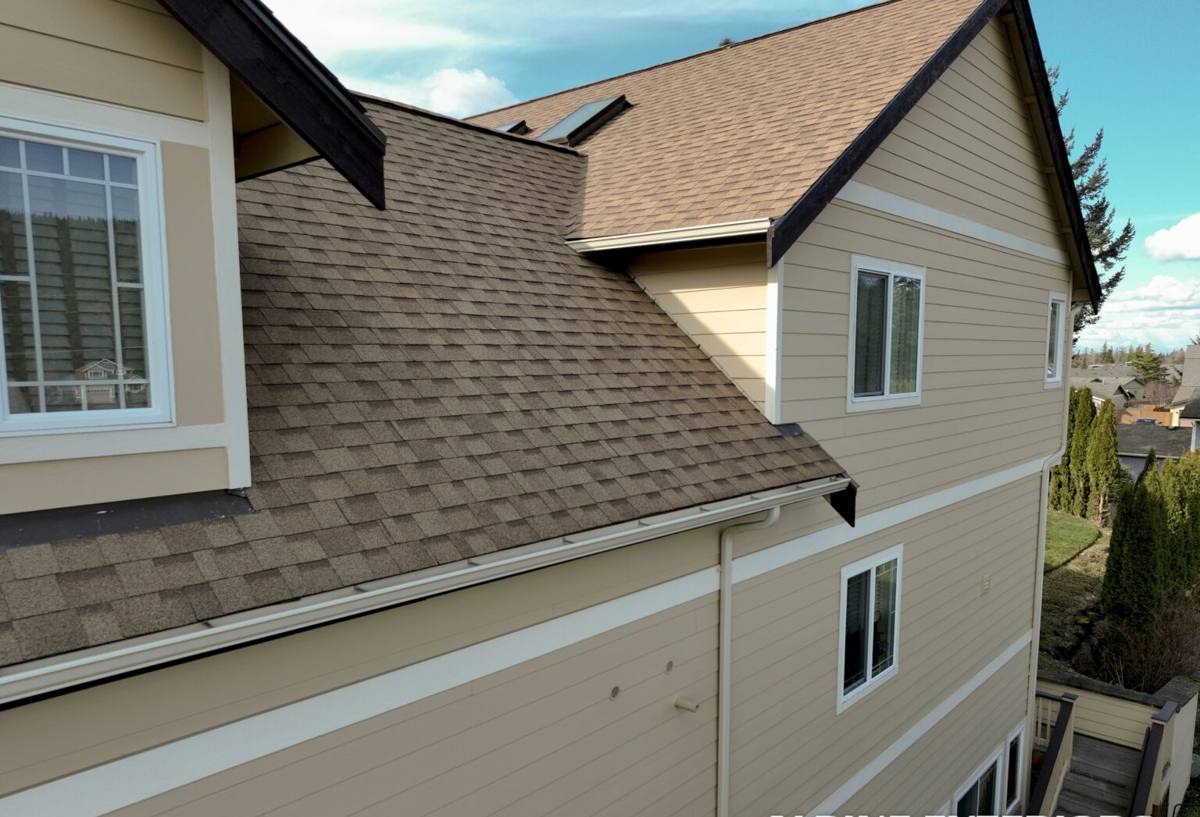
Why We Only Install James Hardie Fiber Cement
We made a decision a long time ago to install one siding system and stand behind it completely: James Hardie fiber cement. We don't install vinyl, LP SmartSide, Cemplank, Allura, primed spruce, or cedar. That's not a marketing line — it's a practical standard we hold because we've seen how each of those materials performs (or doesn't) in exactly the conditions Sudden Valley homes deal with every year.
Fiber cement is non-combustible, dimensionally stable, and doesn't swell, rot, or feed insects the way wood-based products can. It's engineered specifically for regional climate conditions through Hardie's HZ product lines, and it carries a factory-applied ColorPlus finish that's baked on rather than field-applied, which matters enormously in a climate where paint has to survive real moisture cycling, not just sunshine. When we install it correctly — and installation technique matters as much as the product itself — it's the closest thing to a "set it and forget it" exterior that exists in this climate.
What This Means for Your Specific Property
If your lot has mature tree cover, sits close to the water, or just doesn't get much direct afternoon sun on one or two sides, you already know which walls of your house stay damp the longest. Those are the walls where siding choice and installation quality matter most. We pay particular attention to those exposures during both the estimate and the install.
What Correct Siding Installation Actually Involves
A siding job is only as good as what's underneath it. A huge share of the moisture problems we get called out to inspect on older homes aren't failures of the siding material itself — they're failures of the water management system behind it. Getting this right is non-negotiable on every job we do:
- Removing old siding down to the sheathing so we can actually see what's there, not just what's visible
- Inspecting and repairing any rot, damaged sheathing, or compromised framing before anything new goes up
- Installing a proper weather-resistive barrier with correctly lapped and taped seams
- Flashing every window, door, and penetration so water is directed out and down, never trapped behind the cladding
- Maintaining correct rainscreen or drainage gap where conditions call for it, so moisture that does get behind the siding can actually drain and dry
- Installing James Hardie planks, panels, or shingles to manufacturer specification — correct fastener type, spacing, and clearance from grade, decks, and roof lines
- Sealing and finishing details (trim, corners, butt joints) with products rated for the exposure, not just whatever's on the truck
Skip any one of these steps and you can end up with siding that looks fine from the curb for a couple of years while moisture quietly does damage behind it. This is the exact failure pattern we see most often on homes near the lake and in shaded neighborhoods throughout the area — good-looking siding installed over compromised prep work.
Moss, Algae, and the Long Damp Season
Whatcom County's moss season isn't a two-week nuisance — it's closer to a permanent condition on shaded, north-facing, or lake-adjacent walls. Materials that hold surface moisture (bare wood, some engineered wood products, and porous or poorly finished cladding) give moss and algae something to grip. Once established, that growth holds even more moisture against the wall, which accelerates whatever underlying problem already exists.
James Hardie's factory ColorPlus finish is smoother and more consistent than field-applied paint, which gives organic growth less to hold onto and makes routine cleaning (a simple soft wash) far more effective than it is on porous or textured surfaces that have started to break down. It won't make moss impossible — nothing in this climate does — but it removes one of the biggest contributing factors.
Salt Air and Coastal Exposure
Proximity to the water introduces a slow, steady corrosive element that many homeowners don't think about until fasteners, trim, and hardware start showing it. Salt-laden air accelerates corrosion on unprotected metal and can degrade lower-grade finishes faster than inland exposure would. We account for this by specifying corrosion-resistant fastener and flashing materials appropriate to the exposure level of your specific site, not a one-size-fits-all spec sheet.
How Our Process Works
1. On-Site Evaluation
We walk the exterior with you, look at drainage patterns, tree cover, sun exposure by wall, and the condition of the existing siding and trim. We're honest about what we find, including where the current siding is doing fine and doesn't need to be touched yet.
2. Detailed, Written Estimate
You get a scope that spells out exactly what's included — tear-off, sheathing repair allowances, weather barrier, flashing details, product line and profile, and finish color — so there's no ambiguity about what "the job" means.
3. Prep and Weatherproofing First
Before a single piece of finished siding goes up, the wall gets opened, inspected, repaired, and properly wrapped and flashed. This is the stage that determines whether the job lasts 10 years or 40.
4. Installation to Manufacturer Spec
James Hardie products installed per their published installation requirements — fastening, clearances, joint treatment, and finish detailing done the way the manufacturer's warranty actually requires, not the way that's fastest.
5. Final Walkthrough
We go around the house with you before we call it done, point out anything worth knowing for long-term care, and make sure you're not left guessing about maintenance.
Why Local Experience in This Area Matters
A crew that already works Sudden Valley and the surrounding Whatcom County area isn't guessing at how a given wall will behave — they've already seen how shaded, lake-adjacent, and coastal-exposed homes hold up over time. That means fewer surprises during tear-off, better judgment about where extra flashing or drainage attention is warranted, and a realistic sense of how a finish color and sheen will actually look and wear under this region's specific light and moisture conditions, not a showroom's.
Comparing Siding Approaches for This Climate
| Consideration | James Hardie Fiber Cement | Typical Vinyl or Engineered Wood |
|---|---|---|
| Moisture resistance | Non-combustible, dimensionally stable, engineered for regional climate exposure | Varies; some products more prone to swelling, warping, or moisture intrusion at seams |
| Finish durability | Factory-baked ColorPlus finish resists fading and holds up to repeated moisture cycling | Field-applied or lower-grade factory finishes can fade or chalk sooner |
| Moss and algae resistance | Smoother factory finish sheds growth more easily and cleans up well | Porous or textured surfaces can hold growth longer |
| Fire performance | Non-combustible material | Combustible in most vinyl and engineered wood products |
| Long-term maintenance | Periodic soft washing; minimal repainting needed | Often requires more frequent cleaning, caulking, or repainting |
What to Ask Before Hiring Anyone for This Work
- Will you remove the old siding down to the sheathing, or install over the existing wall?
- What weather-resistive barrier and flashing details are included in the written scope?
- Are you a manufacturer-approved or trained installer for the product you're proposing?
- What warranty applies to the material, and what warranty applies to your labor?
- How do you handle rot or damage discovered once the old siding comes off?
- Can you walk me through drainage and rainscreen details for the shaded or north-facing walls specifically?
If a contractor can't answer these clearly and specifically for your property, that's worth noticing before you sign anything.
Cost Factors Worth Understanding Upfront
Every property is different, but the same variables drive most of the cost conversation: the amount of tear-off and disposal required, how much sheathing or framing repair turns up once the old siding is off, the size and complexity of the home (corners, windows, trim details), the Hardie product line and profile selected, and site access. We'd rather walk your property and give you real numbers than quote a range that doesn't reflect what your home actually needs.
Ready for an Honest Look at Your Siding?
If your Sudden Valley home has siding that's showing its age, holding moss, or you're just planning ahead for a replacement, we're happy to come take a look. The estimate is free, there's no pressure, and we'll tell you straight what we see — including if it's not time yet. Reach out using the form below to get started.