 Ferndale Roofing
 Why Sudden Valley's Climate Wears Out the Wrong Siding Fast
Homes in Sudden Valley sit in a pocket of Whatcom County that gets the full range of what Pacific Northwest weather can throw at a wall: long stretches of driving rain, salt-tinged air moving inland from Bellingham Bay and the Strait, and heavy tree cover that keeps siding shaded and damp well after a storm has passed. That combination is exactly what wears out siding faster than homeowners expect. Wood-based products swell and check. Vinyl goes brittle in cold snaps and gaps at the seams. And almost everything in this area eventually grows a green film of moss and algae if it can't dry out between rains.
The moss issue in particular is a Whatcom County reality that homeowners further inland or in drier climates never have to think about. Moss doesn't just sit on the surface — it holds moisture against the siding material for weeks at a time, and that sustained dampness is what breaks down anything with wood fiber or an absorbent substrate. Salt-laden air adds a second layer of stress, accelerating corrosion on fasteners and trim if the wrong hardware was used to begin with. A siding system for Sudden Valley has to handle all three problems at once — rain volume, prolonged dampness, and salt exposure — not just one of them.
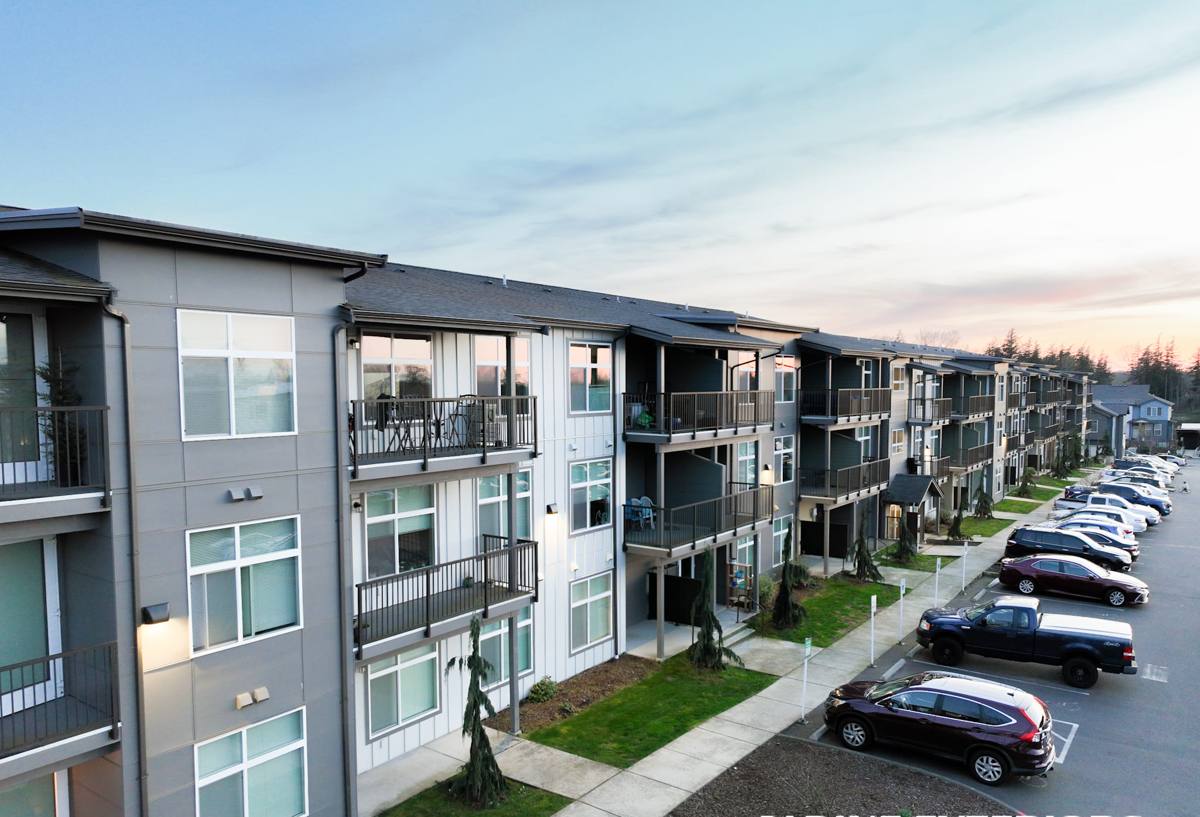
Why We Install Only James Hardie Fiber Cement
We standardized on James Hardie siding for every job we do in the Ferndale area, including Sudden Valley, because it's engineered for exactly this kind of climate. Hardie's fiber cement is non-combustible and dimensionally stable — it doesn't swell, warp, or rot the way wood-based or wood-adjacent products can when they stay wet for extended periods. That matters enormously here, where siding can go days without a full dry-out cycle during the wet season.
James Hardie also builds region-specific product lines, and for Northwest homes that means HZ5 formulations engineered for higher-moisture, freeze-thaw climates. Combined with the factory-applied ColorPlus finish — baked on in a controlled environment rather than sprayed on-site — you get a finish that resists fading and holds up to moss and mildew growth far better than field-applied paint. When it's installed correctly, with the right clearances and flashing details, Hardie siding is one of the few products that genuinely shrugs off what Sudden Valley's climate does to a house.
What HZ5 Actually Changes
HZ5 isn't a marketing label — it's a formulation difference. James Hardie engineers their siding differently depending on whether a region deals more with humidity and moisture cycling (HZ5) or hard freeze-thaw extremes (HZ10). For Whatcom County's wet, moderate-temperature climate, HZ5 product is the correct specification. Getting this detail right at the ordering stage is a small thing that a lot of out-of-area contractors skip.
What a Correct Installation Involves
Fiber cement siding is only as good as its installation. Hardie's own warranty is explicit that improper installation voids coverage, and in a climate like this one, installation shortcuts show up as problems within a few wet seasons rather than a few decades. A correct job on a Sudden Valley home includes:
- Proper clearance between siding and grade, decks, patios, and roof lines so water has somewhere to go
- A weather-resistive barrier installed and lapped correctly behind every panel
- Rain-screen or drainage gap detailing on walls that see prolonged shade and moisture
- Correct fastener type and spacing — corrosion-resistant fasteners matter more here given salt exposure
- Factory-cut and field-cut edges sealed per Hardie's specification, not just caulked over
- Proper flashing at windows, doors, and butt joints to keep driving rain from getting behind the panel
- Manufacturer-specified gaps at trim and joints to allow for expansion without trapping water
Every one of these details exists because of what happens when they're skipped: water gets behind the panel, can't escape, and you end up with hidden rot in the sheathing or framing even though the Hardie board itself is holding up fine. The siding material can be the best in the industry and still fail a homeowner if the installation ignores these basics.
Our Process for a Sudden Valley Project
We treat every Sudden Valley home as its own case, because tree cover, sun exposure, and existing wall condition vary a lot even within the same neighborhood.
- On-site assessment. We look at existing siding condition, moisture staining, moss patterns, and how much shade and airflow each wall actually gets.
- Sheathing and moisture check. Before any new siding goes up, we check what's underneath — old siding often hides moisture damage that needs to be addressed first, not covered over.
- Product and profile selection. We help homeowners choose between lap siding, shingle-style panels, or board-and-batten, and the HZ5-appropriate ColorPlus finish that fits the home and the neighborhood's general character.
- Installation to spec. Weather barrier, drainage detailing, flashing, and fastening all done to James Hardie's published installation requirements — not a shortcut version of them.
- Final inspection and cleanup. We walk the job with the homeowner, check every seam and clearance, and make sure the site is left clean.
How Hardie Compares to Other Siding Options in This Climate
Homeowners in Sudden Valley often ask us to weigh Hardie against other materials they've seen advertised. Here's an honest breakdown based on how these products actually behave in a wet, moss-prone, salt-air-adjacent climate:
| Material | Moisture Behavior | Moss/Algae Resistance | Long-Term Maintenance |
|---|---|---|---|
| James Hardie fiber cement | Dimensionally stable, doesn't swell or rot | Factory finish resists growth better than field paint | Occasional wash; repaint cycle is long |
| LP SmartSide / wood-based composite | Wood-strand core can swell if the finish is compromised | More prone to sustained moisture retention | Finish and seams need closer monitoring |
| Vinyl | Doesn't rot, but seams and panels can warp or gap | Grows moss/algae readily in shaded, damp areas | Low upkeep but limited repair options if damaged |
| Cedar / primed spruce | Natural wood — absorbs and releases moisture constantly | Highest susceptibility without frequent treatment | Regular sealing, staining, or painting required |
This isn't a knock on every one of these products in every climate — some of them perform fine in drier regions. But for the specific combination of rain volume, shade, and salt-tinged air that Sudden Valley homes deal with, fiber cement engineered for this region consistently holds up with less homeowner intervention over time.
Cost Factors for a Sudden Valley Hardie Project
Every home is different, so we don't quote broad numbers without seeing the job, but these are the factors that actually move the price on a Hardie siding project in this area:
| Factor | Why It Matters Here |
|---|---|
| Existing sheathing condition | Moisture damage found during tear-off adds repair scope before new siding can go on |
| Wall complexity | Dormers, multiple gables, and trim-heavy facades take more time to flash and detail correctly |
| Profile and finish choice | Lap, shingle, and board-and-batten styles differ in material and labor |
| Access and site conditions | Sloped or wooded lots, common in Sudden Valley, can affect staging and scaffolding needs |
| Trim and accessory work | Corner boards, fascia, and soffit work is often bundled in for a finished, weather-tight result |
Color and Style Choices That Fit the Neighborhood
James Hardie's ColorPlus line offers a range of factory-finished colors, and most Sudden Valley homeowners lean toward tones that read well against the area's heavy greenery — deep grays, warm neutrals, and muted greens or blues that complement rather than fight the wooded setting. Because the finish is baked on at the factory rather than applied on-site, the color holds its tone longer even with constant exposure to shade, moisture, and the occasional layer of moss before a wash. We can walk homeowners through samples and help match a profile — lap, shingle, or a mix with trim accents — that fits the home's existing lines without needing a full redesign.
Maintenance That Keeps Hardie Siding Performing Long-Term
Fiber cement is low-maintenance compared to the alternatives, but "low-maintenance" doesn't mean "no maintenance," especially in a climate that grows moss on almost every exterior surface. A simple annual routine goes a long way:
- Rinse siding gently once a year to clear pollen, moss spores, and grime buildup, especially on shaded walls
- Keep gutters clear so overflow doesn't run down the siding face repeatedly
- Trim back vegetation and tree limbs that keep a wall section shaded and damp
- Check caulking at trim and penetrations periodically and re-seal if it's cracked or pulling away
- Address any moss growth early with a gentle wash rather than letting it build up over multiple seasons
None of this is heavy work, but skipping it is how even a good siding system ends up looking neglected sooner than it should in a climate this wet.
Why a Crew That Already Works in Sudden Valley Matters
Sudden Valley and the broader Ferndale area have their own patterns — where moss builds up fastest, which wall orientations stay damp longest, and how local permitting and inspection tend to run in Whatcom County. A crew that's already worked in this specific area brings that pattern recognition to your job instead of learning it on your house. We know which details in James Hardie's installation guide matter most here — clearance, flashing, and fastener choice chief among them — because we've seen what happens on local homes when they're skipped. That local experience, paired with installing nothing but James Hardie, is what lets us stand behind the work.
If you're weighing a siding replacement or new construction siding for a home in Sudden Valley, we're happy to walk the property, look at what's there now, and talk through what a correctly installed James Hardie system would look like for your specific walls and exposure. Reach out for a free, no-pressure estimate using the form below.