 Ferndale Roofing
 Windows Built for a Wet, Mossy Corner of Whatcom County
Homes around Sudden Valley take a specific kind of weather beating. It's not the occasional hard storm that does the damage — it's the steady, unglamorous drip of a long wet season, moisture that sits in tree shade for months at a time, and salt-laden air off the water that finds its way into every seam and fastener it can reach. Windows are one of the first places that shows up. A window that was installed correctly holds up to all of it for decades. A window that was installed with shortcuts — even a good window from a good manufacturer — starts failing quietly, often behind the trim where you can't see it, long before you notice a draft or a soft spot in the sill.
This page is about window installation specifically for homes in and around Sudden Valley, not a general overview of window replacement. The climate here drives real decisions: what glass package makes sense, how flashing gets layered, where sealant belongs and where it doesn't, and how a crew sequences the work so the house isn't sitting open to a wet afternoon.
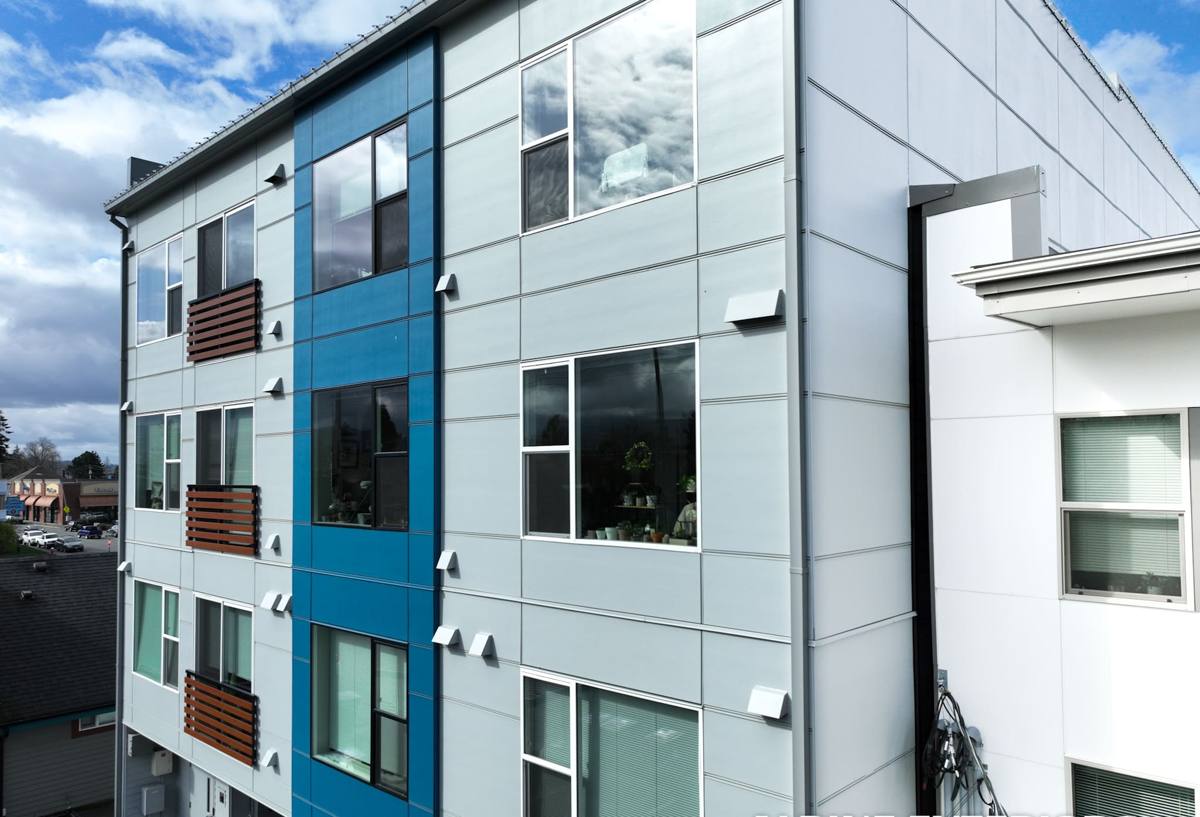
What This Climate Actually Does to Windows
Three things matter most for window performance in this part of Whatcom County:
- Driving rain: Wind-driven rain doesn't just hit a window — it gets pushed sideways and upward under trim and around frames if the flashing isn't lapped correctly. Most water intrusion problems we find in older installs trace back to flashing detail, not the window unit itself.
- Long moss season: Shaded lots and consistently damp conditions mean moss and algae get a foothold on any horizontal surface — including window sills, trim caps, and mulled joints between units. Moss holds moisture against wood and vinyl far longer than open air would, which accelerates rot and seal breakdown.
- Salt-influenced air: Even set back from open water, this stretch of coastal Whatcom County carries enough salt in the air to matter for exposed hardware, fasteners, and certain metal flashing and trim components over time. It's a slow effect, but it's real, and it factors into what materials we spec.
None of this means window installation here is exotic or requires special products nobody else uses. It means the ordinary steps — flashing sequence, sealant selection, drainage path, fastener choice — have to be done right every time, because the margin for a shortcut is smaller here than in a drier climate.
Why This Matters More at the Time of Installation Than After
Almost everything that determines whether a window performs well for 20-plus years is decided during the install, not afterward. Once trim is back on and paint is dry, a bad flashing lap or a missed sealant joint is invisible — until it isn't. That's the core argument for hiring carefully for this specific job rather than treating it as a commodity task.
Signs Your Current Windows Are Already Behind
Homeowners in Sudden Valley often reach out because of one of these, and it's worth knowing what to watch for before a small issue becomes a framing repair:
- Soft or discolored wood at the bottom corners of the frame or sill, especially on north- or west-facing windows that stay shaded longer
- Visible moss or dark streaking building up on sills or trim, even after cleaning
- Condensation forming between the panes of a double-pane window — a sign the seal has failed, not something that can be fixed without replacing the unit
- Noticeable draft or cold spot along the frame edge during wind-driven rain
- Difficulty opening, closing, or locking a window that used to operate smoothly — often a sign the frame has shifted or swelled
- Paint or finish failing repeatedly in the same spot no matter how often it's touched up
Any one of these is worth a look. Several together usually means the original installation, not just the window itself, is the underlying issue.
What a Correct Window Installation Actually Involves
A window replacement is not just "old unit out, new unit in." Done right, it's a sequence, and skipping steps is exactly how the water problems described above get built into a house:
- Remove the old unit and inspect the opening. This is where hidden rot or past water damage gets found — before it's covered back up by a new window.
- Repair or rebuild the rough opening if there's any compromised framing, sill damage, or missing sheathing. Setting a new window into a bad opening just delays the same failure.
- Install a sloped sill pan so any water that gets past the window has a path back outside instead of pooling at the bottom of the frame.
- Flash in the correct order — sill, then sides, then head, with each layer overlapping the one below it, so water sheds down and out rather than behind the housewrap.
- Set the window level, plumb, and square, and check it operates correctly before it's permanently fastened.
- Insulate the gap between frame and opening properly — not overpacked, which can bow the frame, and not left with gaps, which kills the R-value and lets air move.
- Seal and trim with the right exterior sealant for this climate, leaving weep paths clear so the window can still drain.
Every one of those steps takes time. It's also exactly why two quotes for "the same job" can come in at noticeably different prices — one may include real opening repair and correct flashing, the other may not.
Frame Material Comparison for This Climate
Material choice matters less than installation quality, but it's still a real decision. Here's how the common options hold up under Sudden Valley's conditions specifically:
| Material | Moisture Performance | Maintenance | Typical Lifespan |
|---|---|---|---|
| Vinyl | Does not rot or corrode; performs well in wet, shaded conditions | Low — occasional cleaning | 20-30+ years |
| Fiberglass | Very stable, minimal expansion/contraction with temperature swings | Low | 30+ years |
| Aluminum-clad wood | Good exterior protection, but any breach in the cladding exposes wood underneath to rot | Moderate — cladding seams need periodic inspection | 20-30 years, dependent on seal integrity |
| Solid wood | Attractive but most vulnerable to sustained moisture and moss growth without diligent upkeep | High — regular refinishing and inspection | Highly variable by maintenance |
We're not going to tell a homeowner solid wood windows are a bad product — plenty of people love the look and are willing to keep up with the maintenance. Our professional standard is simply to be upfront that in a shaded, moisture-heavy setting like Sudden Valley, low-maintenance materials carry less long-term risk, and we'll spec accordingly unless you have a specific reason to go another direction.
What Drives the Cost of a Window Installation Here
| Factor | Why It Matters Locally |
|---|---|
| Condition of the existing opening | Hidden rot from years of moisture exposure adds repair time before the new window can even go in |
| Number and size of windows | Larger openings and full-house replacements benefit from efficiency of scale |
| Glass package | Higher-performance glass helps with both energy efficiency and condensation resistance in a damp climate |
| Trim and siding tie-in | Matching existing trim profiles or siding cleanly around the new unit takes more time than a simple swap |
| Access and site conditions | Sloped lots, second-story windows, and tree-shaded work areas common in Sudden Valley can affect labor time |
We give straightforward, itemized estimates so you can see what you're paying for — not a single lump number that hides whether opening repair or proper flashing is actually included.
Our Process, Start to Finish
- On-site assessment: We look at every window being considered, not just the ones you've flagged, and check for signs of hidden moisture damage.
- Written estimate: Clear pricing broken out by window, with any opening repair called out separately so there are no surprises mid-project.
- Scheduling around weather: Openings only get exposed to the elements for as short a window as possible — we plan around forecasts rather than gambling on a dry afternoon.
- Installation: Following the sequence above, on every unit, every time — not just on the windows facing the street.
- Final check: Every window opens, closes, and locks correctly, and exterior sealant lines are clean before we consider the job done.
Why It Matters That We Already Work in Sudden Valley
Window installation isn't a job you want to hand to a crew figuring out a new climate on your dime. Working regularly in and around Ferndale and Whatcom County means we already know how shaded lots hold moisture longer, how driving rain off the water behaves against a west-facing wall, and which details actually need extra attention here versus a drier inland town. That's not a marketing point — it changes real decisions on your job, from flashing sequencing to which sealant holds up through a long wet season without needing to be redone in three years.
It also means we're not disappearing after the invoice is paid. A local crew has a reason to get the flashing right the first time, because we're still around this community if something needs a look.
A Quick Checklist Before You Hire Anyone
- Do they inspect the rough opening before quoting, or just measure the glass?
- Does the estimate specify sill pan flashing and a proper flashing sequence, or just "install window"?
- Are they upfront about material trade-offs for a wet, shaded climate rather than just upselling the priciest option?
- Do they carry appropriate licensing and insurance for exterior work in Washington?
- Will they show you the opening before it's closed back up, if hidden damage is found?
If a contractor can't answer these clearly, that's worth noticing before you sign anything.
If you're noticing drafts, soft trim, or fogged glass on windows around your Sudden Valley home, we're happy to take a look and give you a straightforward, no-pressure estimate — just fill out the form below.