 Ferndale Roofing
 Why Sudden Valley Homes Are Tougher on Windows Than Most
Sudden Valley sits under heavy tree cover close to the water, and that combination changes how a house ages compared to a more open, sun-exposed lot elsewhere in Whatcom County. Shade keeps siding and window frames damp longer after every rain. Moisture that would evaporate off a sunnier wall in a few hours can sit on north- and west-facing frames for days. Add in the driving rain that comes through this part of Washington off the Strait, and the long stretch of grey, wet months where moss and algae get a foothold on anything that stays damp, and you've got a climate that's genuinely harder on window seals, sills, and frame materials than a dry-climate home ever has to deal with.
Salt-tinged marine air moving inland compounds it. It doesn't take a beachfront lot to feel the effect — it accelerates corrosion on hardware, pitting on lower-grade aluminum, and breakdown of cheap sealants over time. None of this means windows fail overnight. It means the failure mode here is slow: seals lose their grip a few years earlier than the warranty assumes, frames trap moisture instead of shedding it, and by the time a homeowner notices fog between the panes or a draft at the sill, the damage has usually been building for a while.
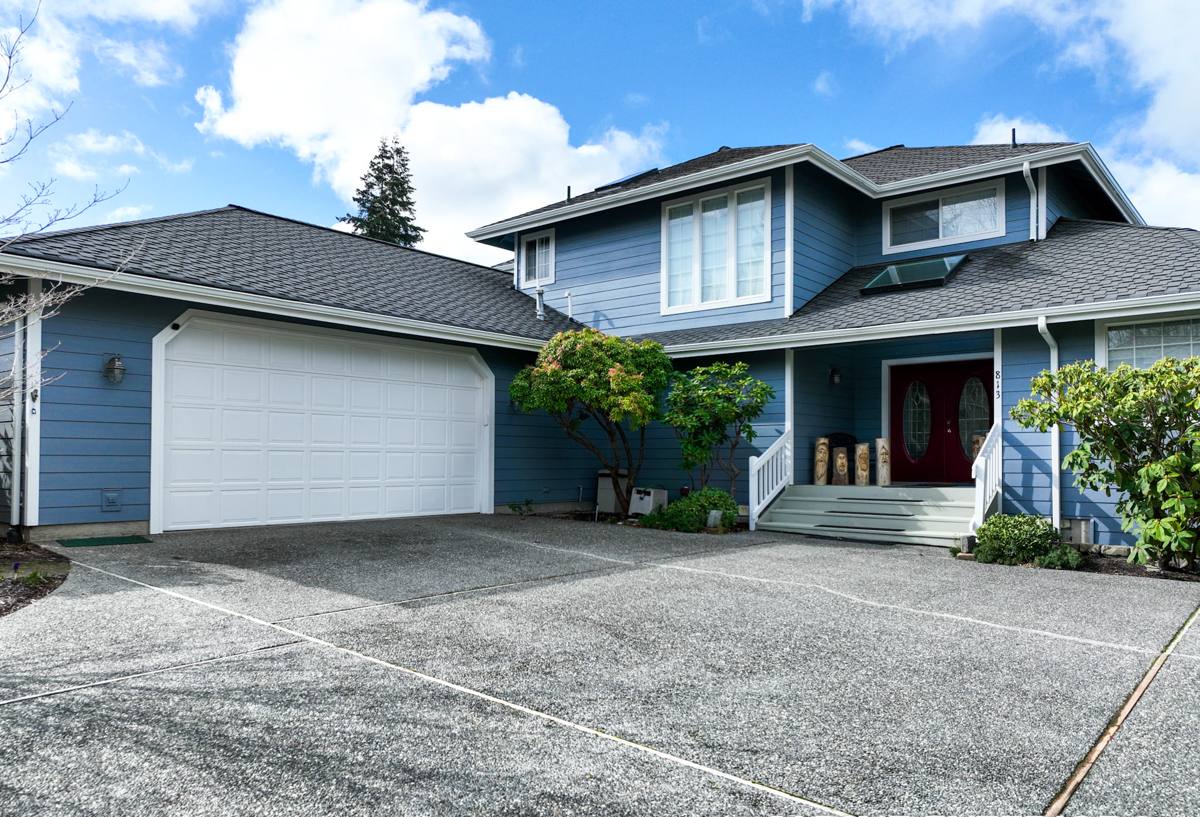
What "Energy-Efficient" Actually Means for This Climate
Efficient windows aren't just about a lower heating bill, though that matters here too, given how many months of the year this area runs the furnace or heat pump. In a shaded, damp environment like Sudden Valley, efficiency and durability are the same conversation — a window that manages moisture well is also the window that holds its performance longest.
Frame material
The frame has to resist swelling, rot, and corrosion without needing constant upkeep, since these lots don't get the sun exposure that dries things out quickly after a storm.
Glass package
Double-pane with a Low-E coating and an inert gas fill (typically argon) is the baseline we'd recommend for almost any home in this region. Triple-pane adds another layer of insulation and can be worth it on north-facing rooms or homes right up against the tree line where cold pockets are more noticeable, but it's not automatically the right call for every opening — we'll talk through where it actually pays off versus where it's overkill.
The installation itself
A high-performance window installed with a poor air seal or no flashing plan will underperform a mid-grade window installed correctly. We've seen plenty of "premium" replacement jobs elsewhere in the county that leaked air and eventually water because the installation shortcuts undid what the product was capable of.
Frame Materials: How They Hold Up Here
| Material | How it handles moisture & shade | Maintenance |
|---|---|---|
| Vinyl | Won't rot; performs well in damp, low-sun conditions | Low — occasional cleaning |
| Fiberglass | Excellent stability, resists swelling and doesn't corrode | Low |
| Wood-clad | Good insulator but the wood core is vulnerable if the cladding is ever breached in a wet, shaded spot | Higher — needs inspection over time |
| Aluminum (uncoated) | Conducts cold, can pit and corrode faster near marine air | Moderate to high |
We're generally selective about where we'll use uncoated aluminum or bare wood frames on a Sudden Valley home — not because any manufacturer's product is bad, but because our own standard is to match the material to the actual site conditions. A shaded, moisture-heavy lot is not the place to gamble on a frame that depends on quick drying to perform well.
Signs Your Windows Are Already Costing You
Most homeowners don't replace windows because one thing breaks — they replace them because a handful of small problems add up. Walk your house and check for these:
- Fog or haze trapped between the panes (a failed seal, not something you can clean off)
- A noticeable draft when you hold your hand near the frame on a windy day
- Moss, algae, or black streaking building up on the sill or exterior trim
- Wood trim that's soft, discolored, or spongy to the touch near the frame
- Windows that are difficult to open, close, or lock — a sign the frame has shifted or swollen
- Condensation forming on the inside of the glass during cold, wet stretches
- Noticeably colder rooms on the shaded or north side of the house
Any one of these on its own might just need a repair. Several at once, especially on windows original to the house, usually means the whole unit is past the point where patching makes sense.
What a Correct Installation Actually Involves
This is the part that gets skipped when a job is rushed, and it's the part that determines whether a window lasts fifteen years or thirty in a climate like this one.
Removal and inspection
Old windows come out carefully so we can see the actual condition of the framing underneath — this is often the first time hidden moisture damage from a failed old seal becomes visible, and it needs to be addressed before a new window goes in, not covered up.
Flashing and drainage
Proper flashing and a sloped sill pan are what actually keep water out over the long run, not caulk alone. In a place that sees as much driving rain as this region does, water management around the rough opening matters more than almost any other step.
Insulation and air sealing
The gap between the window frame and the rough opening gets properly insulated and air-sealed — a gap packed too tight or left too loose both cause problems, from compressed insulation losing R-value to drafts finding their way through.
Exterior finish work
Trim and sealant on the outside are finished in a way that sheds water and doesn't create a ledge where moss and debris can collect, which matters more here than in drier parts of the state.
Our Process, Start to Finish
- On-site assessment: We look at your existing windows, the framing condition, sun/shade exposure on each side of the house, and your goals — comfort, lower bills, easier maintenance, or all three.
- Straightforward proposal: You get a clear breakdown of frame material, glass package, and pricing per opening, with the trade-offs explained in plain language.
- Scheduling around the weather: We plan install days with this region's rain patterns in mind so openings aren't sitting exposed longer than necessary.
- Installation: Removal, framing inspection, flashing, insulation, and finish work, done opening by opening so your home stays weathertight throughout.
- Walkthrough and cleanup: We confirm every window operates correctly, answer questions, and leave the site clean.
Why Local Experience in Sudden Valley Specifically Matters
A lot of window crews can install a window on a flat, easy-access lot in town. Sudden Valley presents different realities — wooded, sometimes tight-access properties, homes set back from the road, and lot conditions that vary a lot from one street to the next depending on sun exposure and how close the tree line sits to the house. A crew that's worked this neighborhood before knows to expect softer trim on shaded elevations, understands how staging and access typically work on these lots, and isn't guessing about how the local climate has already treated the home before we even arrive.
That familiarity also shows up in smaller ways — knowing which frame materials we're comfortable standing behind for a shaded, damp lot versus a sunnier one elsewhere in Ferndale, and not treating every house in Whatcom County like it has the same maintenance needs as a home somewhere drier.
What Affects the Cost
| Factor | Why it moves the price |
|---|---|
| Number and size of openings | More or larger windows means more material and labor |
| Frame material | Vinyl is typically the most budget-friendly; fiberglass and wood-clad cost more upfront |
| Glass package | Triple-pane and specialty coatings add cost over standard Low-E double-pane |
| Existing damage | Rotted framing or trim found during removal adds repair work before the new window goes in |
| Access and site conditions | Tight or wooded access on some lots can affect staging and labor time |
We'd rather walk your property and give you real numbers than throw out a broad estimate that doesn't hold up once we see the actual condition of your framing.
Living With the Climate After Installation
Even the best window benefits from a little seasonal attention in a climate like this. Keep gutters and any nearby drainage clear so water isn't sitting against exterior trim. Rinse moss and algae off sills and trim before it gets a chance to hold moisture against the frame. Check weatherstripping and hardware once a year, especially heading into the wetter months, and address any soft trim or peeling sealant early rather than waiting — small fixes now are a lot cheaper than replacing a frame that's been absorbing water for a season or two.
If your windows are drafty, fogged, hard to operate, or just original to a house that's been sitting under Sudden Valley's tree cover for a couple of decades, it's worth having a straightforward, no-pressure look. Use the form below to request a free estimate, and we'll walk the property with you and give you honest options for your home and budget.