 Ferndale Roofing
 Why Semiahmoo's Coastal Climate Is Hard on Windows
Homes along Semiahmoo Bay and the surrounding Whatcom County shoreline deal with a different set of pressures than houses further inland. Salt-laden air off the water works on metal hardware and frame components year-round, not just during storms. Add in driving rain that comes in sideways off the Strait during winter fronts, and windows here are being tested from multiple directions at once — wind pressure, moisture intrusion, and slow corrosion, all layered on top of each other.
Then there's the moss and mildew season, which in this part of Whatcom County can stretch from fall through spring. Anything that traps moisture — a poorly sealed sill, a frame with nowhere for water to drain, a gap behind old trim — becomes a place for growth to take hold. Windows that were installed without this climate in mind tend to show it early: soft wood, black streaking, hardware that seizes up, or seals that fail years before they should.
None of this means Semiahmoo is a bad place to own a home. It means the windows going into these homes need to be chosen and installed with the coastline in mind, not treated the same as a job forty miles inland.
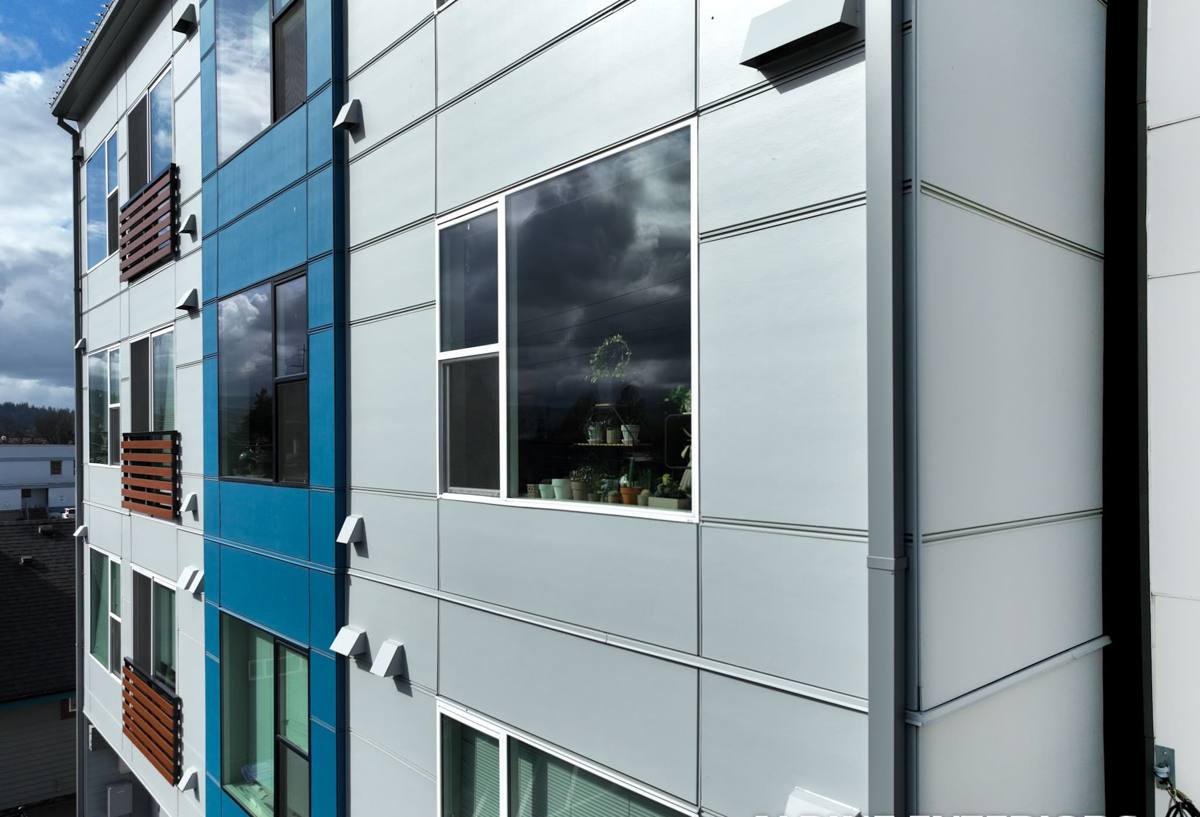
What "Custom" Actually Means for This Kind of Job
Custom doesn't mean expensive for the sake of it. It means the windows are made to fit your actual openings and your actual home, instead of forcing a standard size into a space it wasn't built for. This matters more in older coastal homes than people expect.
Problems we commonly find in older openings
- Rough openings that have gone slightly out of square from decades of settling and moisture cycling
- Rot in the framing around old wood windows, hidden until the old unit is pulled
- Sills that were never properly sloped to shed water away from the house
- Trim and siding details that don't match modern standard window dimensions
- Layers of old paint or caulk masking gaps rather than sealing them
A custom approach means measuring the opening as it actually exists, addressing what's underneath before the new window ever goes in, and building or ordering units that match — rather than caulking around a mismatch and calling it finished.
Frame Materials That Actually Hold Up Near Salt Air
There's no single "best" window material for every home — it depends on your home's style, your budget, and how much upkeep you want to take on. What we can say honestly is how each material tends to behave in a salt-air, high-moisture environment like Semiahmoo.
| Material | Salt Air / Moisture Behavior | Maintenance | Best Fit |
|---|---|---|---|
| Vinyl | Doesn't corrode; performs well near salt air | Low — occasional cleaning | Most homes, budget-conscious replacements |
| Fiberglass | Very stable, resists warping and corrosion | Low | Larger openings, higher wind exposure |
| Wood-clad | Interior wood needs protection from humidity; exterior cladding shields the frame | Moderate — interior finish upkeep | Homes wanting a traditional wood look inside |
| Aluminum | Standard aluminum corrodes faster in salt air unless it's a marine-grade finish | Moderate to high | Specific architectural styles only, with the right coating |
| Solid wood | Highest maintenance burden in this climate; prone to moisture damage without diligent upkeep | High | Historic restorations where matching original material is a priority |
We're upfront when a material isn't a good match for a waterfront-adjacent property. That's not a knock on the product — a solid wood window can be beautiful — it's just an honest trade-off between appearance, maintenance, and how much moisture exposure the home actually gets.
Glass and Sealing Choices Worth Considering Here
The frame material gets most of the attention, but the glass package and the installation seal do most of the actual work against wind-driven rain.
Glass
Double-pane windows with a Low-E coating and argon gas fill are the baseline we'd recommend for most Semiahmoo homes — they cut down on heat loss and reduce interior condensation, which matters when outdoor humidity is high most of the year. Triple-pane is worth discussing for homes with more direct wind exposure off the water, though it adds cost and weight that isn't always necessary depending on orientation and how sheltered the home is.
Sealing and flashing
This is where a lot of window failures actually start, and it has nothing to do with the window itself. Proper flashing tape, a correctly sloped sill pan, and sealant applied in the right sequence are what keep driving rain from working its way behind the frame over time. A premium window installed with shortcuts on the flashing will leak eventually. A mid-range window installed correctly, with attention to how water moves around the opening, will outperform it.
Signs Your Current Windows Are Already Losing the Fight
Coastal moisture damage is gradual, so a lot of homeowners don't notice until a window is well past the point of a simple fix. Worth checking for:
- Fogging or a hazy film between panes of double-pane glass — the seal has failed
- Soft or spongy wood at the sill or lower frame corners
- Visible moss or dark streaking on or around the frame
- Windows that stick, won't latch fully, or take real effort to open
- Paint that's bubbling or peeling specifically around the window, not the wider wall
- A noticeable draft or cold spot near the window on windy days
Any one of these can usually be addressed. Several at once on the same window is usually a sign it's time to replace rather than patch.
How We Approach a Custom Window Job in Semiahmoo
The process is straightforward, but each step matters more in this climate than it would somewhere drier.
1. On-site assessment
We look at every opening individually — not just the window, but the framing, sill condition, and any existing moisture damage. This is where we catch rot or square issues before they become surprises mid-install.
2. Material and glass discussion
We walk through frame and glass options based on your home's exposure, style, and budget — including telling you plainly if something isn't a good fit for a salt-air location.
3. Precise measurement and ordering
Custom units are built to the actual opening dimensions, not rounded to the nearest standard size.
4. Installation with proper moisture management
This includes correct flashing, sill pan installation where needed, and sealing sequenced so water is directed out, never trapped in.
5. Cleanup and walkthrough
We clean the work area and walk the finished windows with you so you know how they operate and what upkeep, if any, they'll need.
Cost Factors to Expect
We don't publish flat prices because every opening and every home is different, but these are the main things that move the number up or down:
| Factor | Why It Affects Cost |
|---|---|
| Frame material | Vinyl runs lower than fiberglass or wood-clad options |
| Number of openings | Per-window costs typically drop with larger multi-window jobs |
| Condition of existing framing | Rot repair or out-of-square correction adds labor before the new window goes in |
| Window size and configuration | Larger units, bays, or unusual shapes cost more to custom-build |
| Glass package | Triple-pane and specialty coatings add cost over standard double-pane Low-E |
| Access and site conditions | Upper-story or hard-to-reach windows take more time and equipment |
We give a written estimate after seeing the actual openings — not a phone-quoted number that changes once we're on site.
Why a Crew That Already Works This Area Matters
Windows near Semiahmoo Bay face wind and moisture exposure that a crew from a drier inland area may not think to plan for. Knowing which frame materials actually hold up here, how to detail flashing for wind-driven rain, and what a coastal-exposed sill needs isn't something you want your contractor learning on your house. It also means fewer surprises with local permitting expectations in Ferndale and unincorporated Whatcom County, since that's a process we go through regularly rather than occasionally.
Familiarity with the area also means realistic expectations. We're not going to recommend a low-maintenance product for a home that needs one, or oversell a premium option where it isn't necessary. The goal is windows that are still performing well a decade or two from now, not just windows that look good on install day.
Keeping New Windows Performing Long-Term
Even a well-installed window benefits from a little seasonal attention in a climate like this. A simple maintenance routine goes a long way:
- Rinse frames and glass periodically to clear salt residue, especially after storms
- Keep weep holes and drainage tracks clear of debris, moss, and dirt buildup
- Check and touch up exterior caulking annually, particularly on sun- or wind-exposed sides
- Operate hardware (locks, latches, cranks) a few times a season to prevent seizing
- Watch for early moss growth on sills and remove it before it spreads to the frame
- Address any new drafts or sticking promptly rather than waiting for the next season
If you're weighing whether your current windows need attention or full replacement, we're happy to take a look and give you a straight answer either way. Reach out for a free, no-pressure estimate — we'll walk the openings, talk through what actually makes sense for your home, and give you a real number to work with.