 Ferndale Roofing
 Siding Built for a Waterfront Microclimate
Homes in and around Semiahmoo sit in one of the more demanding exposure zones in Whatcom County. Being close to the water means near-constant airflow off the bay, salt-laden moisture that settles on exterior surfaces, and a rain pattern that soaks siding for days at a stretch through fall and winter. Add in a shaded, moss-friendly growing season that runs longer here than it does further inland, and you have a set of conditions that will find every weakness in a siding product within a few years, not a few decades.
We install fiber cement siding on homes across Ferndale and the surrounding Whatcom County communities, and the jobs we do near Semiahmoo get treated differently from the start. The wind-driven rain angle is steeper, the fastener corrosion risk is higher, and the north- and west-facing walls that catch salt spray need a finish that isn't going to chalk, peel, or feed algae growth within the first few winters.
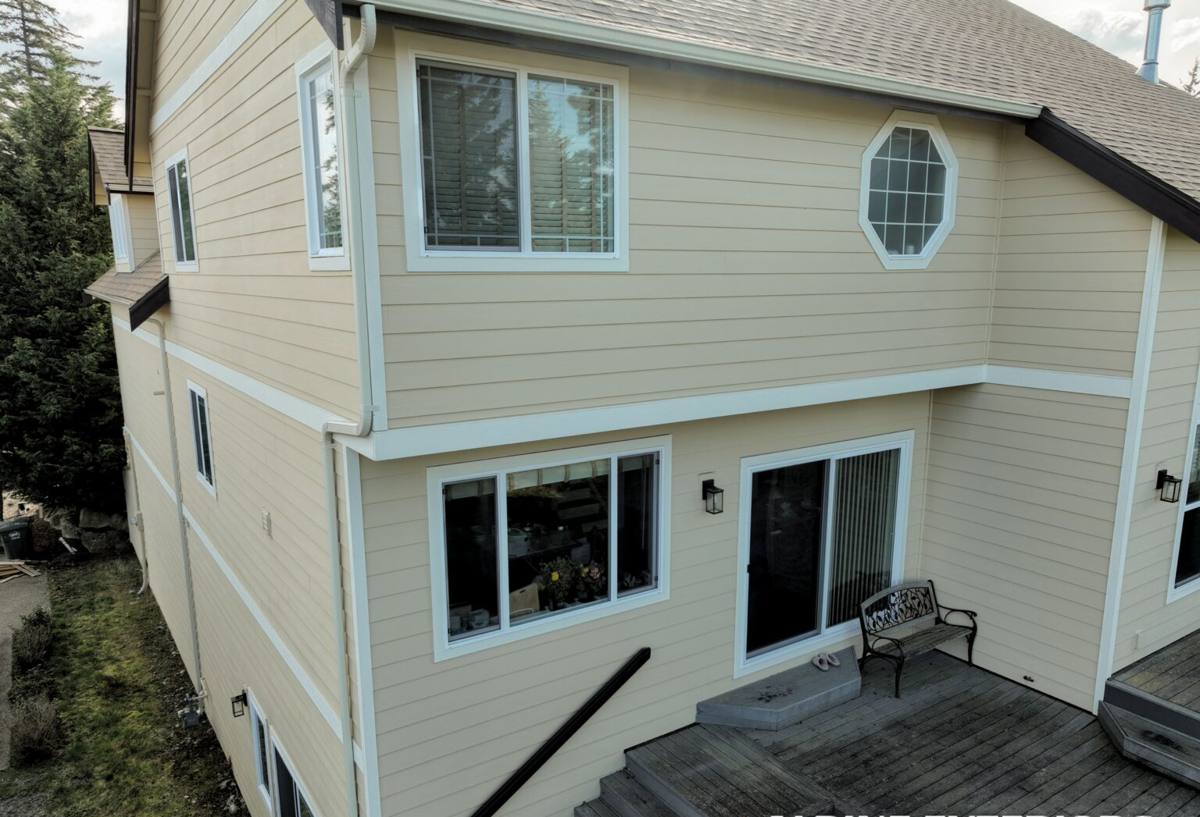
What Salt Air, Driving Rain, and Moss Actually Do to Siding
It helps to understand the specific failure modes this climate causes, because they're different from what you'd see on a home fifty miles inland.
Salt Air
Airborne salt is corrosive to exposed metal fasteners, trim flashing, and any hardware that isn't rated for coastal exposure. It also accelerates the breakdown of lower-grade paint finishes, which is why factory-cured, baked-on finishes hold up so much better here than field-applied paint that's exposed to salt within its first few weeks of curing.
Driving Rain
Wind off the water doesn't just drop rain straight down — it pushes it sideways into lap joints, butt seams, and anywhere a siding panel meets a window, door, or trim board. Any gap in flashing or caulking becomes a water entry point, and once moisture gets behind siding it has nowhere to go but into the sheathing.
Moss and Algae
Shaded walls and a long damp season give moss and algae months of ideal growing conditions. Porous or wood-based siding absorbs moisture and gives organic growth something to root into. Siding that stays dimensionally stable and doesn't wick water resists this far better.
None of these are exotic problems — they're the normal, predictable stresses of building near the water in Whatcom County. The fix isn't a special coating or a maintenance trick. It's choosing a siding material engineered to shrug off all three at once, and installing it correctly the first time.
Why We Only Install James Hardie Fiber Cement
We made a standard for our company a while back: James Hardie fiber cement, full stop. We don't install vinyl, LP SmartSide, primed wood, cedar, or other fiber cement brands, and we're upfront about why. Vinyl expands and contracts with temperature swings and can crack or bow under wind-driven rain pressure at the seams. Wood and wood-composite products need consistent maintenance to keep moisture out, and in a climate that stays wet for months at a time, that maintenance window gets thin. Fiber cement from other manufacturers may look similar on paper, but James Hardie's engineering, factory finish process, and product testing for wet Pacific climates is what we've seen actually perform over the long haul.
Hardie fiber cement is non-combustible, doesn't absorb moisture the way wood-based products do, and holds its factory finish instead of relying on a field-applied coat that has to survive salt exposure before it's even fully cured. That's the whole reason we standardized on it — not because it's the only decent product on the market, but because it's the one we're comfortable putting our name behind on homes that take this kind of weather every year.
The Right Hardie Product Line for This Exposure
James Hardie engineers its siding by climate zone (HZ5 and HZ10 designations), and the Pacific Northwest formulation is built specifically for regions with sustained moisture exposure — which describes the Semiahmoo area about as well as anywhere in the county. For homes with heavier salt and wind exposure, we typically talk through:
- HardiePlank lap siding — the most common choice for full re-sides, available in several exposure widths and finish textures
- HardieShingle — for homes wanting a shingle-style look with fiber cement's durability instead of cedar shingles that need ongoing maintenance
- HardieTrim — matched trim boards so corners, window surrounds, and fascia age at the same rate as the field siding instead of becoming the first thing that fails
- ColorPlus factory finish — a baked-on finish applied and cured under controlled conditions, which holds color and resists the fade and chalking that field-painted siding sees first in salt air
We'll walk through color and texture options during the estimate, but the starting point for a coastal-exposure home is almost always ColorPlus rather than a job-site-primed-and-painted product, simply because of what we've watched happen to painted finishes on homes this close to the water.
What a Correct Installation Involves Here
Fiber cement siding is only as good as the installation behind it, and that's especially true in a wet, wind-exposed area. A few details matter more here than they would on a more sheltered inland lot:
Flashing and Water Management
Every window, door, and horizontal trim transition needs proper flashing integrated with a drainable house wrap or rainscreen, not just caulk covering a gap. Caulk fails; flashing and a drainage plane behind the siding are what actually keep water out over the life of the job.
Fastener Choice
Coastal exposure calls for corrosion-resistant fasteners rated for the job — this isn't a place to use whatever's cheapest. Fastener corrosion is one of the more common causes of premature siding failure we see on homes near the water.
Clearances
Hardie's install specs call for minimum clearances between the bottom of the siding and grade, roof lines, decks, and other horizontal surfaces. Skipping these clearances is one of the fastest ways to trap moisture against the bottom course and start rot in the sheathing behind it — and it's one of the most common corner-cutting mistakes we find when we tear off older, failing siding.
Joint and Seam Treatment
Butt joints need to be treated correctly, whether that's caulked and sealed per manufacturer spec or shadow-gapped and flashed. Left untreated, seams are where wind-driven rain finds its way in first.
Our Process, Start to Finish
- On-site assessment — we walk the exterior, check for existing moisture damage, and look at exposure on each elevation, since the water side of a Semiahmoo home usually needs more attention than the sheltered side
- Product and color selection — we go over lap style, trim details, and ColorPlus color options based on your home and exposure
- Written estimate — a clear scope covering tear-off (if applicable), water management upgrades, siding, trim, and finish
- Prep and moisture check — removing old siding gives us a chance to check sheathing condition and address any rot or water damage before it gets covered up again
- Installation to manufacturer spec — flashing, house wrap or rainscreen, correct fastening, and proper clearances throughout
- Final walkthrough — we go over the finished job with you before calling it done
What Drives the Cost
| Factor | Why It Matters Here |
|---|---|
| Tear-off vs. new construction | Removing old siding adds labor but lets us inspect and fix any hidden moisture damage first |
| Sheathing repair | Homes with years of water intrusion behind failing siding often need sheathing sections replaced before new siding goes on |
| Trim complexity | Homes with more corners, window surrounds, and architectural detail take longer and need more matched trim |
| Water management upgrades | Adding or upgrading a rainscreen/drainage plane costs more upfront but matters more on exposed, water-facing walls |
| Product line and finish | ColorPlus finishes and specialty textures cost more than base products but hold up longer against salt air fading |
| Home size and wall height | More square footage and taller walls mean more material and more scaffolding or lift time |
Every one of these can shift the number meaningfully, which is why we give a written, walked estimate rather than a rough phone quote.
Signs Your Current Siding Is Already Failing
- Soft or spongy spots when you press on the siding, especially near the bottom courses
- Paint that's bubbling, peeling, or chalking faster than it should, particularly on water-facing walls
- Persistent moss or algae growth that comes back within a season of cleaning
- Visible gaps, cracks, or warping at seams and butt joints
- Staining or discoloration below window sills or trim boards, which usually points to a flashing failure
- Rust streaks around fasteners or trim hardware
Any of these on a Semiahmoo-area home is worth a look before the next wet season, since moisture problems behind siding get more expensive to fix the longer they sit.
Why Local Experience Matters for This Job
A crew that mostly works drier, inland jobs can still install fiber cement siding — but they may not default to the flashing details, fastener grade, or drainage plane choices that a coastal Whatcom County home actually needs. We work in Ferndale and the surrounding communities regularly, which means we already know how differently a water-facing wall near Semiahmoo behaves compared to a sheltered wall a few miles inland, and we plan the job around that instead of treating every house the same.
If your home is due for new siding, or you're seeing early signs of moisture trouble on an exterior wall, we're happy to come take a look. Reach out for a free, no-pressure estimate using the form below.