 Ferndale Roofing
 Siding Built for the Semiahmoo Coastline
Homes near Semiahmoo sit in one of the more demanding microclimates in Whatcom County. The siding on a house here isn't just cladding — it's the first and most constant line of defense against salt-laden air coming off the water, driving rain that blows in sideways during winter storms, and a moss and mildew season that can stretch nine months out of the year. Siding that would hold up fine twenty miles inland can fail early out here, and the failure is usually slow and hidden until it isn't.
We replace siding on homes throughout the Ferndale area, and the work we do near Semiahmoo follows the same standard everywhere: James Hardie fiber cement, installed to manufacturer spec, with real attention paid to what's happening behind the siding — not just what it looks like once it's up.
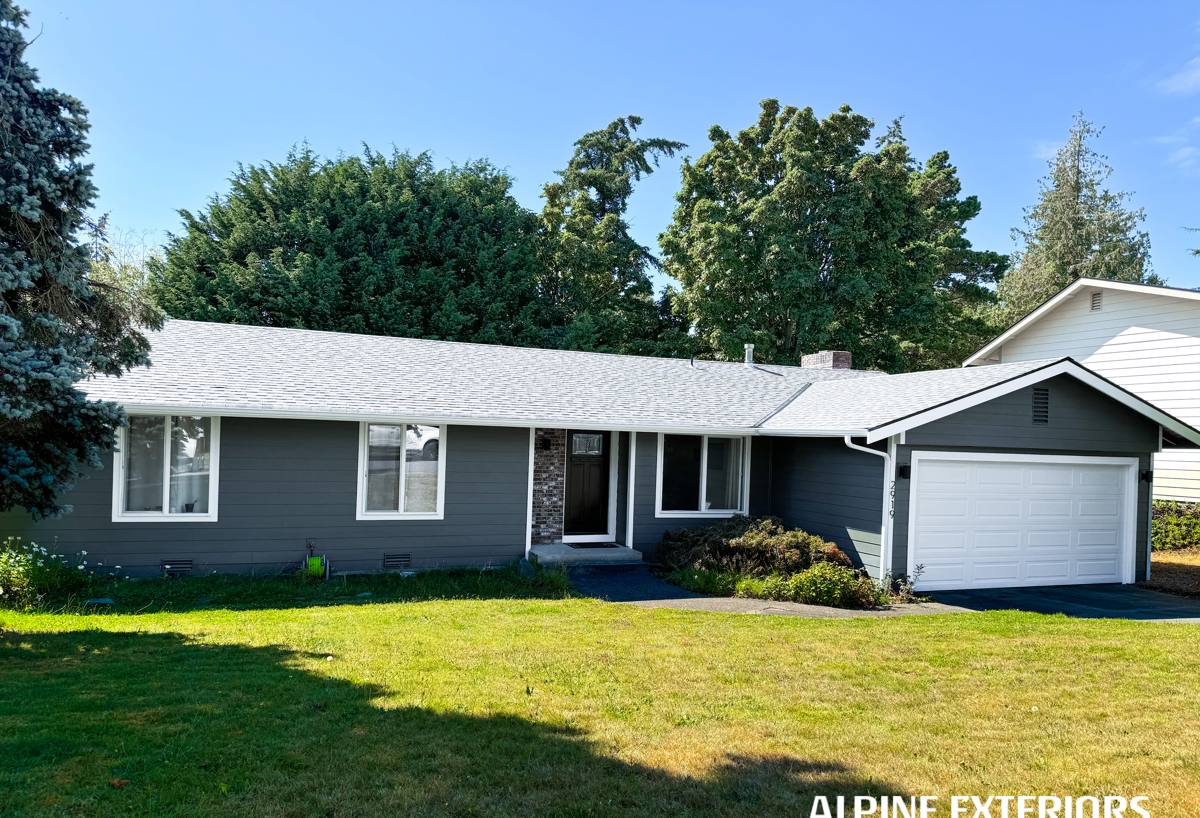
What Salt Air, Rain, and Moss Actually Do to Siding
It helps to understand the specific ways this environment breaks down siding, because it explains why some products are a poor match for this stretch of coastline.
Salt Air
Airborne salt is corrosive to exposed metal fasteners, flashing, and trim, and it accelerates the breakdown of lower-grade coatings and finishes. Over years, homes closer to the water show faster fading, chalking, and finish failure than the same materials would show further inland.
Driving Rain
Wind-driven rain doesn't just wet the surface of a wall — it pushes moisture up and under laps, into seams, and through any gap in the water-resistive barrier or flashing. Siding systems that rely on a tight, well-sealed installation to keep water out are only as good as the crew that installed them.
Extended Moss and Mildew Season
Constant damp, shade from mature trees, and mild temperatures let moss, algae, and mildew establish on siding and stay active for most of the year. Some siding materials resist this better than others, and the finish matters as much as the substrate.
Signs Your Siding Has Reached the End of Its Useful Life
Not every siding problem means a full replacement, but in this climate certain symptoms usually mean the underlying material or the original installation has failed rather than just aged cosmetically.
- Soft, spongy, or delaminating siding when pressed, especially near the bottom courses or around window and door trim
- Persistent moss or dark staining that returns within weeks of cleaning
- Visible cracking, cupping, or warping of individual boards or panels
- Paint that's peeling or bubbling rather than just fading, which often points to moisture trapped behind the surface
- Rust streaking from fasteners or flashing, a common sign of the salt air working on exposed metal
- Soft trim boards, sagging corner boards, or gaps that have opened up at seams and joints
- Interior signs — musty smells, damp drywall, or peeling interior paint on exterior walls — that suggest water has been getting behind the siding for some time
If you're seeing two or more of these, it's worth having someone open up a section and look at the sheathing before deciding whether repair or full replacement is the right call.
Why We Only Install James Hardie Fiber Cement Here
We get asked regularly why we don't offer vinyl, cedar, primed spruce, or LP SmartSide as options. It comes down to how each of these materials actually performs in a coastal, high-moisture environment over the long haul — not just in the first few years.
| Material | How It Holds Up Near Semiahmoo |
|---|---|
| Vinyl siding | Lightweight and inexpensive, but it can warp or distort in wind and temperature swings, and it doesn't offer the impact or fire resistance of fiber cement. Faded or damaged panels are also difficult to color-match years later. |
| Cedar / primed spruce | Attractive but wood-based, meaning it's genuinely vulnerable to the rot, moisture absorption, and moss growth this climate produces. It demands ongoing painting, sealing, and maintenance to stay ahead of decay. |
| LP SmartSide | An engineered wood product with a resin-treated strand core. It performs reasonably in moderate climates, but wood-strand substrates are more sensitive to sustained moisture exposure at cut edges and seams than fiber cement, which matters in a driving-rain environment. |
| James Hardie fiber cement | Non-combustible, dimensionally stable, and engineered specifically for the Pacific Northwest through Hardie's HZ5 product line. It doesn't rot, doesn't feed moss the way wood does, and holds its factory finish far longer than field-applied paint. |
James Hardie's ColorPlus finish is baked on at the factory under controlled conditions, which gives it better fade and moisture resistance than paint applied on site — and it comes with its own finish warranty separate from the product warranty. That combination of a stable substrate and a durable factory finish is why we standardized on it and stopped offering the alternatives.
What a Correct Siding Replacement Actually Involves
The siding material is only part of the equation. Most siding failures we uncover near the coast trace back to what was done — or skipped — underneath it, not the material itself.
Tear-Off and Sheathing Inspection
Old siding comes off completely, which lets us inspect the sheathing underneath for rot, soft spots, or existing water damage. Any compromised sheathing gets replaced before anything new goes on — covering over damaged sheathing just hides a problem that gets worse.
Weather-Resistive Barrier
A properly lapped, sealed weather-resistive barrier goes over the sheathing. In a driving-rain environment, this layer — and how carefully it's integrated with flashing at every penetration — matters as much as the siding itself.
Flashing at Every Opening
Windows, doors, hose bibs, vents, and any other penetration need proper flashing so water is directed out and away rather than behind the wall assembly. This is one of the most commonly rushed steps in siding work, and it's usually where leaks start.
Fastening and Clearances
James Hardie specifies exact fastener types, spacing, and clearances — including ground clearance and roof-to-wall clearances — to keep moisture from wicking up into the bottom of the siding. Installed off-spec, even the best siding material will underperform.
Our Process, From Estimate to Final Walkthrough
- On-site assessment — we look at your current siding, trim, and any visible trouble spots, and talk through what we're seeing
- Written estimate — a clear scope of work and pricing, no pressure to decide on the spot
- Tear-off and sheathing check — old material removed, sheathing inspected and repaired as needed
- Weather barrier and flashing installation — the part of the job you won't see once it's finished, but the part that determines how long everything else lasts
- Hardie siding installation — installed to manufacturer spec for fastening, spacing, and clearances
- Trim, caulking, and final detailing
- Walkthrough — we go over the finished work with you before calling the job done
What Affects the Cost of a Siding Replacement
Every home is different, and we don't quote real numbers until we've seen the house, but these are the factors that typically move a project's cost up or down.
| Factor | Why It Matters |
|---|---|
| Sheathing condition | Rot or water damage found during tear-off adds repair work before new siding can go on |
| Home size and wall complexity | More corners, gables, and dormers mean more cutting, flashing, and labor time |
| Siding profile chosen | Lap siding, shingle-style panels, and board-and-batten each involve different material and labor costs |
| Trim and accessory scope | Replacing trim, fascia, and soffits alongside siding adds cost but avoids mismatched materials aging at different rates |
| Access and site conditions | Tight lots, second stories, or landscaping obstacles can affect staging and labor time |
What to Ask Before You Hire Anyone for This Job
- Are you a licensed and insured contractor in Washington State?
- Will you inspect and repair sheathing if you find damage during tear-off, or is that a change order surprise?
- What weather-resistive barrier and flashing details do you use, and can you explain why?
- Are you a manufacturer-recognized James Hardie installer, and do you follow their published fastening specs?
- Do you provide a written estimate that spells out materials, scope, and what's included?
- Can you walk me through your process, including what happens if you find a problem mid-project?
Why It Matters That We Already Work Semiahmoo
A crew that regularly works this stretch of coastline already knows what to look for the moment old siding comes off — where moisture tends to collect, which details get skipped on production-grade installs, and how much clearance and flashing this climate actually demands versus what a general spec sheet says. That familiarity shows up in fewer surprises during the job and a longer-lasting result once it's finished. We're a Whatcom County crew doing Whatcom County work, not a traveling outfit passing through.
If your siding is showing its age or you're just planning ahead, we'd be glad to take a look and give you a straight assessment. Fill out the form below for a free, no-pressure estimate — we'll tell you honestly what we see and what your options are.