 Ferndale Roofing
 Roofing a Home on Semiahmoo's Shoreline
Semiahmoo sits right where the weather comes ashore. The same water that makes the area worth living near also puts a roof through more than most homes ever see: salt-laden air, wind-driven rain off the Strait, and a moss season that can run most of the year in shaded, north-facing sections. An asphalt shingle roof installed the way it's typically done inland doesn't always hold up the same way out here. We treat Semiahmoo jobs as coastal work, not standard Whatcom County work, because the difference shows up within a few years if it's ignored.
This page covers what asphalt shingle roofing actually needs to hold up in a Semiahmoo environment, how we approach the job, and what to weigh when you're comparing quotes or materials.
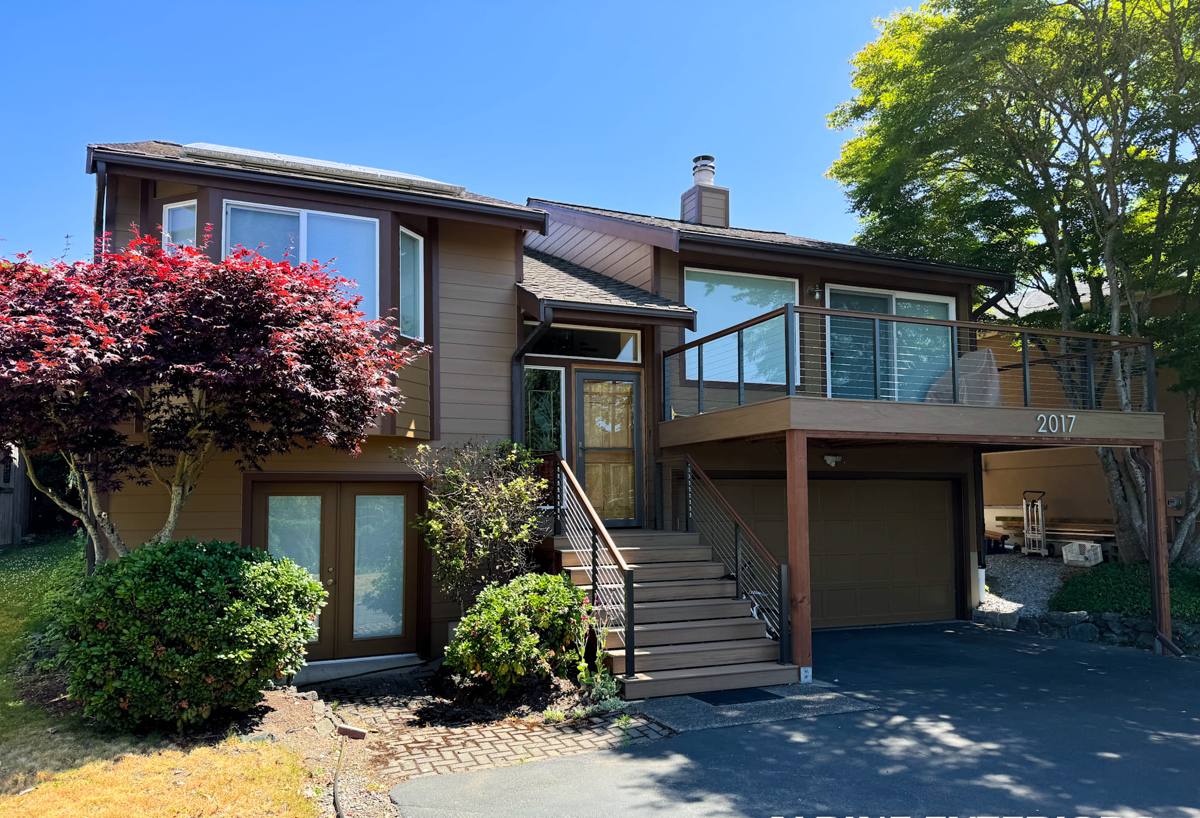
What Salt Air, Rain, and Moss Actually Do to a Shingle Roof
Each of these stressors attacks a different part of the roof system, and a roof that only accounts for one or two of them will still fail early.
Salt Air and Corrosion
Airborne salt speeds up corrosion on anything metal — fasteners, flashing, drip edge, vent boots with metal collars. A standard-grade galvanized nail can start showing rust well before the shingles themselves are due for replacement. Once fasteners weaken, shingles lift in wind, and once flashing corrodes, water finds a way in at the seams instead of running off the surface.
Driving, Wind-Driven Rain
Rain that comes in mostly sideways, which is common on exposed Semiahmoo lots, behaves differently than rain that falls straight down. It gets pushed up under shingle tabs and along valleys and eaves instead of simply sheeting off. A roof built for calmer conditions can pass a light rain and still leak in a real Whatcom County storm.
Moss and Algae
Shade from trees, marine humidity, and long damp stretches all favor moss and algae growth. Moss holds moisture against the shingle surface, works into the granule layer over time, and can lift shingle edges as it grows — which then gives wind and rain a place to start. Algae staining is mostly cosmetic, but heavy moss is a real durability issue, not just an appearance one.
What a Correctly Built Roof System Looks Like Here
An asphalt shingle roof is a system, not just a layer of shingles. For a Semiahmoo home, every layer needs to be chosen with the local exposure in mind.
- Underlayment: A synthetic underlayment with good water resistance across the whole roof, with self-adhering ice-and-water membrane at eaves, valleys, and any low-slope transitions where wind-driven rain is most likely to intrude.
- Fasteners: Corrosion-resistant nails, sized and placed according to the shingle manufacturer's wind-rated nailing pattern, not just the minimum code pattern.
- Flashing: New flashing at every roof-to-wall transition, chimney, skylight, and vent penetration — reused flashing is a common shortcut that fails first in salt air.
- Ventilation: Balanced intake and exhaust airflow through the attic. Poor ventilation traps moisture under the deck, which promotes rot and gives moss and algae an easier foothold from underneath as well as above.
- Starter course and edge detail: A proper starter strip and drip edge so the roof's most vulnerable perimeter is sealed and doesn't become the first place wind gets underneath the shingles.
Skip any one of these and the roof will likely still look fine on installation day — the problems show up two, five, or ten years later, usually right where the shortcut was taken.
Our Asphalt Shingle Roofing Process
Inspection and Assessment
We start by looking at the whole system, not just the shingles: deck condition, existing ventilation, flashing detail, and how exposed the roof is to prevailing wind and salt air given its orientation and surrounding trees. This tells us whether it's a straightforward reroof or whether deck repair or ventilation upgrades need to be part of the scope.
Tear-Off and Deck Preparation
We remove the old roofing down to the deck rather than layering over it. This lets us actually see and fix soft or rotted decking, which is common on older coastal homes where trapped moisture has been working on the plywood or boards for years without being visible from inside.
Installation
Underlayment, ice-and-water membrane, new flashing, starter course, and shingles go on in that order, following the manufacturer's specified nailing pattern for the wind exposure of the site. Valleys, penetrations, and roof-to-wall intersections get the extra attention they need — these are the spots that fail first when a roof isn't built for driving rain.
Final Walkthrough and Cleanup
We walk the finished roof, check the details with you, and make sure the property is cleared of debris and old material before we consider the job done.
Choosing a Shingle System for a Coastal, Moss-Prone Roof
Not every shingle product is a good match for Semiahmoo's conditions. The table below compares the general tiers of asphalt shingle available and how each holds up to this kind of exposure.
| Shingle Type | Wind Performance | Moss/Algae Resistance | Best Fit For |
|---|---|---|---|
| Standard 3-tab | Lower wind rating, more prone to lifting at edges | Standard granules only, no built-in resistance | Budget projects on more sheltered, less exposed roof sections |
| Architectural/laminate | Higher wind rating due to multi-layer construction | Available with algae-resistant granules | Most Semiahmoo homes — the standard recommendation for coastal exposure |
| Impact-rated/premium laminate | Highest wind and impact rating in the asphalt category | Algae-resistant options widely available | Fully exposed lots, waterfront-facing slopes, or homeowners prioritizing longevity |
For most Semiahmoo properties, we recommend an architectural shingle with algae-resistant granules as the baseline, not the upgrade. Given the moss pressure and wind exposure typical of the area, the extra durability tends to pay for itself over the life of the roof rather than being an unnecessary upsell.
A Note on Product Choice
We install from established, warrantied asphalt shingle lines rather than lesser-known or discount products. That's a professional standard, not a comment on any specific competitor's material — it comes down to consistent granule adhesion, predictable wind ratings, and warranty support that's actually backed by the manufacturer if something goes wrong years down the road.
Keeping a Semiahmoo Roof Healthy Between Services
A well-built roof still needs some basic upkeep in this climate. None of this requires a professional every time, but it does require attention.
- Keep overhanging branches trimmed back to reduce shade and debris buildup on the roof surface.
- Clear gutters and valleys of needles and leaves before the fall rains set in, so water has a clear path off the roof.
- Watch for dark streaking (algae) or green growth (moss) starting on shaded slopes, and address it early rather than letting it establish.
- Avoid pressure washing shingles — it strips granules and shortens shingle life; use manufacturer-approved cleaning methods or have it done professionally.
- Have the roof looked at after any major windstorm, especially if you notice a shingle in the yard or missing from a slope.
- Schedule a periodic visual inspection so small flashing or fastener issues get caught before they become deck damage.
What Affects the Cost of a Semiahmoo Reroof
Every roof is priced from an on-site inspection, but the main factors that move the number are consistent. This table gives you an honest starting point for what drives cost up or down.
| Factor | Why It Matters |
|---|---|
| Roof size and pitch | More surface area and steeper slopes both increase material and labor time |
| Number of existing layers | Tearing off multiple old layers takes longer and adds disposal cost versus a single-layer tear-off |
| Deck condition | Rotted or soft decking found during tear-off needs to be replaced before shingles go on |
| Ventilation upgrades | Adding or correcting intake/exhaust venting is worth the added scope on a roof with moisture or moss history |
| Shingle tier | Architectural and impact-rated products cost more than 3-tab but generally last longer under coastal exposure |
| Roof access and layout | Steep sites, limited access, or complex rooflines with many valleys and penetrations add labor time |
We'll always walk you through which of these apply to your specific roof before giving you a number, rather than quoting off a square-footage guess.
Why It Matters to Hire a Crew That Already Works This Area
Semiahmoo's exposure isn't uniform — a slope facing open water takes a different beating than one tucked behind trees on the same property. Crews who work this stretch of Whatcom County regularly know to look for that variation, size up wind exposure by orientation, and detail flashing and fastening accordingly instead of applying a one-size-fits-all install. Ferndale Roofing Co is based locally and works this coastline as a regular part of our territory, not as an occasional out-of-town job, which means we're familiar with the permitting expectations and the way weather windows actually behave here when scheduling tear-off and installation.
Warranty Coverage That Actually Means Something
An asphalt shingle roof typically carries two separate warranties: a manufacturer's material warranty covering defects in the shingle itself, and a workmanship warranty from the installing contractor covering the quality of the install. In a coastal environment, the workmanship side matters just as much as the material side — most leaks trace back to flashing, fastening, or ventilation detail rather than a defective shingle. We'll explain both warranties plainly before work begins, including what each one actually covers and for how long, so there's no confusion later.
Get a Straightforward Estimate
If you're weighing a reroof or replacement for a Semiahmoo home, we're happy to take a look and give you an honest read on what your roof actually needs — no pressure, no inflated scope. Use the form below to request a free estimate and we'll get back to you to schedule a time to come look at the roof in person.