 Ferndale Roofing
 Board & Batten on the Semiahmoo Waterfront
Semiahmoo sits right on the water, and that changes what "good siding" means. Homes out on the peninsula and along the bay face conditions that inland Ferndale properties simply don't see as often: near-constant salt-laden air, wind-driven rain coming straight off the water, and long stretches of grey, damp weather that keep exterior surfaces wet for days at a time. Board and batten siding — with its clean vertical lines and strong shadow reveal — is a popular choice for the coastal and craftsman-style homes in this area, but the look only holds up if the material underneath is built for the environment it's going into.
We install board and batten exclusively in James Hardie fiber cement, and we do that on purpose. Before we get into why, it's worth walking through what Semiahmoo actually does to a house over the years, because that's what should drive the material decision — not just the look.
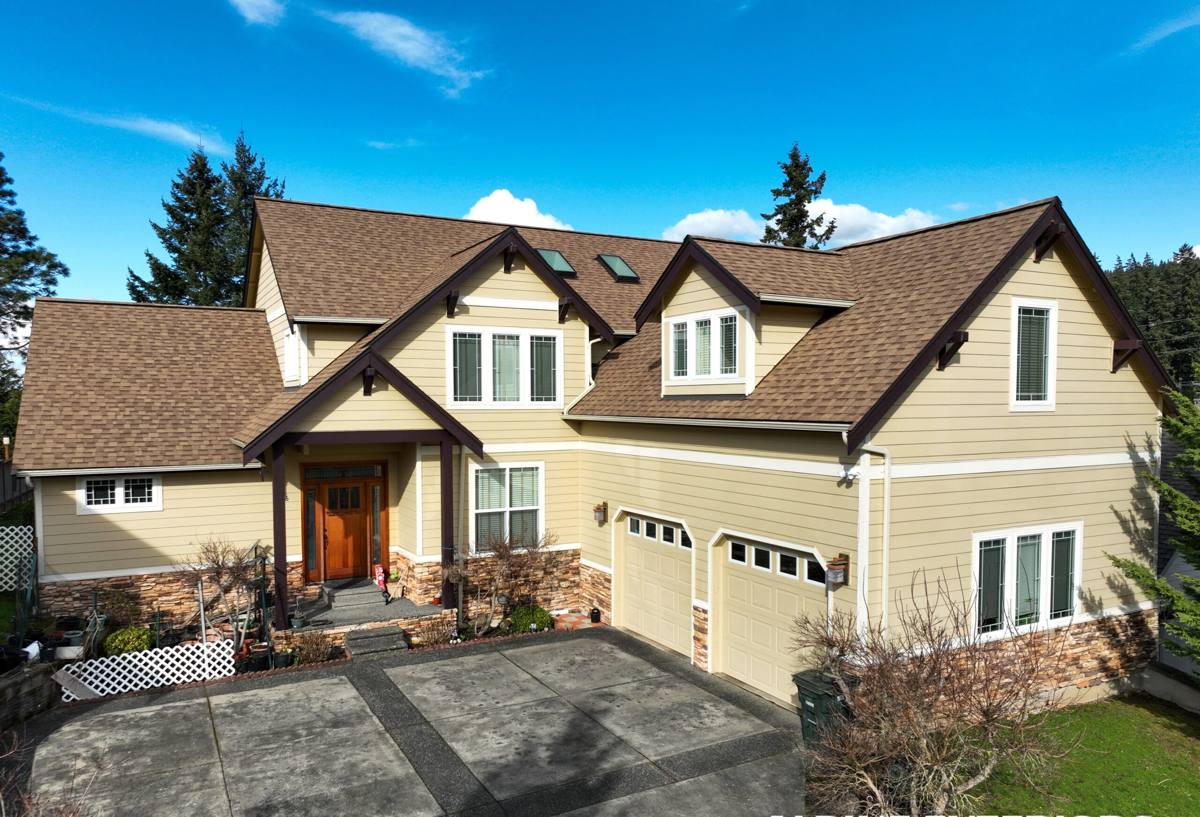
What Salt Air, Driving Rain, and Moss Season Do to Siding
Three things wear on siding out here more aggressively than in most of Whatcom County:
Salt Air
Airborne salt from Semiahmoo Bay and Drayton Harbor settles on exterior surfaces and accelerates corrosion of fasteners, flashing, and any exposed metal trim. It also breaks down certain paint and coating systems faster than they'd wear inland, which shows up as chalking, fading, or peel years ahead of schedule on lower-grade products.
Driving Rain
Waterfront exposure means wind pushes rain sideways into wall assemblies, not just straight down. Any siding system with weak seams, gaps at butt joints, or inadequate flashing details will let moisture behind the cladding — and once water gets behind siding, the sheathing and framing pay the price long before the siding itself looks bad.
Moss and Sustained Dampness
Whatcom County's wet season runs long, and shaded, north-facing walls near mature trees or close neighboring structures can stay damp for extended stretches. That dampness feeds moss and algae growth on porous or textured surfaces, and it keeps wood-based products at risk of swelling, cupping, and rot if the finish isn't fully sealed on every cut edge.
Board and batten's vertical board joints and batten strips create more seams and more cut edges than a standard lap profile — which means the product and the installation both have to be right, or those extra seams become extra entry points for water.
Why We Install Board & Batten Only in James Hardie Fiber Cement
James Hardie fiber cement is engineered specifically to resist the conditions Semiahmoo throws at it. It's non-combustible, dimensionally stable in wet-dry cycling, and manufactured with climate-specific HZ formulations designed for the Pacific Northwest's moisture exposure. The factory-applied ColorPlus finish is baked on under controlled conditions, which gives it stronger resistance to fading, chalking, and moisture intrusion at the surface than a field-applied paint job.
For board and batten specifically, that matters more than it does on a flat lap wall, because a vertical board and batten assembly has more vertical seams running down the wall. Every one of those seams is a place where the material either holds its shape and finish for decades, or slowly opens up, swells, and lets water track behind it. Fiber cement holds dimension in a way that wood-based and engineered wood products can't fully match, which is the core reason we don't offer those alternatives for this application.
We don't install vinyl, LP SmartSide, primed spruce, cedar, or other fiber cement brands for board and batten work. That's a standard we hold across every job, not a sales pitch — we'd rather have a smaller, more focused product lineup we trust completely than offer options we know create maintenance headaches for homeowners a decade down the road, especially this close to the water.
What a Correct Board & Batten Installation Actually Involves
Board and batten isn't a cosmetic layer — it's a system, and the parts you never see matter as much as the reveal you do see.
- Weather-resistive barrier installed and lapped correctly behind the siding, with no gaps at penetrations
- Rain screen or furring strategy where wall assembly and exposure call for it, to let incidental moisture drain and the wall breathe
- Flashing at every window, door, and roofline intersection — the details that keep driving rain from tracking behind the boards
- Correct board spacing and batten placement per manufacturer specification, not just eyeballed for a clean look
- Fastener type and placement matched to Hardie's published installation requirements — corrosion-resistant fasteners are non-negotiable this close to salt air
- Factory-cut and field-cut edges properly sealed, since an unsealed cut edge is the fastest way for a fiber cement board to take on moisture
- Proper clearance at grade, decks, and roof lines so the siding never sits in standing water or gets constant splash-back
Skipping any one of these doesn't usually show up right away. It shows up in year five or seven, as staining, a soft spot at a butt joint, or paint failure at a cut edge — which is exactly why installation quality matters as much as the product choice.
Vertical Reveal Options
James Hardie offers more than one way to get a board and batten look, and the right one depends on the home's style and budget:
| Option | How It's Built | Best Fit |
|---|---|---|
| HardiePanel vertical siding with battens | Large flat panels installed vertically, with separate batten strips over the panel seams | Traditional board and batten look, efficient install, strong seam protection |
| Individual board and batten (plank-style) | Narrower vertical boards installed with visible reveal, battens applied over joints | Closer to a true carpentry board and batten appearance, more seams to detail correctly |
| Board and batten as an accent | Used on gables, dormers, or entry features paired with horizontal lap elsewhere | Homes wanting texture and contrast without a full vertical elevation |
Cost Factors for Board & Batten in a Waterfront Setting
Every quote should account for the same underlying factors, whether the estimate comes in on the lower or higher end of a range:
| Factor | Why It Moves the Price |
|---|---|
| Wall complexity | Gables, dormers, and multiple wall planes mean more cuts, more flashing details, more labor |
| Existing wall condition | Sheathing repair or added moisture barrier work if the old siding was compromised |
| Exposure level | Direct waterfront walls facing prevailing wind and rain often warrant extra flashing and rain-screen detailing |
| Panel vs. individual board style | True individual board and batten typically runs more labor-intensive than panel-with-batten systems |
| Trim and accent scope | Corner boards, window trim, and fascia work done at the same time affects total scope |
We walk every project through these factors in person rather than quoting off a phone call, because a Semiahmoo waterfront wall and a sheltered inland wall on the same street can need genuinely different detailing.
Our Process on Semiahmoo Projects
We start with an on-site walk of the exterior, checking existing siding and trim for moisture damage, assessing exposure on each elevation, and noting anything — deck ledgers, roof-to-wall intersections, window flashing — that needs attention before new siding goes on. From there we put together a scope that spells out the board and batten style, the HZ product line suited to the exposure, the color, and the flashing and barrier details specific to that wall. Once the work starts, we inspect the sheathing and barrier as it's exposed, correct anything that's been compromised by old leaks, and install to Hardie's fastening and clearance specifications rather than shortcuts that only hold up on paper.
We don't treat a waterfront wall on Semiahmoo the same as a sheltered wall three miles inland — the flashing details, fastener choice, and rain-screen approach get adjusted to what that specific elevation is facing.
Maintenance in a Salt-Air Environment
Correctly installed James Hardie board and batten is genuinely low-maintenance, but "low-maintenance" doesn't mean "no attention needed" on the water. A once- or twice-a-year rinse to clear salt residue and organic buildup, along with a visual check of caulked joints and trim intersections, catches small issues before they become expensive ones. Because ColorPlus finish is factory-applied and warranted separately from the substrate, homeowners aren't stuck repainting every few years the way they might be with a field-finished wood product — which matters a lot in an environment that's hard on paint.
Why Hiring a Crew That Already Works Semiahmoo Matters
A lot of siding problems on waterfront property trace back to a crew that installed the product correctly for an inland home but didn't adjust for the exposure. Fastener corrosion resistance, rain-screen decisions, and flashing detail all need to be dialed in for what a specific wall actually faces — and that judgment comes from having done the work on this exact stretch of coastline before, not from a generic installation manual. We work throughout Ferndale and Whatcom County, including the waterfront communities around Semiahmoo and Blaine, and we bring what we've learned about this shoreline's exposure into every board and batten project we scope here.
If you're weighing board and batten siding for a home in Semiahmoo, we're happy to walk the exterior with you, point out anything the current siding or trim is telling us, and put together a straightforward, no-pressure estimate — just fill out the form below to get started.