 Ferndale Roofing
 Why Lummi Nation Homes Need a Different Approach to Metal Roofing
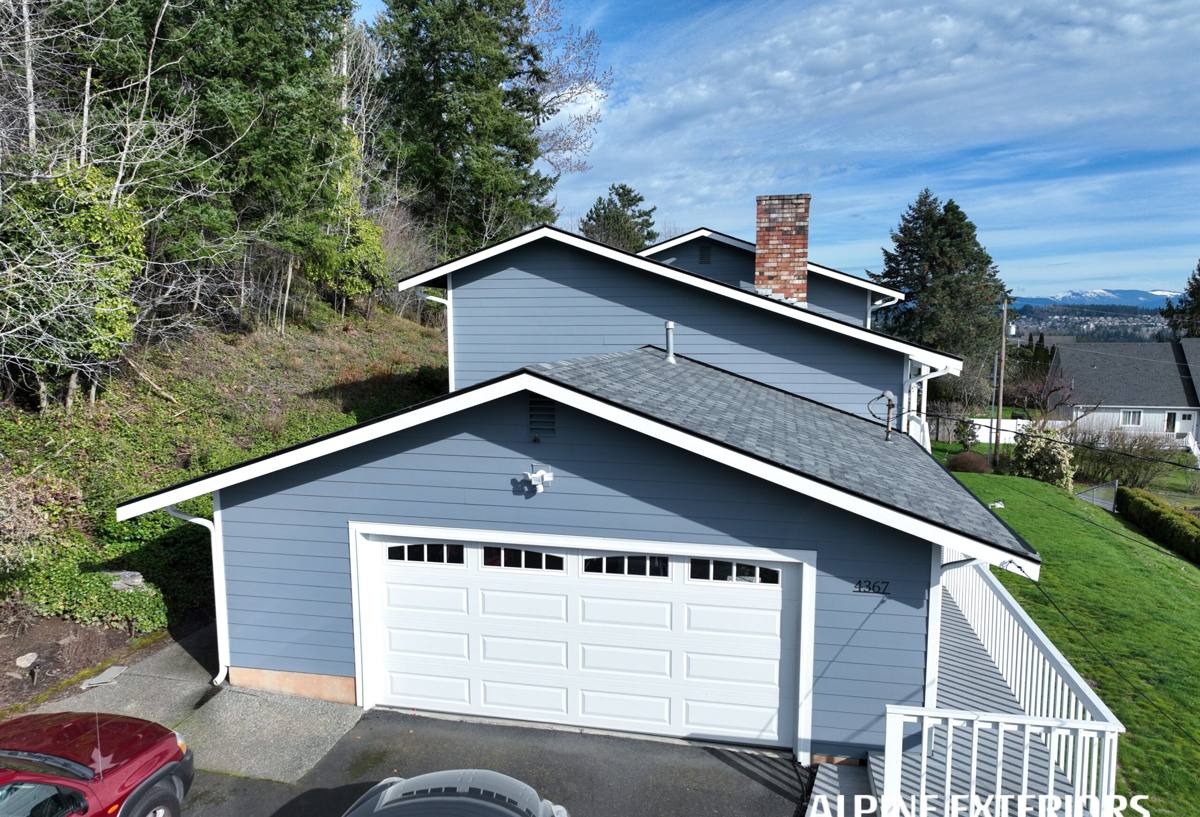
Homes on and around the Lummi Nation sit about as close to the water as you can get in Whatcom County. That location is part of what makes the area beautiful, and it's also exactly why roofs here take more abuse than roofs ten or fifteen miles inland in Ferndale or Bellingham proper. Salt-laden air off Bellingham Bay and the Strait of Georgia, near-constant wind exposure, and a wet season that can stretch for months all work on a roof at the same time. A metal roof can handle all of that better than almost any other roofing material available — but only if it's specified and installed with this specific exposure in mind. A generic metal roofing job, done the same way you'd do it for a sheltered lot inland, will not hold up the same way out here.
This page is about that distinction: what the local climate actually does to a roof, what a correctly built metal roofing system looks like for a home in this area, and how we approach the work differently because of where the house sits.
What Salt Air and Coastal Wind Do to a Roof Over Time
Corrosion at fasteners, cut edges, and fastener heads
Salt in the air doesn't just sit on the surface of a metal roof — it settles into every joint, seam, and exposed edge, and it never really stops working on the metal once it's there. The two weak points on most metal roofs are fastener heads and cut edges, because both expose bare metal that hasn't been factory-coated. On a home a few miles inland, a lower-grade coating or a standard steel fastener might go a decade without trouble. On a roof exposed to salt air off the water, the same components can start showing rust streaks and early corrosion in a fraction of that time. This is the single biggest reason a metal roofing job near Lummi Nation needs different material specs than the same job elsewhere in Whatcom County.
Wind uplift along open water
Open water means fewer windbreaks and more consistent, higher-speed wind hitting the roof plane directly, especially during winter storms. Metal roofing is genuinely excellent in wind when it's fastened and seamed correctly — panels are large, continuous, and don't rely on hundreds of small overlapping pieces the way shingles do. But that strength depends entirely on fastening pattern, panel engagement, and edge detail. Skip any of that and you've got a roof that looks like a proper metal system but performs like a much weaker one in a real storm.
Moss, Rain, and the Long Wet Season
Whatcom County's wet season runs long, and homes shaded by conifers or sitting close to tree lines see moss and algae growth on north-facing and low-slope sections almost year-round. Moss is more than cosmetic — on porous roofing materials it holds moisture against the surface, works into laps and fastener penetrations, and shortens the life of the roof underneath it. This is one of the clearer advantages metal has over composition shingles and wood-look products in this specific location. Metal doesn't give moss the porous, granulated surface it needs to take hold the way shingles do, and water sheds off a properly sloped metal panel fast enough that standing moisture — the thing moss actually needs to establish itself — rarely gets the chance to build up.
That doesn't mean a metal roof here is maintenance-free. Debris still collects in valleys, gutters still need clearing, and shaded sections can still develop a light film of organic growth over years. It just means the maintenance burden is meaningfully lower than it is with a porous roofing material in the same conditions.
Choosing the Right Metal System for a Coastal Lot
Not all metal roofing is built the same, and the differences matter more here than they would on a sheltered inland roof. The table below covers the panel types we typically discuss with homeowners in this area.
| System | Best fit | Coastal consideration |
|---|---|---|
| Standing seam (concealed fastener) | Most homes near open water | No exposed fastener heads to corrode; strongest wind performance |
| Metal shingle / shake panel | Homes wanting a traditional look with metal's durability | Interlocking panels reduce exposed fasteners; verify coastal-rated coating |
| Exposed-fastener panel | Outbuildings, shops, budget-conscious projects | Fastener heads and washers need periodic inspection and replacement over time |
For a primary residence within a mile or two of the water, we lean toward standing seam or a quality interlocking metal shingle specifically because they minimize the number of exposed fastener points — the part of any metal roof that fails first in a salt-air environment. Exposed-fastener panel is a fine, economical choice for a shop or outbuilding where a fastener replacement in ten or fifteen years is a minor task, not a roof-off repair.
Metal type and coating
Both steel and aluminum can perform well here, but they need different protection strategies. Steel panels need a full, factory-applied corrosion-resistant coating system rated for coastal or marine exposure — this isn't a place to save money on a lower coating tier. Aluminum is naturally corrosion-resistant even without that coating layer, which is why it's a common recommendation for homes closest to the shoreline, though it typically costs more than coated steel. We'll walk through which makes sense for a specific property based on its exact distance from the water, roof pitch, and sun/shade exposure — those factors change the calculation more than most homeowners expect.
Fasteners, Flashing, and the Details That Actually Prevent Leaks
Panel choice gets most of the attention, but the details around the panels are what actually determine whether a metal roof stays watertight through a coastal winter. A few of the ones we pay closest attention to on Lummi Nation projects:
- Fastener material and coating matched to the panel metal, so you don't get galvanic corrosion where two dissimilar metals touch
- Closed or vented ridge caps with foam closures sized correctly for the panel profile, so wind-driven rain can't push up under the ridge
- Step flashing and counter-flashing at every wall, chimney, and dormer intersection, not just sealant bridging the gap
- Valley construction that accounts for the volume of water a steep, wet-season roof actually moves, not a minimum-code valley
- Underlayment rated for the freeze-thaw and moisture cycling this climate produces, installed as a real water-shedding layer rather than an afterthought under the panels
- Fastener spacing and clip engagement set for the wind exposure category of the specific lot, not a generic inland pattern
Any one of these done wrong can undermine an otherwise good panel system. This is where the difference between a roof that performs for thirty-plus years and one that starts leaking in year six usually comes down to workmanship, not material.
Our Installation Process
- On-site assessment — we look at roof pitch, tree cover, sun/shade exposure, and how close the structure sits to open water, since all of that changes the material and detailing recommendations
- Tear-off and deck inspection — we check the existing roof deck for moisture damage or soft spots before anything new goes down; a metal roof is only as good as what it's fastened to
- Underlayment and ice/water protection — installed at eaves, valleys, and penetrations where wind-driven rain is most likely to find a way in
- Panel installation — laid and fastened to the pattern appropriate for the site's wind exposure, not a one-size-fits-all spec
- Flashing and trim — all transitions, penetrations, and edges detailed by hand, not just caulked
- Final walk-through — we go over the completed roof with the homeowner, including what routine maintenance actually looks like for the system installed
Why a Crew That Already Works Lummi Nation Matters
Roofing work in this area isn't quite the same as roofing work a few miles inland, and it's worth working with a crew that already understands why. Properties on the Lummi Nation can fall under different permitting and jurisdictional processes than a typical property in unincorporated Whatcom County or the City of Ferndale, depending on whether the land is held in trust or as fee land. A contractor who hasn't worked in the area before may not know to ask the right questions up front, which can turn into delays once a project is already underway. We take the time to confirm what's required for a given property before work starts, rather than assuming county rules apply the way they would elsewhere.
Beyond permitting, there's the practical side: knowing how exposed a given stretch of shoreline actually is, which roofs in the area tend to collect the most moss based on tree cover and orientation, and what material choices have held up well versus struggled in this specific microclimate. That kind of familiarity doesn't come from a single job — it comes from working the area repeatedly and paying attention to how roofs actually age here, not just how they look on installation day.
What Drives Cost on a Coastal Metal Roof
Metal roofing costs more up front than composition shingles, and the range for a given home depends on several factors that matter more here than in a sheltered location.
| Factor | Why it matters near the water |
|---|---|
| Panel material (steel vs. aluminum) | Aluminum costs more but skips the coating-dependent corrosion resistance steel relies on |
| Panel system (standing seam vs. exposed fastener) | Concealed-fastener systems cost more but remove the most salt-vulnerable component |
| Roof complexity (valleys, dormers, penetrations) | More transitions mean more flashing detail, which is where coastal leaks actually start |
| Existing deck condition | Wet-climate homes more often need deck repair discovered during tear-off |
| Coating tier and warranty | Marine-rated coatings cost more than standard tiers but are the right call this close to salt water |
We'll always give a specific, itemized number for an actual roof rather than a broad estimate — too much of the cost depends on the details above to price a coastal metal roof accurately from a general range.
Maintenance That Keeps a Metal Roof Performing Here
A well-installed metal roof in this climate needs far less attention than a shingle roof, but "less" isn't "none." A short, honest checklist for homeowners:
- Clear gutters and valleys of needles and debris at least twice a year, more often under heavy tree cover
- Rinse off accumulated salt film and organic debris on shaded or low-slope sections periodically
- Have fastener heads and sealant points on exposed-fastener systems inspected every few years
- Check flashing at chimneys, dormers, and wall intersections after major wind events
- Trim back overhanging branches that keep sections of the roof shaded and slow to dry
Let's Look at Your Roof
If you're weighing a metal roof for a home on or near the Lummi Nation, we're glad to walk the roof with you, talk through what its specific exposure calls for, and give you a straightforward, no-pressure estimate. There's a form below — reach out and we'll get a time set up.