 Ferndale Roofing
 Building Decks Where Salt Air Meets Whatcom County Rain
Homes in and around Lummi Nation sit close to the water, and that changes what a deck needs to survive. Salt-laden air off Bellingham Bay and Lummi Bay works on metal and wood differently than it does a few miles inland. Add Whatcom County's driving rain, which often comes in sideways off the water instead of straight down, and a long stretch of the year where shaded, damp surfaces stay wet long enough to grow moss, and you have a climate that's genuinely harder on outdoor structures than the regional average.
A deck built to a generic spec sheet can look fine for a season or two before these conditions start showing up: fastener heads bleeding rust through the decking, ledger boards trapping moisture against the house, or a green film building up on north-facing boards that never fully dries out. None of that is inevitable. It's a matter of choosing the right materials and details for this specific setting, not the cheapest ones that would work fine somewhere drier.
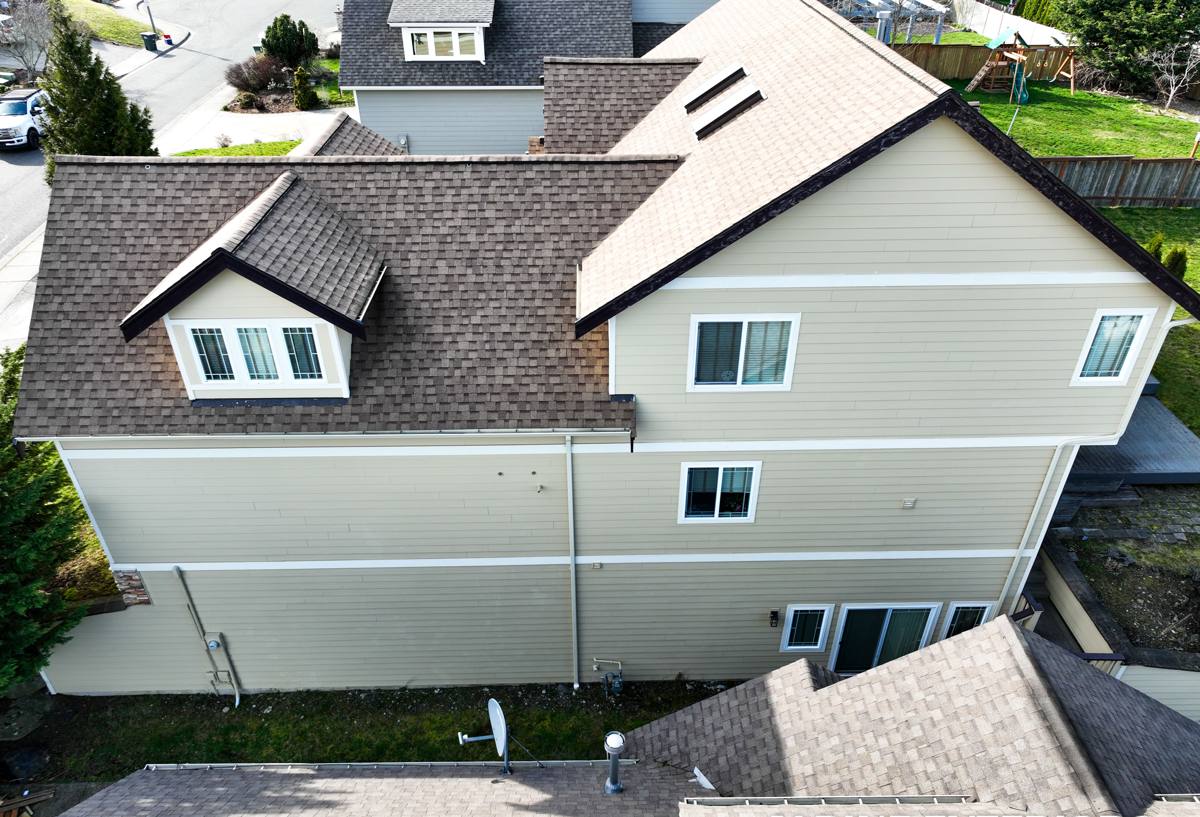
What a Deck Built for This Environment Actually Needs
Framing and Substructure
The framing is what determines whether a deck is still solid in fifteen years or needs to be torn apart in five. In a salt-air, high-rainfall setting, we look closely at ground clearance and airflow underneath the deck — a low, tight crawl space traps moisture and speeds up rot in joists and beams even when the visible decking looks fine. Footings need to be sized and set to current code, and any framing lumber should be rated for ground contact where it's close to grade or shaded most of the day.
Fasteners and Hardware
This is where a lot of decks near the water actually fail first — not the wood, the hardware. Standard electro-galvanized screws and joist hangers can start showing rust streaks within a couple of years this close to salt air. We spec hot-dip galvanized or stainless steel fasteners and connectors for anything structural, and stainless or coated deck screws for the visible surface, matched to whatever decking material is going down. It costs more up front than hardware-store fasteners. It's also the difference between hardware that lasts as long as the deck and hardware that becomes the weak point.
Ledger Attachment and Flashing
Where a deck attaches to the house, water intrusion is the single biggest risk — and the one that causes damage you can't see until it's serious. Proper ledger flashing, correctly lapped with the house's existing weather barrier, keeps driving rain from working its way behind the ledger board and into the rim joist or wall framing. This detail matters everywhere, but it matters more here, where wind-driven rain off the water hits siding and ledger connections harder than it would a few miles inland.
Choosing a Decking Material for This Climate
There's no single "best" decking material — there's a best material for your budget, your maintenance appetite, and how exposed your site is to salt air and standing moisture. Here's how the common options actually compare in a setting like this:
| Material | Upfront Cost | Salt Air / Moisture Behavior | Maintenance | Typical Lifespan |
|---|---|---|---|---|
| Pressure-treated wood | Lowest | Prone to swelling, splitting, and mildew staining if not sealed regularly | Annual cleaning and re-sealing recommended | 10-15 years with upkeep |
| Cedar | Moderate | Naturally rot-resistant, but greys and can hold moss in shaded, damp spots | Periodic cleaning, optional staining | 15-20 years with upkeep |
| Composite | Higher | Won't rot or splinter, but can still grow surface mildew/algae if shaded and damp | Periodic washing, no sealing or staining | 25-30 years, manufacturer-dependent |
| PVC / capped polymer | Highest | Fully moisture-resistant surface, least prone to staining | Occasional washing | 25-30+ years, manufacturer-dependent |
Composite and PVC decking get marketed as maintenance-free, and structurally that's close to true — but "maintenance-free" doesn't mean "moss-proof." Any decking surface in a shaded, damp spot near the water will collect organic growth over time if it's never cleaned. The real advantage of composite and PVC here isn't zero maintenance, it's that they don't rot, cup, or splinter while you keep up with that maintenance.
Moss, Mildew, and Drainage: The Long Game
Moss doesn't grow because a deck is poorly built — it grows because a surface stays damp and shaded long enough for spores to take hold, and Whatcom County's fall-through-spring stretch gives it plenty of time to do that. The goal in design and construction isn't to make moss impossible, it's to reduce the conditions that let it spread fast: gaps between boards sized for proper drainage, joist framing that lets air move underneath instead of trapping standing water, and layout choices that avoid unnecessary shade traps where practical.
Underneath the deck matters as much as the surface. Standing water or poor grading beneath a low deck keeps the framing damp long after a storm has passed, which accelerates both moss growth and structural wear. Getting the drainage and grading right during the build is far cheaper than trying to fix a chronically wet crawl space after the fact.
Permitting and Site Considerations Near the Reservation
Building near the Lummi Reservation can involve different jurisdiction depending on exactly where a property sits — land within reservation boundaries that's held in tribal trust may fall under different permitting authority than land under Whatcom County or City of Ferndale jurisdiction. This isn't something to guess at. Before design work starts, we confirm which permitting authority actually applies to your specific parcel, and we handle that step as part of the process rather than leaving it for the homeowner to sort out mid-project.
Site conditions near the water can also affect setbacks, shoreline buffers, and drainage requirements. These vary by exact location, so we treat every site assessment as its own conversation rather than assuming what applied to the last project down the road applies here too.
Our Process for a Lummi Nation Deck Project
- Site assessment — we walk the property, check grade, drainage, sun/shade exposure, and confirm which permitting jurisdiction applies.
- Design and material selection — layout, framing plan, and decking material chosen for your budget and this site's actual exposure to salt air and rain.
- Permitting — we handle the paperwork for whichever authority applies to your parcel.
- Construction — footings, framing, flashing, and decking installed with corrosion-rated hardware throughout.
- Final walkthrough — we go over the finished deck and basic care so you know what to expect over the first few seasons.
Why a Crew That Already Works This Area Matters
A contractor who mostly builds decks inland can still build a structurally sound deck here — but they may not think to spec stainless fasteners over standard galvanized, or catch that a shaded corner of the yard is going to hold moss year-round, or know which permitting office to call first. Those aren't exotic problems; they're just specific to building this close to the water in this part of Whatcom County. A crew that's worked Lummi Nation and Ferndale regularly has already run into these details and builds around them by default, not as an afterthought.
Keeping Your New Deck in Good Shape
A well-built deck in this climate still needs some seasonal attention. A short annual routine keeps small issues from becoming expensive ones:
- Sweep debris off the deck regularly, especially fallen leaves and needles that trap moisture against the surface
- Rinse or wash the decking a couple of times a year to remove early moss and algae growth before it spreads
- Check that gaps between boards are clear and draining, not packed with debris
- Inspect visible fasteners and hardware once a year for early rust staining
- Confirm the area underneath the deck isn't holding standing water after heavy rain
- Re-seal or re-stain wood decking on the manufacturer or product's recommended schedule
None of this takes much time, and it's far cheaper than replacing boards or hardware that failed early because moisture had a chance to sit and work.
Get a Straight Answer for Your Property
Every lot near Lummi Nation is a little different — sun exposure, shoreline distance, existing drainage, and which permitting authority applies can all shift the right approach for your deck. If you're planning a new deck or replacing one that's showing its age, we're happy to walk the site with you and give you a free, no-pressure estimate based on what your property actually needs, not a generic template.