 Ferndale Roofing
 Windows Built for Life on the Water
Homes in and around Lummi Nation sit close to the Salish Sea, and that proximity shapes everything about how a window needs to perform. This isn't a neighborhood where you can install whatever's cheapest at the local supply house and expect it to hold up. Salt-laden air moves in off the water daily, wind-driven rain hits window walls at angles that flat, inland installs never see, and the shaded, damp stretches of the year here in Whatcom County keep moss and mildew active for months longer than in drier parts of the state. A window package that works fine in Spokane or even in downtown Bellingham can fail early out here.
We've replaced and installed windows on homes throughout this stretch of coastline long enough to know which failure patterns show up first, and why. This page walks through what that means for material choice, installation technique, and long-term upkeep — so you know what to ask for and what to watch out for, whether you're replacing a handful of failing windows or doing a full-home upgrade.
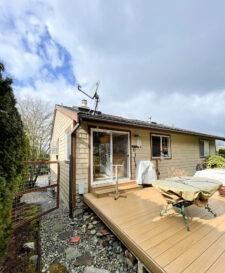
What Salt Air, Rain, and Moss Actually Do to a Window
Salt Air and Metal Components
Salt in the air isn't just a coastal cliché — it's a corrosive agent that settles on every exposed surface, including window hardware. Cheaper aluminum cranks, hinges, and locking mechanisms start to pit and seize up well before the glass or frame shows any wear. Once hardware corrodes, windows stop sealing tight, and that's when moisture starts working its way into places it shouldn't.
Driving Rain and Water Intrusion
Rain here doesn't just fall — it's pushed sideways by wind coming off open water, which means it hits window flanges and trim with real force. A window that's flashed correctly sheds that water outward and down. A window that's flashed poorly, or one where the installer skipped proper sill pan detailing, lets water track behind the trim and into the wall cavity. That kind of hidden water damage can go unnoticed for years before it shows up as soft trim, stained drywall, or a musty smell in a room.
Moss, Algae, and the Long Wet Season
Whatcom County's wet season runs long, and shaded exterior walls or windows under overhangs stay damp for extended stretches. That moisture supports moss and algae growth on wood trim, sills, and even on window screens and tracks. Left alone, that growth holds moisture against the wood and finish, accelerating rot at exactly the points — sills and lower corners — where a window is already most vulnerable.
What a Correct Custom Window Installation Involves
"Custom" doesn't just mean a non-standard size. It means the window is specified, flashed, and installed to match the actual exposure of that specific wall on that specific home. A proper job includes:
- Accurate field measurement accounting for any settling or out-of-square framing common in older coastal homes
- Correct sill pan flashing that directs any water that does get past the window back outside the wall assembly
- Compatible flashing tape and house wrap integration, not just caulk and hope
- Proper shimming so the window operates smoothly and doesn't rack over time with wind load
- Insulation in the gap between the rough opening and the window frame — done right, not overpacked or left empty
- Weather-resistant trim and sealant rated for high-moisture, high-UV coastal exposure
- A final water test or visual inspection of the seal before the job is called done
Skipping any of these steps might not show up as a problem right away. It shows up two or three winters later, after a few storm seasons have had time to find the weak point.
Choosing Window Materials for This Coastline
Frame Material Trade-Offs
There's no single "best" window frame material for every home — each has real trade-offs worth understanding before you decide.
| Frame Material | Coastal Performance | Maintenance |
|---|---|---|
| Vinyl | Won't rot or corrode; handles salt air well | Low — occasional cleaning |
| Fiberglass | Very stable in temperature swings and moisture; strong long-term option | Low |
| Wood (clad or unclad) | Classic look but vulnerable to moisture unless well-maintained | High — regular finish upkeep needed |
| Aluminum | Prone to corrosion and condensation in this climate unless thermally broken | Moderate to high |
We steer most homeowners in this area away from bare wood exteriors and non-thermally-broken aluminum, not because those products are bad everywhere, but because the maintenance burden they carry in a salt-air, high-rain environment is steep. A wood exterior here needs recoating on a schedule most homeowners underestimate. Vinyl and fiberglass hold up with far less attention, which matters most on a home you're not repainting every couple of years.
Glass Packages
Double-pane, low-E glass with argon fill is the practical baseline for this region — it manages heat loss during the cold, wet months and cuts down on condensation on interior glass during cold snaps. For rooms facing open water or prevailing wind, a slightly heavier glass package or laminated glass option is worth discussing for both noise reduction and impact resistance during winter storms.
Our Process, Start to Finish
1. On-Site Assessment
We look at each window opening individually — sun exposure, wind exposure, existing water damage, and current flashing condition — rather than quoting a blanket price for "windows" without seeing the home.
2. Honest Recommendation
We'll tell you which openings genuinely need full replacement versus which ones might just need re-flashing or hardware service. Not every window on a home is failing the same way.
3. Custom Ordering
Openings on older homes are rarely perfectly square or standard-sized. We measure and order to the actual opening rather than forcing a stock size to fit.
4. Installation and Flashing
This is where most window jobs succeed or fail. We flash every opening properly regardless of whether it's visible once trim goes back on — because the parts you can't see are the parts that determine whether the job lasts.
5. Final Inspection
Before we consider the job complete, we check operation, seal, and trim finish on every window installed.
Cost Factors to Understand Before You Budget
Window project costs vary widely based on size, quantity, material, and site conditions, so we won't quote a number without seeing the home. What we can tell you is what tends to move the price:
| Factor | Why It Matters |
|---|---|
| Frame material | Fiberglass and higher-end vinyl cost more upfront than basic vinyl or aluminum |
| Existing water or rot damage | Sill or framing repair adds labor before a new window can even go in |
| Opening size and count | Larger openings and whole-home projects have economies of scale over one-off replacements |
| Access and story height | Second-story or hard-to-access openings take more time and equipment |
| Glass upgrades | Impact-rated or acoustic glass adds cost but pays off on exposed elevations |
Signs It's Time to Replace, Not Repair
Not every problem window needs full replacement, but these signs generally mean it's time to stop patching and start budgeting for new units:
- Visible moss or algae growth on the sill or lower frame that keeps coming back after cleaning
- Soft or spongy wood trim around the window frame
- Fogging or condensation between panes on double-pane glass — a sign the seal has failed
- Hardware that's corroded, seized, or requires force to lock and unlock
- Drafts or noticeable temperature difference near the window on windy days
- Visible daylight or gaps around the frame when the window is closed
- Peeling paint or discoloration on interior trim that suggests moisture is getting past the seal
Why a Crew That Already Works This Area Matters
Coastal Whatcom County properties don't behave like inland construction projects, and a crew that hasn't worked this specific kind of exposure regularly will make assumptions that don't hold up here — under-flashing an opening that faces open wind, or specifying a frame material that looks fine in the showroom but corrodes within a few winters. We work homes along this stretch of coastline consistently, which means we already know which details matter most for a given elevation before we even start measuring: which walls take the worst of the wind-driven rain, which areas hold moisture longest through the wet months, and which hardware and finish choices actually hold up rather than just looking good on install day.
That familiarity also means less guesswork and fewer surprises during the job itself — we're not learning the coastal exposure lessons on your home for the first time.
Get a Straightforward Estimate
If your windows are showing signs of wear, letting in drafts, or you're planning ahead of the next wet season, we're happy to take a look and give you an honest read on what your home actually needs — no pressure, no upsell. Use the form below to request a free estimate.