 Ferndale Roofing
 Siding Built for Life on the Water
Homes in and around Lummi Nation sit close to Bellingham Bay, Hale Passage, and Lummi Bay, which means they take on weather most inland Whatcom County houses never see. Salt-laden air moves off the water and settles on exterior surfaces year-round. Wind-driven rain comes in sideways during winter storms instead of falling straight down. And the long, damp shoulder seasons that stretch from fall through spring give moss, algae, and mildew months at a time to get established on anything that stays wet. Siding out here isn't just a cosmetic choice — it's the first line of defense against a genuinely tough coastal climate.
We install siding replacements specifically for homes in this waterfront and low-lying part of Ferndale, and the material and installation choices that hold up well on a dry, sheltered lot inland often fail faster out here. This page walks through what that means for your home, what a correct replacement actually involves, and why we've standardized on one product system instead of offering the full menu most contractors sell.
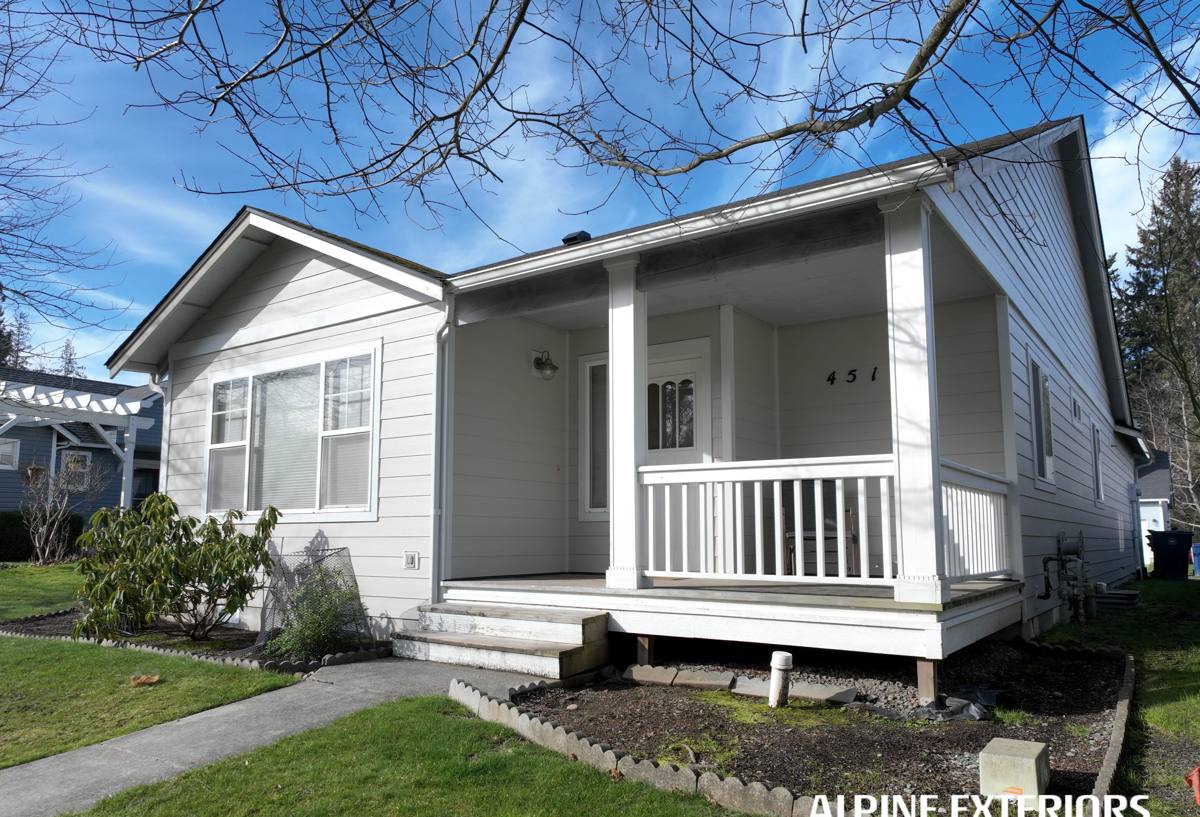
What Salt Air, Driving Rain, and Moss Actually Do to Siding
Each of these three conditions attacks siding differently, and a Lummi Nation home usually deals with all three at once.
Salt Air
Airborne salt is corrosive to metal fasteners, flashing, and trim, and it's abrasive to painted and coated surfaces over time. Siding products that rely on a thin factory coating or field-applied paint tend to chalk, fade, and lose their protective layer faster in a marine environment than they would twenty or thirty miles inland.
Driving Rain
Waterfront exposure means wind pushes rain into seams, laps, and fastener penetrations that would stay dry on a more sheltered wall. If the water-resistive barrier behind the siding, the flashing details, and the lap spacing aren't done correctly, that moisture finds its way behind the cladding — and once it's behind the siding, the damage happens where you can't see it until it's serious.
Moss and Organic Growth
Whatcom County's wet season runs long, and shaded, north-facing, or low-airflow walls near mature trees stay damp for extended stretches. Moss and algae don't just look bad — they hold moisture against the siding surface, which accelerates rot in wood-based products and can stain or degrade coatings on lower-quality composites.
None of this means siding is doomed on the water — it means the product and the installation both have to be matched to the exposure, not just to a catalog picture.
Why We Install Only James Hardie Fiber Cement
Ferndale Roofing Co installs James Hardie fiber cement siding exclusively. We don't offer vinyl, LP SmartSide, Cemplank, Allura, primed spruce, or cedar — not because those products don't have a place in the market, but because we've standardized our crews, our warranty backing, and our reputation on one system we can install to spec every time and stand behind without hedging.
For a coastal property specifically, fiber cement has real advantages over the alternatives:
- Non-combustible: Hardie board is fiber cement, not wood or wood byproduct, which matters for fire exposure and for many insurance conversations.
- Dimensionally stable in wet climates: unlike wood-based composites, fiber cement doesn't swell, delaminate, or take on moisture the way engineered wood siding can if a seam or cut edge is compromised.
- Factory-applied ColorPlus finish: the color and protective coating are baked on at the factory under controlled conditions, which holds up better against salt air and UV than field-applied paint.
- Climate-engineered HZ product lines: Hardie manufactures different formulations for different climate zones, including moisture-heavy regions like ours — this isn't one generic product sold everywhere.
- Warranty structure: Hardie backs its products with a strong, transferable limited warranty, which matters if you sell the home down the road.
We're not going to tell you vinyl or LP SmartSide are bad products across the board — they're not, and they work fine in plenty of applications. But for the exposure a Lummi Nation home deals with, we've seen enough of the trade-offs — vinyl's tendency to warp or fade and its seams being a weak point against driving rain, engineered wood's dependence on flawless edge-sealing and maintenance to avoid moisture intrusion — that we made a business decision to install one product system we trust completely rather than sell whatever a homeowner asks for.
What a Correct Siding Replacement Actually Involves
Siding replacement is not just pulling off old boards and nailing up new ones. On a coastal property, the details behind the siding matter as much as the siding itself.
Tear-Off and Inspection
We remove the existing siding down to the sheathing and inspect for rot, moisture damage, and compromised framing. This is often the first real look anyone gets at what's been happening behind the old siding, and it's common to find soft sheathing or water staining around windows, corners, and low-clearance areas near grade.
Water-Resistive Barrier
A new, continuous weather-resistive barrier goes over the sheathing before any siding is installed. On a wind-exposed, rain-driven site, the quality and lapping of this layer is arguably more important to long-term performance than the siding itself.
Flashing at Every Penetration
Windows, doors, hose bibs, vents, and any other wall penetration need proper flashing integrated with the water barrier so water is directed out and down, never trapped behind the cladding. This is one of the most commonly rushed steps on lower-quality installs, and it's where most siding failures actually originate.
Correct Fastening and Clearances
Hardie siding has manufacturer-specified fastener patterns, lap requirements, and clearance-to-grade and clearance-to-roofline standards. Skipping these doesn't show up as a problem in year one — it shows up in year six or seven as moisture intrusion or premature coating failure, right around when most warranties would have covered a proper install.
Trim, Caulking, and Finish Details
Corner boards, trim around openings, and any field-cut edges get properly sealed and finished so the ColorPlus coating's protection isn't compromised at the cut lines.
Our Process for Lummi Nation Homes
- Site visit and assessment: we look at wind exposure, water drainage, existing moisture damage, and how the home's orientation to the water has affected the current siding.
- Product and color selection: we walk through the appropriate Hardie line and ColorPlus options for your home's exposure level.
- Written estimate: a clear scope of work and cost breakdown before anything is scheduled.
- Tear-off and sheathing inspection: any rot or damage found gets documented and addressed before new siding goes up, not hidden behind it.
- Barrier, flashing, and siding installation: installed to Hardie's specifications for our climate zone.
- Final walkthrough: we review the finished work with you before calling the job done.
What Drives the Cost of a Siding Replacement
Every home is different, but these are the main factors that move the price up or down on a coastal Ferndale-area siding job:
| Factor | Why It Matters |
|---|---|
| House size and wall complexity | More square footage, corners, and cutouts around windows and doors mean more labor and material. |
| Condition of the sheathing underneath | Rot or moisture damage found during tear-off adds repair scope before new siding can go on. |
| Siding profile and product line | Lap width, board texture, and the specific Hardie line chosen affect material cost. |
| Color and finish selection | Standard ColorPlus colors versus custom finishes can shift pricing. |
| Trim and detail work | Corner boards, window casing, and fascia detailing add labor time. |
| Access and site conditions | Waterfront lots with limited access, steep grades, or landscaping close to the house can slow the work. |
We give a written, itemized estimate before any work starts, so you know exactly what you're paying for and why — no vague lump-sum numbers.
Signs Your Siding Needs Replacing, Not Just Repair
- Soft, spongy, or crumbling spots when you press on the siding
- Persistent moss or algae growth that comes back within weeks of cleaning
- Paint or coating that's peeling, chalking heavily, or bubbling
- Visible warping, cupping, or gaps between boards
- Staining or discoloration on interior walls near exterior corners
- Rising energy bills with no other clear cause, suggesting compromised insulation behind the wall
- Siding that's original to a home built more than 20-25 years ago, especially wood-based products
If you're seeing more than one of these, it's worth having someone look at what's happening behind the siding, not just at the surface.
Why Hiring a Crew That Already Works This Area Matters
A siding contractor's experience with a specific microclimate isn't a formality — it changes real decisions on the job. A crew that regularly works waterfront and near-waterfront properties around Lummi Nation and Ferndale knows to pay closer attention to flashing at grade, to fastener corrosion resistance, and to how much clearance a wall actually needs given wind and rain direction off the bay. That's different from general siding experience gained on inland, sheltered lots.
We also understand that many homes in this area have their own site-specific quirks — proximity to water, tree cover, drainage patterns — and we treat every estimate as specific to that property rather than a generic template. Respecting the character of this community and doing the work right the first time matters more to us than moving fast through a job list.
Ready for a Straightforward Estimate
If your siding is showing wear from salt air, storm exposure, or years of moss and moisture, we're happy to take a look and give you an honest read on what's going on and what it would take to fix it right. Fill out the form below for a free, no-pressure estimate — no obligation, just a clear picture of your options.