 Ferndale Roofing
 Deck Building for Lummi Nation's Coastal Conditions
Homes in and around Lummi Nation sit close to the water, and that proximity shapes almost every decision that goes into a well-built deck. Salt-laden air off Bellingham Bay and the Strait of Georgia, long stretches of driving rain, and a moss season that can run most of the year all put more stress on outdoor structures here than they do further inland in Whatcom County. A deck built without those conditions in mind may look fine for a season or two, then start showing corrosion at the fasteners, soft spots at the ledger, or a slick green film that never fully goes away.
We build decks specifically for this stretch of coastline. That means choosing materials and hardware rated for marine exposure, framing with drainage and airflow as a priority rather than an afterthought, and detailing the connection points where water and salt do the most damage. This page walks through what that actually looks like for a deck built in Lummi Nation, not a generic overview of deck construction.
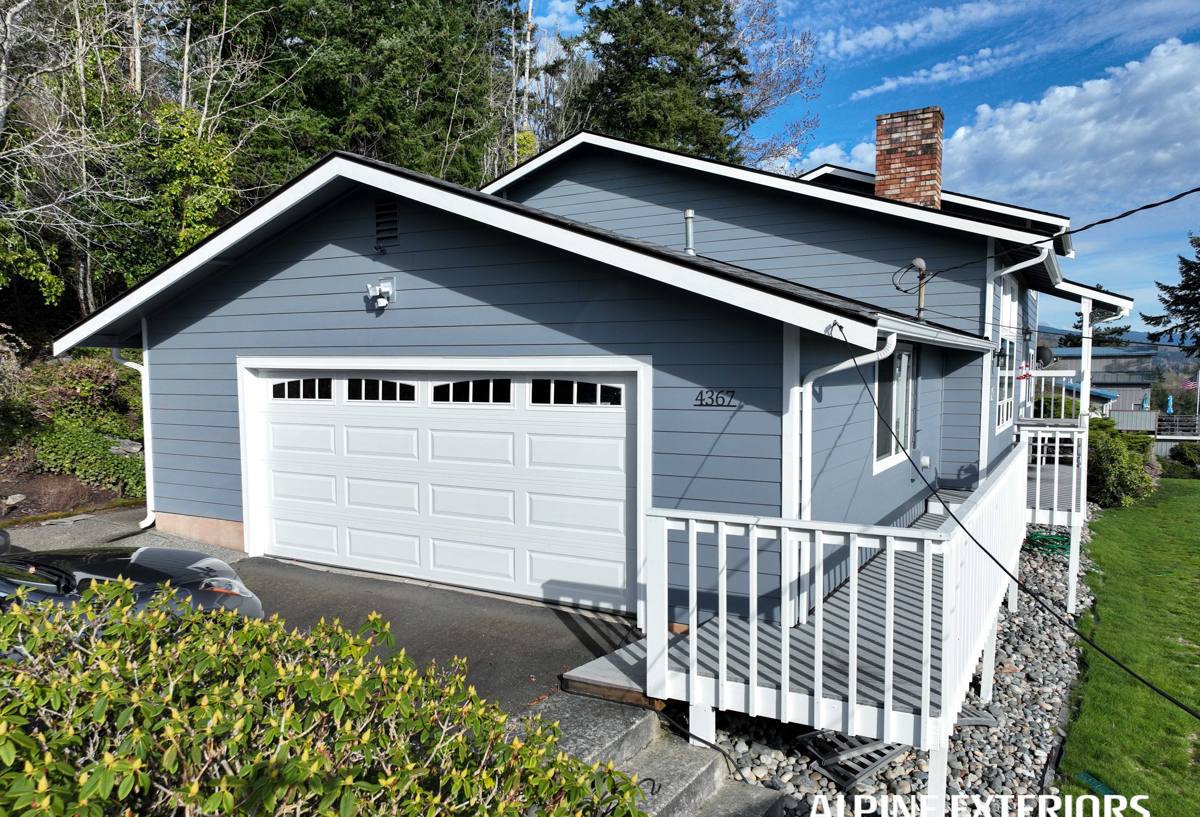
What Salt Air, Rain, and Moss Actually Do to a Deck
It helps to understand the specific ways coastal Whatcom County weather attacks a deck, because it explains why certain shortcuts that work fine in drier climates fail here.
Salt Air and Corrosion
Airborne salt is conductive and corrosive. It settles on exposed metal — screws, joist hangers, bolts, railing hardware — and accelerates rust far faster than plain moisture alone would. Standard galvanized fasteners can start showing surface corrosion within a few years this close to the water. Once a fastener starts to weaken, it's not just cosmetic; it's a structural connection losing integrity.
Driving Rain and Moisture Intrusion
Rain here doesn't just fall straight down. Wind off the water pushes it sideways into ledger connections, under railing posts, and into any gap where flashing or sealant wasn't done correctly. Wood that stays damp for extended periods is where rot starts, usually from the inside of a joint outward, which is why deck failures often show up first at connection points rather than on open board surfaces.
Moss Season
Whatcom County's mild, wet winters and shoulder seasons create ideal conditions for moss and algae growth on horizontal surfaces that don't get much direct sun or airflow. Beyond looking bad, moss holds moisture against the decking surface, which shortens the life of the boards underneath it and makes the deck surface slick and genuinely dangerous underfoot, especially on stairs.
Choosing the Right Decking Material for This Location
There's no single "best" decking material for every situation, but some materials are a noticeably better fit for a Lummi Nation property than others. The table below reflects trade-offs we actually weigh with homeowners, not marketing claims.
| Material | How It Handles Salt Air & Moisture | Moss/Algae Resistance | Maintenance Burden |
|---|---|---|---|
| Pressure-treated lumber | Good with quality hardware; needs consistent sealing | Low — needs regular cleaning | Annual cleaning and periodic sealing |
| Cedar | Naturally moisture-tolerant; fasteners must be corrosion-resistant to avoid staining | Moderate — still benefits from cleaning | Periodic sealing/staining to preserve color and protection |
| Composite decking | Very good — doesn't absorb moisture or corrode | Moderate to good depending on the product's surface texture | Low — occasional washing, no sealing |
| PVC decking | Excellent — fully moisture-resistant | Good, especially on smoother-surface products | Low — washing only |
Composite and PVC products have become popular in coastal Whatcom County precisely because they remove moisture absorption from the equation entirely, which sidesteps a lot of the rot and warping risk that wood carries here. That said, wood decking done correctly — with the right species, sealing schedule, and corrosion-resistant hardware — still performs well and remains the right call for homeowners who want that material specifically. We'll walk through the honest maintenance expectations for whichever material you're leaning toward before you commit, rather than pushing one option.
Framing and Structural Hardware: Where Most Deck Problems Start
The decking boards are the most visible part of a deck, but the framing underneath and the hardware holding it together are what actually determine how long it lasts in this climate.
- Joist hangers and fasteners: we use stainless steel or heavy hot-dip galvanized hardware rated for coastal/marine exposure, not standard-grade galvanized fasteners that corrode faster near saltwater.
- Ledger board flashing: the connection where the deck attaches to the house is the single most common failure point on any deck. Proper flashing keeps wind-driven rain from getting behind the ledger and into the house framing.
- Post bases: post bases that hold posts above grade and away from standing water reduce the moisture wicking that leads to rot at the base of support posts.
- Beam and joist spacing: engineered to current code for the deck's actual load, not just "what's always been done," especially important for elevated decks or decks supporting hot tubs or heavy furniture.
None of this is visible once the deck is finished, which is exactly why it matters to have it done right the first time. A deck that looks solid on the surface can still be quietly failing underneath if the hardware and flashing weren't matched to this environment.
Drainage and Slope: Managing Water Before It's a Problem
Water management is arguably more important to a deck's lifespan here than the decking material itself. A few details make the biggest difference:
Board Spacing and Slope
Decking boards need consistent gapping to let water drain through rather than pool on the surface, and the frame itself should have a slight slope away from the house so water sheds instead of collecting at the ledger.
Under-Deck Airflow
Decks built low to the ground or over patios need enough airflow underneath to let framing dry out between rain events. Poor airflow is one of the most common reasons we see premature rot in older decks in this area.
Stair and Landing Drainage
Stairs collect moss faster than open deck surfaces because they get less sun and more foot traffic wears grip surfaces down. Proper drainage at stair landings and attention to tread spacing reduces both moss buildup and slip risk.
Our Deck Building Process
Every deck we build in Lummi Nation follows the same general process, adjusted for the specific site, elevation, and how close the property sits to the water.
- On-site assessment: we look at sun exposure, prevailing wind and rain direction, grade, and how close the site is to salt spray to inform material and hardware choices.
- Design and material selection: we walk through decking material trade-offs honestly, including what upkeep each option actually requires in this climate.
- Permitting: we handle the permitting process required for the project's specific location and jurisdiction.
- Footings and framing: built with corrosion-resistant hardware and proper flashing at every connection point, especially the ledger.
- Decking and railing installation: installed with correct spacing for drainage and airflow underneath.
- Final walkthrough: we review maintenance expectations for the specific material installed so there are no surprises a year or two in.
Here's a quick checklist of what to expect us to confirm before we ever start building:
- Ledger flashing detail and how the deck ties into the existing structure
- Hardware grade — confirmed corrosion-resistant, not standard galvanized
- Decking material and its realistic maintenance schedule for this climate
- Drainage slope and under-deck airflow plan
- Stair and railing layout, including grip and drainage at landings
- Permitting requirements for the specific site
Permitting on and Near Lummi Nation Land
Permitting requirements can differ depending on exactly where a property sits and which jurisdiction has authority over it, which is not always identical to permitting elsewhere in Whatcom County. We confirm the correct permitting path for each specific site before work begins rather than assuming one process applies everywhere. If you're not sure which jurisdiction covers your property, that's something we sort out with you early in the process rather than leaving it as a surprise mid-project.
Maintenance in a Marine Climate
Whatever material a deck is built from, a little regular upkeep goes a long way in this environment. Wood decks generally need cleaning and re-sealing on a recurring schedule to keep water out of the grain. Composite and PVC decks need far less — mostly periodic washing to keep moss and algae from establishing — but "low maintenance" doesn't mean "no maintenance" in an area with this much moisture and salt exposure. Hardware should get a visual check periodically too, since that's where corrosion shows up first and is easiest to catch before it becomes a structural issue.
Why Hire a Crew That Already Works in Lummi Nation
A deck builder who mainly works inland doesn't necessarily think about salt-air hardware ratings or wind-driven rain at the ledger, because those aren't daily concerns in a drier or more sheltered part of the county. Working regularly in this area means we've seen what actually fails here over time — which hardware holds up, which materials handle the moss season without constant upkeep, and which framing details matter most given the wind and rain patterns off the water. That local pattern recognition is the difference between a deck that's built to code and a deck that's actually built for where it sits.
If you're planning a new deck or replacing one that's showing its age, we're happy to come take a look and put together a straightforward, no-pressure estimate for your property. There's a form below — reach out and we'll go from there.