 Ferndale Roofing
 Storm Damage in Custer: What Whatcom County Weather Does to a Roof
Custer sits close enough to the Strait of Georgia and the open water of Whatcom County that roofs here take a different kind of beating than roofs twenty miles inland. Wind off the water carries salt, and that salt settles on shingles, flashing, and fasteners year-round. Add the driving, sideways rain that comes through with fall and winter storm systems, and you have two forces working against a roof at the same time: wind trying to lift and loosen materials, and water looking for any gap that wind has opened up. Layer in a moss season that runs long in this climate, and a roof that isn't checked regularly can be quietly losing ground for months before a leak ever shows up inside the house.
None of this means Custer homes need exotic roofing. It means storm damage repair here has to account for salt exposure, wind-driven water intrusion, and moss growth as related problems, not separate ones. A repair that only patches the visible damage and ignores the other two usually needs to be redone within a couple of years.
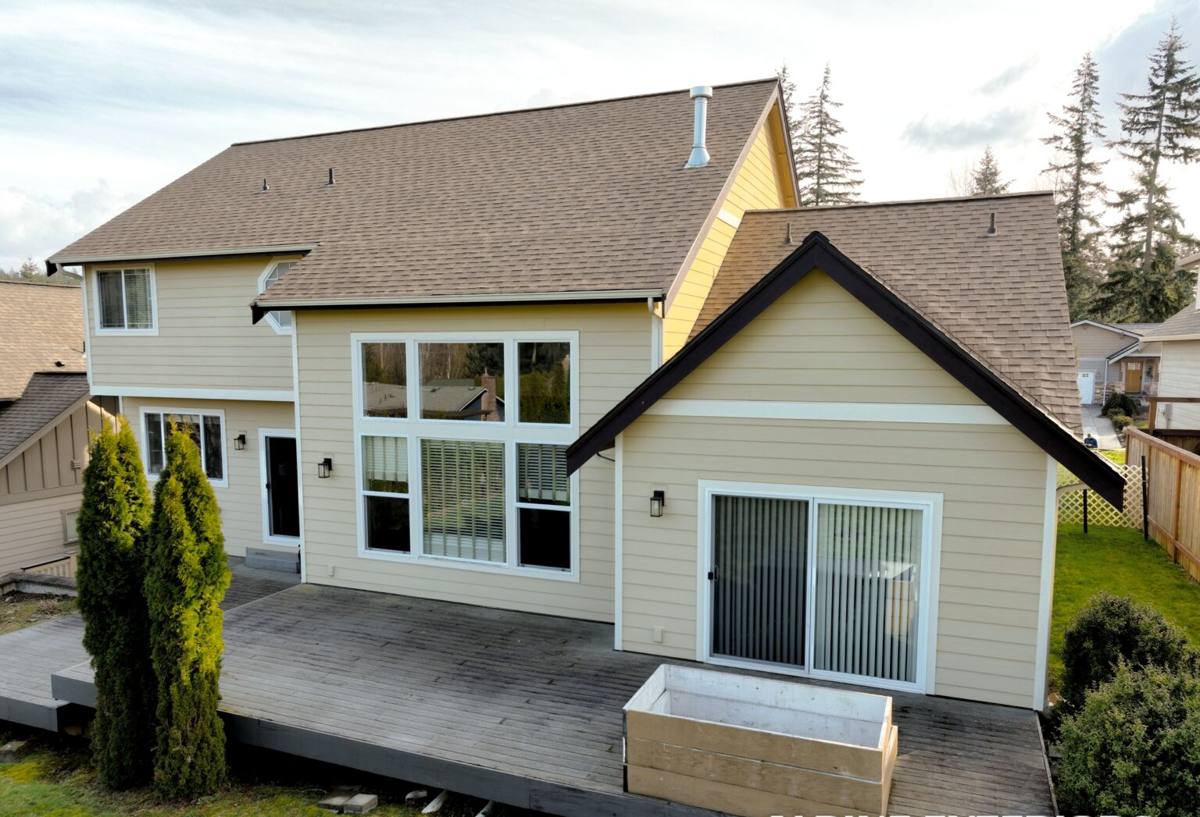
Common Storm Damage We Find on Custer Roofs
Wind Damage
Sustained wind and gusts during winter storms lift shingle tabs, crack ridge caps, and work fasteners loose over repeated cycles. Once a shingle edge has been lifted a few times, the adhesive strip underneath loses its ability to reseal, even if the shingle looks intact from the ground. That shingle is now a weak point the next time wind picks up.
Wind-Driven Rain Intrusion
Straight-down rain rarely causes leaks on a roof in good condition. Rain that's being pushed sideways by wind is a different story — it can work its way up under shingle edges, around flashing that's slightly proud of the surface, and into any nail hole that isn't fully sealed. This is why storm leaks often show up at valleys, chimney flashing, and roof-wall intersections rather than in the middle of an open roof field.
Moss and Debris Impact
A long moss season does two things to a Custer roof. First, moss holds moisture against the roofing material far longer than open air would, which accelerates wear on shingles and speeds up granule loss. Second, moss mats and trapped debris change how water moves across the roof during a storm, sometimes redirecting flow toward seams and edges that were never designed to handle concentrated water. Storm damage on a mossy roof is often worse than the same storm would cause on a clean one, simply because the moss changed the drainage pattern.
Signs Your Custer Home May Have Storm Damage
Some storm damage is obvious. Most of it isn't, at least not from the ground. After any significant wind or rain event, it's worth checking for:
- Shingle tabs that look lifted, curled, or out of alignment with the surrounding roof
- Granules collecting in gutters or at the base of downspouts
- New or worsening moss growth along the north-facing slopes or shaded valleys
- Water stains or discoloration on ceilings, especially near exterior walls or chimneys
- Soft or discolored fascia and soffit boards near the roofline
- Flashing around chimneys, vents, or skylights that appears bent, separated, or rusted
- Debris — branches, needles, moss clumps — built up in valleys or behind chimneys where it traps water
Any one of these on its own might not mean much. Two or three together, especially after a named storm or a week of heavy wind, is worth a professional look before the next system rolls through.
Our Storm Damage Repair Process
We treat storm damage repair as a diagnostic job first and a repair job second. Patching the spot that's leaking without understanding why it failed usually just delays the next call.
- Full roof inspection, not just the reported leak area. We walk the roof, checking every slope, valley, and penetration — not only the spot where a stain appeared inside, since water often travels before it drips.
- Document the damage. We record what we find with photos and notes, which matters both for our own repair plan and for any insurance claim you may file.
- Identify the actual entry point. Interior stains rarely line up directly under the roof damage — we trace the path water actually took.
- Explain the findings and the repair options in plain terms. You'll know what's damaged, what's still sound, and what your realistic options are before we touch anything.
- Make the repair to match existing materials and manufacturer specifications. Flashing, underlayment, and shingles are replaced to the same standard as the surrounding roof, not just sealed over.
- Address contributing factors. If moss or poor drainage played a role in the damage, we'll flag it and offer options — this is what keeps the same spot from failing again next storm season.
Repair or Replace? What We Look At
Most storm damage on a roof under 15 years old is repairable. Older roofs, or roofs with damage in multiple areas, sometimes make more sense to replace outright. Here's how we weigh it:
| Factor | Favors Repair | Favors Replacement |
|---|---|---|
| Age of roofing | Under 12–15 years | Approaching or past expected lifespan |
| Extent of damage | Isolated to one or two areas | Spread across multiple slopes |
| Underlying decking | Solid, no rot found | Soft spots or water damage to sheathing |
| Moss/algae history | Minor, manageable with cleaning | Heavy, long-term growth affecting large areas |
| Prior repairs | Roof has few or no past patches | Multiple past repairs in different spots |
We'll always give you our honest read on which side of that table your roof falls on. A repair that's likely to need another repair in a year isn't a favor to you — it just delays a decision you'll end up making anyway.
Materials and Methods Built for Salt Air and Moss
Flashing and Fasteners
In salt-exposed areas like Custer, we pay close attention to flashing and fastener material. Corrosion-resistant flashing and properly sealed fasteners hold up far longer near open water than standard-grade hardware, and this is one area where cutting corners shows up as a repeat repair a few years down the line.
Underlayment as a Backup Layer
Because wind-driven rain can get past shingles even on a well-maintained roof, the underlayment beneath is your second line of defense. When we're repairing storm damage, we make sure the underlayment under the affected area is intact and properly lapped — a shingle repair over compromised underlayment is a repair that won't last.
Moss-Resistant Practices
We don't sell moss treatments as a cure-all, but proper attic ventilation, keeping valleys and gutters clear, and addressing moss growth before it mats down are all things that reduce how much punishment your roof takes in the next storm. A roof that sheds water cleanly handles wind-driven rain far better than one where moss is already holding moisture against the surface.
Insurance Claims and Documentation
Many storm damage repairs in Whatcom County are at least partially covered by homeowners insurance, depending on your policy and the cause of the damage. We're not your insurance adjuster, but we can provide clear photo documentation and a written scope of the damage we find, which is often exactly what your adjuster needs to process a claim efficiently. If you're not sure whether a repair is worth filing a claim over, we'll give you an honest cost estimate so you can make that call yourself.
Why a Local Custer/Ferndale Crew Matters
Storm damage repair isn't a one-size-fits-all trade. A crew that works roofs across Whatcom County regularly — including the wind and salt exposure specific to areas near Custer and the Ferndale coastline — knows which failure points to check first and which materials actually hold up here versus on a roof twenty miles inland. That familiarity saves time during an inspection and means fewer surprises once a repair is underway. It also means we're a short drive away if a repair needs a follow-up look after the next storm, not scheduling you weeks out because we're coming from across the region.
We also know that storm damage rarely announces itself politely. A missing shingle after a windstorm can turn into a soaked attic insulation problem within a couple of heavy rain events if it sits unaddressed. Being local means we can often get out to look at active or recent damage faster than a company working from farther away.
Get a Free, No-Pressure Estimate
If a recent storm has you wondering about your roof, or you've noticed any of the warning signs above, we're happy to take a look. The estimate is free, there's no pressure to move forward, and you'll get a straight answer about what — if anything — needs to be done. Use the form below to get started.