 Ferndale Roofing
 Custer Sits Right in the Path of Everything Whatcom County Weather Throws
Custer is a rural crossroads community northwest of Ferndale, close enough to the water that homes here take on a mix of conditions most inland siding contractors never have to think seriously about. There's salt-laden air rolling in off the Strait of Georgia and the bay, long stretches of driving rain through fall and winter, and a moss and algae season that can run most of the year in shaded, north-facing exposures near tree lines and farmland. None of that is dramatic on any single day. It's the accumulation — year after year of moisture cycling in and out of a wall assembly — that determines whether siding lasts fifteen years or forty.
Siding replacement in this area isn't a cosmetic project. It's a decision about what's going to stand between a home's structure and that cycle of salt, rain, and moss for the next few decades. We treat it that way.
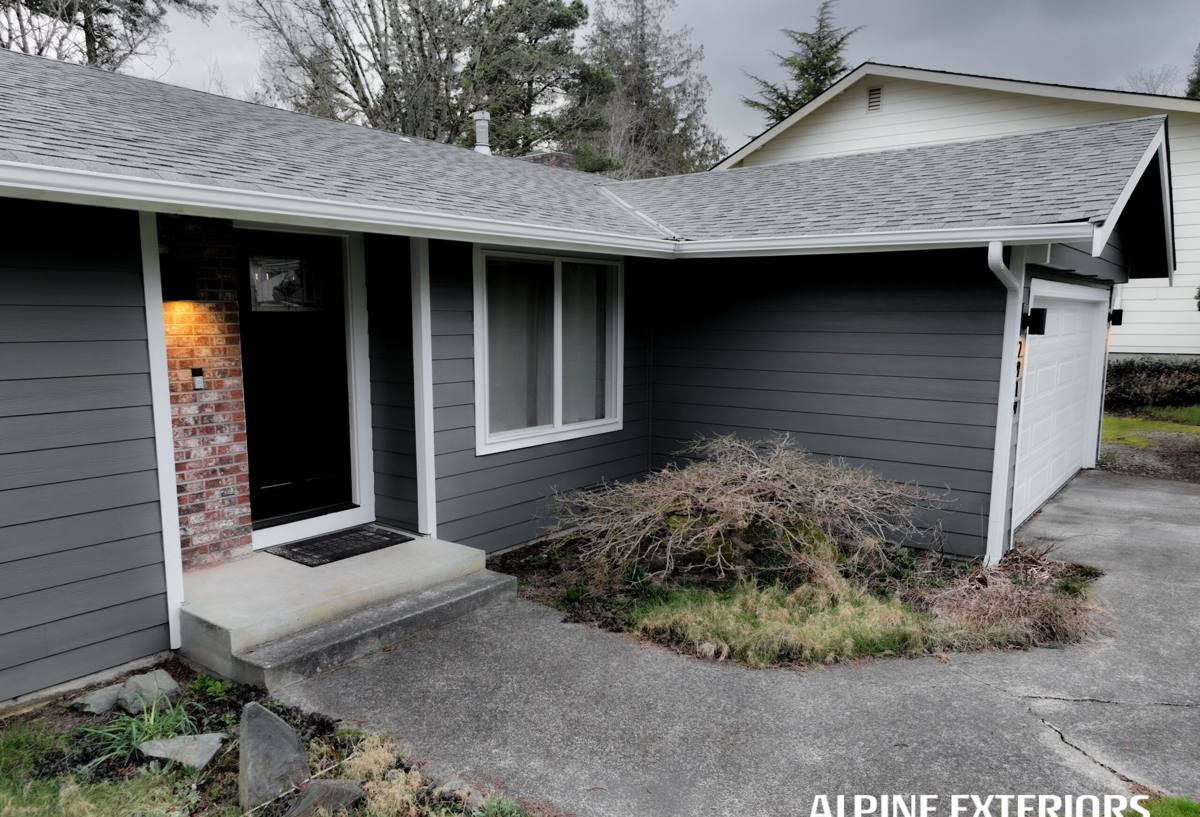
How This Climate Actually Attacks Siding
Salt Air
Airborne salt is corrosive to fasteners, trim flashing, and any coatings not engineered to resist it. Over time it accelerates fastener corrosion and breaks down cheaper factory finishes faster than manufacturers' published fade and chalk warranties assume — those numbers are usually tested in less aggressive environments.
Driving Rain
Wind-driven rain doesn't just run down a wall — it gets pushed sideways and upward into laps, seams, and butt joints. Siding systems that aren't installed with the right overlaps, gaps, and drainage plane behind them will take on moisture at exactly those joints, regardless of what the siding material is rated for.
Moss and Organic Growth
Shaded exposures, especially north and east walls near trees or outbuildings common around Custer properties, stay damp longer after rain. Moss and algae hold moisture directly against the siding surface, which is a much bigger problem for materials that absorb water or swell than for ones that don't.
Signs a Custer Home Needs Siding Replaced, Not Patched
- Soft, spongy, or crumbling spots when you press on the siding, especially near the bottom courses and around windows
- Paint that won't hold — recurring peeling or bubbling in the same spots every couple of years
- Visible gaps, warping, or buckling boards, particularly on sun-and-rain-exposed elevations
- Persistent moss or black streaking that returns within a season of cleaning
- Interior signs — musty smell, staining, or soft drywall near exterior walls — that point to moisture getting behind the siding
- Siding that's original to a home built more than 20-25 years ago, especially if it's an older wood, hardboard, or vinyl product
A few of these can sometimes be addressed with targeted repair. Most of them, especially in combination, mean the assembly behind the siding has already been taking on water for a while — and patching the visible symptom without addressing that is a short-term fix.
What a Correct Siding Replacement Actually Involves
Siding replacement done right is mostly about what happens before the new siding ever goes up. The visible product is only one part of a system.
Full Tear-Off and Inspection
We remove the old siding down to the sheathing so we can actually see what's underneath — rot, soft sheathing, damaged framing, or old moisture damage that's been hidden for years. This is the point where problems get caught and fixed, not covered over.
Water-Resistive Barrier
A correctly lapped, properly fastened weather-resistive barrier goes over the sheathing before any siding. This is the layer that actually stops bulk water that gets past the siding surface — it matters more in a driving-rain climate than almost any other single component.
Flashing at Every Penetration
Windows, doors, hose bibs, vents, light fixtures, and deck ledgers all need proper flashing integrated with the water-resistive barrier using correct shingle-lap sequencing. This is where most real-world leaks originate — not through the siding field, but at these transitions.
Rainscreen or Furring Where Called For
Depending on the wall assembly and exposure, we build in a drainage gap behind the siding so any moisture that does get past the cladding can drain and dry instead of sitting against the sheathing. On rain-heavy, salt-exposed walls, this detail pays for itself.
Correct Fastening and Clearances
Fastener type, spacing, and depth are specified by the manufacturer for a reason — over-driven nails, wrong fastener alloys, or insufficient ground clearance are common causes of early siding failure that have nothing to do with the siding material itself.
Why We Install Only James Hardie Fiber Cement
We don't install LP SmartSide, vinyl, Cemplank, Allura, or primed wood siding like spruce or cedar. That's a deliberate standard, not a limitation on what we're capable of installing.
Each of those products has real strengths — vinyl is inexpensive and low-maintenance in mild climates, engineered wood has a warm appearance, cedar has genuine curb appeal. But in a Whatcom County coastal-influenced environment with salt air, sustained wind-driven rain, and long damp seasons, the trade-offs stack up differently:
- Vinyl can warp or distort under sustained heat exposure on sun-facing walls and doesn't hold paint if a color change is ever wanted — it's replaced, not refinished.
- Engineered wood (LP SmartSide) performs well when installation and caulking are maintained precisely, but any breach at a cut edge or fastener hole allows moisture into the wood-based substrate, and consistent long-term maintenance is what determines its lifespan.
- Primed cedar or spruce requires the most active homeowner maintenance of any siding option — regular refinishing, caulking, and inspection — to keep moisture out of a naturally organic material.
James Hardie fiber cement is non-combustible, dimensionally stable across wet and dry cycles, and doesn't feed moss the way organic materials can. Its factory-applied ColorPlus finish is baked on and warranted against fading and chipping under real exposure conditions, which matters directly for salt-air and UV wear. Hardie's HZ5 product line is engineered specifically for climates with more moisture and freeze-thaw exposure — relevant for this region. The transferable warranty structure also gives a homeowner real protection if the property changes hands before the siding's useful life is up.
None of that replaces correct installation. Even the best siding material fails early if the water-resistive barrier and flashing behind it are wrong. That's why we treat the assembly and the material as one job, not two.
Our Process, Start to Finish
- On-site assessment — we look at current siding condition, wall exposure, drainage, and any visible moisture damage before quoting anything.
- Written scope and estimate — what's being torn off, what barrier and flashing details apply to your specific walls, and what Hardie product and profile fit the home.
- Tear-off and sheathing inspection — full removal, with any rot or damage addressed and documented before covering it back up.
- Barrier, flashing, and drainage installation — the part of the job that determines whether the siding lasts.
- Hardie installation to manufacturer spec — correct fastening, clearances, and joint treatment.
- Final walkthrough — we go over the finished work with you before calling the job done.
What Drives Cost on a Custer Siding Job
| Factor | Why It Matters |
|---|---|
| Extent of hidden damage found at tear-off | Rotted sheathing or framing repair adds scope that can't be quoted until walls are opened up |
| Home size and wall complexity | More corners, gables, and penetrations mean more flashing detail and labor time |
| Hardie product line and profile chosen | Lap, shingle, and panel styles, plus HZ5 vs. standard formulations, price differently |
| Trim and accessory scope | Fascia, soffit, and trim replacement alongside siding changes total project cost |
| Site access | Rural Custer properties can involve longer driveways, setbacks, or equipment access that affect labor time |
We give a written, itemized estimate before any work starts so there are no surprises about what's driving the number.
Simple Maintenance That Extends the Life of New Siding
- Rinse siding annually, especially shaded or north-facing walls prone to moss and algae
- Keep gutters clear so overflow doesn't run down and sit against siding seams
- Trim back vegetation and tree branches that keep walls shaded and damp
- Walk the exterior once a year and look at caulking around windows, doors, and trim
- Address any impact damage or cracked caulk promptly rather than letting moisture find a way in
Why Hiring a Crew That Already Works Custer Matters
Siding installed correctly for a dry inland climate isn't automatically correct for a property sitting in salt air with sustained wind-driven rain. The flashing details, drainage decisions, and fastening specs that hold up here are the same ones we apply on every Custer and Ferndale job we run, because we've seen what happens when they're skipped. A crew that already knows this stretch of Whatcom County isn't guessing at what the weather will do to a wall assembly — it's building for the conditions that are already there.
If your Custer-area home has siding that's aging, showing moss it won't shed, or just due for an honest look, we're glad to come out and take one. The estimate is free, there's no pressure attached to it, and you'll get a straight answer about what your home actually needs — use the form below to get started.