 Ferndale Roofing
 New Roof Installation for Custer's Open, Weather-Exposed Terrain
Custer sits in the agricultural flatland north of Ferndale, close enough to the Salish Sea that marine air, wind, and long stretches of rain shape how every roof on a home out here has to be built. There isn't much in the way of hills or dense tree cover to break the wind across most of this area, so storms coming off the water push rain sideways into roof planes instead of letting it fall straight down and run off. Add a moss season that can stretch across most of the year on shaded, north-facing slopes, and a new roof installation in Custer has to be treated as a system built for these specific conditions, not a generic product installed the same way it would be forty miles inland.
This page covers new roof installation specifically for Custer homes: what the local climate actually demands from a new roof, what a correct installation involves from tear-off to final flashing, how our process works, and why hiring a crew that already works this part of Whatcom County matters more than it might seem.
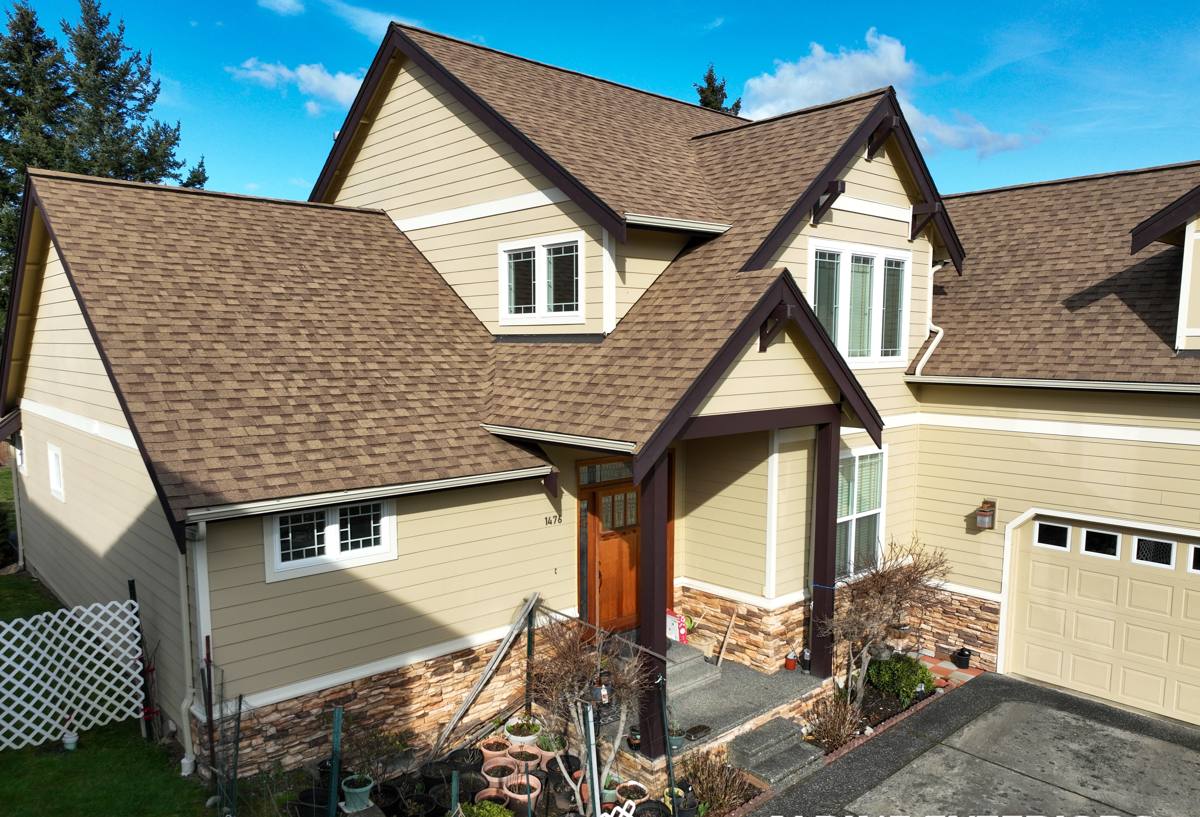
What Custer's Climate Demands From a New Roof
Wind-Driven Rain Across Open Land
Flat, open agricultural terrain gives storm systems off the Strait of Georgia room to push rain into roof planes at an angle instead of straight down. A roof built to a bare minimum spec handles vertical rain fine and then leaks the first time a real storm drives water sideways under shingle tabs or up under flashing edges. New roof installations here need underlayment and flashing detail sized for wind-driven rain as a normal condition, not an occasional worst case.
Salt-Laden Air and Corrosion
Custer sits a few miles inland from the water, so homes here don't take direct salt spray the way a waterfront property closer to the shoreline does. Salt-laden air still travels well inland on winter storms, and it works steadily on exposed metal over years. Fasteners, flashing, and any exposed hardware on a new roof need to be corrosion-resistant, because the cheaper galvanized options that hold up fine in a dry inland climate start failing early out here.
A Long Moss Season
Shaded and north-facing roof slopes in Custer stay damp for long stretches of the year, which is exactly what moss needs to take hold. Once moss establishes itself on a roof, it holds moisture against the shingle surface, works its way under tabs, and shortens the life of the roofing material well before it would otherwise need replacing. A new roof installed without accounting for this — wrong material choice, poor ventilation, no algae-resistant granules where they'd help — starts that clock running from day one.
Signs a Roof Needs Full Replacement, Not Another Repair
Not every roof problem calls for a full replacement, but there's a point where patching a roof stops making financial sense and starts just delaying the inevitable. Signs worth taking seriously include:
- Shingles that are curling, cracking, or losing granules across large sections rather than in one isolated spot
- Repeated leaks in different locations after previous patch repairs
- Visible sagging anywhere in the roofline, which can point to deck or structural issues underneath
- Moss or algae coverage across most of the roof rather than a manageable patch
- A roof that's at or past the manufacturer's expected service life for its material type
- Daylight visible through the roof deck from inside the attic
- Granules consistently collecting in gutters, a sign the shingle surface is breaking down
If a roof is showing two or three of these at once, a full replacement usually costs less over time than continuing to chase individual repairs on a roof that's already past its useful life.
Choosing the Right Roofing Material for a Custer Home
There's no single correct material for every home, but the tradeoffs matter more here than they would in a sheltered, inland setting. This is a general comparison of the main options homeowners in this area weigh:
| Material | How It Handles This Climate | Tradeoffs to Weigh |
|---|---|---|
| Architectural asphalt shingle | Good performance when paired with marine-rated hardware and full underlayment coverage; the most common choice locally | Lower upfront cost; needs periodic moss and gutter maintenance to hit full lifespan |
| Standing seam metal | Sheds wind-driven rain aggressively and resists moss buildup better than shingles on shaded slopes | Higher upfront cost; installation is less forgiving of mistakes and should go to an experienced crew |
| Synthetic composite shingle | Resists moisture absorption and corrosion issues that affect some natural materials | Mid-to-upper price range; product quality varies more between manufacturers than with shingles or metal |
| Wood shake | Requires the most ongoing maintenance in a long moss season and consistent damp conditions | We don't typically recommend it for this specific climate given the maintenance burden it creates |
For most Custer homes, a well-specified architectural shingle roof remains the practical choice — proven, repairable in sections if needed down the road, and reasonably priced relative to metal or composite. Metal earns its higher cost on homes where long-term low maintenance is the priority, or on steep or shaded slopes where moss is a persistent problem.
What a Correct New Roof Installation Involves
A new roof isn't just new shingles laid over the old ones. Done correctly, it's a full system built from the deck up.
Full Tear-Off and Deck Assessment
Removing the existing roofing down to the deck is the only way to find hidden rot, soft spots, or moisture damage that's been developing out of sight, sometimes for years. Any damaged decking gets identified and replaced before anything new goes down. Skipping this step and layering over an old roof just buries whatever problems already exist.
Ice-and-Water Shield and Underlayment
Self-adhered membrane at eaves, valleys, and other vulnerable transitions provides a real water barrier in exactly the spots most likely to take on wind-driven rain. Synthetic underlayment across the rest of the roof field backs that up, performing significantly better than older felt products when rain is being pushed sideways rather than falling straight down.
Flashing at Every Transition
Valleys, chimneys, skylights, vent penetrations, and wall-to-roof intersections are where the large majority of roof leaks actually start, not in the open field of shingles. Flashing at these points needs to be properly lapped, integrated with the underlayment, and sealed — not caulked over as a shortcut.
Fastening and Layout
Shingles fastened with the correct nail pattern, placement, and count hold up to wind uplift far better than shingles installed quickly with minimal fastening. This is one of the easiest details to shortcut and one of the first things that fails in a bad windstorm when it's been done wrong.
Ventilation
Balanced intake and exhaust ventilation lets moisture and heat escape from the attic space instead of condensing against the underside of the deck. Poor ventilation shortens shingle life from underneath and encourages moss growth on the roof surface above it, working against everything the roofing materials themselves are trying to do.
Our New Roof Installation Process
- On-site inspection and estimate. We look at the existing roof, deck condition where visible, ventilation setup, and any specific problem areas before recommending an approach.
- Material and system selection. We walk through material options honestly, including cost, expected lifespan in this climate, and maintenance tradeoffs, so the decision fits the home and the budget.
- Permitting. We handle the permitting process with Whatcom County so the homeowner isn't left navigating that on their own.
- Tear-off and deck repair. Full removal of the old roofing, deck inspection, and any necessary repairs before new materials go down.
- Underlayment, flashing, and installation. Ice-and-water shield, synthetic underlayment, properly integrated flashing, and correct fastening throughout.
- Final walkthrough. We review the completed roof with the homeowner, cover the warranty coverage in plain terms, and answer any questions before considering the job done.
Cost Factors for a New Roof Installation in Custer
| Factor | Why It Affects Cost |
|---|---|
| Roof size and complexity | More valleys, dormers, and penetrations mean more flashing work and labor time |
| Pitch and access | Steep roofs or difficult access require more safety setup and slow the work down |
| Material choice | Shingle, metal, and composite options carry different upfront costs and different long-term maintenance needs |
| Deck condition | Rot or soft sheathing found during tear-off adds repair cost that usually isn't visible until the old roof is off |
| Underlayment upgrade | Full self-adhered membrane coverage costs more than minimum-code underlayment but meaningfully reduces wind-driven rain risk here |
| Ventilation upgrades | Adding or correcting intake and exhaust ventilation on an older home adds labor but extends the life of the new roof |
We provide a written estimate that breaks these factors down clearly rather than a single lump number, so homeowners can see exactly what they're paying for and where there's room to adjust scope if needed.
Why Hire a Crew That Already Works in Custer
A roofing crew that mostly works sheltered, inland jobs isn't wrong about roofing fundamentals, they're just working from a different set of defaults. Fastener specs, underlayment coverage, and flashing choices that are perfectly adequate on a typical inland roof are often undersized for the open, wind-exposed conditions Custer sees regularly. A crew that already works this stretch of Whatcom County has seen which shortcuts actually fail here over time, not just which ones fail in general.
There's also a familiarity advantage that shows up in smaller ways: knowing which slopes on a typical Custer roof will need extra moss protection before it becomes a problem, sizing ventilation correctly for the humidity levels this area sees, and specifying hardware that won't start corroding within a few years of salt-laden air working on it. None of that is exotic knowledge, but it only comes from doing the work here repeatedly, not from a general roofing background applied to a new area.
Maintaining a New Roof After Installation
Even a correctly installed roof benefits from basic upkeep given the conditions in this area:
- Keep gutters clear so water isn't backing up under roof edges during heavy rain
- Have moss growth treated before it spreads across a full slope, not after
- Trim back tree cover that keeps a section of roof shaded and slow to dry
- Schedule a periodic inspection of flashing points, especially after major windstorms
- Address any small leak signs right away rather than waiting for a dry stretch to deal with it
These are quick, low-cost habits, and they're the difference between a roof that comfortably hits its full expected lifespan and one that needs premature attention because small issues were left to compound.
If your roof is due for replacement or you're planning ahead for one, we're glad to take a look and talk through honest options for your Custer home. Reach out for a free, no-pressure estimate using the form below.