 Ferndale Roofing
 Windows Built for Custer's Weather, Not Just Any Weather
Custer sits close enough to the water and the open farmland north of Ferndale that homes here take a different kind of beating than houses further inland. Salt-laden air off the Strait moves through on a regular basis, wind-driven rain comes in sideways more often than straight down, and the wet season stretches long enough that anything with a gap, a bad seal, or unprotected wood is going to show it. Windows are one of the first places that shows up — as fogged glass, soft trim, or a draft you can feel standing three feet away from the frame.
A window that's rated fine for a dry inland climate can still underperform in Whatcom County's coastal conditions if it isn't installed with the right flashing and sealant details. We treat every Custer window job as a coastal install, because that's what it actually is.
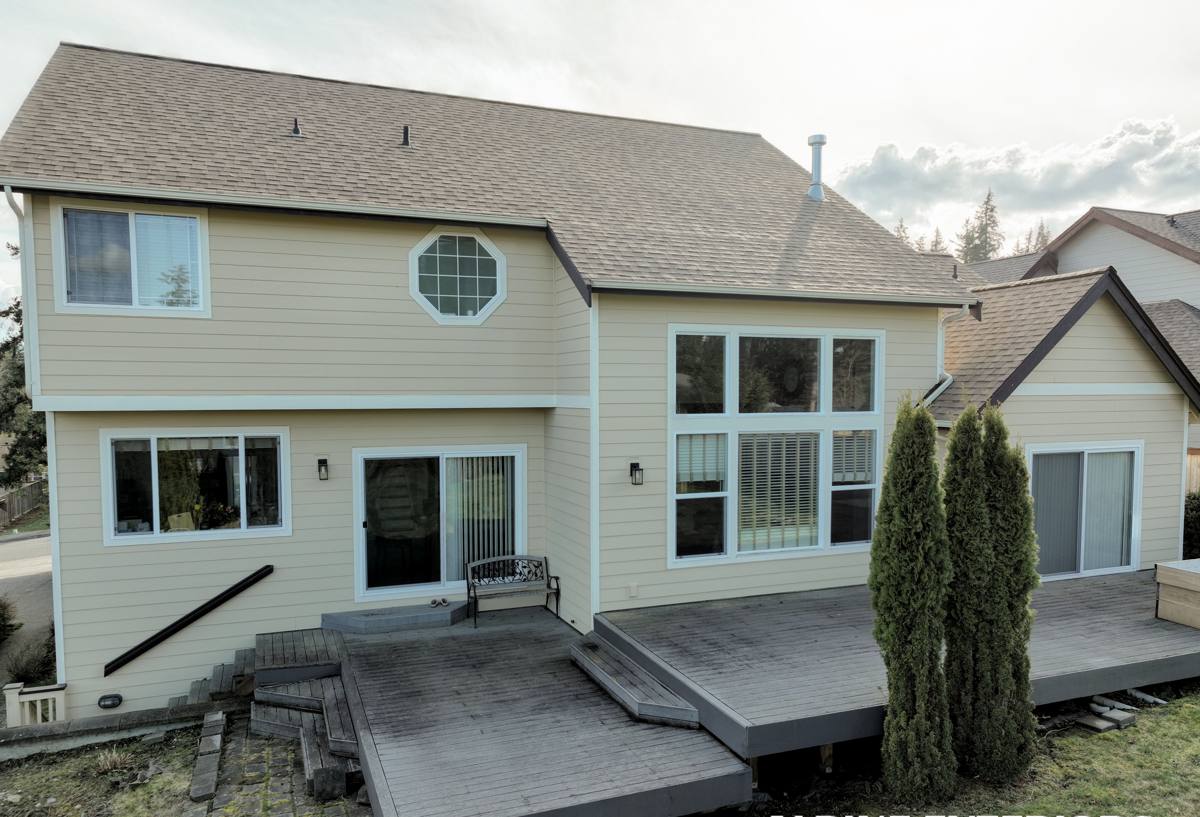
What Custer's Climate Does to Windows Over Time
Salt Air
Airborne salt accelerates corrosion on hardware, screens, and any exposed metal fasteners. It also breaks down cheaper sealants and finishes faster than a typical inland install would suffer, which is why the choice of hardware finish and sealant matters more here than it does twenty miles east.
Driving, Wind-Driven Rain
Wind off open fields and the water pushes rain up under sills and sideways into joints that a still-air climate would never test. If flashing and sill pans aren't installed correctly, this is exactly the condition that finds the mistake — usually a year or two later, as staining or soft wood inside the wall cavity.
Long Moss Season
Extended damp, shaded stretches of the year let moss and algae take hold on horizontal surfaces, including window sills, exterior trim, and the tops of frames. Left alone, that growth holds moisture against wood and paint far longer than the rain itself does, which is often what actually causes rot — not the rain, but what grows on top of the standing moisture afterward.
Signs a Custer Home's Windows Are Due for Replacement
- Condensation forming between the glass panes (a failed seal, not a cleaning issue)
- Visible gaps, drafts, or daylight around the frame
- Soft, spongy, or discolored wood at the sill or bottom corners
- Windows that stick, won't latch, or have swollen shut
- Paint that keeps failing in the same spot no matter how often it's redone
- Noticeable temperature difference near the window compared to the rest of the room
- Moss or dark streaking building up on the sill or exterior trim every winter
Any one of these on its own isn't necessarily an emergency, but two or three together usually means the window and the wall behind it have been dealing with moisture longer than they should have.
What a Correct Custom Window Installation Actually Involves
"Custom" doesn't just mean an unusual size — it means the window and its flashing details are built and installed to fit that specific opening and that specific exposure. In Custer, that matters more on walls facing open wind and weather than on more sheltered sides of the house.
Sill Pan and Flashing
Every opening gets a sloped sill pan and flashing integrated with the house wrap so that any water that does get past the exterior sheds back out, rather than sitting against the framing. This is the single most important detail on a coastal install and the one most likely to get skipped on a rushed job.
Proper Sealant, Not Just Caulk
We use sealants rated for the movement and moisture exposure the window will actually see, not a generic tube of caulk. Salt air and constant damp-dry cycling are hard on lower-grade sealants, and a failed bead is one of the most common causes of a "new" window leaking within a couple of years.
Insulation Around the Frame
Gaps between the window frame and the rough opening get filled correctly — not overpacked, not left hollow — so the window performs the way it's rated to and doesn't create a cold spot that invites condensation on the interior side.
Hardware and Fastener Choices
Given the salt exposure, hardware and fastener selection is not an afterthought. We use corrosion-resistant fasteners and hardware finishes suited to a coastal environment rather than whatever is cheapest to stock.
Choosing Window Materials for Custer's Conditions
There's no single "best" window material for every home — it depends on the home's exposure, style, and budget. Here's how the common options compare for a Custer-area install:
| Material | Salt Air / Moisture Handling | Maintenance | Typical Fit |
|---|---|---|---|
| Vinyl | Handles salt air well, won't corrode or rot | Low — occasional cleaning | Most homes, best value |
| Fiberglass | Excellent — very stable in temperature swings and moisture | Low | Higher-exposure walls, long-term durability priority |
| Wood-clad | Good if the exterior cladding is intact; interior wood still needs care | Moderate to high — finish upkeep matters here | Homes prioritizing interior wood look |
| Aluminum | Prone to corrosion in salt air unless specifically coated | Moderate | Limited use; we're selective about where this goes on coastal walls |
For homes on more exposed sides of Custer — facing open wind or closer to the water — we lean toward vinyl or fiberglass because they don't give salt air and moisture cycling anything to work on. Wood-clad windows can still be the right call for the right home, but we're upfront that the exterior cladding integrity is what does the real work protecting them here.
Our Window Replacement Process
- On-site assessment — we look at each opening, the exposure it faces, and the condition of the framing underneath, not just the window itself
- Accurate measurement — custom sizing so the finished install fits tight without shimming problems
- Material and glass package selection — matched to that wall's exposure and your budget
- Removal — old window and any compromised trim or sheathing removed, framing inspected for hidden rot before anything new goes in
- Flashing and sill pan install — the step that determines whether the window stays dry for the next twenty years
- Window set, shimmed, and insulated — leveled and secured correctly, gaps filled properly
- Sealing and trim-out — exterior and interior finished and sealed
- Walkthrough — operation, locks, and finish checked with you before we call it done
Energy Efficiency and Condensation Control
In a climate with this much sustained humidity, glass package selection affects more than your heating bill. A Low-E coating with the right argon-filled spacing helps keep interior glass surface temperatures up, which cuts down on interior condensation — one of the more common complaints we hear about older or poorly-installed windows in this area. We'll walk through glass package options based on which direction the window faces and how exposed that wall is, rather than defaulting to one spec for the whole house.
Maintaining New Windows in Custer's Climate
- Rinse salt residue off exterior frames and glass periodically, especially after storms
- Keep sills and tracks clear of moss, leaves, and standing debris
- Check exterior sealant beads once a year for cracking or separation
- Make sure gutters and downspouts near windows are directing water away, not onto the wall above
- Operate locks and hardware a few times through the wet season so they don't seize
- Watch for any new condensation between panes — it means a seal has failed and won't self-correct
Why It Matters That We Already Work in Custer
A crew that only occasionally works this stretch of Whatcom County will treat every window like a standard inland install. We already know which walls in this area take the worst of the wind and rain, what the moss buildup looks like a year or two after a bad install, and where a sill pan detail actually earns its keep versus where it's just extra work. That's not a marketing line — it changes real decisions on the job, like which side of the house gets the more corrosion-resistant hardware or where we spend extra time on flashing because we've seen what happens when it's skipped.
We also handle any permitting or code requirements that apply to window replacement in this area as part of the job, so you're not left tracking that down yourself.
What Affects the Cost of a Custom Window Project
| Factor | Why It Matters |
|---|---|
| Number of windows | Per-window cost typically drops as the total count on one job goes up |
| Material choice | Vinyl, fiberglass, and wood-clad carry different upfront costs and long-term maintenance |
| Size and configuration | Larger openings, bays, or custom shapes take more material and labor |
| Condition of existing framing | Hidden rot found during removal adds repair work before the new window goes in |
| Glass package | Low-E coatings and gas fills add cost but pay back in comfort and condensation control |
| Access and site conditions | Second-story or hard-to-reach openings take more time and equipment |
We give straightforward, itemized estimates so you can see exactly what's driving the number, rather than one lump figure.
If your Custer home's windows are drafty, fogged, or just due for an upgrade, we're happy to take a look and put together a free, no-pressure estimate — use the form below to get started.