 Ferndale Roofing
 Composite Decking Built for Custer's Climate, Not Just Its Curb Appeal
Custer sits close enough to the water and to Whatcom County's marine weather patterns that a deck here works harder than a deck built the same day fifty miles inland. Salt-laden air moves through on the wind, rain falls steadily for months at a stretch, and shaded yards hold moisture long after a storm has passed. A composite deck installed without accounting for those conditions can still look fine at first — the problems that show up are almost always in the framing, fasteners, and drainage details underneath, not in the boards themselves.
This page is about composite decking specifically for Custer properties: what the local climate demands, what a correct installation actually involves, and how we approach the job when we build here.
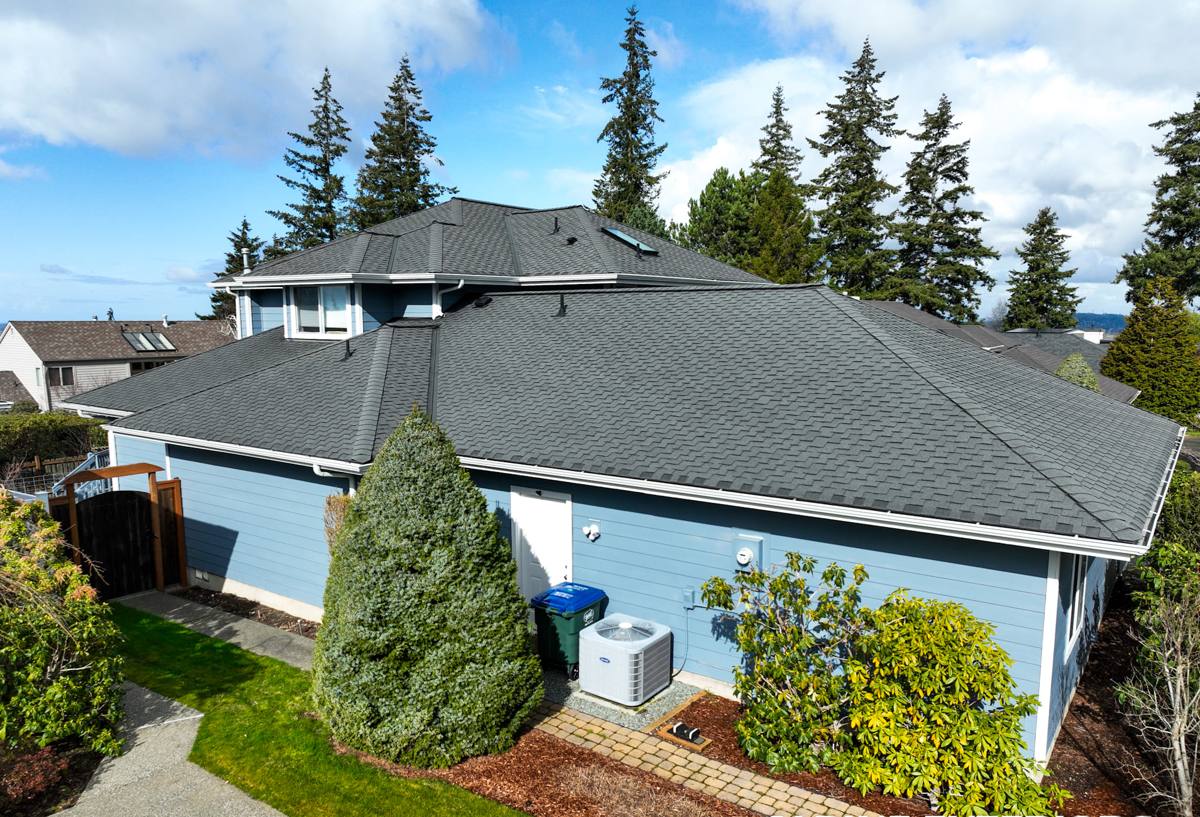
What Whatcom County's Coastal Climate Does to a Deck Over Time
Three things define decking conditions around Custer, and each one affects the build differently.
Salt Air
Proximity to Puget Sound and the Strait of Georgia means airborne salt is a real factor, even a few miles from the water. Salt accelerates corrosion in fasteners, joist hangers, and any exposed metal hardware. A deck built with the wrong grade of hardware can develop rust streaks and weakened connections years before the decking surface itself shows any wear.
Driving Rain
Whatcom County gets a long, wet season, and wind-driven rain doesn't just fall straight down — it gets pushed sideways into ledger connections, under rail posts, and into any gap in the flashing. Water that gets behind a house wrap or ledger board and can't get back out is one of the most common causes of hidden rot on older decks in this area.
Moss Season
Cool, damp, and shaded conditions for much of the year give moss and algae plenty of time to establish themselves, especially on decks that sit under tree cover or on the north side of a house. Moss holds moisture against the board surface, and on any decking product, sustained damp contact is what eventually causes problems — whether that's staining, slickness, or accelerated wear at fastener points.
What a Correct Composite Deck Installation Involves
Composite boards themselves are only part of the job. The framing and detailing underneath determine whether the deck stays solid and dry for the long haul, especially in a climate like this one.
Substructure and Ground Clearance
Joists need adequate airflow underneath the deck to let moisture evaporate rather than sit and soak. On lower decks or ground-level patios, we pay close attention to clearance and grading so water drains away from the structure instead of pooling under it. This matters more in Custer's wetter months than it would in a drier climate, where a marginal clearance might never cause an issue.
Fasteners and Hardware
Given the salt air, we use fasteners and structural hardware rated for coastal or corrosive environments — stainless or high-grade coated hardware rather than standard galvanized where it's exposed to the weather. This is a small line-item difference in cost and a large difference in how the deck's connections hold up over ten or fifteen years.
Ledger Board and Flashing
Where the deck attaches to the house, the ledger board and its flashing are the single most common point of hidden water damage on any deck, composite or wood. Proper flashing routes water away from the house framing instead of letting it wick in behind the siding. Given how much driving rain this area sees, we treat this detail as non-negotiable rather than optional.
Board Spacing and Fastening
Composite boards expand and contract with temperature and moisture more than solid wood in some cases, so correct gap spacing at butt joints and along the perimeter matters. Hidden fastener systems, installed to the manufacturer's spacing tolerances, keep the surface flat and prevent the buckling or "washboard" look that shows up when a crew rushes the spacing.
Choosing the Right Decking Material for a Custer Property
Composite isn't the only option, and it isn't automatically the right one for every deck. Here's how the common choices compare for a home in this climate.
| Material | Moisture Behavior | Maintenance | Typical Lifespan Here |
|---|---|---|---|
| Capped composite | Resists moisture absorption well; cap layer sheds water and blocks staining | Occasional wash-down; no sealing or staining required | 25–30+ years with proper install |
| Uncapped composite | More prone to moisture absorption and surface fading over time | Low, but more susceptible to mold in shaded, damp spots | 15–20 years |
| Pressure-treated wood | Absorbs and releases moisture readily; prone to cupping and splintering | Regular sealing/staining needed, especially in wet climates | 10–15 years without diligent upkeep |
| PVC decking | Fully moisture-resistant; does not absorb water | Very low; wash-down only | 25–30+ years |
For most Custer homes, capped composite hits the right balance: it handles sustained damp weather and shaded, moss-prone conditions far better than uncapped composite or wood, without the higher material cost of full PVC systems. We'll talk through where your project sits — sun exposure, tree cover, budget — before recommending a specific product line.
Moss, Algae, and Shade — the Particular Challenge on Custer Lots
A lot of properties around Custer have mature tree cover or sit on lots with limited direct afternoon sun, which is exactly the combination that lets moss and algae take hold on any exterior surface, decks included. This isn't a defect in composite decking — it's a maintenance reality of the region, and it affects wood decking even more.
What actually helps is a combination of board choice, board spacing that allows airflow, and a simple periodic cleaning routine. Capped composite resists staining and surface growth far better than uncapped products, but no decking material is maintenance-free in a shaded, damp yard. We'll flag during the estimate if your site has particular moss exposure so you know what to expect and how to manage it.
Our Process for Custer Composite Decking Projects
The process is straightforward, and we don't skip steps to save time:
- Site walk and assessment — we look at drainage, sun/shade exposure, existing structure condition (if replacing a deck), and how the ledger connects to the house.
- Material selection — we go over composite options suited to the site conditions and your budget, including board color and rail system choices.
- Framing and structural work — joists, footings, and ledger flashing get built or verified to hold up under this climate's demands, not just to meet minimum code.
- Deck installation — boards installed with correct spacing and hidden fastener systems, hardware rated for coastal exposure throughout.
- Final walkthrough — we go over the finished deck with you, including basic care so it holds up through the wet seasons ahead.
Maintenance Checklist for a Composite Deck in This Climate
Composite decking is low-maintenance compared to wood, but "low" isn't "none" — especially with the moss season Whatcom County sees. A few habits go a long way:
- Sweep off leaves, needles, and debris regularly, especially in fall and winter, so moisture and organic matter don't sit on the surface
- Rinse the deck periodically with a hose or low-pressure wash to keep pollen, dirt, and early moss growth from taking hold
- Check that gaps between boards stay clear so water can drain through rather than pool
- Inspect fasteners and rail connections once a year for any signs of loosening or corrosion, particularly if the deck is closer to open water
- Trim back overhanging branches where possible to reduce shade and speed up drying after rain
- Avoid pressure-washing at high PSI directly into the cap surface, which can damage some composite finishes over time
Why Hiring a Crew That Already Works in Custer Matters
A lot of decking problems we get called out to fix didn't start with the boards — they started with a crew that built the same way they would in a dry climate, without adjusting hardware, flashing, or clearance for what this area actually throws at a structure. Working regularly in Ferndale and the surrounding Whatcom County communities, including Custer, means we're not guessing at how salt air and long wet seasons affect a deck's connections — we build for it from the start, and we stand behind the work if something needs attention down the road.
If you're planning a new composite deck or replacing an aging wood deck in Custer, we're happy to walk the site with you and give you a straightforward estimate — no pressure, no upsell, just an honest look at what your property needs. Use the form below to get started.