 Ferndale Roofing
 Why Decks in Custer Wear Out Faster Than the Manuals Say
Custer sits close enough to the water and open farmland that its decks take a different kind of beating than a deck built further inland. Salt-laden air drifting off the Strait of Georgia and Birch Bay area works into fasteners, hinges, and any exposed metal, corroding it well before a manufacturer's stated lifespan. Add Whatcom County's long wet season — months of driving rain that never really stops, just slows down — and you get wood that stays damp for weeks at a time. That constant moisture is exactly what moss, algae, and soft rot need to take hold. By the time most homeowners notice a spongy board or a green film that won't scrub off, the damage usually goes deeper than the surface.
None of this means a deck in Custer can't last. It means the deck has to be built and replaced with this specific climate in mind — correct drainage, the right fasteners, and materials chosen for wet-cycle durability rather than looks alone.
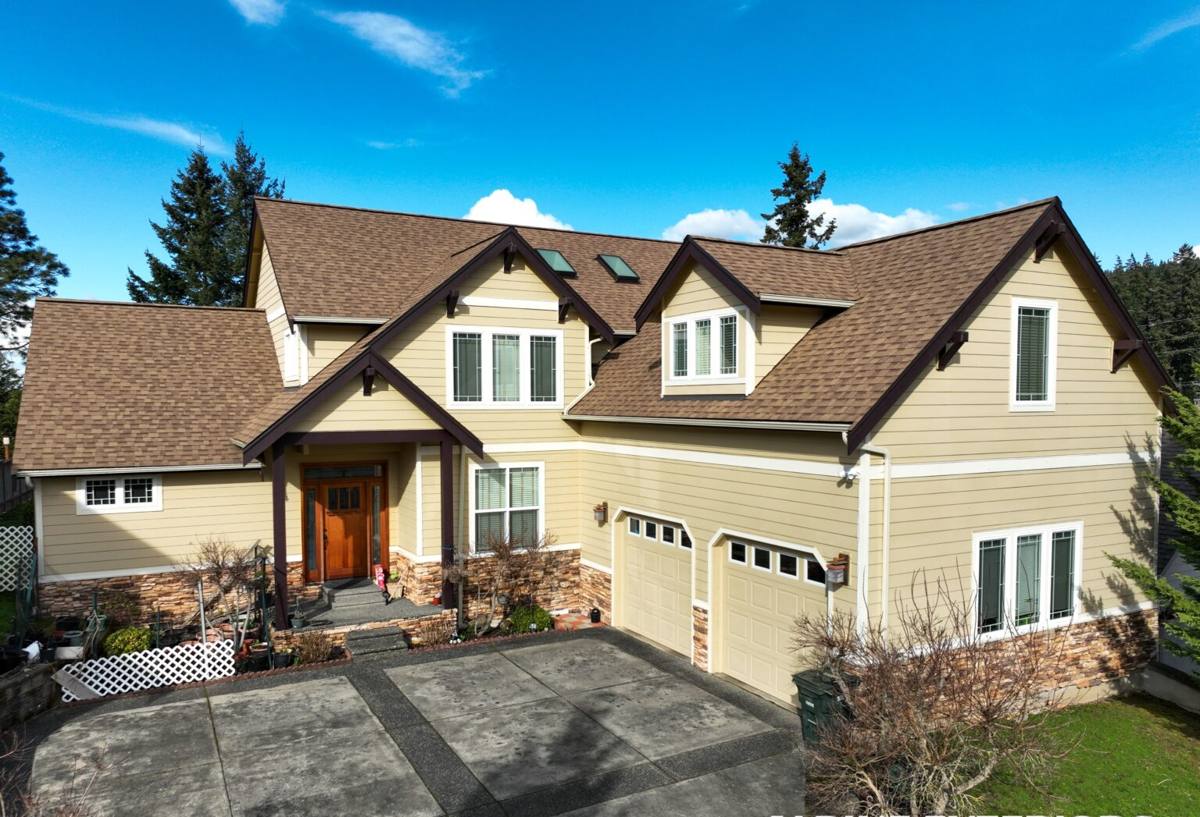
Signs a Custer Deck Needs Replacement, Not Another Repair
We get a lot of calls for "just fix this one board," and sometimes that's genuinely all that's needed. But there's a point where patching individual boards is just delaying a full replacement, and spending money on repairs past that point is money you won't get back. Here's how we tell the difference on a Custer property:
- Screwdriver or awl sinks into the wood with light pressure, especially near the ledger board or post bases
- Moss or algae keeps returning within weeks of cleaning, even in the same spots every year
- Multiple boards are cupping, splitting, or graying unevenly across the deck
- The ledger board attachment to the house shows staining, gaps, or soft framing behind it
- Fasteners are rusted, backing out, or leaving black streaks down the boards
- Railing posts wobble or the deck itself has a noticeable bounce or sag
If you're only seeing one or two of these on a small area, repair is often reasonable. If you're seeing several, or if the structure underneath (joists, ledger, posts) is compromised, replacement is the honest recommendation — and we'll tell you that plainly rather than stack repairs on a deck that's already past its useful life.
Why Moss Season Makes This Worse in Whatcom County
Moss doesn't just look bad — it holds water against the wood surface long after the rain has stopped, which is exactly the opposite of what a deck needs to dry out and last. In Custer's climate, a deck without proper drainage detailing and gapping between boards can stay damp under moss growth for most of the fall and winter. That extended moisture exposure is one of the biggest drivers of premature deck failure we see in this area, more than age alone.
What a Correct Deck Replacement Actually Involves
A deck replacement is more than pulling up old boards and screwing down new ones. Done right, it addresses everything underneath that you can't see once it's finished:
Structure First
We inspect and, where needed, replace the ledger board connection to the house, the joists, the beams, and the post footings. This is the part that actually determines how long the new deck lasts — a beautiful new surface over a compromised frame is a short-term fix wearing a long-term price tag.
Flashing and Drainage
The ledger board flashing where the deck meets the house is one of the most common failure points we find, and it's also one of the most overlooked during quick repairs. Correct flashing keeps water from tracking behind the siding and into the wall framing — a much more expensive problem than a worn deck. We also grade and gap the structure so water sheds off the deck instead of pooling.
Fasteners and Hardware
Given the salt air common in this part of Whatcom County, we use corrosion-resistant, coated or stainless fasteners and structural connectors rather than standard hardware that will rust and stain within a few seasons.
Decking Material
We'll walk through the honest trade-offs between wood and composite decking for your budget, your maintenance appetite, and how the deck is used — covered in the comparison below.
Choosing the Right Decking Material for This Climate
There's no single "best" decking material — there's a best fit for your budget, your maintenance tolerance, and how much direct weather exposure your deck gets. Here's how the common options actually perform in a wet, salt-air environment like Custer's:
| Material | Moisture & Moss Resistance | Maintenance | Typical Lifespan Here |
|---|---|---|---|
| Pressure-treated wood | Fair — needs sealing and regular cleaning to resist moss and rot | Annual cleaning, re-sealing every 1-2 years | 10-15 years with upkeep |
| Cedar | Good natural rot resistance, but surface still needs care in constant damp | Periodic sealing, moss removal | 15-20 years with upkeep |
| Composite decking | Very good — doesn't absorb moisture or feed rot the way wood does | Occasional washing, no sealing or staining | 20-30 years |
| PVC decking | Excellent moisture resistance, fully synthetic | Lowest — occasional washing only | 25-30+ years |
We don't push composite or PVC on every job — a well-built cedar or treated-wood deck with proper drainage and honest maintenance can serve a Custer home for many years. But we will tell you upfront that wood decking in this climate is a maintenance commitment, not a "build it and forget it" purchase, so you can decide with real information rather than a sales pitch.
Our Deck Replacement Process
We keep this straightforward because a deck project shouldn't feel like a mystery:
- On-site assessment — we check the existing structure, ledger connection, footings, and drainage, and tell you honestly whether repair or replacement makes sense
- Written estimate — clear scope, material options, and pricing before any work starts
- Permitting — we handle the permit paperwork required for structural deck work in Whatcom County
- Tear-out and structural rebuild — removal of the old deck and correction of any framing, ledger, or footing issues found underneath
- Decking and railing installation — with proper board gapping and corrosion-resistant fasteners for this climate
- Final walkthrough — we go over the finished deck with you, including basic care so it holds up through the wet season
What Deck Replacement Costs Depend On
We won't quote a number without seeing the site, but these are the factors that actually move the price on a Custer deck replacement:
| Factor | Why It Matters |
|---|---|
| Deck size and footprint | Larger square footage means more material and labor, straightforward but obvious |
| Structural condition underneath | Rotted joists, posts, or a failed ledger connection add rebuild work not visible from the surface |
| Material choice | Treated wood costs less upfront; composite and PVC cost more initially but less over time in maintenance |
| Height and access | Elevated decks or difficult site access add complexity and time |
| Railing and stair complexity | Multiple stair runs, custom railing, or code-required guardrail changes add scope |
| Permit requirements | Structural work typically requires a permit, which factors into project timeline and cost |
Why a Crew That Already Works Custer Matters
Custer isn't a big city job site — it's a smaller community where the housing stock, soil conditions, and weather exposure have real local patterns. A crew that's already worked in this specific area knows what tends to be hiding under an older deck here, understands the drainage challenges from the wet season, and isn't guessing at what fasteners actually hold up against the salt air coming off the water. That experience shows up in fewer surprises mid-project and a deck that's built for the conditions it will actually face, not a generic spec sheet.
It also matters for something less obvious: accountability. A contractor who works regularly in Custer and greater Ferndale has a reputation to maintain with neighbors, not just a single job to finish and leave. That's a meaningful difference when you're trusting someone with a structural project attached to your home.
Caring for Your New Deck Through the Wet Season
A correctly built deck still needs some basic seasonal attention to get its full lifespan in this climate:
- Sweep leaves and debris off regularly, especially in fall — trapped organic matter is what feeds moss growth
- Rinse or lightly scrub visible moss or algae as soon as you notice it, before it spreads
- Check that gaps between boards stay clear so water can drain through, not pool on the surface
- Inspect the ledger board area and any visible flashing once a year for staining or gaps
- Re-seal wood decking on the manufacturer's recommended schedule — don't wait until it looks dry and gray
- Keep gutters and downspouts near the deck clear so runoff isn't dumping directly onto it
Ready to Talk About Your Deck?
If your deck in Custer is showing soft spots, chronic moss, or just feels past its prime, we're happy to come take an honest look and tell you where things stand — repair, partial rebuild, or full replacement. We offer free, no-pressure estimates, and there's a form below to get one scheduled.