 Ferndale Roofing
 Board & Batten Siding for Kendall Homes
Kendall sits east of Ferndale in the Whatcom County countryside, where homes tend to sit on larger lots, closer to tree lines, and further from the constant maintenance culture of a dense subdivision. Board and batten siding fits that setting well. The vertical lines read as clean and a little rural without looking dressed-up, and the style holds up visually on everything from a modest ranch to a two-story farmhouse-style build. It's also one of the more forgiving looks when a home has additions or roofline changes over the years, since the vertical battens break up a wall visually in a way that hides minor plane and alignment inconsistencies better than lap siding does.
We install board and batten siding for homeowners around Kendall on a regular basis, and we do it with one material: James Hardie fiber cement. This page covers what that actually means for a Kendall property, what correct installation looks like, and what to expect if you're comparing bids.
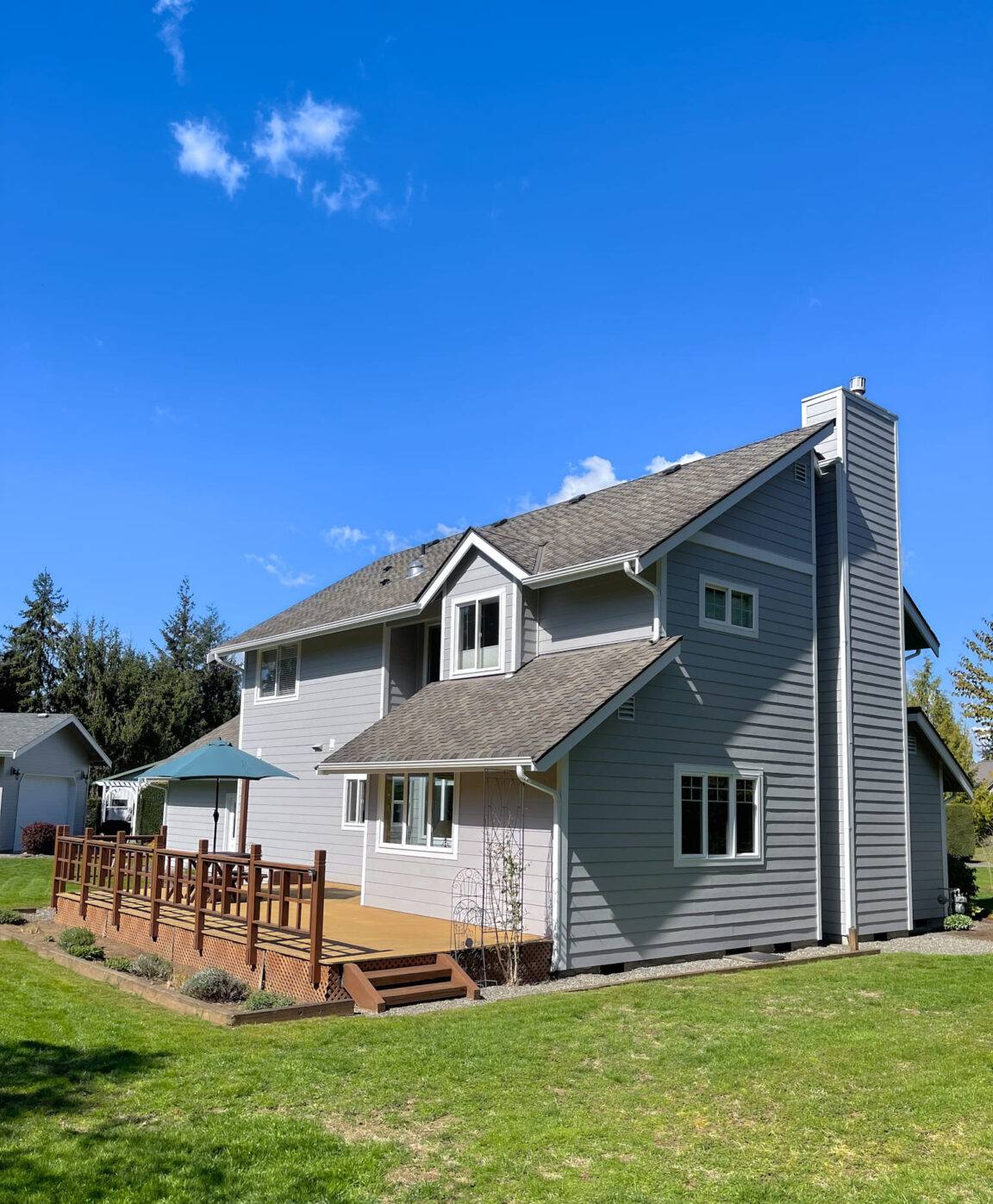
What Whatcom County's Climate Does to Vertical Siding
Ferndale and the surrounding Whatcom County area deal with salt-laden air off the Salish Sea, long stretches of driving rain, and a moss season that can run most of the year on shaded north- and west-facing walls. Board and batten siding is more exposed to this than most people realize, because the battens themselves create dozens of extra vertical seams and shadow lines running down the wall. Every one of those seams is a place where water can be pushed by wind-driven rain, and every batten face is a surface where moss and algae can get a foothold if the material underneath doesn't dry out properly.
This is where material choice and installation quality matter more than most homeowners expect. A board and batten wall built with the wrong product, or built correctly but with sloppy flashing and fastening, tends to show problems first at the battens: swelling, staining, soft spots, or streaking below each seam. A wall built right, with a material engineered for this kind of exposure, sheds that same rain and resists that same moss without drama for decades.
Why Vertical Siding Is Less Forgiving Than Lap
Horizontal lap siding is designed so each course overlaps the one below it, shedding water downward by gravity with very little help needed from caulking or sealant. Board and batten depends much more on the water-resistive barrier behind the panels, the flashing details at every horizontal transition, and the quality of the fastening pattern. There's simply less built-in redundancy. That's not a reason to avoid the style, but it is a reason to be picky about who installs it and what it's made of.
Why We Only Install James Hardie for This Style
We get asked why we don't offer board and batten in cedar, vinyl, or engineered wood products like LP SmartSide. All three can look fine on day one. The honest answer is what happens over the following fifteen to twenty years in a climate like this one.
- Cedar is a beautiful, traditional choice for board and batten, but it's an organic material in a region with a long wet season and heavy moss pressure. It needs ongoing sealing, staining, and vigilance against rot at the battens and bottom courses, and even well-maintained cedar eventually needs board replacement.
- Vinyl board and batten profiles are low-maintenance and inexpensive, but they're thin, they flex and rattle in wind, they can crack in a hard freeze, and their color is baked in as a plastic pigment that fades unevenly over time rather than a factory-cured finish.
- Engineered wood products like LP SmartSide perform reasonably well when installed and maintained to spec, but they're wood-based composites, which means they carry a real risk of edge swelling and moisture damage if caulking fails or a flashing detail is off — and in board and batten, there are a lot of seams where that can happen.
James Hardie fiber cement is non-combustible, dimensionally stable in wet-dry cycling, and finished with the ColorPlus factory coating rather than field-applied paint, which matters enormously on a wall with this many seams and edges. It doesn't rot, it doesn't feed moss the way organic material can, and it holds its color and shape through the kind of weather Kendall sees every winter. That's why it's the only material we put on a board and batten wall.
What Correct Board & Batten Installation Actually Involves
Board and batten is simple in concept — vertical panels or boards with a batten strip covering each seam — but the details underneath the visible surface are what determine whether it lasts. On every board and batten job we do, that includes:
- A properly lapped and sealed water-resistive barrier behind the panels, installed before a single piece of siding goes up
- Correct flashing at every window, door, roofline, and horizontal trim transition — the places where water actually gets in on a poorly built wall
- Fastener placement and spacing that follows James Hardie's published installation instructions, not just "close enough"
- Proper gapping and sealant at panel joints, sized for the material's expansion and contraction, not just caulked shut and hoped for
- Battens installed with enough of a reveal and correct fastening to stay flat and tight over time, not just tacked in place
- Adequate clearance at the bottom of the wall and around any grade or hardscape transitions, so the bottom course isn't sitting in standing moisture
Skip any one of these and the wall might look right for a year or two before problems start showing up where they're hardest to see — behind the battens themselves.
Our Process on a Kendall Property
1. Walk the Site
We look at sun exposure, tree cover, drainage around the foundation, and the condition of the existing siding and trim before we talk about materials or price. A shaded, tree-lined lot near Kendall needs different attention to moss-prone areas than an open one.
2. Assess What's Underneath
If we're removing existing siding, we check the sheathing and framing for hidden rot or moisture damage before closing anything back up. This is the point where problems from years of a poorly performing wall usually surface, and it's better to find them now than after the new siding is on.
3. Build the Water Management System First
The water-resistive barrier, flashing, and drainage plane go in before any Hardie product touches the wall. This layer does most of the actual work of keeping a Kendall home dry — the siding is the visible finish, not the primary defense.
4. Install to Manufacturer Spec
Panels, battens, and trim go up following James Hardie's fastening and clearance requirements, which is also what keeps the manufacturer's warranty intact.
5. Final Walkthrough
We go over the finished wall with the homeowner, including how to care for it going forward, before calling the job done.
Cost Factors for Board & Batten Projects
Every project is different, but the following factors typically move the price on a board and batten job more than anything else:
| Factor | Why It Matters |
|---|---|
| Existing siding removal | Tear-off and disposal, plus time to inspect and repair sheathing underneath |
| Wall height and access | Two-story walls and steep or tight lots require more scaffolding and labor time |
| Trim and detail complexity | Gables, dormers, and multiple roof transitions add flashing and cut work |
| Batten spacing and reveal | Tighter batten spacing looks great but adds material and install time |
| Window and door count | Each opening needs its own flashing and trim detail |
| Color and finish selection | Factory ColorPlus finishes vary slightly in cost by line and color |
We give a firm, itemized number after seeing the property in person — not a phone estimate — since board and batten pricing depends so heavily on what's actually going on with the existing wall.
Maintenance: What a Hardie Board & Batten Wall Actually Needs
One of the real advantages of fiber cement in this climate is how little ongoing work it asks for compared to wood. That doesn't mean zero maintenance — it means the maintenance is simple and infrequent:
- Rinse the walls occasionally, especially shaded sides prone to moss and algae buildup
- Keep gutters clean and functioning so water isn't sheeting down the wall from above
- Trim back vegetation and tree cover that keeps a wall damp and shaded longer than it needs to be
- Check caulking at trim and panel joints every few years and touch up as needed
- Address any impact damage promptly rather than letting it sit exposed
No re-staining, no re-sealing, no repainting cycle every five to seven years — the ColorPlus finish is warranted against fading and is far more durable than field-applied paint on cedar or vinyl.
Why a Local Crew Matters for This Kind of Work
Board and batten rewards a crew that already knows how Whatcom County weather treats a wall, because a lot of the decisions on this style of siding — batten reveal, flashing detail, where to add extra attention on a shaded elevation — come from having actually seen what does and doesn't hold up out here. A crew installing board and batten for the first time in this climate is learning on your house. We're not; we work this material and this style around Ferndale, Kendall, and the rest of Whatcom County regularly enough that the details that matter here are second nature by the time we get to your project.
If you're weighing board and batten for a home in Kendall, we're happy to take a look and give you a straightforward, no-pressure estimate — no obligation, and no pressure to sign anything on the spot. Use the form below to get started.