 Ferndale Roofing
 Building New in Kendall? The Windows Are Where a Lot of Long-Term Problems Start — or Get Prevented
If you're framing up a new home in the Kendall area, the windows are one of the few components on the exterior that get exactly one chance to be installed correctly. Once siding, trim, and interior finishes go on around them, fixing a bad window install means tearing back into finished work. We install new-construction windows for homes going up in and around Kendall, working directly with builders, framers, and homeowners to get the flashing, sequencing, and product selection right the first time — before the envelope closes up around them.
New-construction window work is a different discipline than swapping out an old window in an existing wall. It happens earlier in the build, it involves the window's nailing fin and the house wrap system, and it sets the water-management path that the rest of the wall assembly depends on for decades. In a part of Whatcom County that sees long stretches of driving rain and a moss season that doesn't really end, that water path is not optional detail work — it's the difference between a dry wall cavity in year one and a moisture problem by year five.
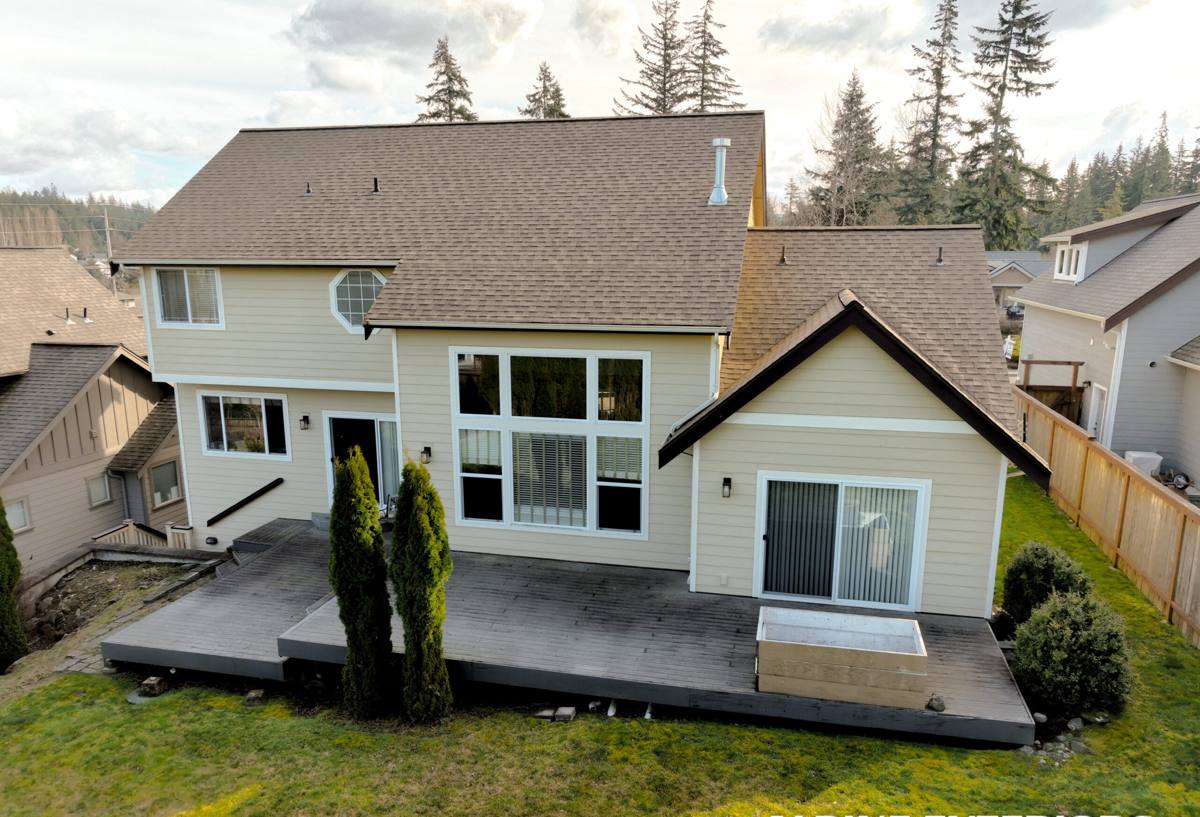
What Kendall's Climate Actually Demands From a Window Install
Kendall sits inland from the coast, tucked into the more wooded, semi-rural stretches of Whatcom County near the foothills. That setting brings its own mix of conditions that a new-construction window install has to account for:
- Sustained wet weather. Whatcom County gets long runs of steady, wind-driven rain rather than short downpours — that means water gets pushed sideways against a wall, not just straight down, and flashing has to be built to handle both directions.
- Heavy tree cover and shade. Wooded lots hold moisture longer after a storm than open ground. Siding and trim around windows stay damp longer, which is exactly the condition moss and mildew need to take hold on frames and sills.
- Temperature swings between seasons. Being farther from the coast's moderating marine air, Kendall can see a wider range between summer heat and winter cold than homes closer to the water, which affects how much a window frame expands, contracts, and needs to seal reliably across the year.
- Longer moss season overall. Across this region, moss and algae growth isn't a summer-only concern — it's active most of the year on any surface that stays shaded and damp, including window sills, exterior trim, and the head flashing above each opening.
None of this means Kendall needs exotic materials. It means the installation details — flashing overlap, sill pan drainage, sealant placement — have to be done correctly and not rushed, because this climate will find any gap in the work.
New-Construction vs. Replacement: Why the Install Method Is Different
A lot of homeowners assume "installing a window" is the same task no matter the situation. In a new build, it isn't. New-construction windows have a nailing flange (fin) around the perimeter that gets fastened directly to the sheathing and then integrated into the house wrap and flashing system before siding goes on. Replacement windows, by contrast, get set into an existing frame with no access to that flange.
The advantage of new construction is that we get to build the water-management system from scratch, in the correct order, instead of working around what's already there. The trade-off is that there's no room for shortcuts — every layer has to go on in sequence, because each one depends on the layer before it being done right.
Getting the Flashing and Water Management Right
This is the part of the job that never shows once the house is finished — and the part that determines whether the wall stays dry. For every opening, the sequence matters:
- A sloped sill pan goes in first, so any water that gets past the window has a built-in path back to the exterior instead of sitting on the sheathing.
- Flashing tape or self-adhered membrane goes around the jambs and over the sill pan, integrated with the house wrap below the opening.
- The window is set, leveled, and fastened through the nailing fin per the manufacturer's specifications — fastener spacing and type matter for both structural performance and warranty coverage.
- Head flashing goes on last, lapped over the house wrap above the window so water sheds down and over the opening, never behind it.
- Sealant is applied only where the manufacturer specifies — sealing the wrong gap can trap water instead of shedding it.
Every layer has to overlap the one below it like shingles on a roof — water always moving down and out, never finding a horizontal seam to sit on. In a climate with as much sustained rain as this region gets, a reversed lap or a skipped sill pan is the kind of mistake that doesn't show up for a year or two, and by then it's inside the wall.
Choosing the Right Window for a Kendall Build
Frame material, glazing, and performance rating all affect how a window holds up to wet, shaded, tree-covered conditions over time. There's no single "best" answer for every home — it depends on budget, the home's design, and how much upkeep the owner wants to take on.
| Frame Material | How It Handles Kendall's Climate | Maintenance |
|---|---|---|
| Vinyl | Won't rot or corrode; handles sustained moisture well; performance varies by quality tier | Low — occasional cleaning |
| Fiberglass | Very stable through temperature swings, strong moisture resistance, holds paint well if desired | Low |
| Wood / Wood-Clad | Warmer look, but exposed wood is more vulnerable to prolonged damp and shaded conditions | Higher — needs regular finish upkeep, especially on shaded elevations |
| Aluminum | Durable and low-maintenance, but a poor thermal performer unless thermally broken | Low |
For most new builds in this area, we steer homeowners toward vinyl or fiberglass on shaded or north-facing elevations, where wood trim and cladding would stay damp the longest. Where wood-look windows are wanted for design reasons, we talk through the added upkeep honestly upfront rather than after the sale.
U-Factor and Performance Ratings
Washington's energy code sets minimum performance requirements for new construction, and those minimums matter more than they might seem — a lower U-factor keeps heat inside during the cold, damp months and reduces condensation on the interior glass, which is a common complaint in newer homes that weren't built with this climate's humidity in mind.
Our Installation Process
- Plan review. We review the window schedule and rough openings with the builder before framing is finalized, catching sizing or sequencing issues early.
- Rough opening check. Every opening is measured and squared before a window goes in — a slightly out-of-square opening is a common source of installation problems that show up later.
- Sill pan and flashing. Installed per manufacturer specification, integrated with the house wrap in the correct shingle-lap order.
- Window set and fastened. Leveled, shimmed as needed, and fastened per manufacturer requirements to preserve both performance and warranty.
- Head flashing and final integration. Completed before siding crews move in behind us.
- Walkthrough. Every opening is checked for level, square, and proper operation before we sign off.
Common Mistakes We See on New Builds
Most window-related callbacks on new construction trace back to a handful of avoidable issues:
- Skipping or improvising a sill pan instead of using a proper sloped drainage detail.
- Flashing installed out of shingle-lap order, creating a seam that channels water inward instead of out.
- Fasteners over- or under-driven through the nailing fin, which can distort the frame or compromise the seal.
- Sealant applied to weep openings or drainage gaps, trapping moisture that's supposed to escape.
- Siding crews closing up the wall before flashing integration is fully inspected and complete.
Why Hire a Crew That Already Works in Kendall
A window installed correctly on paper can still underperform if it isn't matched to the conditions it's actually facing. Working regularly in Kendall and the surrounding Whatcom County area means we've seen how shaded, tree-covered lots hold moisture differently than open ones, how moss establishes on north-facing trim first, and where builders in this area tend to run into inspection or sequencing questions. That local pattern recognition is what turns a code-compliant install into one that actually holds up through this region's long wet season, year after year.
We also coordinate directly with the builders and framers already on site, which keeps the window install from becoming a scheduling bottleneck — a common friction point on new builds when trades aren't used to working together.
Checklist: What to Confirm Before Windows Go In
- Rough openings are framed square and to the correct dimensions for the chosen window line.
- House wrap is installed and ready to integrate with sill pan and flashing.
- Window sizes, styles, and performance ratings match the approved plans and Washington energy code minimums.
- A clear installation sequence is agreed on with the builder so siding doesn't close in behind incomplete flashing.
- Manufacturer installation instructions and fastening schedule are on hand and followed, not assumed.
If you're building in Kendall and want the window installation planned out correctly from the rough opening forward, we're glad to walk the site, review your window schedule, and put together a straightforward, no-pressure estimate — just fill out the form below.