 Ferndale Roofing
 Siding That Has to Work in Kendall's Weather, Not Just Look Good on Day One
Kendall sits inland from Ferndale in the part of Whatcom County where marine moisture off the Salish Sea meets the foothills climate rolling down from the Cascades. That combination means siding here deals with more than a coastal town's salt-laden air — it also sits under tree cover longer, stays damp longer after a storm passes, and grows moss on north faces and shaded walls almost year-round. A siding installation in Kendall isn't just a cosmetic upgrade. It's a decision about what's going to hold up against a genuinely demanding climate for the next several decades.
We install James Hardie fiber cement siding exclusively, and we've done enough work throughout Ferndale and the surrounding Whatcom County communities to know what actually fails out here versus what holds. This page walks through what Kendall homes need from a siding job, what correct installation looks like, and how our process protects the investment you're making.
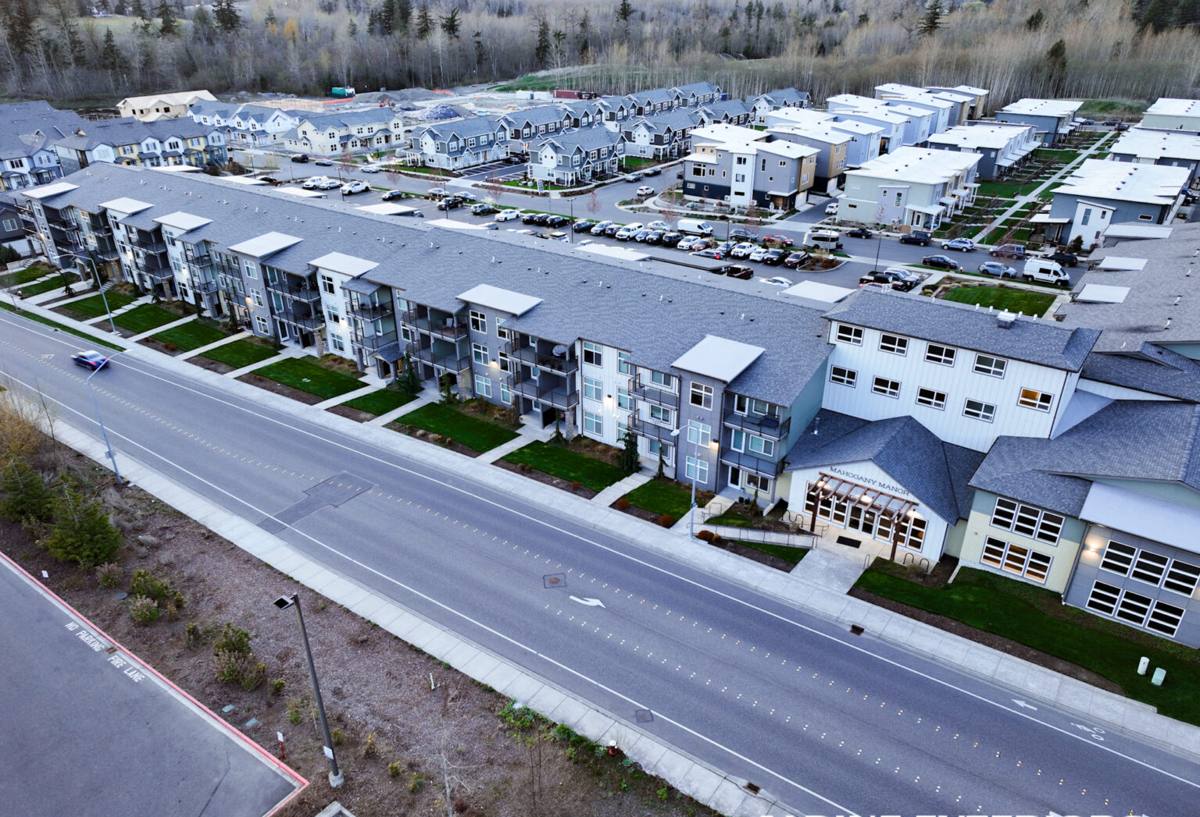
What Kendall's Climate Actually Does to Siding
Driving Rain and Wind-Driven Moisture
Whatcom County storms don't just drop rain straight down — wind pushes it sideways into wall assemblies, especially on exposed gables and second-story walls. Siding that isn't installed with the right clearances, flashing, and drainage plane will let that moisture behind the cladding, where it can sit against sheathing for months before anyone notices a problem.
A Long Moss and Mildew Season
Between the tree cover common on Kendall lots and the number of overcast, damp days in a typical Whatcom County year, exterior surfaces here rarely get a long enough dry stretch to fully shed moisture on their own. Moss, algae, and mildew take hold on siding materials that hold surface moisture or that have organic content for spores to feed on. Once established, they trap even more moisture against the wall.
Salt Air and Corrosion
Even away from the immediate waterfront, salt-laden air moves inland with prevailing weather patterns and accelerates corrosion on fasteners, trim, and any siding material that relies on metal components or exposed seams. Over years, that corrosion becomes a maintenance problem and eventually a moisture entry point.
Temperature Swings and Material Movement
Kendall sees wider day-to-night and seasonal temperature swings than the immediate coastline. Siding materials expand and contract with temperature and moisture content — some more than others — and repeated movement is what eventually opens up caulk joints, warps boards, and loosens fasteners.
Why the Siding Material You Choose Matters More Here Than in a Mild Climate
In a dry, moderate climate, a lot of siding materials can get away with mediocre installation or a less durable substrate. Kendall's climate doesn't offer that forgiveness. Here's how the common options actually perform under sustained damp, salt-influenced conditions:
| Material | Moisture Behavior | Maintenance Burden | Long-Term Outlook in Kendall |
|---|---|---|---|
| Vinyl siding | Doesn't absorb water itself, but panels flex and gap over time, letting moisture behind at seams | Low, but cracks and fades; hard to color-match repairs | Warps and becomes brittle faster with sun/cold cycling; seams are a known weak point in wind-driven rain |
| Primed wood / cedar | Absorbs moisture readily; needs an intact paint film to stay protected | High — repainting and caulk maintenance on a regular cycle | Rot risk climbs fast once the coating fails in a damp, shaded climate |
| LP SmartSide (engineered wood) | Resists moisture better than raw wood but is still wood-based; edges and cut ends are vulnerable | Moderate — edge sealing and caulk upkeep matter | Performs acceptably with strict installation discipline; a single missed detail becomes a swelling point |
| James Hardie fiber cement | Non-combustible, dimensionally stable, engineered specifically for wet climates (HZ10 product line) | Low — factory ColorPlus finish holds up without repainting on a homeowner's typical cycle | Built for exactly this kind of sustained moisture exposure when installed to spec |
We don't install vinyl, LP SmartSide, primed spruce, or cedar — not because those products can't be installed well by someone, but because we've standardized our crews, our training, and our warranty backing around one system we trust to perform in Whatcom County's conditions without asking homeowners to keep up a maintenance schedule most people don't have time for.
What a Correct Hardie Siding Installation Involves
The siding material is only part of the equation — how it's installed determines whether Kendall's climate becomes a non-issue or a slow-motion problem. A correct installation includes:
- A continuous water-resistive barrier behind the siding, lapped correctly so water is directed out and down, not trapped in.
- Proper flashing at every window, door, and roof-to-wall intersection — the majority of moisture intrusion we see in older homes traces back to flashing that was skipped or done wrong.
- Correct clearances from grade, roof lines, decks, and patios, so siding isn't sitting in standing water or splash-back.
- Manufacturer-specified fastening — the right nail type, spacing, and depth, since over- or under-driven fasteners are a common cause of premature failure.
- Sealed and caulked joints using products rated for the movement and moisture conditions the assembly will actually see.
- Ventilation behind the cladding where the assembly calls for it, so any moisture that does get in has a way to dry out.
Any one of these details, skipped, can undermine an otherwise good siding product. This is where a lot of installation problems in older Whatcom County homes actually originate — not from the siding material itself, but from shortcuts taken during the install.
How We Approach a Kendall Siding Project
1. On-Site Assessment
We walk the exterior, check the condition of the existing siding and the sheathing underneath where accessible, and look specifically for moisture staining, soft spots, and moss buildup that can indicate trapped water. We also look at drainage around the foundation and how water moves off the roof, since siding doesn't work in isolation from the rest of the building envelope.
2. Tear-Off and Substrate Check
Old siding comes off, and we inspect the sheathing before anything new goes up. If there's rot or water damage from a prior installation, we address it — installing new siding over a compromised substrate just hides the problem for a few more years.
3. Water-Resistive Barrier and Flashing
We install or verify the drainage plane and flash every penetration and transition point before a single piece of Hardie board goes on. This step is invisible once the job is done, which is exactly why it's the step that gets skipped by crews trying to move fast.
4. Hardie Installation to Manufacturer Spec
Boards, panels, or trim go up per James Hardie's installation requirements — fastening pattern, clearances, and joint treatment — so the ColorPlus finish and the fiber cement substrate perform the way they're engineered to.
5. Final Walkthrough
We walk the finished job with the homeowner, confirm caulking and trim details, and go over what (if anything) needs periodic attention — which, with Hardie, is minimal compared to the other materials in the table above.
Why Local Experience in the Ferndale Area Matters
A siding crew that's worked Kendall and the rest of the Ferndale area already knows which wall orientations take the worst of the driving rain, which lot conditions tend toward heavier moss growth, and how the region's temperature swings affect fastening and caulk choices over time. That's not something you get from a general contractor passing through — it comes from doing this specific work, in this specific climate, repeatedly. It also means we're set up to pull the right permits, coordinate scheduling around Whatcom County's weather windows, and be reachable afterward if a question comes up — not a crew that did one job in the area and moved on.
What Drives the Cost of a Siding Job
| Factor | Why It Matters |
|---|---|
| Home size and wall complexity | More corners, gables, and dormers mean more cutting, flashing, and labor time |
| Condition of existing sheathing | Rot or water damage found during tear-off adds repair scope before new siding can go up |
| Siding profile selected | Lap siding, panel systems, and shingle-style Hardie products carry different material and labor costs |
| Trim and accessory work | Corner boards, window trim, and fascia detailing add to the scope beyond flat wall area |
| Site access | Tree cover, slope, and driveway access on a given Kendall lot affect staging and labor time |
We give straightforward, itemized estimates so homeowners can see exactly what's driving the number — no vague lump-sum pricing.
A Homeowner's Checklist Before Hiring for a Siding Job
- Ask what siding material the contractor installs, and why — and whether they install more than one brand and what that choice is based on.
- Confirm they'll inspect and address sheathing condition, not just install over what's there.
- Ask specifically about flashing details at windows, doors, and roof lines.
- Get the manufacturer's warranty terms in writing, including what's covered by the installer versus the manufacturer.
- Ask for a written, itemized estimate rather than a single bottom-line number.
- Confirm they're licensed and insured to work in Washington, and ask how they handle permitting with Whatcom County.
Get a Straight Answer for Your Kendall Home
If your siding is showing moss, staining, soft spots, or just isn't keeping up with the wear this climate puts on a home, we're happy to take a look and give you an honest assessment — no pressure, no inflated scope. Fill out the form below for a free estimate on siding installation for your Kendall property.