 Ferndale Roofing
 Storm Damage in Marietta: What Homeowners Are Actually Dealing With
Marietta sits low and close to the water on the northern edge of Whatcom County, and that position means storms don't pass through the way they might in a more sheltered, inland neighborhood. Wind coming off the water arrives with less to slow it down, rain gets driven sideways instead of falling straight, and the air itself carries enough salt to accelerate wear on anything metal or exposed. A roof here takes a different kind of beating over the course of a year than a roof twenty minutes inland, and storm damage repair has to account for that instead of treating every roof the same.
Most storm damage isn't a single dramatic event. It's usually a combination of things: a windstorm that lifts a run of shingles along an exposed ridge, months of driving rain that finds its way under a flashing detail that was never quite right, and a moss season that runs long enough to hold moisture against the roof deck for weeks at a time. By the time a homeowner notices a stain on a ceiling, the actual damage is often further along and more spread out than the visible sign suggests.
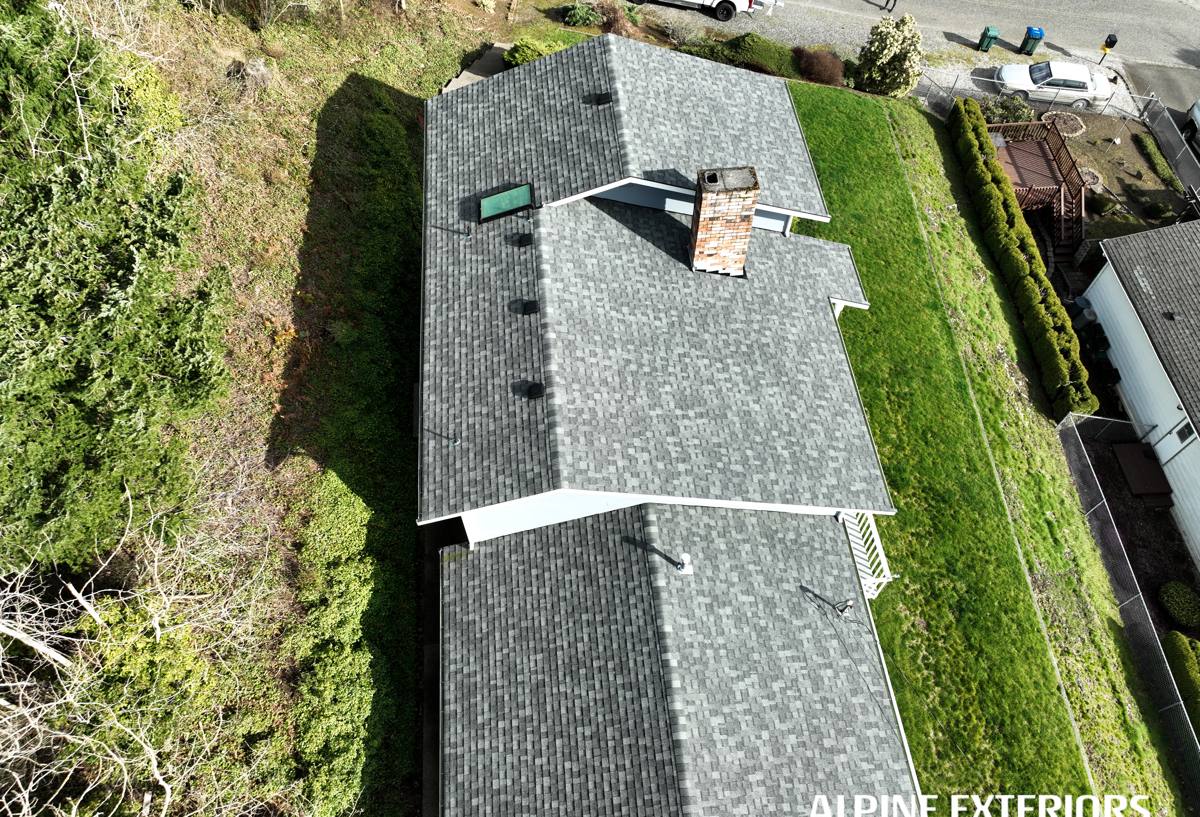
Why Marietta's Location Changes the Storm Damage Picture
Every roof in Whatcom County deals with rain. What's different in Marietta is the combination of exposure and moisture that shows up together, more often, and for longer stretches of the year.
Wind-Driven Rain
When rain is pushed by strong, sustained wind rather than falling straight down, it behaves differently on a roof. It can work under shingle tabs, push past standard flashing laps at valleys and penetrations, and find gaps that would never see water in a calmer setting. Repairs that don't account for wind direction and exposure tend to fail again in the next storm, even if they looked fine the day they were finished.
Salt Air and Corrosion
Proximity to the water means a steady low-level exposure to salt-laden air, which speeds up corrosion on exposed fasteners, flashing, and metal roof components. A fastener or flashing piece that would last two decades in a drier inland location can start showing rust and weakening well before that here, and a repair that reuses failing metal instead of replacing it is a repair that's already on borrowed time.
A Long Moss Season
Shaded slopes and north-facing sections of roof stay damp longer through the wet season, and moss takes hold on that sustained moisture. Moss doesn't just look bad — it holds water against the roofing material, lifts shingle edges as it grows, and traps debris that keeps the surface wet even longer. Storm damage and moss damage often show up in the same spot for the same reason: that part of the roof simply doesn't dry out between storms the way a sunnier slope does.
What Storm Damage Actually Looks Like on a Roof
Some storm damage is obvious. A lot of it isn't, which is part of why a proper inspection matters more than a quick look from the ground.
- Shingles that are lifted, curled, cracked, or missing entirely, especially along ridges and exposed edges
- Granule loss showing up as buildup in gutters or downspouts, which signals a shingle's protective surface is wearing thin
- Flashing that's bent, pulled loose, or separated at chimneys, vent pipes, skylights, and valleys
- Soft spots or visible sagging in the roof deck, which usually means moisture has already reached the wood underneath
- Water stains on interior ceilings or in the attic, which almost always represent damage that's been developing for a while
- Debris punctures or dents from tree limbs, wind-blown material, or hail
- Moss growth or dark streaking on shaded slopes, which points to sustained moisture retention rather than a single storm event
The tricky part is that visible damage and actual damage don't always match up in scale. A small area of missing shingles can sit above a section of decking that's been absorbing moisture for months, while a roof that looks rough from the ground can sometimes be sound underneath. That's why an on-roof inspection, not a drive-by estimate, is the only way to know what's really going on.
Sorting Out Minor, Moderate, and Severe Damage
Not every storm-related issue calls for the same response, and it helps to understand roughly where a problem sits before a crew is on the roof.
| Severity | Typical Signs | Usual Response |
|---|---|---|
| Minor | A few lifted or cracked shingles, minor granule loss, small flashing gaps | Targeted repair, replace affected shingles and flashing, reseal as needed |
| Moderate | A cluster of missing or damaged shingles, active leak with no visible deck damage yet, moss lifting shingle edges | Larger repair section, deck inspection, moss treatment and drainage correction |
| Severe | Sagging deck, widespread missing shingles, visible rot, water stains spreading across ceilings | Deck repair or replacement, full section re-roof, possible insurance claim |
Homeowners sometimes assume a small visible problem means a small fix, or that a bad-looking stain automatically means the whole roof is failing. Neither assumption holds reliably. The only way to know which category a given problem falls into is to actually get eyes on the deck and the underlayment, not just the shingles.
What a Correct Storm Damage Repair Actually Involves
A repair that only addresses what's visible from the ground is not the same thing as a repair that fixes the problem. The difference shows up a year or two later, when a patched area fails again in the next windstorm.
Matching Materials, Not Just Covering the Hole
Shingles vary by manufacturer, product line, and even production run, and mismatched material stands out visually and can behave differently in wind and rain than the surrounding roof. A proper repair matches material as closely as possible and blends the repair into the existing roof plane, rather than creating a patchwork that's more vulnerable at its edges than the rest of the roof.
Flashing and Underlayment
Most repeat leaks trace back to flashing and underlayment, not the shingles themselves. If a repair replaces shingles but reuses old, corroded flashing or skips underlayment repair at a valley or penetration, the underlying problem is still there, just hidden under new shingles for a while.
Decking Inspection
Any time shingles are removed for repair, the decking underneath should be checked for soft spots, delamination, or rot before anything new goes down. Covering damaged decking with new shingles doesn't stop the deterioration — it just delays when it becomes visible again, usually as a worse and more expensive problem.
Our Process, Start to Finish
- On-roof inspection. We walk the roof itself, not just look at it from the driveway, checking shingles, flashing, decking, and any interior signs of moisture.
- Documentation. We photograph and note the extent and cause of the damage, which is useful both for our own repair plan and for any insurance claim you may file.
- Temporary protection if needed. If a roof is actively leaking or exposed, we address that first so the situation doesn't get worse while a full repair is scheduled.
- Repair plan and estimate. We explain what we found, what needs to happen, and what it will cost, in plain terms, before any work begins.
- The repair itself. Damaged shingles, flashing, and decking are replaced as needed, with materials matched to the existing roof wherever possible.
- Cleanup and final check. We clear debris from the job and do a final walk to confirm the repair is sound and the surrounding roof wasn't affected.
Storm Damage and Insurance: What to Know Before You Call Your Adjuster
Many storm damage repairs are covered under a standard homeowner's policy, but coverage and the claims process vary by insurer and by the specific cause of damage. It helps to have clear documentation and a straightforward description of the damage before a claim moves forward, since adjusters are working from what's reported and photographed, not from firsthand knowledge of your roof's history.
We're not an insurance company and we don't handle claims for you, but we can provide the kind of documentation — photos, a written description of the damage, and an honest assessment of cause and scope — that makes a claim easier to support. If a repair turns out to be more involved than expected once we're on the roof, we'll tell you before proceeding, not after.
Reducing the Odds of a Repeat
A repair fixes the immediate problem. A few ongoing habits reduce how often storm damage becomes a recurring issue on the same roof.
- Keep gutters and downspouts clear so water isn't backing up under roof edges during heavy rain
- Trim back tree limbs that overhang the roof, since falling or wind-whipped branches are a common cause of punctures and granule loss
- Have moss treated before it spreads across a full slope, rather than after it's already lifting shingles
- Check attic ventilation periodically, since poor airflow traps moisture against the underside of the roof deck
- Get a roof looked at after any major windstorm, even if nothing looks obviously wrong from the ground
Why It Matters That We Already Work in Marietta
A crew that only sees a handful of roofs in this part of Whatcom County will spot the obvious damage but may not recognize the patterns that repeat here — which slopes hold moss longest, where wind-driven rain tends to find its way in, and which flashing details need extra attention given the salt air and marine exposure. Working roofs in Marietta and the surrounding Ferndale area regularly means those patterns aren't a guess; they're something we've already seen and already know how to address correctly the first time, instead of coming back for a second repair on the same spot.
If your roof has taken storm damage, or you're not sure whether what you're seeing is minor or something more serious, we're happy to take a look. Reach out for a free, no-pressure estimate — we'll walk the roof, explain what we find, and give you a straight answer about what it actually needs.