 Ferndale Roofing
 Why Point Roberts Is a Different Kind of Siding Job
Point Roberts sits on a small peninsula that hangs off the bottom of British Columbia, technically part of Whatcom County but physically cut off from the rest of Washington State by water on three sides and Canada on the fourth. That geography is exactly what makes siding here behave differently than siding twenty minutes inland. Homes are exposed to near-constant marine air, wind-driven rain coming straight off the Strait of Georgia and Boundary Bay, and the shaded, damp conditions that keep moss and algae active for most of the year instead of just a few winter months.
None of that is exotic weather. It's the same Pacific Northwest marine climate that shapes construction decisions across Whatcom County. But the concentration of salt spray, wind exposure, and moisture on a small waterfront peninsula means the margin for error on a siding job is smaller. Materials and installation details that are merely "fine" elsewhere show their weaknesses faster out here.
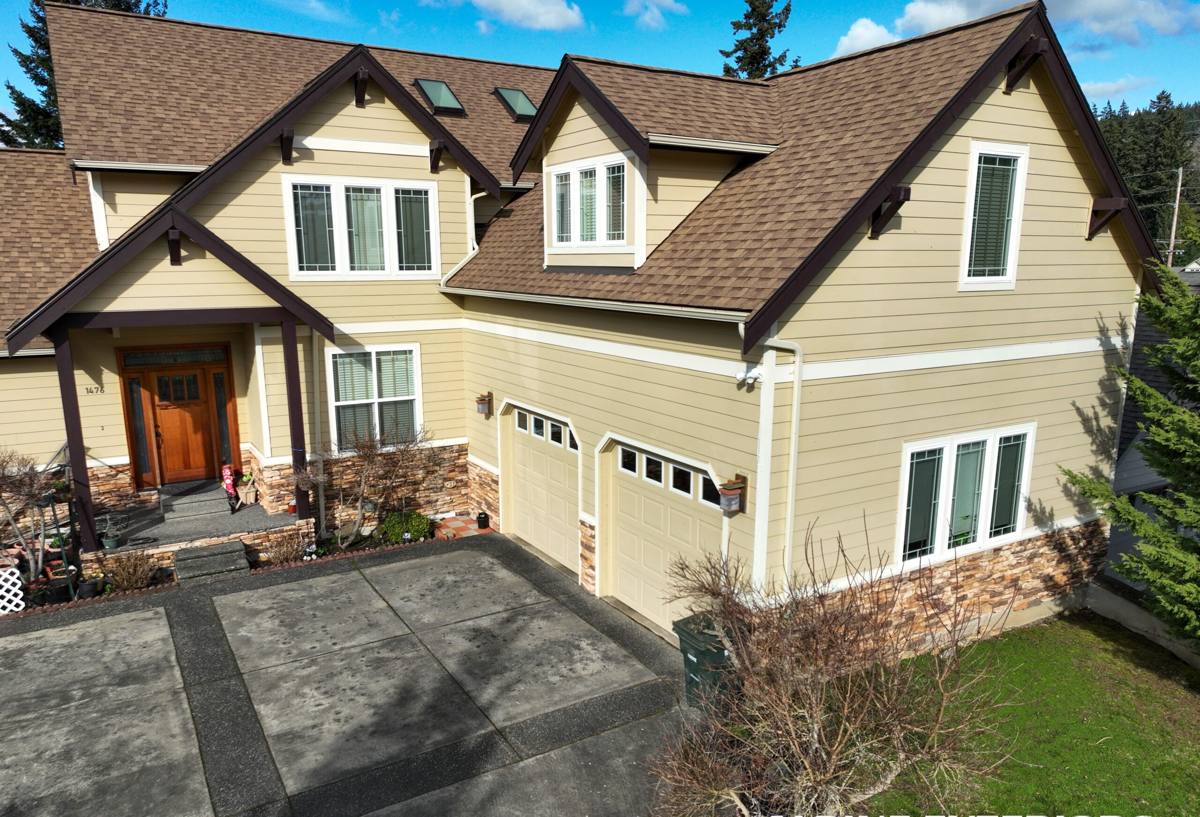
What Salt Air and Driving Rain Actually Do to Siding
Salt Air
Airborne salt is corrosive and hygroscopic — it pulls moisture out of the air and holds it against whatever surface it lands on. On homes near the water, that means fasteners, trim edges, and paint films take a steady low-grade beating year-round, not just during storms. Cheaper coatings chalk and fade faster under salt exposure, and any fastener that isn't corrosion-rated will eventually show rust bleed through the finish.
Driving Rain
Wind off the water doesn't just fall as rain — it drives it sideways into wall assemblies, laps, and seams. That puts real pressure on flashing details, siding overlaps, and caulking joints that a calmer inland site would rarely test. A siding system that's watertight in a still-air installation can still leak on a peninsula lot if the water management details weren't built for wind-driven exposure.
Moss and Algae Season
Shade, moisture, and mild temperatures add up to a moss and algae season that runs much longer here than in drier parts of the state. Organic growth on siding isn't just cosmetic — it holds moisture against the surface, and on materials that aren't dimensionally stable, that trapped moisture is what eventually causes swelling, delamination, or paint failure.
Why We Install Only James Hardie Fiber Cement
Fiber cement doesn't rot, it doesn't feed moss the way wood fiber does, and it holds a factory-applied finish far longer than field-applied paint on wood or engineered wood products. That combination matters more on a Point Roberts lot than almost anywhere else in our service area, which is why we standardized on James Hardie rather than offering a mix of siding brands or wood alternatives.
James Hardie engineers specific product lines for different climate zones, including an HZ5 formulation built for regions with more moisture and freeze-thaw cycling. The ColorPlus factory finish is baked on under controlled conditions, which gives it better adhesion and fade resistance against salt air and UV than a job-site-applied paint job ever will. We're not installing it because it's the only option on the market — we're installing it because, for a peninsula climate like this one, it's the option that holds up with the least maintenance and the fewest callbacks.
What a Correct Installation Involves Here
Water Management Comes First
On a wind-driven-rain site, the water-resistive barrier, flashing at every window and door, and proper head flashing above trim aren't optional extras — they're the difference between a siding job that sheds water and one that eventually traps it behind the cladding. We install house wrap and flashing details to manage bulk water before the siding panel ever goes on, because no exterior cladding, fiber cement included, is meant to be the sole line of defense against driving rain.
Clearances and Fastening
James Hardie's installation instructions specify minimum clearances from grade, roof lines, and decks, along with fastener spacing and type. On a salt-exposed site, we use corrosion-resistant fasteners specifically because standard fasteners will bleed rust through the finish well before the siding itself shows any wear. Skipping this detail is one of the most common ways a fiber cement job looks fine for a year or two and then starts showing problems.
Caulking and Joint Treatment
Every seam, joint, and penetration gets sealed to spec, not just for appearance but because a gap that would be a non-issue in still air becomes a wind-driven entry point on an exposed peninsula lot. We follow Hardie's joint treatment guidance rather than shortcutting it, since improper caulking is one of the more common causes of moisture problems that get blamed on the siding material itself.
Matching the Product Line to the Exposure
Not every part of a home sees the same exposure, and the right Hardie product often varies by wall orientation and proximity to the water. A table like the one below outlines how we typically think through product selection on an exposed peninsula home.
| Area of Home | Typical Exposure | Product Consideration |
|---|---|---|
| Water-facing walls | Direct salt spray, driving rain, full wind | HZ5 lap siding, extra attention to flashing and joint sealing |
| Shaded north/side walls | Lower rain exposure, higher moss and algae risk | ColorPlus finish for long-term color hold without repainting |
| Trim, fascia, soffit areas | Edge exposure, water shedding points | Hardie trim boards matched to siding profile and finish |
| Foundation-adjacent siding | Splash-back, ground moisture | Correct grade clearance per manufacturer spec |
Why Hiring a Crew That Already Works Point Roberts Matters
Point Roberts isn't accessible by road from the rest of Washington State — reaching it means crossing into Canada and back out again, which affects everything from scheduling to material delivery to how a crew plans a job day. Contractors who don't regularly work this community often underestimate that logistics reality, which can mean delayed starts, split trips for forgotten materials, or a job that gets deprioritized the moment something easier comes up on the mainland side of the county.
A crew that already works Point Roberts plans around the border crossing as a normal part of the job: staging materials in full before crossing, scheduling inspections and deliveries efficiently, and treating the site with the same attention as any other Whatcom County job rather than treating it as an inconvenient outlier. That familiarity also extends to the climate itself — knowing to size up fastener corrosion resistance, plan flashing details for wind-driven rain, and account for a moss season that runs longer than it does further inland.
Our Process, Start to Finish
- Site assessment. We look at wall exposure, existing siding condition, moisture damage, and any trim or flashing issues before quoting anything.
- Product and color selection. We help match Hardie product lines and ColorPlus colors to sun exposure and water proximity, not just aesthetics.
- Logistics planning. Because of the border crossing, we stage materials and plan crew days to avoid mid-job delays.
- Tear-off and substrate check. Old siding comes off and the sheathing underneath gets inspected for hidden moisture damage before anything new goes on.
- Water barrier and flashing installation. House wrap, window and door flashing, and any needed repairs happen before siding is hung.
- Siding installation to spec. Correct clearances, corrosion-resistant fasteners, and proper joint treatment throughout.
- Final walkthrough. We review the finished work with the homeowner and confirm everything meets manufacturer installation requirements, which keeps the warranty intact.
What Affects Cost on a Job Like This
Every home is different, but a few factors tend to move the price on Point Roberts jobs specifically:
| Cost Factor | Why It Matters Here |
|---|---|
| Existing moisture or rot damage | Long-term rain and moss exposure can mean hidden sheathing repair before new siding goes on |
| Wall exposure and orientation | Water-facing walls may need more flashing and joint attention than sheltered walls |
| Trim and architectural detail | More corners, windows, and trim lines mean more cutting, flashing, and labor time |
| Access and logistics | Border-crossing material staging affects scheduling and delivery planning |
| Siding removal scope | Full tear-off versus partial replacement changes both labor and disposal costs |
Signs Your Point Roberts Home May Need Attention
A few warning signs tend to show up earlier on exposed peninsula homes than they would further inland:
- Persistent moss or algae growth that comes back within weeks of cleaning
- Paint or coating that's chalking, peeling, or fading unevenly, especially on water-facing walls
- Soft spots, bubbling, or visible warping in existing siding boards
- Rust streaking below fasteners or trim edges
- Visible gaps at joints, corners, or around window and door trim
- Higher-than-expected heating bills, which can point to a compromised wall assembly behind the siding
Catching these early usually means a simpler repair. Waiting on them, especially in this climate, tends to mean more sheathing damage by the time the siding finally comes off.
Get a Straightforward Look at Your Siding
If you're weighing a siding replacement on a Point Roberts home, we're happy to come take a look, walk you through what we're seeing, and put together a clear, no-pressure estimate. There's no obligation — just an honest read on what your home actually needs, using the form below.