 Ferndale Roofing
 Point Roberts Siding Takes a Different Kind of Beating
Point Roberts sits in a spot most siding never has to deal with. It's a peninsula surrounded by water on three sides, which means homes here get near-constant exposure to salt-laden air coming off the Strait of Georgia and Boundary Bay. Add in wind-driven rain that comes at the wall sideways instead of straight down, and a moss and algae season that runs longer than it does even a few miles inland in Ferndale, and you've got a climate that ages siding faster than the manufacturer's brochure ever accounted for.
We work throughout Whatcom County, and we've seen the difference firsthand: siding on a Point Roberts home can show wear years before an identical product would on a home set back from the water. That's not a knock on any particular material — it's just what happens when salt air, moisture, and shade-loving organic growth all show up on the same wall, year after year.
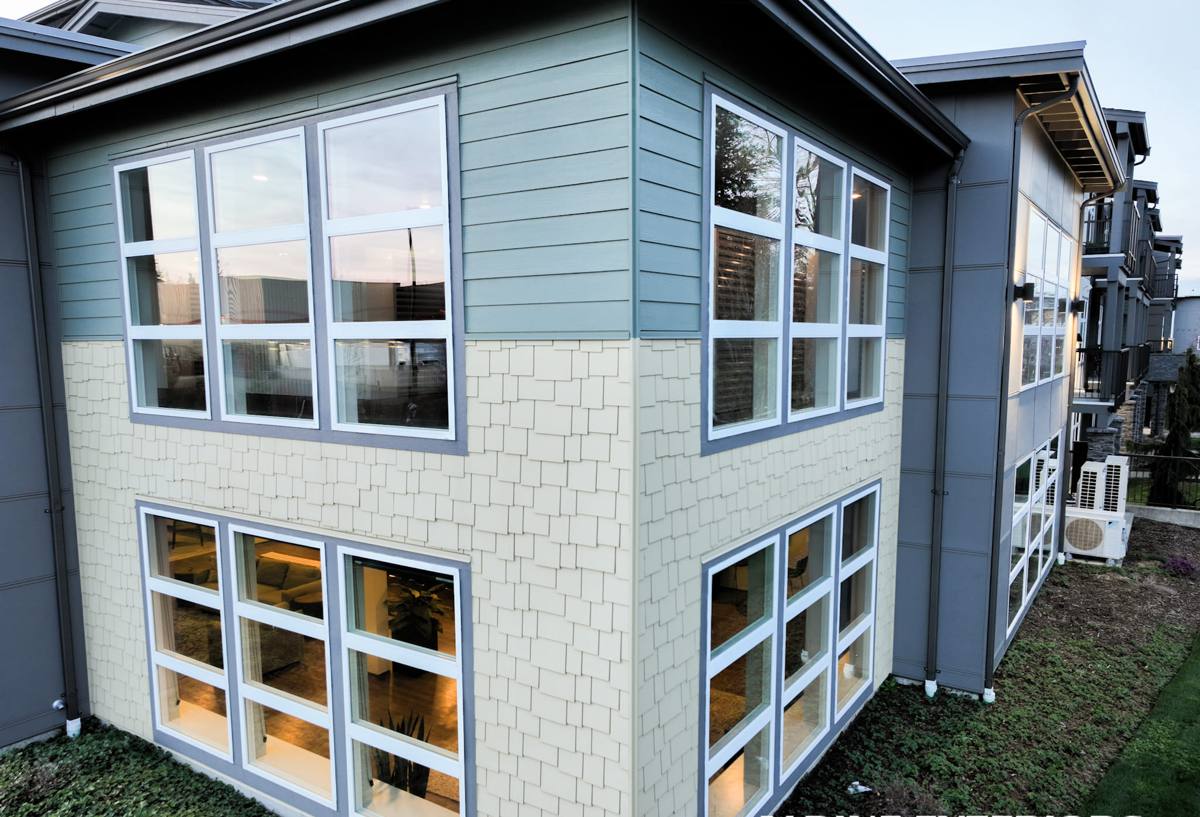
Signs Your Point Roberts Home Needs Siding Repair
Most siding problems don't announce themselves with a hole in the wall. They show up as small, easy-to-dismiss changes that get worse the longer they sit. Here's what we tell homeowners to watch for:
- Soft or spongy spots when you press on the siding, especially near the bottom courses and around window and door trim
- Paint or finish that's bubbling, peeling, or chalking faster than the rest of the house
- Persistent green or black staining that comes back within weeks of cleaning
- Visible gaps, warping, or cupping in boards, particularly on the walls facing the water
- Cracked or split panels near corners, seams, or fastener points
- A musty smell or discoloration on interior walls that back up to exterior siding
- Caulk or sealant that's cracked, shrunk, or pulled away from trim and joints
Any one of these on its own might be minor. Several at once, especially clustered on the same elevation, usually means moisture has been getting behind the siding for a while — which changes the repair from "patch a board" to "open it up and find out how far it's gone."
What's Actually Causing the Damage
Salt Air and Corrosion
Salt in the air doesn't just sit on the surface — it works into fasteners, flashing, and any exposed metal trim, accelerating corrosion in ways homeowners further inland rarely deal with. Rusted or failing fasteners are one of the most common root causes we find when we pull siding for repair on Point Roberts homes. If a repair only replaces the visible board and reuses corroded fasteners or flashing underneath, the same failure shows up again in a season or two.
Wind-Driven Rain and Moisture Intrusion
Point Roberts catches weather off open water with very little to break it up. That means rain doesn't just fall — it's pushed sideways into laps, joints, and trim intersections that were designed for rain falling straight down. Over time, that drives moisture behind siding at exactly the points where seams, caulk, and flashing are weakest. Once water gets behind the cladding, the sheathing and framing underneath start absorbing it, and that's where real structural repair costs come from.
A Long Moss and Algae Season
Shaded walls, persistent moisture, and mild temperatures give moss and algae a long runway to establish themselves on siding here — often longer than what we see on similar homes set back from the water in Ferndale. Beyond the cosmetic issue, moss holds moisture directly against the siding surface, which keeps that section of wall wetter for longer stretches than an exposed, sun-dried wall ever gets. That constant dampness is what eventually leads to rot in wood-based products or degraded finishes on others.
Repair or Replace? How We Decide
Not every damaged section needs a full re-side, and we're not going to tell you it does. But a like-for-like patch job on top of an unresolved moisture problem is a waste of money. We look at the extent and pattern of the damage before recommending a path.
| Situation | Repair Is Usually Enough | Replacement Is Worth Discussing |
|---|---|---|
| Damage location | Isolated to one board or small area | Spread across multiple courses or one whole elevation |
| Sheathing condition | Dry and solid once opened up | Soft, discolored, or damp underneath |
| Age of existing siding | Well within its expected service life | Already near or past what the product is rated for |
| Fastener and flashing condition | Sound, no visible corrosion | Rusted, failing, or missing entirely |
| Recurring issues | First time this section has had a problem | Same area has been patched before and failed again |
When repair is the right call, we do it properly — matching the profile and reveal of the existing siding, correcting whatever let moisture in to begin with, and sealing and flashing the repair so it doesn't just fail again in the next storm season.
What a Correct Repair Actually Involves
A siding repair that lasts starts with diagnosis, not demolition. Before we replace a single board, we want to understand why it failed — because replacing the board without fixing the cause just buys you a few more years before the same spot needs work again. That means checking the house wrap or weather barrier behind the siding, inspecting flashing at windows, doors, and any horizontal trim, and confirming fasteners are sound before anything new goes back up.
Once we know what we're dealing with, the repair itself comes down to a few things done right:
- Removing damaged material back to solid, dry substrate — not just the visibly bad section
- Correcting any flashing, drainage plane, or fastening issue that caused the original failure
- Matching new material to the existing siding's profile, reveal, and finish as closely as possible
- Sealing joints and terminations with products rated for the exposure the wall actually sees
- Verifying the repair blends into the surrounding wall instead of standing out as an obvious patch
Why We Repair With James Hardie Fiber Cement
We install and repair with James Hardie fiber cement exclusively — it's the only siding system we put our name behind, and that includes repair work. Hardie's HZ5 product line is engineered specifically for climates like ours, where wind-driven rain and moisture exposure are a fact of life rather than an occasional storm. It's non-combustible, resists moisture-driven swelling and warping far better than wood-based or engineered wood alternatives, and holds its factory-applied ColorPlus finish without the repeated repainting cycle that salt air and UV exposure force on other materials.
When a repair calls for new material, matching into Hardie siding is straightforward because the product line is consistent and well documented. If your home currently has a different siding product and repeated moisture or moss damage keeps coming back, that's a conversation worth having — sometimes the honest answer is that targeted repair with better materials in the affected area solves the problem, and sometimes it means talking through whether the rest of the wall is heading toward the same fate.
Our Process for Point Roberts Jobs
Point Roberts isn't like scheduling a job in Ferndale proper. It's a U.S. exclave — the only land route in and out crosses through Canada — which means logistics matter in a way they don't for most siding jobs in Whatcom County. Materials, crew, and equipment all need to be planned around that border crossing, not just tacked on as an afterthought.
We build that into how we schedule and stage every Point Roberts job:
- An on-site assessment where we identify not just the visible damage but the likely cause behind it
- A clear, written scope that specifies repair versus replacement for each affected area and why
- Materials and crew scheduling planned around border logistics so the job isn't held up mid-repair
- Repair work that addresses moisture, flashing, and fastener issues — not just the cosmetic surface
- A final walkthrough so you can see exactly what was done and why
Why a Crew That Already Works Point Roberts Matters
A contractor who's never worked in Point Roberts before is learning the logistics on your dime — figuring out border timing, material staging, and weather windows while your siding sits open. A crew that already works this community shows up knowing how to plan the trip, how much weather buffer to build into the schedule, and what this particular stretch of coastline does to siding over time. That familiarity translates directly into fewer surprises, fewer delays, and a repair that's planned around the realities of the site instead of figured out as we go.
If you're dealing with soft spots, recurring moss staining, or siding that just doesn't look right anymore on your Point Roberts home, we're happy to take a look. We'll give you a straight answer on what's causing it, whether repair or replacement makes sense, and a free, no-pressure estimate with no obligation to move forward.