 Ferndale Roofing
 Roofing in an Exclave: Why Point Roberts Is Its Own Challenge
Point Roberts sits at the tip of a small peninsula, cut off from the rest of Washington State by the international border and reachable by land only through Tsawwassen, British Columbia. That geography isn't just a curiosity for homeowners here — it shapes how a roof is built and how it's maintained. The community sits surrounded on three sides by water, which means homes take on a steady diet of salt-laden air, wind-driven rain, and the kind of persistent dampness that keeps moss and algae in business nearly year-round. A roof that would hold up fine twenty miles inland can wear out early here if it wasn't specified and installed with those conditions in mind.
As a Ferndale-based crew, we work throughout Whatcom County, and Point Roberts is one of the more demanding spots on our route precisely because of that marine exposure. This page covers what a correctly installed metal roof looks like for a Point Roberts home, the material and coating choices that actually matter here, and what to expect from a contractor who understands the local conditions rather than treating every roof the same.
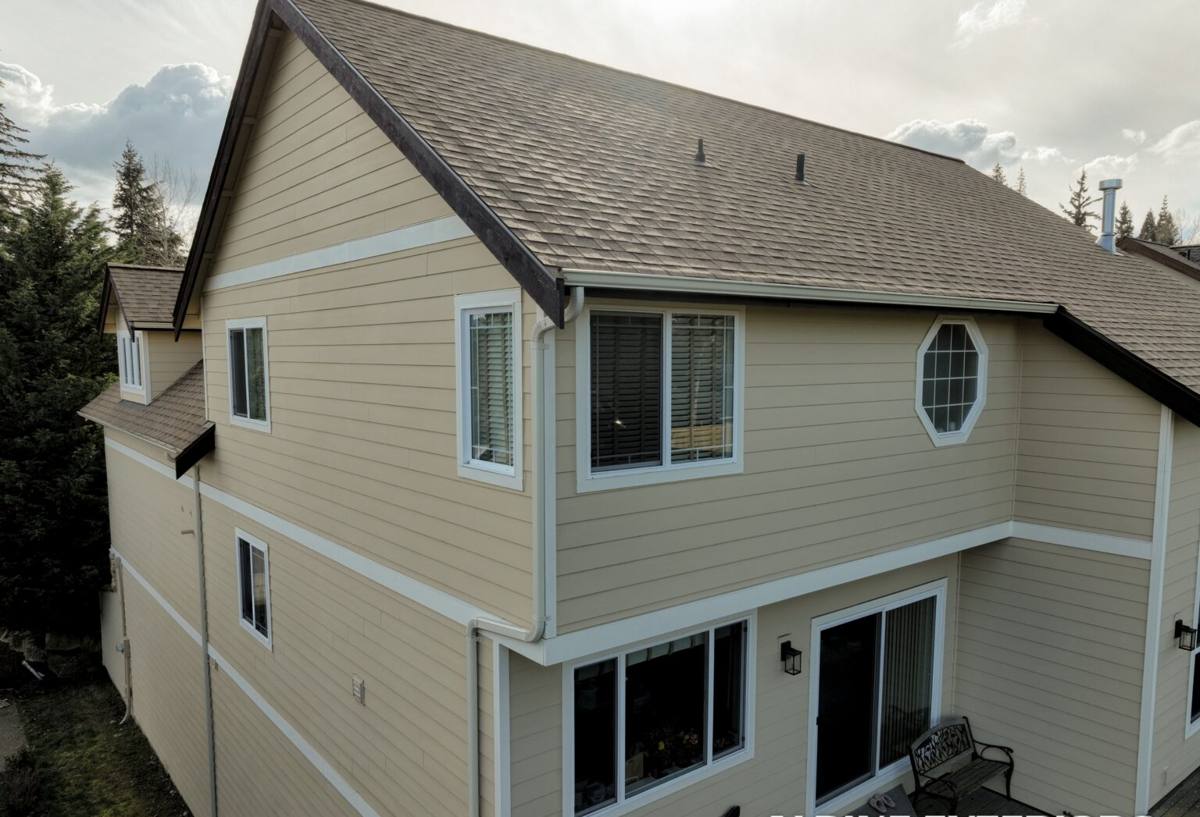
What Salt Air and Driving Rain Actually Do to a Roof
Corrosion Isn't Optional to Plan For
Airborne salt from the surrounding water settles on every exterior surface, including the roof. On uncoated or poorly finished metal, that salt accelerates oxidation at fasteners, cut edges, and seams — the exact spots where a roof is most vulnerable to leaks if corrosion takes hold. The fix isn't complicated, but it has to be deliberate: the right base metal, the right factory finish, and fasteners rated for the exposure, not whatever is cheapest at the supply house.
Wind-Driven Rain Finds Weak Details
Storms coming off the water don't just drop rain straight down — they push it sideways, up under laps, and into any flashing detail that was cut corners on. A metal roof's actual weather resistance lives almost entirely in the details you can't see once the job is done: underlayment selection, flashing laps, and how penetrations (vents, chimneys, skylights) are sealed. Panels themselves rarely fail; the details around them do.
A Long Moss Season
Whatcom County's wet season runs long, and shaded or north-facing roof sections in Point Roberts can stay damp for weeks at a stretch. Moss and algae need that moisture to establish, and once they do, they hold water against the roof surface and work into any gap they can find. Metal roofing doesn't eliminate moss risk entirely, but its smooth, non-porous surface gives moss far less to grip onto compared to shingles or wood, and it dries out faster between rain events.
Why Metal Roofing Is a Strong Fit Here
Metal isn't the right material for every home or every budget, but for the specific combination of salt air, driving rain, and heavy moss pressure that Point Roberts deals with, it has real advantages:
- A continuous, low-porosity surface that sheds water fast and gives algae and moss little to hold onto
- Standing seam profiles with no exposed fasteners, removing the most common leak point on lower-end metal systems
- Coatings engineered specifically to resist fading and chalking under UV and salt exposure
- A long service life that reduces how often the roof needs to be disturbed for repairs — important on a peninsula where every trip for a contractor means factoring in the border crossing
- Strong wind uplift performance when installed with the correct fastening pattern, relevant given how exposed some Point Roberts lots are
None of that is automatic, though. It depends entirely on choosing the right panel system and finish for a marine environment, and installing it correctly.
Panel and Finish Choices That Matter in a Marine Climate
Not all metal roofing is built the same, and the differences matter more here than in a drier, inland part of the county. The table below covers the main choices we walk homeowners through.
| Option | How It Handles Salt Air | Trade-offs to Know |
|---|---|---|
| Galvalume steel (standard finish) | Good resistance from its aluminum-zinc coating, but cut edges need proper sealing to avoid early rust | Lower cost than aluminum; edge detailing is critical near the water |
| Aluminum panels | Naturally corrosion-resistant even in direct salt exposure, since it doesn't rust like steel | Higher material cost; slightly softer, so care is needed during install and foot traffic |
| PVDF (Kynar-type) coating | Excellent, long-term color and finish retention under UV and salt spray | Higher upfront cost than basic polyester paint, but far less fading and chalking over time |
| Standard SMP/polyester coating | Adequate for less exposed sites, but fades and chalks faster under constant marine air | Lower initial cost; shorter finish life in a high-exposure spot like Point Roberts |
| Standing seam (concealed fastener) | Best long-term watertightness since there are no exposed screws to work loose or corrode | Higher labor cost than exposed-fastener panel; worth it for the reduced maintenance |
For most Point Roberts homes directly exposed to the water, we steer people toward aluminum or a well-finished Galvalume system with a PVDF-type coating, in a standing seam profile. It costs more up front than a basic exposed-fastener panel, but it's the combination that actually holds up to what this location throws at a roof year after year.
What a Correct Metal Roof Installation Involves
Underlayment and Deck Prep
Before any metal goes down, the roof deck gets inspected for soft spots, rot, or trapped moisture — common on older Point Roberts homes that have taken decades of coastal weather. We use a high-temp, self-adhered underlayment at eaves, valleys, and penetrations, since these are the areas most likely to see wind-driven rain forced backward under the panels.
Fasteners and Flashing
In a salt-air environment, fastener choice isn't a minor detail — it's one of the biggest determinants of how the roof ages. We use fasteners and flashing metal rated to resist corrosion in coastal exposure, and we match metals where they meet so we're not creating a corrosion reaction between dissimilar materials at flashing joints.
Panel Layout and Seaming
Standing seam panels are mechanically seamed on site, not just snapped or clipped, for the tightest possible weather seal. Panel runs are laid out to minimize seams in high-exposure areas and to keep water moving off the roof as directly as possible, which matters when storms are coming in sideways off the water.
Ventilation
A metal roof over an under-ventilated attic can trap moisture, which works against everything the roofing material is supposed to do. We check and correct intake and exhaust ventilation as part of the job so the roof assembly is drying out properly, not just shedding rain on top while holding moisture underneath.
Our Process, Start to Finish
Because Point Roberts requires crossing the border to reach, we plan these jobs a little differently than roofs closer to Ferndale — batching site visits, confirming material lists before we head out, and making sure the crew has everything needed for the day rather than making return trips.
- On-site assessment: We walk the roof and attic, check the deck condition, note exposure direction, and measure for an accurate material takeoff.
- Written estimate: You get a clear scope covering panel type, finish, fastening system, flashing details, and ventilation work — no vague line items.
- Material staging: Panels, flashing, underlayment, and fasteners are confirmed and staged before the crew crosses over, so the job isn't held up mid-install.
- Tear-off and deck repair: Old roofing comes off, the deck is inspected, and any rot or soft sheathing found along the way is repaired before anything new goes down.
- Installation: Underlayment, flashing, and panels go on in sequence, with seaming and fastening done to the standard the coastal exposure calls for.
- Final walkthrough: We review the finished roof with you, confirm ventilation and flashing details, and go over what maintenance actually looks like for your specific site.
Living With a Metal Roof in a Salt-Air, Moss-Prone Spot
A correctly installed metal roof is low-maintenance compared to most other roofing materials, but "low-maintenance" isn't the same as "no maintenance," especially this close to the water. A little attention once or twice a year goes a long way toward getting the roof's full service life.
- Rinse off accumulated salt spray, pollen, and debris with a garden hose once or twice a year — avoid pressure washers, which can damage seams and coatings
- Clear gutters and downspouts before the wet season ramps up, since clogged gutters back water up under eave flashing
- Trim back overhanging branches on shaded sides of the roof to cut down on the moisture and debris that feed moss growth
- Do a visual check after major windstorms for lifted flashing, dented panels, or debris caught in valleys
- Watch for any streaking or dulling in the finish, which can signal it's time for a professional inspection rather than a cosmetic issue
- Avoid foot traffic on the roof beyond what's necessary — metal panels can dent or scuff under careless handling
Why Local, Point Roberts-Familiar Experience Matters
Point Roberts' isolation changes the practical realities of getting roofing work done well. A contractor unfamiliar with the area might underestimate how exposed certain lots are to wind and salt spray, or plan a job without accounting for the border crossing and the logistics of getting a full crew and materials on site for the day. We've worked this part of Whatcom County enough to plan around those realities rather than get surprised by them mid-job — which keeps your project on schedule and avoids costly return trips for details that should have been handled the first time.
It also means we've seen how different products and finishes actually perform on Point Roberts roofs over time, not just what a spec sheet claims. That experience shapes the specific recommendations we make for panel type, coating, and fastening on your home rather than defaulting to a one-size-fits-all package.
What Affects the Cost of a Metal Roof Here
Every home is different, but a few factors consistently move the price on Point Roberts metal roofing projects:
| Factor | Why It Matters |
|---|---|
| Panel material and coating | Aluminum and PVDF-type finishes cost more than basic steel and standard paint, but last longer in this exposure |
| Roof complexity | More valleys, penetrations, and cut angles mean more flashing work and labor time |
| Existing deck condition | Rot or soft sheathing found during tear-off adds repair work before the new roof goes on |
| Ventilation upgrades | Correcting inadequate attic ventilation as part of the job protects the new roof but adds scope |
| Site access and logistics | Point Roberts' location affects scheduling and material staging, which factors into project planning |
We don't quote a metal roof off a rough square-footage number alone — the estimate reflects what your specific roof and site actually need.
Get a Straight Answer on Your Roof
If your Point Roberts home needs a new roof, or you're weighing whether metal is the right call given the salt air and moss you're already dealing with, we're glad to take a look and give you an honest read — no pressure, no inflated scare tactics. Fill out the form below for a free estimate, and we'll walk you through what your roof actually needs and what it would take to get it done right.