 Ferndale Roofing
 Metal Roofing Built for Lummi Island's Environment
Homes on and around Lummi Island sit right up against the water, and that changes what a roof has to deal with day to day. Salt-laden air moves in off the Sound, wind-driven rain comes in sideways during winter storms, and the tree cover that makes this part of Whatcom County so appealing also means a long moss season on anything with a north-facing slope or heavy shade. A roof that would hold up fine twenty miles inland in Ferndale can wear out faster out here if it isn't specified and installed with those conditions in mind.
Metal roofing is a strong fit for this environment when it's done right, but "metal roofing" isn't one product — panel type, fastener choice, and coating all matter more here than they would in a drier, less coastal setting. This page is about what a correct metal roof installation looks like specifically for homes in the Lummi Island area, not a general overview of metal roofing everywhere.
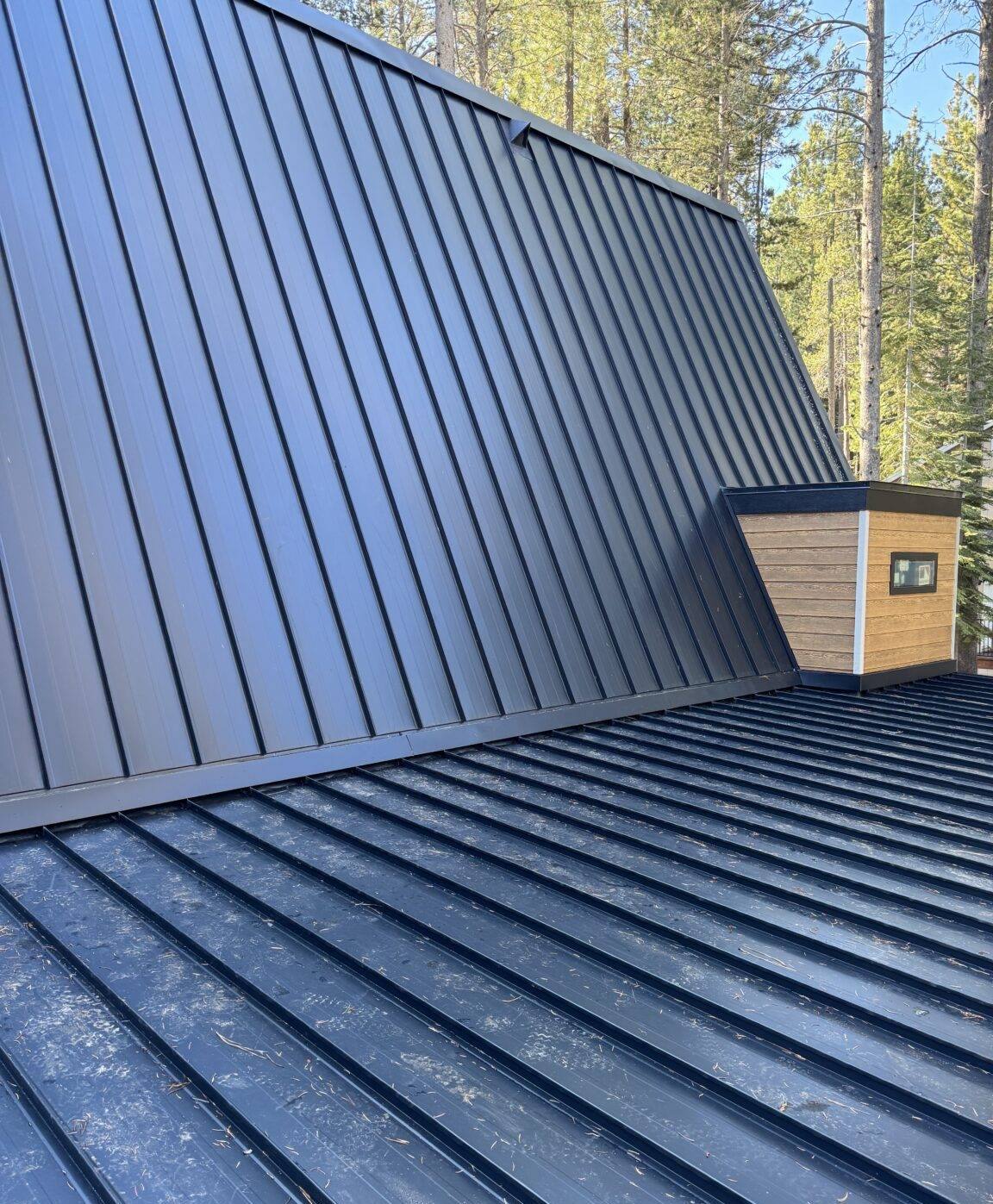
What Salt Air and Coastal Exposure Do to a Roof
Airborne salt is corrosive to exposed metal, full stop. That doesn't mean metal roofing is a bad choice near the water — it means the metal, coatings, and fasteners have to be chosen for that exposure instead of whatever is cheapest or most common inland. A few specific failure points show up more often on waterfront and near-waterfront homes:
- Uncoated or poorly coated steel fasteners corroding well before the panels themselves show wear
- Galvanic corrosion where dissimilar metals touch — for example, the wrong flashing metal paired with the wrong panel metal
- Coating breakdown on cut edges of panels that weren't properly sealed or finished on site
- Premature fading or chalking on lower-grade paint finishes that weren't rated for marine exposure
None of these are reasons to avoid metal roofing. They're reasons to be specific about material grade, coating system, and fastener hardware when the job is going in this close to salt water.
Driving Rain and Wind-Driven Water
The other half of the coastal equation is wind-driven rain. Storms coming across the water don't just fall straight down — they push water sideways and upward under laps, at penetrations, and along edges. A metal roof handles standing water and volume well, but it's only as good as the underlayment and flashing detail underneath it. Skimping on underlayment or flashing at valleys, chimneys, and wall transitions is where most water intrusion on metal roofs actually starts, not in the field of the panels themselves.
Moss and Debris Under Tree Cover
A lot of homes in and around Lummi Island have real tree cover, which is part of the draw of living out here but also means shaded, damp roof sections that hold moisture longer through the fall and winter. Moss doesn't damage metal panels the way it can degrade shingles, but it does hold moisture against the roof surface, clog valleys and gutters, and trap debris that keeps everything wetter for longer. On a metal roof, the bigger practical issue is debris and needle buildup in valleys and at eave lines, since that's where water concentrates and where a small blockage can back water up under a lap.
Choosing the Right Metal Panel System
Not every metal roofing system performs the same way in a marine, high-moisture environment. The two main categories homeowners in this area choose between are standing seam and exposed-fastener panels, and the right call depends on the roof's exposure, slope, and how much long-term maintenance the homeowner wants to take on.
| Feature | Standing Seam | Exposed-Fastener Panel |
|---|---|---|
| Fasteners | Concealed, no exposed penetrations | Exposed screws through the panel face |
| Coastal durability | Higher — fewer failure points at fasteners | Lower — fastener seals are the weak point over time |
| Maintenance | Minimal; occasional debris clearing | Periodic fastener inspection and re-seating |
| Upfront cost | Higher | Lower |
| Best fit | Waterfront and high-exposure roofs | Detached structures, budget-driven projects |
For homes with direct water exposure or a lot of wind, we generally recommend standing seam as our professional standard, since eliminating exposed fastener penetrations removes the single most common long-term maintenance headache in a salt-air environment. Exposed-fastener panels aren't a bad product — they're a reasonable, budget-conscious option for outbuildings, shops, or less exposed roof sections — but we're upfront with homeowners about the trade-off in maintenance burden versus a standing seam system.
What a Correct Installation Actually Involves
The panels get most of the attention, but the parts underneath and around them are what determine whether the roof performs for decades or starts leaking in a few years. On every metal roof we install in this area, the work includes:
- A synthetic, high-temperature underlayment suited to the panel type and slope, installed as a continuous water barrier — not just a formality under the metal
- Ice-and-water shield or equivalent self-adhered membrane at eaves, valleys, and any low-slope transitions where wind-driven rain is most likely to back up
- Flashing metal selected to be compatible with the panel metal, avoiding galvanic corrosion between dissimilar metals at valleys, walls, and penetrations
- Fasteners and clips rated for coastal exposure, not general-purpose hardware
- Proper attic or roof-deck ventilation, since metal roofs handle condensation differently than shingles and inadequate ventilation can trap moisture against the underside of the deck
- Careful detailing at chimneys, skylights, and any roof-wall intersections, which are the most common leak points on any roof type
Any one of these done poorly can undercut an otherwise good panel system. This is where the difference between a correct job and a rushed one actually shows up, usually a few years down the road rather than immediately.
Our Process for Lummi Island Projects
We treat every metal roofing job on Lummi Island as a coastal install from the start, not a standard Ferndale-area roof with metal panels swapped in. That starts with an on-site evaluation of the roof's actual exposure — which slopes face the water and prevailing wind, where tree cover creates shaded, moss-prone sections, and where existing flashing or ventilation is inadequate for the panel system we're recommending.
From there we spec the panel type, coating, and fastener hardware to match that specific roof's exposure rather than defaulting to whatever's standard inland. We plan material delivery and crew logistics around the island's access, so staging and scheduling don't turn into a surprise mid-project. Installation follows the same sequence every time: tear-off and deck inspection, underlayment and membrane at vulnerable areas, flashing, panel installation, and a final walk-through covering ventilation, valleys, and every penetration before we call the job done.
Maintenance That Actually Matters in This Climate
A well-installed metal roof in this area is genuinely low-maintenance compared to other roofing types, but "low-maintenance" isn't "no-maintenance" when you're this close to the water and under tree cover. A simple, realistic maintenance routine covers most of what causes trouble:
- Clear valleys, gutters, and eave lines of needles, leaves, and moss buildup at least once a year, more often under heavy tree cover
- Visually check exposed-fastener systems for loose or lifted screws every year or two, since fastener seals are the first thing to wear in salt air
- Rinse accumulated salt residue off the roof surface periodically if the home is directly on the water
- Watch for any staining or discoloration at flashing points, which can signal an early seal or corrosion issue worth catching before it becomes a leak
- Keep overhanging branches trimmed back to reduce shade, debris, and moss buildup on north-facing or shaded slopes
What Drives Cost on a Job Like This
Every roof is different, but the same handful of factors tend to move the price up or down on metal roofing projects in this area:
| Factor | Why It Matters |
|---|---|
| Panel system chosen | Standing seam costs more upfront than exposed-fastener panel but needs less long-term attention |
| Roof complexity | More valleys, dormers, and penetrations mean more flashing work and labor time |
| Tear-off vs. re-roof | Removing an existing roof and repairing the deck adds cost but is often necessary for a correct install |
| Access and staging | Site access, including island logistics, affects delivery and crew scheduling |
| Ventilation upgrades | Older homes often need attic or roof-deck ventilation improvements to perform correctly under metal |
We're not going to quote a number on a page like this, because it would be a guess — but we can give you a straight, itemized estimate after seeing the actual roof.
Why Local Experience on Lummi Island Matters
A lot of roofing problems near the water aren't caused by bad products — they're caused by installers treating a coastal roof like any other roof in Whatcom County. Fastener hardware, flashing metal compatibility, underlayment choice, and ventilation all need to account for salt exposure and moisture, and that only happens consistently when a crew is used to working in this specific environment rather than encountering it occasionally. We've done work in and around this area enough to know which slopes need extra attention, where moss and debris cause problems fastest, and what actually holds up out here versus what looks fine on paper.
If you're weighing metal roofing for a home on Lummi Island, we're happy to take a look, walk the roof, and give you a straightforward, no-pressure estimate — including which panel system and details make sense for your specific exposure. There's a form below to get that conversation started.