 Ferndale Roofing
 Why Marietta Siding Takes a Different Kind of Beating
Marietta sits low and close to the water on the edge of Ferndale, and that location shapes what happens to a house over time. Homes here don't just deal with ordinary Pacific Northwest weather — they sit in a spot where marine air, standing moisture, and heavy tree cover combine to attack siding from several directions at once. A siding repair that would hold up fine in a drier, more sheltered part of Whatcom County can fail fast out here if it doesn't account for the local conditions.
That's the problem with treating siding repair as a generic fix. Patching a hole, recaulking a seam, or swapping a few damaged boards is only half the job. The other half is understanding why that section failed in the first place, and building the repair so the same failure doesn't happen again in two years. In Marietta, that almost always comes back to three things: salt-laden air, driving rain, and a moss season that runs longer than most homeowners expect.
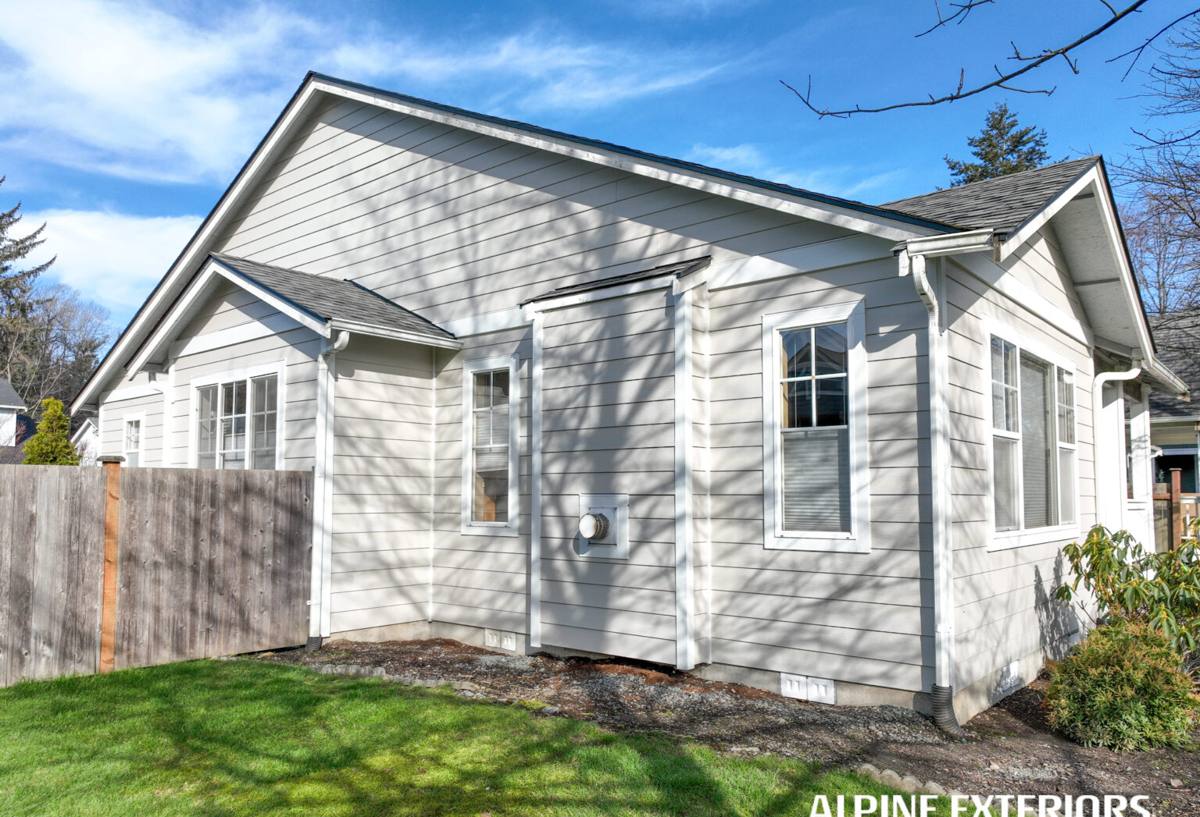
The Three Culprits: Salt Air, Driving Rain, and Moss
Salt Air and Corrosion
Proximity to open water means airborne salt settles on exterior surfaces year-round, not just during storms. On siding, that salt film holds moisture against the surface longer than plain rainwater would, and it accelerates corrosion on fasteners, flashing, and any exposed metal trim. Once a fastener starts rusting under a piece of siding, the problem is invisible until the board around it starts to stain, swell, or come loose.
Wind-Driven Rain and Water Intrusion
Storms coming off the water don't just drop rain straight down — they push it sideways, into laps, seams, and butt joints that were never designed to handle water moving horizontally. Over time, driving rain finds every gap in caulking, every under-sized flashing detail, and every spot where the original installation cut a corner. The damage usually shows up somewhere other than where the water actually got in, which is why a proper repair starts with tracing the water path, not just patching the visible spot.
Moss, Algae, and Trapped Moisture
Between the tree cover common in and around Marietta and the sheer number of damp, low-light days each year, moss and algae get a long growing season on north-facing and shaded walls. Moss isn't just cosmetic — its root structure holds water against the siding surface and, on wood-based products, works into seams and joints. Left alone through a full wet season, that trapped moisture is one of the most common reasons we get called out to look at siding that appeared fine the summer before.
Signs Your Siding Needs Repair, Not Just Cleaning
Some siding problems are obvious. Others hide until they've caused real damage underneath. Here's what we tell Marietta homeowners to watch for between inspections:
- Soft or spongy spots when you press on a wall, especially near the bottom courses or around windows
- Paint that's bubbling, peeling, or failing faster than the rest of the house
- Visible gaps at seams, corners, or where siding meets trim, window frames, or the foundation
- Streaking or dark staining below nail heads or seams — often a sign of moisture wicking through a joint
- Moss or algae that returns within weeks of cleaning, which usually means the surface underneath is staying damp longer than it should
- Warping, cupping, or visible separation between boards or panels
- Any section that was patched years ago and is showing damage again around the patch
What a Correct Siding Repair Actually Involves
Diagnosing the Real Cause
Before anything gets replaced, we figure out why that section failed. That means checking the flashing above and below the damaged area, looking at how water is shedding off the wall, and, where the siding is coming off anyway, checking the condition of the water-resistive barrier underneath. Replacing a board without understanding the cause just resets the clock on the same failure.
Matching Materials and Finish
A repair that looks obviously patched isn't a finished job. We match plank profile, reveal, and — on factory-finished products — the actual finish coat, so a repaired section blends into the surrounding wall instead of standing out as an obvious splice.
Restoring the Water Management System
Siding is one part of a larger water-shedding system that includes house wrap, flashing, and properly lapped seams. Any repair we do puts that system back together correctly — new flashing where the old flashing failed, properly lapped house wrap, and fasteners set to spec — not just a cosmetic patch over a structural gap.
Why We Repair With James Hardie Components
We install James Hardie fiber cement siding exclusively, and that carries over into repair work. When a Hardie wall needs a section replaced, we're matching into an engineered product with a known, consistent track record in wet marine climates — not guessing how a mismatched patch material will age against the original. Here's how repair realities differ by siding type, based on how each product behaves in a climate like Marietta's:
| Siding Type | Common Failure Mode Here | Repair Difficulty |
|---|---|---|
| Vinyl | Cracking in cold snaps, warping near heat sources, color fade making patches visible | Patches often mismatch quickly as the surrounding panels fade |
| Cedar / Wood | Moisture absorption, rot at seams, moss holding water against the board | Requires ongoing maintenance to keep repairs from recurring |
| LP SmartSide | Edge swelling if caulking or paint maintenance lapses | Repairs need careful edge sealing to prevent recurrence |
| James Hardie Fiber Cement | Failures usually trace to flashing or installation details, not the board itself | Non-combustible, dimensionally stable material holds a clean patch line |
This isn't a knock on every product on that list — cedar has real character, and other products have their place. It's why, when a homeowner's existing siding is a different material and needs more than a spot repair, we're upfront that our standard is Hardie, and we'll explain honestly what that would mean for their project rather than push a mismatched patch that won't hold up through another wet season.
Our Marietta Siding Repair Process
1. On-Site Assessment
We walk the exterior, check the areas you're concerned about, and look for related issues nearby — damage rarely stays confined to one spot.
2. Root-Cause Diagnosis
Where siding needs to come off anyway, we check flashing, house wrap, and framing condition underneath before closing anything back up.
3. Written Scope and Estimate
You get a clear explanation of what failed, what needs to happen to fix it correctly, and a straightforward cost range before we start.
4. Repair and Water-Management Restoration
We replace damaged material, correct flashing and sealing details, and match finish so the repair blends in.
5. Final Walkthrough
We review the completed work with you and point out anything else on the exterior worth keeping an eye on.
Repair Cost Factors
Every repair is different, but these are the main variables that drive cost on a Marietta job:
| Factor | Why It Matters |
|---|---|
| Extent of hidden water damage | Rot found under the siding once it's opened up adds framing or sheathing repair, not just siding replacement |
| Wall height and access | Second-story and hard-to-reach sections take more time and equipment |
| Color and finish matching | Factory-finished products need the right batch and profile to blend cleanly |
| Flashing and trim condition | Failed flashing often needs replacing alongside the siding itself to actually solve the problem |
| Scope of moss/algae staining | Heavily affected walls may need cleaning and treatment beyond the repaired section |
Why a Crew That Already Works Marietta Matters
Siding repair in this part of Whatcom County isn't the same job as siding repair somewhere dry and inland. A crew that already works Marietta and greater Ferndale has seen how the marine air, wind exposure, and moss cycle actually play out on real houses here — which wall orientations fail first, which flashing details tend to be undersized on older homes, and how long a "clean" repair actually lasts once it's been through a full wet season. That local pattern recognition is the difference between a repair that solves the problem and one that just covers it up until next winter.
If you've got a section of siding that's soft, staining, or growing moss faster than the rest of the house, we're glad to take a look. Request a free, no-pressure estimate below and we'll give you a straight answer on what's actually going on and what it would take to fix it right.