 Ferndale Roofing
 Building a Deck in Marietta Is Not the Same as Building One Inland
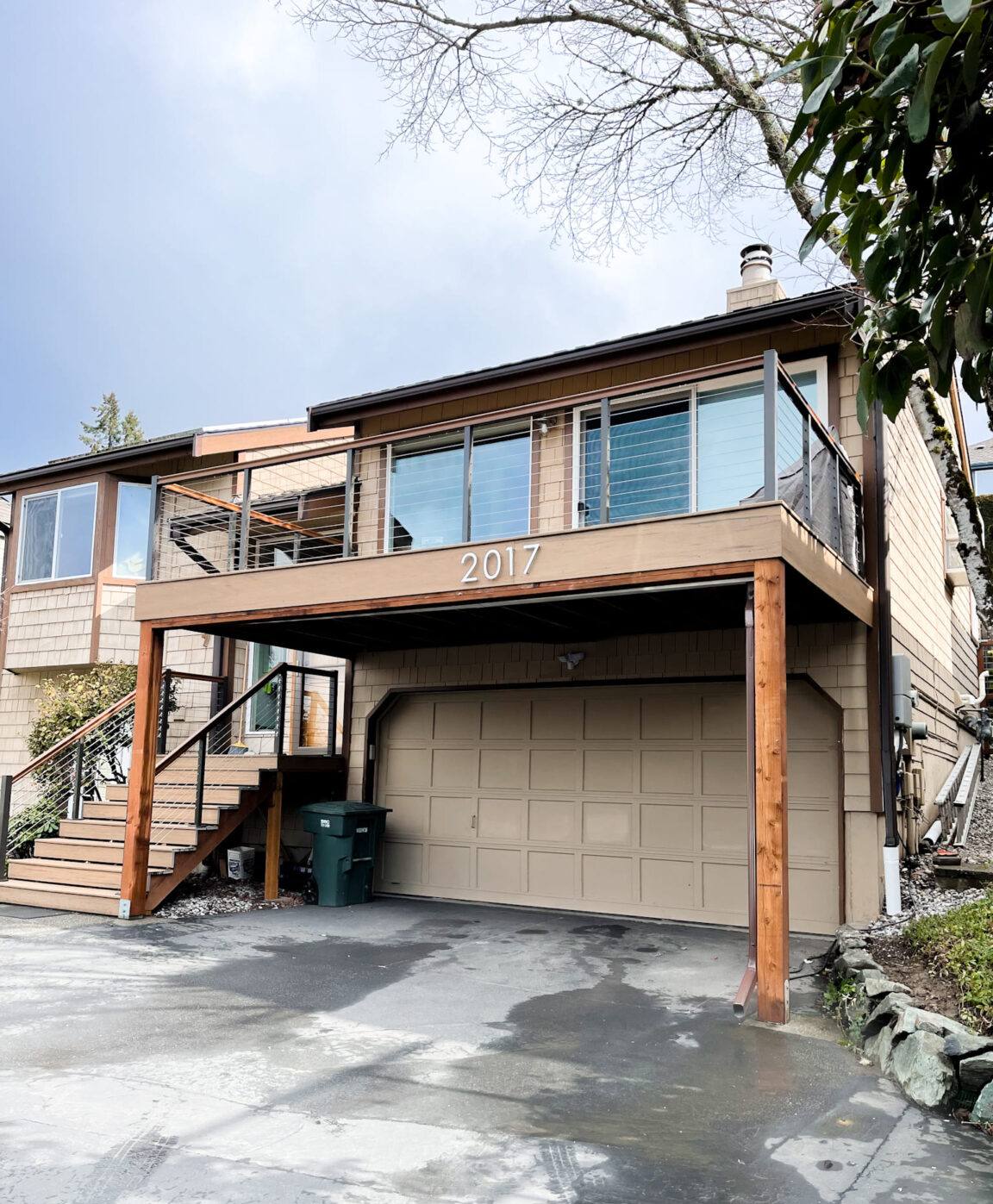
Marietta sits close to the water on the edge of Ferndale, and that proximity changes what a deck needs to survive. A deck built to a generic spec sheet might look fine the first summer and start showing problems by year three: fasteners bleeding rust through the decking, railing hardware seizing up, ledger boards holding moisture against the house, and a green film creeping across every board that doesn't get direct sun. None of that is inevitable. It's the result of choices made before the first board goes down — material selection, fastener grade, flashing detail, and drainage plan. We build custom decks for homes in and around Marietta with those choices made up front, not discovered later.
The three conditions that matter most here are salt-laden air off the water, driving rain that hits decks side-on instead of straight down, and a moss season that in Whatcom County can run from fall through spring. A deck plan that ignores any one of those three ages faster than it should.
What Salt Air Actually Does to a Deck
Salt air doesn't need direct ocean spray to cause damage — a fine mist carried on wind is enough to accelerate corrosion on anything metal. On a deck, that means:
- Standard zinc-coated screws and nails corrode faster near the water than the same hardware would inland, leading to rust streaks and eventual fastener failure.
- Uncoated or poorly coated joist hangers and structural connectors lose strength years before a homeowner notices, because the damage is happening underneath the decking where it isn't visible.
- Aluminum and lower-grade stainless railing components can pit and discolor faster than expected in a marine-influenced environment.
The fix isn't complicated, but it does cost more up front: stainless steel or heavy-duty coated fasteners rated for coastal exposure, structural hardware with a corrosion-resistant coating rated for the environment, and railing systems chosen with salt exposure in mind rather than picked purely on looks. We treat this as a baseline for Marietta work, not an upgrade option.
Driving Rain, Drainage, and the Parts of a Deck You Don't See
Whatcom County rain doesn't always fall straight down. Wind-driven rain pushes water sideways into ledger connections, under railing base plates, and into any gap where flashing was skipped or installed loosely. On an older deck, this is usually where you'll find the worst rot — not on the visible decking surface, but at the ledger board where the deck attaches to the house, and around post bases sitting in standing water.
Where correct flashing and drainage matter most
- Ledger board attachment — proper flashing between the ledger and the house siding, with a drainage gap, keeps water from tracking behind the ledger and into the wall structure.
- Post bases — posts set to shed water rather than sit in a puddle, using bases that hold the post above grade instead of embedding wood directly in concrete or soil.
- Decking board spacing — enough gap between boards for water to drain through rather than pool on the surface, especially important on lower or shaded decks that dry out slowly.
- Substructure ventilation — airflow underneath the deck so the framing can dry out between storms instead of staying damp for weeks.
These details cost very little in materials but require someone who builds this way as a habit, not as an afterthought when a customer asks.
Moss, Algae, and Surface Maintenance
A long moss season is part of life in this part of Washington, and decks that sit under tree cover or on the shaded side of a house are especially prone to it. Moss and algae on a deck surface aren't just cosmetic — they hold moisture against the boards and make the surface slippery, which is a real safety issue on stairs and landings.
Material choice affects how much of a fight this becomes. Some wood species and finishes resist moss better than others, and composite and PVC decking generally shed surface moisture and resist moss growth better than untreated wood, though no decking material is completely immune in a shaded, damp spot. Board orientation, spacing, and how much sun a deck gets from its design all factor into how much moss maintenance a homeowner will actually deal with year to year.
Choosing the Right Decking Material for Marietta Conditions
There's no single "best" decking material — the right choice depends on budget, how much upkeep the homeowner wants to do, and how exposed the deck is to sun, shade, and salt air. Here's how the common options compare for this specific environment:
| Material | Moss/Algae Resistance | Salt Air Durability | Maintenance |
|---|---|---|---|
| Pressure-treated wood | Moderate — needs regular cleaning and finish | Good if fasteners/hardware are upgraded | Annual cleaning, periodic re-staining/sealing |
| Cedar | Moderate | Good with proper fastener selection | Regular sealing to maintain color and resistance |
| Composite decking | Good — sheds moisture, resists staining | Very good | Occasional washing, no staining/sealing |
| PVC/capped polymer decking | Very good | Very good | Lowest — periodic washing only |
Composite and PVC decking generally cost more per square foot up front than wood, but for a shaded or water-exposed lot in Marietta, the reduced maintenance often makes sense over the life of the deck. That said, wood decks built with the right hardware and finish schedule can perform well too — it comes down to how much upkeep a homeowner actually wants to commit to.
Fasteners and Hardware: Where Corners Get Cut
This is the part of a deck build that's invisible once the project is finished, and it's also where cost-cutting does the most long-term damage. Structural connectors, joist hangers, ledger bolts, and decking fasteners all need to be rated for the exposure they'll actually face — not just whatever is cheapest at the yard that week. In a salt-air environment, that generally means:
- Stainless steel or coated fasteners rated for coastal/marine exposure, not standard exterior-grade hardware.
- Structural hardware (hangers, hurricane ties, post connectors) matched to the fastener type — mixing incompatible metals can accelerate corrosion through galvanic reaction.
- Hidden fastener systems or properly countersunk, capped screws for the decking surface, which also reduces water pooling around fastener heads.
Permits, Railings, and Code Requirements
Custom decks in Ferndale and unincorporated Whatcom County generally require a building permit once they exceed a certain height or size, and any deck with a walking surface more than a modest height above grade needs a code-compliant guardrail. Common requirements include minimum guardrail height, maximum baluster spacing to prevent a child from passing through, and proper attachment of the ledger board to the home's structure — this last one is frequently where older, non-permitted decks fail inspection when a home sells. We handle the permit process as part of the build, so the deck is documented correctly and doesn't create a problem at resale.
Our Process for a Marietta Deck Project
- On-site assessment — we look at sun exposure, drainage patterns, proximity to water, existing structure (if replacing a deck), and how the space will actually be used.
- Design and material selection — sized and laid out for the lot, with decking, fastener, and hardware choices matched to the site's exposure rather than a one-size-fits-all spec.
- Permitting — we prepare and submit what's needed for the local jurisdiction so the finished deck is code-compliant and on record.
- Build — footings, framing, flashing, decking, and railing installed in that order, with each step inspected before moving to the next.
- Walkthrough — we go over the finished deck with the homeowner, including what maintenance (if any) the chosen material needs going forward.
Deck Maintenance Checklist for Marietta Homeowners
- Sweep debris and standing organic matter off the surface before the wet season sets in, especially in shaded corners.
- Check for moss buildup on stairs and landings through the winter — this is a slip hazard, not just a cosmetic issue.
- Inspect fastener heads and railing hardware annually for rust streaking, which signals hardware that's failing early.
- Confirm gaps between boards haven't clogged with debris, which blocks drainage and traps moisture.
- Re-seal or re-stain wood decking on the schedule recommended for the product — don't wait until it's visibly gray and worn.
- Look underneath the deck occasionally for signs of moisture at the ledger board or post bases.
Why It Matters That We Already Work in Marietta
A crew that mostly builds decks inland, away from the water, can still build a structurally sound deck — but they may not default to coastal-grade fasteners, may not think through moss-prone shade patterns the same way, and may not have a feel for how Whatcom County's driving rain behaves against a ledger board. Working regularly in Marietta and the surrounding Ferndale area means these aren't special requests we have to be reminded about — they're the baseline we build from on every project in this part of the county.
If you're planning a new deck or replacing one that's showing its age, we're happy to take a look and walk through the options with you. Reach out for a free, no-pressure estimate using the form below.