 Ferndale Roofing
 New-Construction Windows for Lynden Homes, Done Right From the Framing Stage
New-construction windows are a different job than replacement windows, even though homeowners often use the terms interchangeably. A new-construction window has a nailing fin around its perimeter and gets installed into a bare, framed rough opening before the weather-resistive barrier (WRB) and siding go on. That means the window becomes part of the wall's water-management system from day one, not something fitted into an existing opening after the fact. For a new build or an addition in Lynden, getting that sequence right the first time matters more than almost any other exterior detail, because once siding and trim close it in, mistakes are expensive to find and worse to fix.
We work new-construction window installs across our Whatcom County service area, and Lynden's mix of new subdivisions, infill lots, and larger rural and agricultural properties all get the same standard: correct flashing order, verified rough openings, and products matched to what this climate actually does to a house over time.
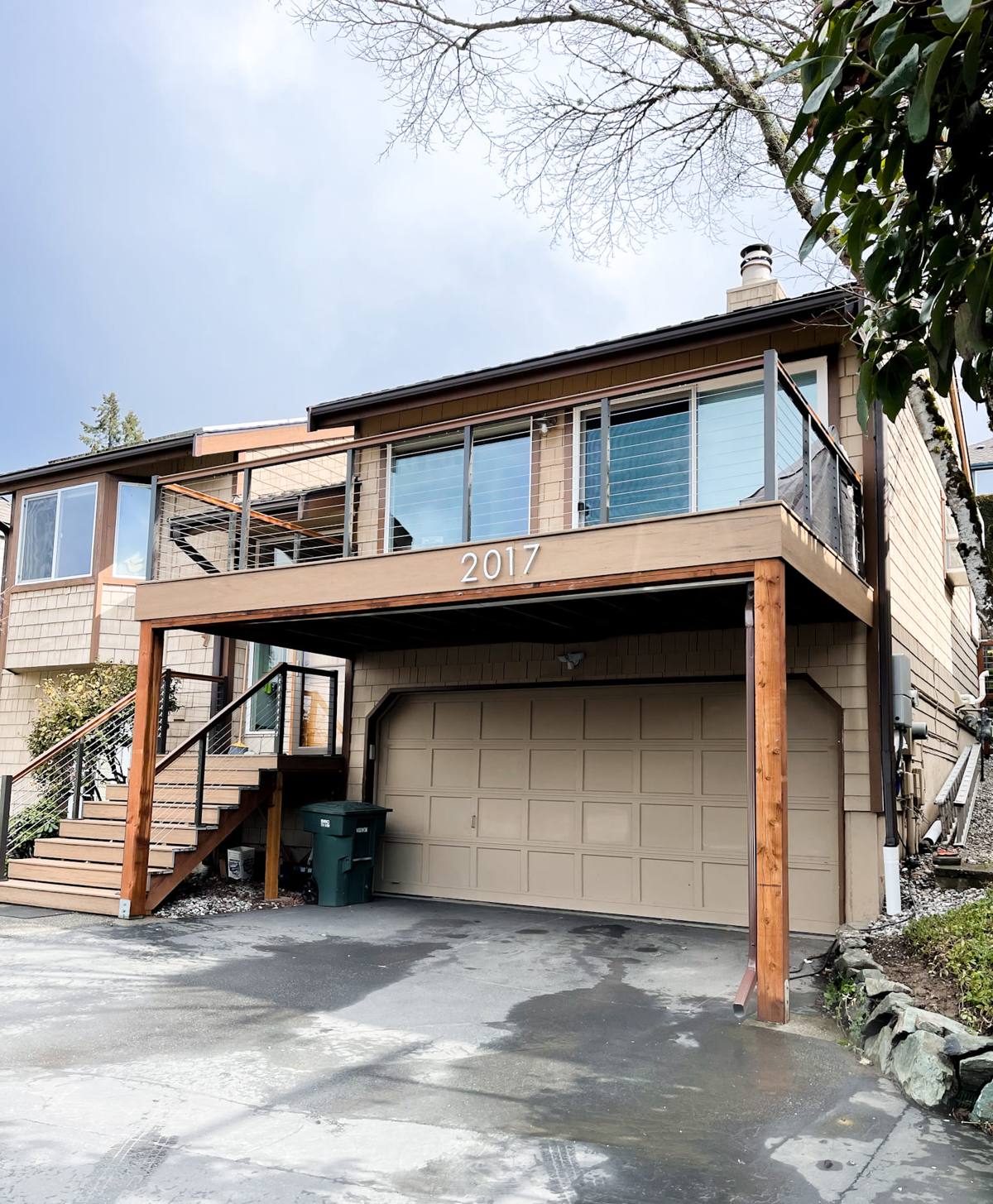
What Lynden's Climate Demands From a New-Construction Window Install
The same regional climate pattern that shapes roofing decisions across our service area — salt-laden marine air, driving wind-borne rain, and a long moss and algae season — also drives how a window needs to be flashed, sealed, and finished on a new build. A window that's technically "installed" but not installed for this climate will show problems within a few wet seasons, usually as stains, soft trim, or air leaks that are hard to trace back to the original cause.
Wind-driven rain and window flashing
Rain here doesn't just fall straight down — it gets pushed sideways against exterior walls during storms, which puts pressure on every seam around a window opening. New-construction installs give us the chance to build a proper drainage plane from scratch: sill pan flashing, correctly lapped WRB, and flashing tape sequenced so water is always directed out and down, never trapped behind the window or the siding.
Moss, algae, and prolonged moisture exposure
Long stretches of damp, shaded weather encourage moss and algae growth on anything that stays wet too long — sills, exterior trim, and the bottom edges of window openings included. Sill design and slope, along with the trim materials and sealants used around the window, affect how much moisture lingers in those spots and how soon that growth shows up.
Salt air and hardware or finish corrosion
Marine air carries salt that accelerates corrosion on unprotected metal — hinges, cranks, screws, and lower-grade cladding finishes are all exposed to it over the life of the window. We factor that into hardware and finish choices so a new-construction window still operates smoothly and looks right years after installation, not just on move-in day.
What a Correct New-Construction Window Install Actually Involves
The window unit itself is only part of the job. The sequence and detailing around it are what actually keep water out.
Flashing and WRB integration sequence
Before the window ever goes in, the rough opening gets a sill pan to catch and direct any water that gets past the window itself. The WRB is then integrated with the window's flashing in the correct shingle-lap order — each layer overlapping the one below it — so water always sheds outward rather than working its way behind the wall assembly.
Nailing fin installation and shimming
The window is set into the opening, shimmed level, plumb, and square, then fastened through the nailing fin per the manufacturer's pattern. Getting this step right affects how the sashes operate for the life of the window — a slightly racked frame can bind, leak air, or wear out hardware early.
Sealant and backer rod placement
Interior and exterior sealant joints use the right backer rod and sealant type for the gap size and material, so the joint can flex with temperature and moisture changes without cracking or pulling away. A caulk bead over a gap that's too wide, or sealant applied to the wrong side of the assembly, is a common shortcut that fails quietly for a year or two before it starts leaking.
Choosing Window Products for a New Build in This Climate
New construction gives you a real choice of frame material, since you're not constrained by an existing opening. Each option has trade-offs worth understanding before your builder locks in a spec.
| Frame Material | Performance in Wet, Salt-Influenced Air | Maintenance | General Cost Position |
|---|---|---|---|
| Vinyl | Good moisture resistance; won't rot or corrode | Low — occasional cleaning | Most affordable |
| Fiberglass | Excellent — stable in temperature swings, resists warping | Low | Mid to upper-mid range |
| Wood-clad | Depends heavily on cladding quality and installation detailing at joints | Higher — exposed wood or joints need monitoring | Highest |
We don't push homeowners toward the most expensive option by default. We explain what each material actually does over 15–20 years in a marine climate with heavy rain and moss exposure, and let that inform the decision alongside budget and the look the builder or homeowner wants.
Coordinating With Builders and General Contractors
On a new build, window installation sits in the middle of a tight sequence: framing has to be complete and inspected, the rough openings have to be checked for size and square, and the WRB usually needs to go on around the same time. We coordinate directly with the builder or GC on Lynden projects so window install happens at the right point in the schedule — not so early that framing tolerances haven't settled, and not so late that it holds up siding and trim crews.
Rough opening verification
Before we install anything, we check that rough openings match the ordered window sizes and that they're actually square. Framing crews are usually close, but "close" isn't good enough for a window that has to operate smoothly and seal properly for decades.
Energy Code and Performance Considerations for Washington Builds
Washington's state energy code sets minimum performance requirements for new construction, including window U-factor and solar heat gain coefficient (SHGC), and those requirements vary by how the rest of the building envelope is designed. On a new build in Whatcom County, we work from the specified performance targets rather than guessing at "energy efficient" as a marketing term, and we can walk through what U-factor and SHGC actually mean for comfort and heating costs in our climate, not just what number satisfies an inspector.
Our Process for New-Construction Window Installs in Lynden
- Review window schedule, rough opening sizes, and product specs with the builder or homeowner before ordering.
- Verify rough openings on site for size, square, and structural readiness.
- Install sill pan flashing and integrate it with the WRB.
- Set, shim, level, and fasten each window per manufacturer instructions.
- Complete exterior flashing tape and head flashing sequence.
- Apply interior and exterior sealant with correct backer rod.
- Walk the install with the builder or homeowner before siding and trim close it in.
Why Hire a Crew That Already Works in Lynden
A window install that's correct on paper can still fail if the crew doesn't understand how the local climate stresses the assembly, or hasn't coordinated new-construction work with builders before. We've built our process around Whatcom County's wet, wind-driven weather and the moss and algae exposure that comes with it, and we know how to slot window installation into a builder's schedule without becoming the bottleneck. That local familiarity — with the climate, with the trades sequence, and with what actually holds up here — is the difference between a window that performs for 20+ years and one that starts showing problems in the first few wet seasons.
Pre-Install Checklist
Whether you're a homeowner working with a builder or a GC bringing us in directly, these are the items worth confirming before window installation day:
- Rough openings match ordered window sizes and are framed square
- WRB is installed and ready to integrate with window flashing
- Sill pan flashing material is on site and compatible with the WRB and window
- Window products match the specified U-factor and SHGC for code compliance
- Flashing tape is compatible with both the WRB and the window's exterior finish
- Weather forecast allows for a dry install window, given how much rain this region gets
- A walkthrough is scheduled before siding and trim crews close the opening in
If you're planning a new build or addition in Lynden and want windows installed correctly the first time, we're happy to walk the plans with you or your builder and provide a free, no-pressure estimate. Use the form below to get started.