 Ferndale Roofing
 Board & Batten Siding Built for Fairhaven's Coastal Climate
Board and batten has become one of the most requested siding profiles for homes in and around Fairhaven, and it's easy to see why. The clean vertical lines, deep shadow reveals, and the way it pairs with both older, character-rich homes and newer builds give it a look that a lot of homeowners want. But in this part of Whatcom County, the look is only half the equation. Fairhaven sits close enough to the water that salt-laden air, wind-driven rain, and a long, wet moss season are simply part of owning a home here — and those three things are hard on siding in ways that don't show up right away.
We treat board and batten as a system, not just a style. The vertical boards and the battens that cover their seams have to work together with the water-resistive barrier, the flashing, and the fasteners behind them to actually shed water for decades, not just look good on install day. That's the standard we build every Fairhaven project to.
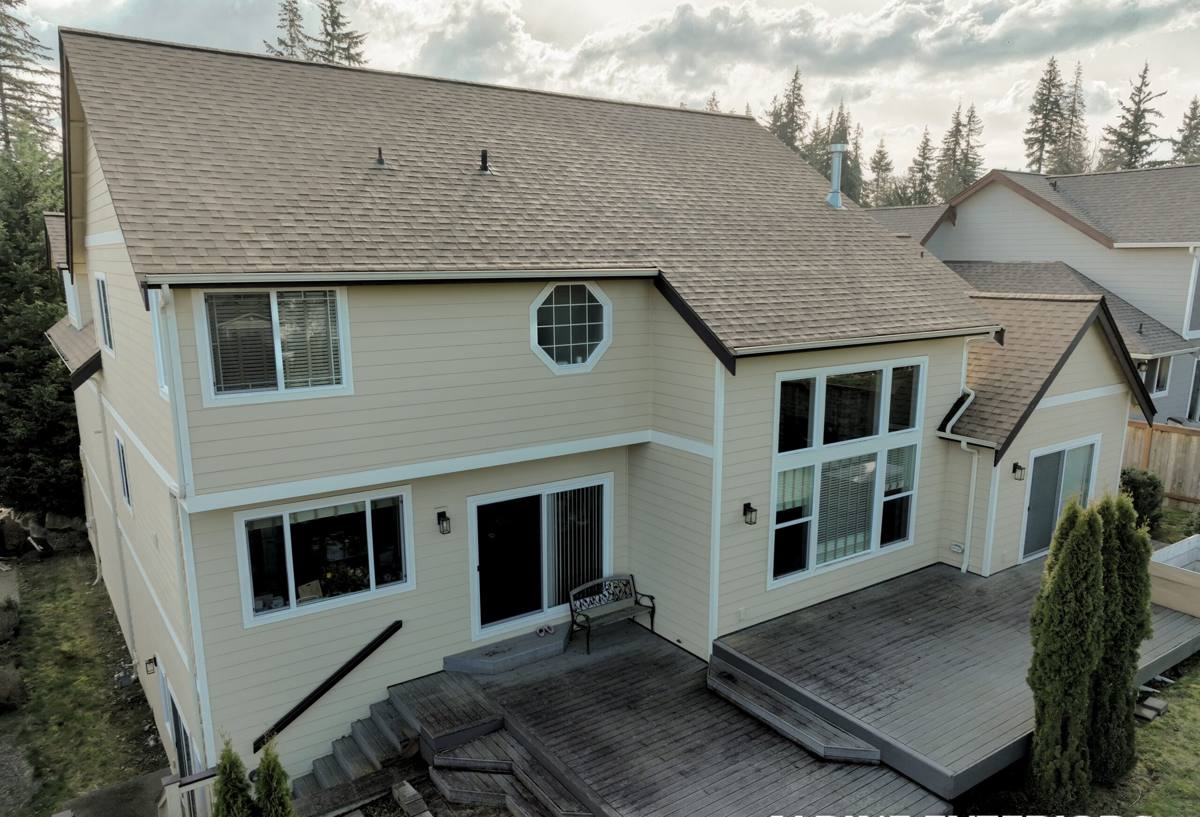
What Salt Air, Driving Rain, and Moss Season Do to Siding
Three climate factors do most of the damage to exterior siding in this area, and they compound each other over time.
Salt Air
Airborne salt from nearby marine waters accelerates corrosion on anything metal — fasteners, flashing, and trim connectors. When fasteners corrode faster than the siding around them, you get streaking, loosening boards, and eventually water paths straight into the wall assembly.
Driving Rain
Wind off the water doesn't just fall straight down — it drives rain sideways into wall faces and up under horizontal joints and trim. Board and batten has more vertical seams than lap siding, which means more places where water can be pushed inward if the install doesn't account for it.
Moss Season
Shaded, moisture-heavy stretches of the year let moss and algae take hold on siding, especially on north-facing walls and anywhere airflow is limited. Moss doesn't just look bad — it holds moisture directly against the siding surface for weeks at a time, which is exactly the kind of prolonged wetting that breaks down untreated or improperly sealed materials.
What a Correct Board & Batten Installation Actually Involves
Board and batten looks simple from the street, but it has more failure points than most siding styles if it's rushed. A correct install addresses each of these deliberately.
Drainage Plane and Rainscreen Gap
A weather-resistive barrier goes on the sheathing first, and in a climate like this we install a rainscreen gap behind the siding so any water that gets past the surface has somewhere to drain and dry out instead of sitting against the wall.
Fastening Pattern and Clearances
Boards and battens need to be fastened at the manufacturer's specified spacing, with the right clearance from grade, decks, and roof lines. Too little clearance and every rainstorm wicks moisture straight up into the bottom of the boards.
Flashing at Every Penetration
Windows, doors, hose bibs, light fixtures, vents — every penetration through the siding is a place water can enter if it isn't flashed correctly. On a vertical profile like board and batten, this matters even more because water traveling down a board has fewer places to naturally redirect around an opening.
Factory Finish vs. Field Painting
A factory-applied finish is baked on under controlled conditions and backed by its own warranty. A field-painted finish is only as good as the weather on install day and the prep work underneath it — and in a climate with this much moisture, that gap in quality shows up early.
Why We Install Board & Batten Only in James Hardie Fiber Cement
We get asked fairly often why we don't offer board and batten in cedar, primed wood, engineered wood (LP SmartSide), or vinyl. All of those products have their place, and none of them are "bad" products in a vacuum. Our answer is simple: given what Fairhaven's climate does to siding over ten, twenty, and thirty years, we don't think those trade-offs make sense on the homes we put our name on.
Wood and primed wood board and batten look beautiful, but they need consistent, ongoing maintenance — recaulking, repainting, and moisture checks — to hold up against driving rain and moss. Engineered wood products use a wood-based core that is more moisture-tolerant than raw lumber but still isn't inorganic, meaning it still relies on an intact factory coating and careful installation to keep moisture out over the long run. Vinyl board and batten is low-maintenance and inexpensive, but it's a thinner, more flexible material that can show its age faster in strong coastal wind and UV exposure, and it doesn't offer the same fire rating or factory finish depth.
James Hardie fiber cement is non-combustible, dimensionally stable in wet and dry cycles, and available in the HZ5 formulation engineered specifically for climates like the Pacific Northwest's. Its ColorPlus factory finish is baked on and backed by its own finish warranty, which matters when a house is going to see salt air and long wet stretches every single year. That combination is why it's the only board and batten product we install.
Material Comparison for Board & Batten in a Marine Climate
| Factor | James Hardie Fiber Cement | Cedar / Primed Wood | Engineered Wood (LP-type) | Vinyl |
|---|---|---|---|---|
| Moisture resistance | Strong; non-combustible, engineered for wet climates | Moderate; needs sealed end cuts and consistent upkeep | Moderate; wood-based core relies on intact coating | Good on its own, but seams and fasteners are the weak point |
| Salt air / corrosion exposure | Handles well with correct fastener spec | Fasteners and finish both vulnerable over time | Similar fastener concerns as wood | Low corrosion risk, but UV and impact wear increase near water |
| Maintenance | Low; factory finish, periodic wash | High; recoat/recaulk on a recurring cycle | Moderate; watch coating integrity at seams | Low; occasional cleaning |
| Fire resistance | Non-combustible | Combustible | Combustible | Combustible, can deform under heat |
| Typical lifespan when installed to spec | Decades, factory finish extends repaint cycle | Shorter without diligent upkeep | Moderate, coating-dependent | Moderate, more UV/impact sensitive |
Every product in that table can perform well somewhere. Our position is about what performs well here, on homes exposed to salt air, driving rain, and a real moss season year after year.
Our Process for a Fairhaven Board & Batten Project
- On-site assessment of the existing siding, sheathing condition, and any active moisture issues before anything is quoted.
- Careful removal of old siding with an inspection of the sheathing underneath for hidden rot or water damage.
- Installation of a weather-resistive barrier and rainscreen drainage gap suited to the wall's exposure.
- Installation of James Hardie board and batten panels and battens to manufacturer fastening and clearance specifications.
- Flashing and sealing of every window, door, and penetration before trim goes on.
- Final trim, touch-up, and a walkthrough so you understand exactly what was done and why.
Why Hiring a Crew That Already Works Fairhaven Matters
Siding work isn't identical from one neighborhood to the next. A crew that regularly works homes in and around Fairhaven already understands how close-to-water exposure changes fastener choices, how much clearance to build in for driving rain, and where moss tends to take hold first on local rooflines and walls. That familiarity shows up in fewer surprises during the job and fewer callbacks after it — because the crew isn't guessing at what this climate does to a wall assembly, they've already seen it.
It also matters for permitting and code details specific to Whatcom County, and for working respectfully around the older, established homes that are common in this area — matching reveal depth, trim details, and proportions so new siding actually looks like it belongs on the house.
Signs Your Current Board & Batten Siding Needs Attention
- Soft or spongy spots when you press on boards, especially near the bottom edge
- Persistent moss or dark staining that keeps returning after cleaning
- Visible gaps, cupping, or warping in boards or battens
- Rust streaks below fasteners or trim pieces
- Peeling or bubbling paint/finish, especially on north-facing or shaded walls
- Rising utility bills that could point to a compromised water/air barrier behind the siding
If any of that sounds familiar, it's worth having someone look at it before the next wet season rather than after.
If you're weighing board and batten siding for a home in Fairhaven, we're happy to take a look and walk you through what we're seeing — no pressure, no obligation. Use the form below to request a free estimate.