 Ferndale Roofing
 Birch Bay's Coastal Climate Puts Extra Demands on a Shingle Roof
Birch Bay sits right up against the water, and that changes what a roof has to deal with compared to a home a few miles inland in Ferndale or elsewhere in Whatcom County. Salt-laden air moves off the bay and settles on everything, including your roof. Over years, that salt exposure accelerates corrosion on exposed fasteners, flashing, and vent components in a way that inland homes simply don't experience at the same rate. Add in wind-driven rain that comes at the roof sideways instead of straight down, and you've got a climate that punishes any weak point in the water-shedding layers of a shingle roof.
On top of the salt air and rain, Birch Bay's tree cover and marine humidity mean moss and algae have a long growing season — often close to year-round in shaded or north-facing sections of a roof. A shingle roof built for a drier, more inland climate can look and perform fine for a while, but the cumulative effect of salt corrosion, wind-driven moisture intrusion, and constant moss pressure is what actually determines how long a roof lasts here.
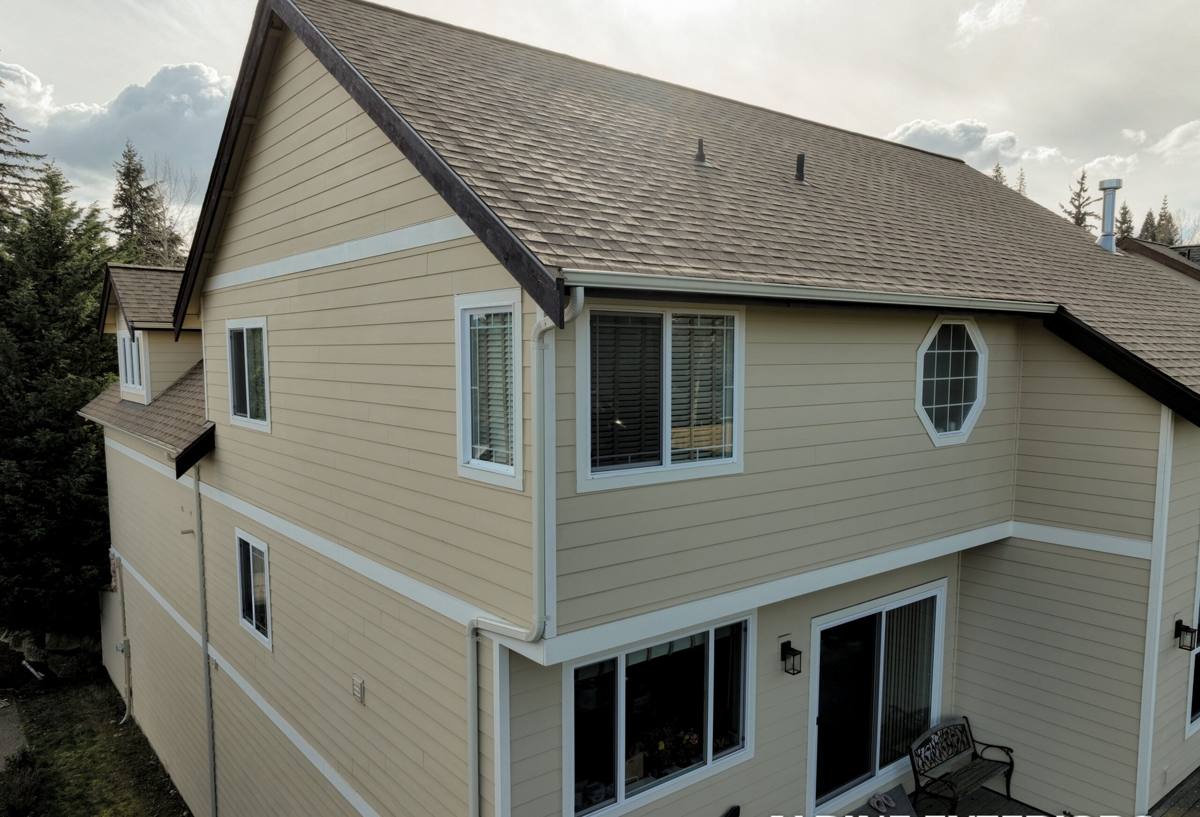
What a Correctly Built Asphalt Shingle Roof Needs in This Environment
Underlayment and Water-Shedding Layers
Wind-driven rain can push water up and under shingle laps, especially on exposed elevations facing the water. A synthetic underlayment installed with proper overlap, plus self-adhering ice-and-water membrane at eaves, valleys, and around penetrations, gives the roof a second line of defense when wind pushes moisture past the shingles themselves. This isn't optional detailing for a Birch Bay roof — it's the difference between a roof that sheds a storm and one that leaks into the deck.
Fasteners and Flashing That Resist Salt Corrosion
Standard fasteners and flashing can corrode faster near the water than they would a few miles inland. Corroded nails lose their grip on shingles over time, and corroded flashing at chimneys, walls, and roof-to-wall transitions is a common source of slow, hard-to-notice leaks. Using corrosion-resistant fasteners and properly formed metal flashing at every transition point matters more here than in a typical inland install.
Ventilation Sized for Moisture, Not Just Heat
Attic ventilation is usually thought of as a heat problem, but in a humid coastal climate it's just as much a moisture problem. Poor ventilation traps damp air under the roof deck, which speeds up moss and algae growth from underneath as well as on the surface, and can lead to premature deck deterioration. Balanced intake and exhaust ventilation, sized correctly for the attic space, helps the roof dry out between rain events instead of staying damp.
Algae-Resistant Shingles for a Long Moss Season
Given how long the moss and algae season runs in this area, shingles with algae-resistant granules are worth the modest upfront difference. They don't make a roof moss-proof, but they slow the growth cycle meaningfully compared to standard granules, which reduces how often the roof needs cleaning and treatment.
Warning Signs We See Most Often on Birch Bay Roofs
- Moss buildup concentrated on north-facing slopes or areas shaded by trees, often heavier than what a homeowner further inland would notice
- Granule loss showing up as bare, darker patches on shingles, especially on wind-exposed slopes facing the water
- Rust streaking below metal flashing, vents, or fasteners — a sign salt air is actively corroding hardware
- Curling or lifting shingle edges near eaves, which lets wind-driven rain get a foothold underneath
- Soft or discolored decking visible from the attic, usually near valleys or old flashing details
- Gutters that fill with moss and granules faster than expected between cleanings
Choosing a Shingle Product for This Exposure
Not every asphalt shingle product is built the same way, and for a home exposed to salt air and sustained wind off the water, that difference matters more than it would for a sheltered inland roof.
| Shingle Type | Wind Performance | Moss/Algae Resistance | Best Fit for Birch Bay |
|---|---|---|---|
| Standard 3-tab | Lower wind rating, more prone to lifting in gusts | Only if algae-resistant granules are specified | Budget-conscious, sheltered lots away from direct water exposure |
| Architectural/laminate | Higher wind rating, heavier and more resistant to lifting | Widely available with algae-resistant granule options | Most Birch Bay homes, especially waterfront or wind-exposed lots |
| Impact-resistant architectural | Comparable or better wind rating, added mat durability | Same granule technology, added surface durability | Homes wanting maximum long-term durability, higher upfront cost |
For most homes in Birch Bay, we recommend an architectural shingle with algae-resistant granules and a wind rating suited to open, water-facing exposure. It's a reasonable middle ground between upfront cost and how well the roof holds up to what this location actually throws at it.
Our Asphalt Shingle Installation Process
- Inspection and scope review — we walk the roof and attic, check the deck for soft spots or existing moisture damage, and confirm ventilation is adequate before quoting anything.
- Tear-off and deck assessment — old roofing comes off down to the deck so we can see the actual condition of the sheathing, not just assume it's sound.
- Deck repair as needed — any damaged or delaminated sheathing gets replaced before anything new goes down; this is not an area to shortcut on a coastal roof.
- Ice-and-water membrane and underlayment — self-adhering membrane at eaves, valleys, and penetrations, followed by synthetic underlayment across the full deck.
- Flashing detail work — new corrosion-resistant flashing at chimneys, walls, skylights, and any roof-to-wall transitions.
- Shingle installation — installed to manufacturer nailing patterns and exposure specs, with corrosion-resistant fasteners throughout.
- Ventilation check and correction — intake and exhaust ventilation confirmed or upgraded to match the attic's actual needs.
- Cleanup and final walk-through — magnetic sweep for stray fasteners, gutter check, and a final review with the homeowner before we call it done.
What Drives the Cost of a Birch Bay Reroof
| Cost Factor | Why It Matters Here |
|---|---|
| Roof pitch and access | Steeper pitches and limited access near waterfront lots increase labor time |
| Deck condition | Coastal moisture and moss can hide deck damage that isn't visible until tear-off |
| Number of existing layers | Homes with multiple layers of old roofing require full tear-off, adding time and disposal cost |
| Flashing complexity | Chimneys, skylights, and multiple roof planes each add flashing detail work |
| Shingle grade chosen | Architectural and impact-resistant products cost more upfront but hold up better to wind and salt exposure |
| Ventilation upgrades | Homes with inadequate existing ventilation may need added intake or exhaust vents |
We give homeowners a clear, itemized quote after the inspection rather than a rough guess, since the deck condition and flashing complexity often aren't obvious until we're actually up there.
Living With a Long Moss Season: Maintenance That Actually Matters
Even a well-built roof in Birch Bay benefits from some regular attention given how long the moss season runs here. A few habits go a long way toward protecting the investment:
- Keep gutters clear so moss debris and granules don't dam up water at the eaves
- Have moss physically removed rather than left to grow thick, since heavy moss holds moisture against the shingle surface
- Avoid pressure washing shingles directly — it strips granules and shortens shingle life; use gentle, low-pressure methods instead
- Have flashing and fasteners checked periodically for early signs of salt corrosion
- Schedule a roof inspection after any major wind event, especially on water-facing elevations
Why Hire a Crew That Already Works Birch Bay
A roofing crew that regularly works Birch Bay and the surrounding Ferndale and Whatcom County area already knows what this specific exposure does to a shingle roof over time. That familiarity shows up in small but important decisions: which fasteners to use given the salt air, how much ventilation a given attic actually needs, where wind-driven rain tends to find weak spots, and which shingle products are worth the extra cost for a water-facing lot versus a sheltered one further from the shoreline.
It also means we're not guessing at local permitting expectations or relearning the climate on your roof. We'd rather bring that experience to your project than treat every coastal home like a standard inland reroof.
A Quick Checklist Before You Sign With Any Roofer
- Do they inspect the deck and attic before quoting, not just the shingle surface?
- Do they specify corrosion-resistant fasteners and flashing for coastal exposure?
- Do they include ice-and-water membrane at eaves, valleys, and penetrations?
- Do they check and correct attic ventilation as part of the job, not as an upsell?
- Can they explain why they're recommending a specific shingle product for your exposure?
- Do they provide a written, itemized scope rather than a vague lump-sum quote?
If your Birch Bay roof is showing moss, granule loss, or you're just due for an honest look at its condition, we're happy to come take a look. Use the form below to request a free, no-pressure estimate and we'll walk the roof with you and tell you straight what it needs.