 Ferndale Roofing
 Roof Repair for Sumas Homes, Built Around Whatcom County Weather
Sumas sits in eastern Whatcom County, close to the Canadian border, and it gets the same weather system that moves through the whole region — the marine-influenced air off the Sound that carries driving rain inland, mixed with colder overnight temperatures than you'll see closer to the water. That combination is hard on roofs. Wind-driven rain finds any weak lap or open flashing seam and pushes water uphill instead of letting it run off. Long stretches of damp, low-sun weather feed a moss season that can run most of the year on north-facing slopes. And the colder nights common in this part of the county mean more freeze-thaw cycling on any water that does get trapped.
None of that means a roof is failing — it means repairs here have to account for how water actually moves and sits on a roof in this climate, not just patch what's visible. Ferndale Roofing Co works Sumas regularly, so we're not guessing at what a Whatcom County winter does to a roof over a few seasons. We're diagnosing and fixing the same recurring issues on homes a few miles apart.
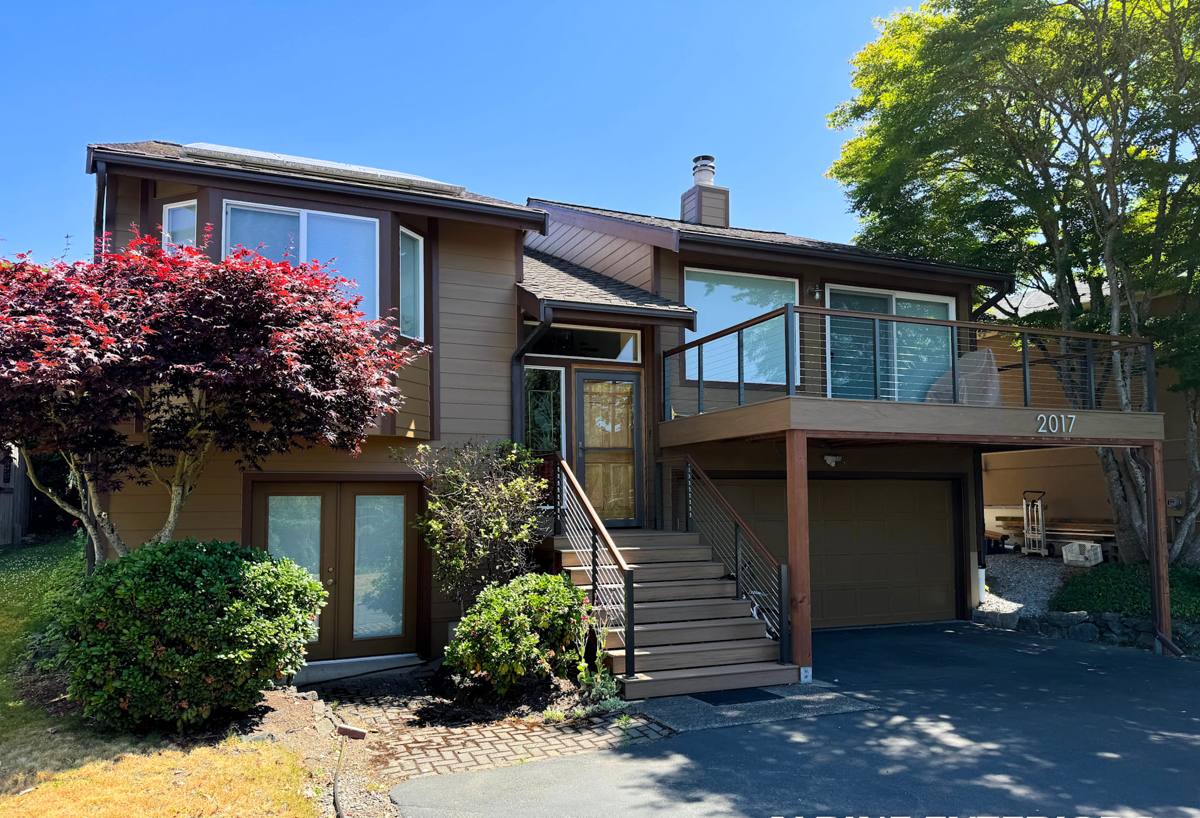
Signs a Sumas Roof Needs Repair, Not Just a Look
Most roof repairs get called in after a leak shows up inside the house, but by then the roof has usually been telling you something for a while. Worth checking, especially heading into or coming out of moss season:
- Granules collecting in gutters or at downspout outlets — a sign shingles are wearing thin
- Thick moss mats along the ridge or on shaded, north-facing slopes
- Shingle edges curling, cupping, or lifting at the corners
- Rusted, lifted, or loose flashing around chimneys, skylights, or wall-to-roof transitions
- Water stains on ceilings or in the attic, especially near valleys or penetrations
- Daylight visible through the roof deck from inside the attic
- A soft or spongy feel underfoot on decking near an eave or valley
- Missing or torn shingles after a windstorm, even if nothing's visibly leaking yet
Any one of these on its own might be minor. Two or three together, especially in the same area of the roof, usually means water has already gotten past the surface layer.
What's Actually Causing the Damage
Moss and Trapped Moisture
Moss doesn't just sit on top of a roof — it holds water against the shingle surface and, on wood-based materials, against the wood itself, long after the rest of the roof has dried out. Over a full moss season that moisture cycle wears down the shingle mat, lifts edges, and works its way toward fasteners and seams. It's most aggressive on shaded slopes and anywhere debris collects, which on tree-lined Sumas properties is common.
Wind-Driven Rain and Flashing
Flat, vertical rain rolls off a roof fine. Driving rain, pushed sideways by wind, behaves differently — it can travel under shingle laps and through flashing joints that would never leak in calmer weather. Chimneys, skylights, dormers, and valleys are the usual failure points because they rely on flashing rather than shingle overlap alone to shed water.
Freeze-Thaw Cycling
Sumas sees colder overnight temperatures more often than areas closer to the Sound. Water that's already trapped under moss or behind failed flashing can freeze, expand, and pry材料 apart slightly — then thaw and let more water in. It's a slow process, but it's why a small, ignored leak point tends to get worse year over year rather than staying the same size.
What a Correct Repair Actually Involves
Diagnosing the Real Source
Water on a ceiling rarely shows up directly under the roof defect that let it in — it travels along rafters and decking before it drips. A correct repair starts on the roof itself, tracing the path back from any interior staining to the actual entry point, not just patching the spot that looks worst.
Matching Materials
A repair that uses the wrong shingle profile, color lot, or gauge of flashing metal doesn't just look off — it can behave differently in wind and rain than the surrounding roof, creating a new weak point. We match material type, profile, and as close a color match as the existing product allows.
Flashing, Valleys, and Underlayment
Most repeat leaks trace back to flashing or valley details, not the shingle field. A proper repair reinstalls flashing with correct step-and-counter overlap, re-beds or replaces underlayment where it's compromised, and confirms valley metal or woven valleys are actually shedding water downhill instead of catching it.
Moss Treatment That Doesn't Damage the Roof
Pressure washing strips granules and shortens shingle life; it's not something we do on asphalt roofs. We remove moss by hand or with a soft-wash approach and treat the area to slow regrowth, which protects the repair instead of undoing it.
Repair or Replace? Cost Factors to Weigh
Not every roof problem in Sumas needs a full replacement, but not every leak is a quick fix either. These are the factors that actually drive that decision:
| Factor | Leans Toward Repair | Leans Toward Replacement |
|---|---|---|
| Roof age | Under roughly two-thirds of expected material lifespan | Near or past the material's expected service life |
| Extent of damage | Localized to one section or penetration | Spread across multiple slopes |
| Repair history | First or second repair in that area | Same section repaired repeatedly |
| Decking condition | Solid, dry decking under the damaged area | Soft, delaminated, or rotted decking |
| Moss and staining | Surface growth, shingle mat intact | Moss has broken down granule surface broadly |
Straightforward repairs — a section of flashing, a valley, a handful of damaged shingles — are usually a modest cost measured in the low hundreds to a bit over a thousand dollars, depending on access and what's actually wrong. Decking replacement or repairs that touch multiple roof planes cost more because they involve more labor and material, not because of markup. We'll tell you plainly which category your roof falls into before any work starts.
Our Process, Start to Finish
- Call or photos first. A quick description or a few photos of the problem area often tells us what we're dealing with before we're even on site.
- On-site inspection. We walk the roof, trace the leak or damage back to its actual source, and check nearby areas that tend to fail together.
- Written scope and price. You get a plain explanation of what's wrong, what we're fixing, and what it costs — before any work begins.
- The repair. Matched materials, correct flashing details, and moss removal where it's contributing to the problem.
- Cleanup. Old material, granules, and debris are cleared from the roof and gutters, not left for the next rain to wash down.
- A straight answer on what's next. If we see other issues developing — moss returning, a flashing detail we'd watch — we tell you, even if it's not something we're recommending you address right now.
Why a Crew That Already Works Sumas Matters
A roofer who's out in this part of Whatcom County regularly has already seen how the local weather ages different roof types, ages, and slopes here — which flashing details tend to fail first, how aggressive a given moss season is going to be, and how quickly a small leak turns into a decking problem if it sits through a wet winter. That's the difference between a repair that's a guess and one that's informed by what actually happens to roofs in this area.
It also matters for response time. Roof damage after a windstorm or a hard freeze doesn't wait for a convenient week, and a crew that's regularly working in and around Sumas can get eyes on a problem faster than one driving in from well outside the county. And because we're not a one-time crew passing through, we have no reason to oversell a repair — recommending a replacement you don't need, or patching something that actually needs real work, both cost us the next call from a neighbor.
Materials We Work With for Repairs
Most Sumas roofs we repair are asphalt composition shingle, with a mix of metal roofing and some cedar shake on older homes. Asphalt repairs are the most straightforward to match and blend. Metal roof repairs require more care around fastener seals and panel seams, since a poorly matched repair can create a new leak point instead of closing one. On cedar, our standard is to be upfront about maintenance: cedar shake holds moisture longer than other materials in a wet, mossy climate like this one, which means more frequent moss and debris removal to keep it performing — that's a maintenance reality of the material, not a defect in it, and we plan repairs accordingly rather than cutting corners to save time.
If you're seeing moss buildup, a stain on the ceiling, or storm damage on a Sumas roof, an honest look at what's actually going on is worth more than guessing. Reach out for a free, no-pressure estimate using the form below — we'll tell you straight whether it's a simple fix or something bigger.