 Ferndale Roofing
 Metal Roofing in Sumas: Built for the Weather That Actually Shows Up
Sumas sits out in eastern Whatcom County, close enough to the Canadian border that homeowners here deal with a slightly different mix of weather than folks closer to the water — colder snaps in winter, more standing moisture in low-lying yards, and the same relentless Pacific Northwest rain season everyone in the county gets. Add in the marine air that pushes inland off Bellingham Bay through the valleys, and you've got a climate that's genuinely hard on a roof: driving rain that finds every weak seam, moss that gets a running start every fall and doesn't let up until late spring, and enough freeze-thaw cycling most winters to work loose anything that wasn't fastened right the first time.
Metal roofing holds up to that mix better than almost anything else on the market, which is why we install a lot of it out this way. But "metal roofing" isn't one product — it's a category, and the difference between a correct installation and a mediocre one shows up fast in a climate like this. This page is about what a metal roof needs to do for a Sumas home specifically, not a generic rundown of metal roofing in general.
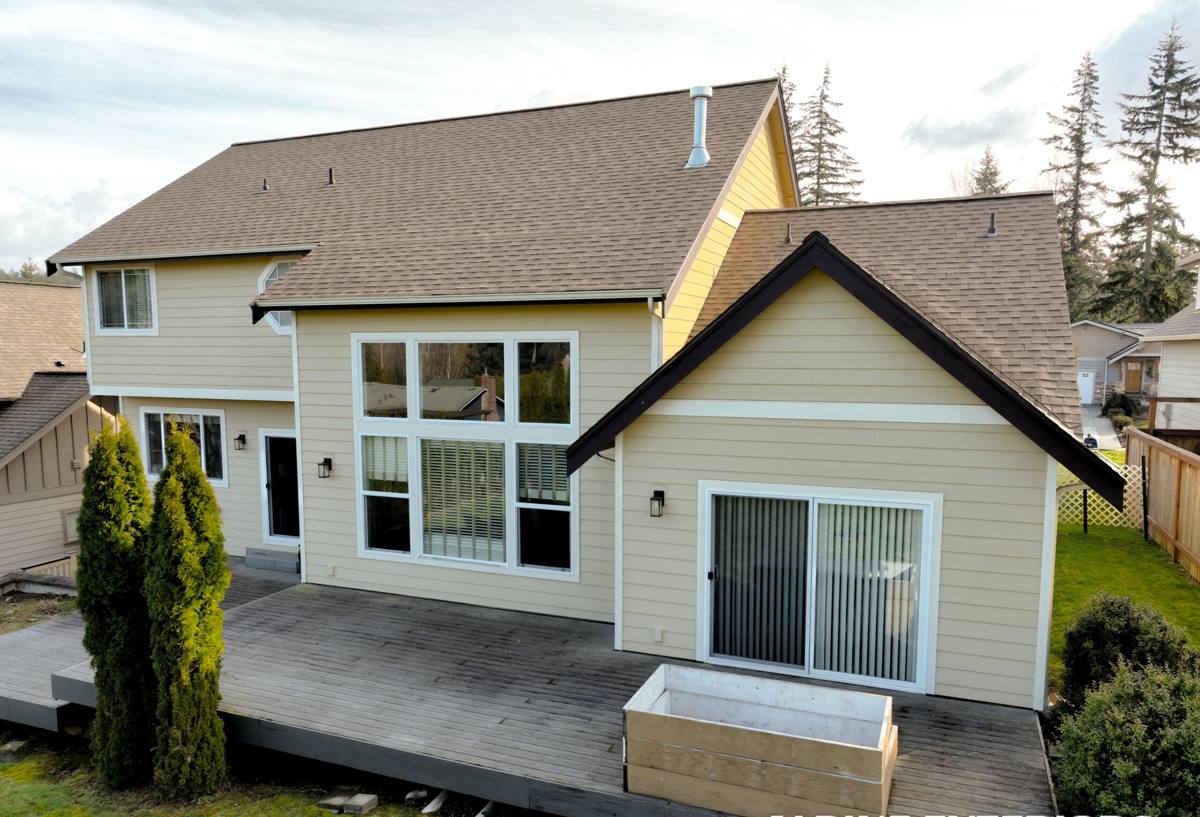
What a Sumas Roof Actually Needs From Metal
Before we talk panels and fasteners, it helps to know what problems we're actually solving for. Homes in this part of Whatcom County tend to run into the same handful of issues over and over:
- Moss and organic buildup: Long damp seasons and tree cover mean moss gets established fast on anything with texture or shade, and it holds moisture against the roof surface long after the rain stops.
- Wind-driven rain: Storms coming through the valley don't always fall straight down — rain gets pushed sideways under poorly lapped seams and around loose flashing.
- Freeze-thaw stress: Colder overnight temps than you'll see nearer the coast mean more expansion and contraction cycles on fasteners, sealants, and panel seams over a winter.
- Heavy tree cover in places: Falling branches and needle debris are a real concern for roofs near wooded lots, and debris buildup is exactly what moss needs to take hold.
A metal roof addresses most of this by default — it doesn't absorb water, it sheds moss more easily than shingles, and a good panel system handles wind uplift and thermal movement without failing at the seams. But it only does that if it's specified and installed correctly for this climate, not just bolted down to a generic spec sheet.
Why Moss Resistance Matters More Here Than It Sounds Like It Should
Moss doesn't just look bad — on an asphalt roof it holds water against the granules and shortens the roof's life. Metal doesn't give moss the same foothold, but it isn't immune. Panels installed with poor drainage, valleys that don't shed fast enough, or shaded roof sections still collect organic debris over time. Where we detail valleys, ridge caps, and low-slope transitions matters just as much as the panel choice itself.
Choosing the Right Metal Panel System
Not every metal roofing product is built the same way, and the right choice depends on the home, the roofline, and the budget. Here's how the main options compare for a Sumas property:
| Panel Type | How It's Fastened | Typical Lifespan | Best Fit |
|---|---|---|---|
| Standing Seam | Concealed clips, no exposed fasteners on the panel field | 40-60+ years | Homes wanting the longest service life and fewest future maintenance points |
| Exposed-Fastener Panel | Screws driven through the panel face into the deck or purlins | 25-40 years | Budget-conscious projects, outbuildings, shops, and simpler rooflines |
| Stone-Coated Steel | Interlocking panels with a granulated coating, fastened similarly to shingles | 40-50 years | Homeowners who want a shingle or shake look with metal's durability underneath |
We install both standing seam and exposed-fastener systems, and we'll tell you honestly which one fits your roof and budget rather than steering every job toward the most expensive option. Exposed-fastener panels are a perfectly good roof when they're installed with the right fastener spacing and quality gaskets — the tradeoff is that the fasteners themselves eventually need attention, since a compressed rubber washer doesn't last as long as the steel around it. Standing seam avoids that maintenance point entirely because there's nothing penetrating the panel face, which is part of why it costs more up front.
What a Correct Metal Roof Installation Actually Involves
Metal roofing has a reputation for being low-maintenance, and it is — but only if the installation underneath it is right. Most metal roof problems we get called out to inspect trace back to shortcuts taken during the original install, not a failure of the metal itself.
Underlayment and Deck Prep
Metal panels need a synthetic or high-temp underlayment rated for the way metal behaves — it gets hotter in direct sun and colder overnight than shingles do, and it moves with temperature swings more than people expect. We check the deck for soft spots or rot before anything goes down, since metal panels won't hide a bad deck the way shingles sometimes do.
Fastening and Panel Layout
Panel spacing, seam direction, and fastener pattern all affect how the roof handles wind and thermal expansion. Panels run the wrong direction relative to prevailing wind and rain, or fastened without room for the metal to expand and contract, are a common source of oil-canning and long-term seam failure.
Flashing and Penetrations
Every chimney, vent pipe, and roof-to-wall transition is a place water can get in if the flashing isn't matched to the panel profile. This is where driving rain in a storm finds its way in — not usually through the panel field itself.
Ventilation
Metal roofs need proper attic ventilation just as much as any other roof type, sometimes more, since condensation on the underside of a metal panel in a poorly vented attic can cause its own moisture problems. We check existing ventilation as part of every metal roofing quote.
Our Process for a Sumas Metal Roofing Project
- On-site inspection and measurement: We walk the roof, check the deck condition, look at existing ventilation, and note anything specific to your property — tree cover, roof pitch, existing moss or debris issues.
- Honest system recommendation: We'll tell you which panel type fits your roof, your budget, and how long you plan to stay in the home, without pushing you toward the priciest option by default.
- Written estimate: A clear breakdown of materials, labor, and scope before any work starts — no vague allowances that turn into surprise change orders.
- Tear-off and deck repair: Old roofing comes off, the deck gets inspected, and any soft or damaged sections are repaired before underlayment goes down.
- Installation: Underlayment, panels, flashing, and ventilation components installed to the manufacturer's specifications and matched to Whatcom County wind and rain exposure.
- Final walkthrough: We go over the finished roof with you, including what maintenance (if any) it'll actually need going forward.
Maintenance: What a Metal Roof Actually Needs Over Time
One of the real advantages of metal in this climate is how little upkeep it demands compared to asphalt. That said, "low-maintenance" isn't "no-maintenance." A metal roof in a moss-prone, tree-covered part of Whatcom County still benefits from:
- Clearing debris out of valleys and gutters before the fall rains set in
- Keeping overhanging branches trimmed back to reduce shading and debris drop
- A periodic visual check of flashing around chimneys, vents, and skylights
- Rinsing off any moss or algae growth in shaded sections before it spreads
- Checking fastener condition on exposed-fastener systems every several years
None of this is heavy work, and it's a fraction of what an asphalt roof needs in the same environment — but skipping it entirely can shorten the life of even a well-installed metal roof.
What Metal Roofing Costs to Install
Metal costs more up front than asphalt shingles — that's the honest trade-off for a roof that can outlast two or three shingle roofs over its lifetime. The exact number for your home depends on several factors:
| Factor | How It Affects Cost |
|---|---|
| Panel type | Standing seam runs higher than exposed-fastener panels due to material and labor complexity |
| Roof pitch and complexity | Steep roofs, multiple valleys, and dormers all add labor time |
| Deck condition | Rot or soft decking found during tear-off adds repair cost before panels go on |
| Tear-off vs. re-roof over existing | Full tear-off costs more but is usually the right call for a long-term metal install |
| Gauge and finish | Heavier gauge steel and premium paint finishes cost more but hold up better long-term |
We won't quote a number without seeing the roof, but we will give you a straight answer on what's driving the cost of your specific project and where there's room to adjust scope if budget is a concern.
Why Hire a Crew That Already Works in Sumas
Metal roofing is less forgiving of installation mistakes than shingles — a shingle roof with an imperfect flashing detail might leak slowly; a metal roof with the same mistake can funnel a lot of water to one spot fast during a hard storm. That makes experience with the specific product and the specific weather conditions genuinely useful, not just a sales point.
A crew that already works this part of Whatcom County has a feel for how storms move through the valley, how much moss pressure a given roof orientation will actually see, and which detailing choices hold up here versus somewhere drier. That local familiarity doesn't replace good workmanship, but it does mean fewer surprises and fewer callbacks.
A Quick Checklist Before You Hire Anyone for Metal Roofing
- Ask what panel gauge and finish they're quoting, not just the panel type
- Confirm they're pulling proper permits for the work
- Ask how they handle flashing at chimneys, vents, and walls — this is where most leaks start
- Get the ventilation plan in writing along with the roofing scope
- Ask for a written warranty on both materials and workmanship, and understand the difference between the two
If you're weighing metal roofing for a home in Sumas, we're happy to take a look and walk you through what makes sense for your roof and your budget. There's no pressure and no obligation — just a straight assessment and a written estimate, using the form below.