 Ferndale Roofing
 Building a Deck That Actually Holds Up in Sumas
Sumas sits at the edge of Whatcom County, close enough to the Nooksack River valley and the Canadian border that its weather runs a little different from the towns closer to the water. Winters can dip colder here than on the coast, spring and fall bring long stretches of steady, soaking rain, and the humidity that settles over the valley keeps everything - siding, fences, and decks included - damp far longer than most homeowners expect. A deck built without that in mind will look fine the first summer and start showing problems by the second or third winter: soft spots underfoot, green film on the boards, rust bleeding out of fasteners, or a railing that's gone spongy at the post base.
Ferndale Roofing Co has built and repaired decks across Whatcom County for years, and Sumas is one of the areas we get called back to most often once a deck starts aging poorly - not because the work done there is worse, but because the climate here is less forgiving of shortcuts than homeowners expect.
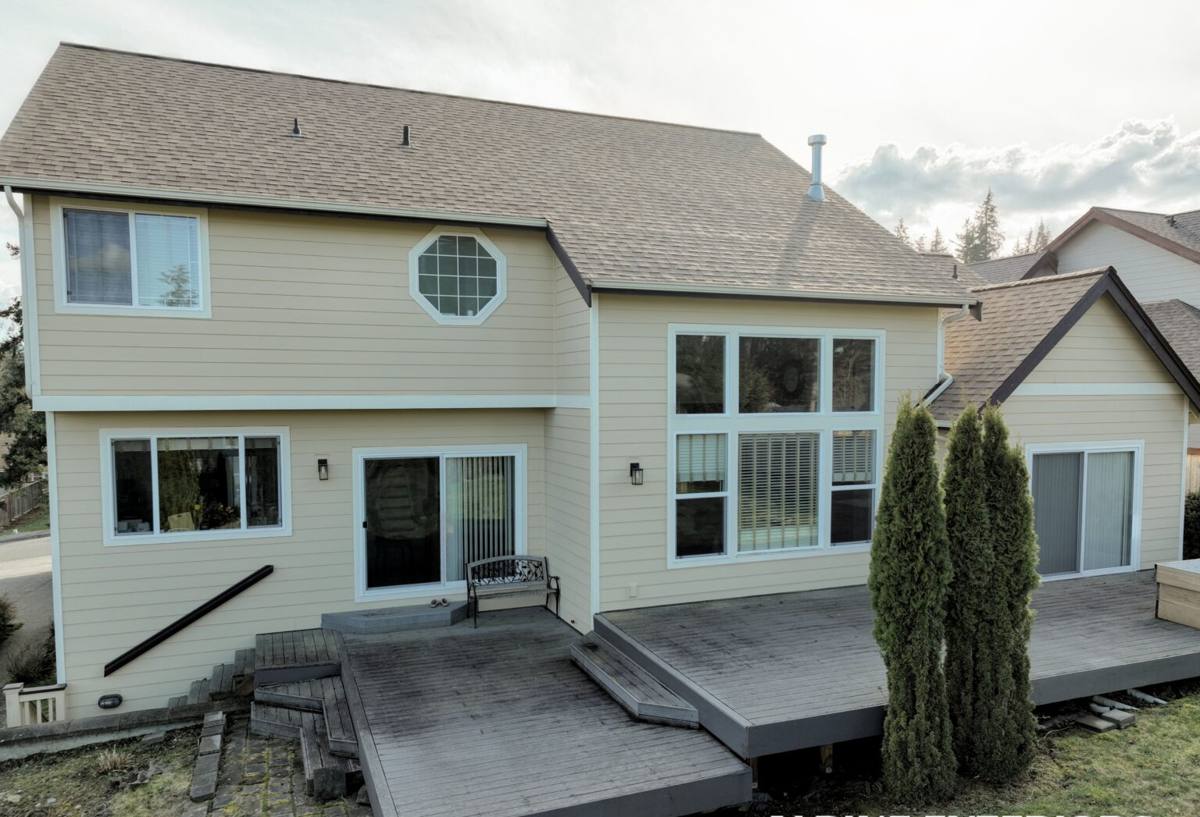
What Sumas Weather Does to an Outdoor Deck
Long Wet Seasons and Moss
Whatcom County gets a genuinely long wet season, and Sumas's inland position doesn't spare it from that - if anything, low-lying, tree-shaded, or pasture-adjacent lots common around Sumas can hold moisture and shade longer than open coastal lots do. Moss and algae take hold on any deck surface that stays damp and shaded for weeks at a time, and once established, they hold water against the wood or composite surface, which accelerates rot, staining, and slip hazards.
Freeze-Thaw Cycling
Sumas can see colder overnight temperatures in winter than communities closer to the water, which means more freeze-thaw cycling on any deck built here. Water that gets into a joint, a fastener hole, or a crack in the wood expands when it freezes and works that damage wider every time it happens. Because Sumas sits further from the moderating effect of the water than towns like Ferndale itself, that stress tends to be a bit more pronounced here, which is exactly why footing depth and fastener choice matter as much as the decking surface people actually see.
Wind and Open Exposure
Many Sumas properties sit on larger, more open parcels - farmland, pasture edges, or lots without dense tree cover - compared to tighter in-town lots elsewhere in the county. That means more direct wind and sun exposure on some builds, and less on heavily wooded lots. Either way, the deck needs to be designed for the actual site conditions, not a generic assumption.
What a Correctly Built Deck Needs Underneath the Surface
Most of what makes a deck last - or fail - is invisible once the project is finished. This is where corners get cut on lower-quality builds, and it's the part homeowners should ask the most questions about.
- Footings below frost depth: Concrete footings need to be set deep enough to stay below the frost line so freeze-thaw cycling doesn't heave the structure over time.
- Proper ledger flashing: Where a deck attaches to the house, flashing has to be installed and layered correctly so water sheds away from the house rim joist instead of running behind the siding.
- Joist tape or protective coating: Covering the tops of joists and beams reduces the water intrusion that causes rot at fastener points, which is one of the most common failure points we see on older Whatcom County decks.
- Corrosion-resistant fasteners: Standard hardware rusts and stains lumber within a few wet seasons. Structural connectors and fasteners rated for ground contact and moisture exposure are worth the modest upcost.
- Airflow underneath the deck: Proper spacing and ventilation beneath low decks keeps ground moisture and vegetation from creating a permanently damp microclimate under the boards.
Choosing Decking Material for a Sumas Property
There's no single "best" decking material - the right choice depends on how much upkeep a homeowner wants to take on, the budget, and how much shade and moisture the specific site holds onto through the year.
| Material | How It Handles Sumas's Wet Seasons | Maintenance | Typical Lifespan |
|---|---|---|---|
| Pressure-treated wood | Good if sealed regularly; absorbs moisture if maintenance lapses | Annual cleaning and re-sealing recommended | 15-20 years with upkeep |
| Cedar | Naturally moisture- and insect-resistant, but still needs sealing in this climate | Periodic cleaning, re-staining every few years | 15-20 years with upkeep |
| Composite decking | Very good; resists moisture absorption and won't rot, though surface can still grow moss if shaded and unwashed | Periodic washing, no sealing or staining needed | 25-30+ years |
| PVC/vinyl decking | Excellent moisture resistance; performs consistently in wet, shaded conditions | Low; occasional washing | 25-30+ years |
On heavily shaded or low-lying Sumas lots, we lean toward recommending composite or PVC decking, simply because it removes the ongoing sealing and staining work that a busy homeowner is likely to fall behind on during a long wet stretch. On sunnier, more open parcels, a well-maintained wood deck can perform just as well and costs less up front - the honest trade-off is that it needs consistent attention.
Why We're Selective About Which Wood Products We Install
Not every treated lumber or composite product on the market is built to the same standard, and we've seen the difference play out over years of callbacks. Our standard is to use decking and structural lumber rated for ground contact and moisture exposure, and to skip products that have a track record of inconsistent core quality or warranty coverage that doesn't hold up in practice. We'll walk through the specific brands and grades we use and why during your estimate.
Railings, Stairs, and the Code Details That Get Overlooked
Railings and stairs are where inspectors most often catch problems, and they're also the components most exposed to weathering because they're vertical, unshielded surfaces. A correctly built railing system needs posts anchored into the framing (not just surface-bolted), baluster spacing that meets current code, and a graspable handrail on any stair run that requires one. On a deck more than 30 inches above grade, guardrails aren't optional - they're required by code, and getting the anchoring wrong is one of the more common safety failures we find when repairing older decks.
Permits and Working With Whatcom County
Most deck builds in and around Sumas require a permit, particularly if the structure is attached to the house, elevated above a certain height, or involves electrical work for lighting or outlets. Permit review confirms the footing depth, ledger attachment, and railing design meet current code - it's a real safeguard, not just paperwork. Most permit reviews for a straightforward attached deck move through Whatcom County within a few weeks, though timelines can shift depending on the season and how busy the permit office is. We handle the permit application and inspection scheduling as part of the build so homeowners aren't stuck navigating that process solo, and so the finished deck is fully documented if the property is ever sold or insured.
Our Deck Building Process
Every property is different, but the process we follow stays consistent from the first phone call to the final walkthrough:
- On-site consultation: We walk the property, look at drainage, sun and shade exposure, existing structures, and talk through how the space will actually be used.
- Design and material selection: We go over layout options and material trade-offs honestly, including what each choice means for long-term maintenance in this climate.
- Permit filing: We prepare and submit the permit application with Whatcom County and schedule the required inspections.
- Site prep and footings: Excavation and footing placement set below frost depth, with layout confirmed before any concrete is poured.
- Framing and flashing: Ledger attachment, joist layout, and flashing details go in first, since these are the parts that determine how the deck ages.
- Decking, railings, and stairs: Surface material, railing systems, and stairs are installed to code and to the design agreed on up front.
- Final walkthrough and inspection: We review the finished deck together, confirm the final inspection is complete, and go over basic maintenance for the material chosen.
Keeping a Sumas Deck Ahead of the Moss Season
A well-built deck still needs some ongoing attention in a climate like this one. A short annual routine prevents most of the problems we get called out to fix on older decks:
- Sweep debris and standing leaves off the deck surface regularly through fall, since trapped organic matter holds moisture and feeds moss growth.
- Wash the deck surface at least once a year to remove algae and moss film before it gets a foothold, especially on shaded sections.
- Check fastener heads and structural connectors periodically for rust staining, which can signal the start of corrosion.
- Reseal or re-stain wood decking on the schedule recommended for the specific product - don't wait until the finish has visibly failed.
- Confirm gutters and downspouts near the deck are directing water away from footings and ledger connections.
- Keep vegetation trimmed back from under and around the deck to maintain airflow.
Why a Crew That Already Works in Sumas Matters
Sumas is a smaller community, and the properties here often sit on larger lots with different site conditions than tighter subdivisions closer to Ferndale or Bellingham. A crew that already builds and repairs decks in this area knows the local permit process with Whatcom County, has a practical sense of how this specific microclimate treats different materials over time, and isn't guessing at footing depth or drainage based on a different region's weather. That local knowledge also means knowing which suppliers stock the materials we specify without a long wait, which keeps a project moving instead of stalling on a back-ordered board or connector. That familiarity shows up in fewer surprises during the build and a deck that's designed for the property it's actually sitting on, not a generic template.
If you're planning a new deck or need to replace one that's showing its age, we're glad to walk the property with you and put together a straightforward plan and estimate - no pressure, no obligation. Use the form below to get started.