 Ferndale Roofing
 Custom Decks for Lynden Homes
Lynden sits in the same stretch of Whatcom County weather as the rest of our service area — long wet stretches from fall through spring, short dry summers, and a marine-influenced climate that doesn't let up just because a property is a few miles inland from the water. A deck built here has different needs than a deck built in a dry climate, and it has different needs than a deck built right on the coast. Lynden homeowners get a mix of both: driving rain off the water systems that move through the region, and enough humidity and shade in a lot of yards to grow moss on almost anything that sits still long enough.
We build and replace decks for homes in and around Lynden as part of our regular Ferndale-area work. That matters more than it sounds like it should — a crew that's out here regularly knows what actually holds up on local decks versus what looks fine on paper or works in a showroom in a drier part of the state.
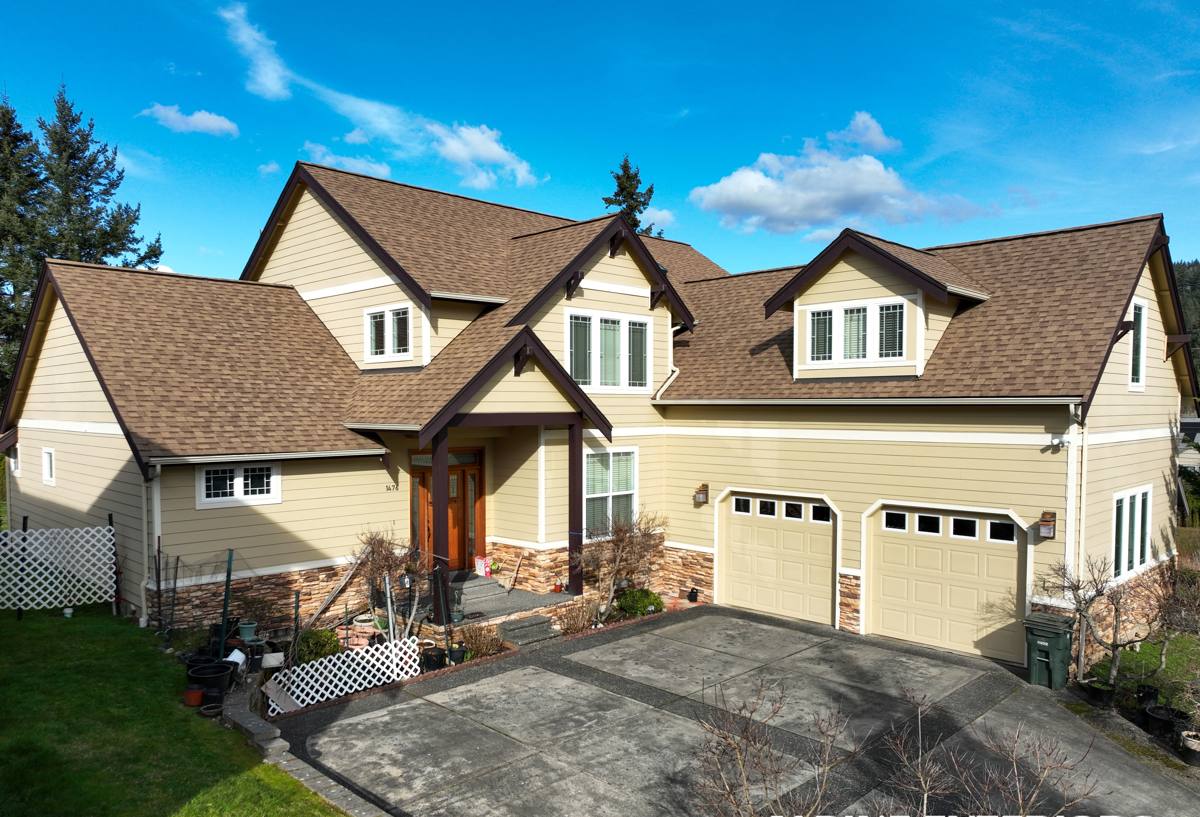
What Whatcom County Weather Does to a Deck
Every deck problem we get called out to fix traces back to moisture in one form or another. Understanding how that plays out helps explain why we build the way we do.
Rain and Standing Water
Long, low-intensity rain is worse for a deck than a hard downpour that clears out fast. Water sits in joints, ledger connections, and anywhere a board doesn't have a clean path to shed it. Over years, that slow, repeated wetting is what rots ledger boards, corrodes hardware, and softens framing that was never sealed properly to begin with.
Moss and Algae Growth
Shaded yards, tree cover, and the region's humidity give moss and algae everything they need. Beyond looking bad, moss holds moisture against the deck surface and turns boards slick and dangerous underfoot — especially on stairs. A deck built with the wrong board spacing, poor airflow underneath, or the wrong surface material will grow moss faster and need more aggressive cleaning to keep it safe.
Freeze-Thaw and Seasonal Movement
Whatcom County doesn't see extreme cold most winters, but it does see enough freeze-thaw cycling to matter. Water that's worked its way into a crack or a fastener hole expands when it freezes, and that slowly widens the damage year after year. Fasteners, footings, and board-to-board gaps all need to account for this kind of seasonal movement, not just look good on installation day.
Salt-Influenced Air
Homes closer to Bellingham Bay deal with salt air directly attacking hardware and fasteners. Lynden is further inland, so the effect is lighter, but it's not zero — regional marine air still carries enough moisture and mineral content to accelerate corrosion on lower-grade screws, brackets, and connectors over time. It's one more reason we don't cut corners on hardware grade regardless of how close a property sits to the water.
Choosing the Right Decking Material for This Climate
There's no single "best" decking material — there's a best material for a given budget, look, and how much upkeep the homeowner actually wants to do. Here's how the common options hold up under Whatcom County conditions specifically.
| Material | Moisture Performance | Moss Resistance | Maintenance | Typical Lifespan |
|---|---|---|---|---|
| Pressure-treated fir/hem-fir | Good if sealed and re-sealed on schedule | Low — needs regular cleaning | Annual cleaning, re-sealing every 1-2 years | 15-20 years with upkeep |
| Cedar | Naturally moisture-resistant, but surface still needs sealing | Moderate | Cleaning plus periodic sealing/staining | 20-25 years with upkeep |
| Composite decking | Excellent — doesn't absorb water like wood | Higher, but still needs periodic washing | Occasional washing, no sealing/staining | 25-30+ years, manufacturer-dependent |
| PVC decking | Excellent — fully synthetic, no wood fiber to hold moisture | High | Occasional washing | 25-30+ years, manufacturer-dependent |
Composite and PVC cost more up front but remove most of the moisture-related maintenance burden that wood carries in this climate. Cedar is a solid middle ground for homeowners who want a natural look and are willing to keep up with sealing. Pressure-treated lumber is the most affordable option, but in a climate this wet, it's also the one that punishes deferred maintenance the fastest — a missed sealing cycle or two and the boards start absorbing water they shouldn't.
We'll talk through the honest trade-offs for your yard's sun and shade pattern, not just push whatever has the best margin. A heavily shaded, moss-prone lot changes the math toward composite or PVC even if the upfront cost is higher.
What a Correctly Built Deck Actually Involves
A deck that fails early almost always fails at the same handful of points, and they're the points that don't show up in a quick visual inspection after the fact.
The Ledger Board Connection
Where the deck attaches to the house is the single most important structural and moisture-management point on the whole project. It needs proper flashing to keep water from working its way behind the siding and into the house framing, and it needs the right fasteners for the load. This is also the most common place we find prior work done wrong on older decks — flashing skipped or installed incorrectly, letting water into the house structure for years before anyone notices.
Footings and Framing
Footings need to go below frost depth and bear on solid, undisturbed soil — not fill dirt or backfilled trenches. Framing spans, joist spacing, and beam sizing all need to match the actual load and span, not just "what's always been done." Undersized framing is a slow-motion problem: it may hold for years before it starts to sag or bounce.
Fasteners and Hardware
Given the moisture and mild salt exposure in this region, we use corrosion-resistant, code-rated hardware throughout — joist hangers, structural screws, post bases. Cheaper fasteners corrode faster here than they would in a dry climate, and a corroded fastener in a structural connection is a safety issue, not just a cosmetic one.
Drainage and Airflow
Grading under and around the deck, gaps between boards, and skirting design all affect how fast the structure dries out after rain. A deck that can't shed water and dry between storms is a deck that grows moss faster and rots sooner, no matter how good the materials are.
Permits and Code in Whatcom County
Most deck projects above a certain size or height require a permit, and inspections check exactly the structural points above — footings, ledger attachment, framing, and railing/guard requirements. We handle the permitting and inspection process as part of the build rather than treating it as an extra step, because a deck that's built to code is also, not coincidentally, a deck built to actually last in this climate. Skipping the permit process doesn't just create legal risk — it usually means skipping the inspection that would have caught a ledger flashing mistake before it became a hidden rot problem.
Our Process for Lynden Deck Projects
- Site visit and assessment — we look at sun/shade exposure, drainage, soil, and how the deck will connect to the house.
- Design and material selection — sizing, layout, and an honest conversation about material trade-offs for your specific yard.
- Permitting — we prepare and submit what's required and coordinate inspections.
- Build — footings, framing, ledger and flashing, decking, railing, and finish work, in that order, with each step checked before moving to the next.
- Final walkthrough — we go over the finished deck with you, including basic care so it holds up.
Keeping a Lynden Deck in Good Shape
Whatever material you choose, a little regular care goes a long way in this climate. This is the same checklist we give homeowners after a build:
- Sweep off leaves and debris regularly, especially in fall — trapped organic matter holds moisture and feeds moss.
- Wash the surface at least once a year to knock back moss and algae before it gets established.
- Check and clear gaps between boards so water can drain instead of pooling.
- Inspect railings, stairs, and fasteners once a year for looseness or corrosion.
- Re-seal or re-stain wood decking on the schedule the product actually calls for, not just when it starts looking worn.
- Keep an eye on the ledger board area where the deck meets the house — it's the first place to check if you ever notice soft or discolored siding nearby.
Why a Local Crew Matters
A deck design that works fine in a dry climate can be the wrong call here, and a crew that doesn't build in Whatcom County regularly won't always know that going in. We work Lynden and the surrounding Ferndale area on an ongoing basis, which means we're the ones who get called back if something was built wrong — so we have every reason to build it right the first time. That includes flashing details, hardware grade, and material choices that are specific to how this region's weather actually behaves over years, not just how a deck looks on installation day.
If you're planning a new deck or replacing one that's showing its age, we're happy to come take a look and give you a straightforward, no-pressure estimate. There's a form below to get that started.