 Ferndale Roofing
 Storm Damage Roof Repair in Everson
Everson sits inland from the salt water but still takes a real beating from Whatcom County weather — windstorms that funnel down the Nooksack valley, wind-driven rain that doesn't fall straight down so much as get shoved sideways under roof edges, and a moss and mildew season that runs long on shaded, north-facing slopes. After a storm, the damage that matters most is often the damage you can't see from the ground: lifted shingle tabs, cracked flashing, a soaked layer of underlayment that's already let water into the deck. This page covers what storm damage repair actually involves for homes in and around Everson, and what a correct job looks like versus a rushed patch.
We're not a storm-chasing crew that shows up after a big wind event and disappears once the check clears. We work Whatcom County roofs year-round, which means when we tell you a repair is solid, we're the ones who'll be answering the phone if it isn't.
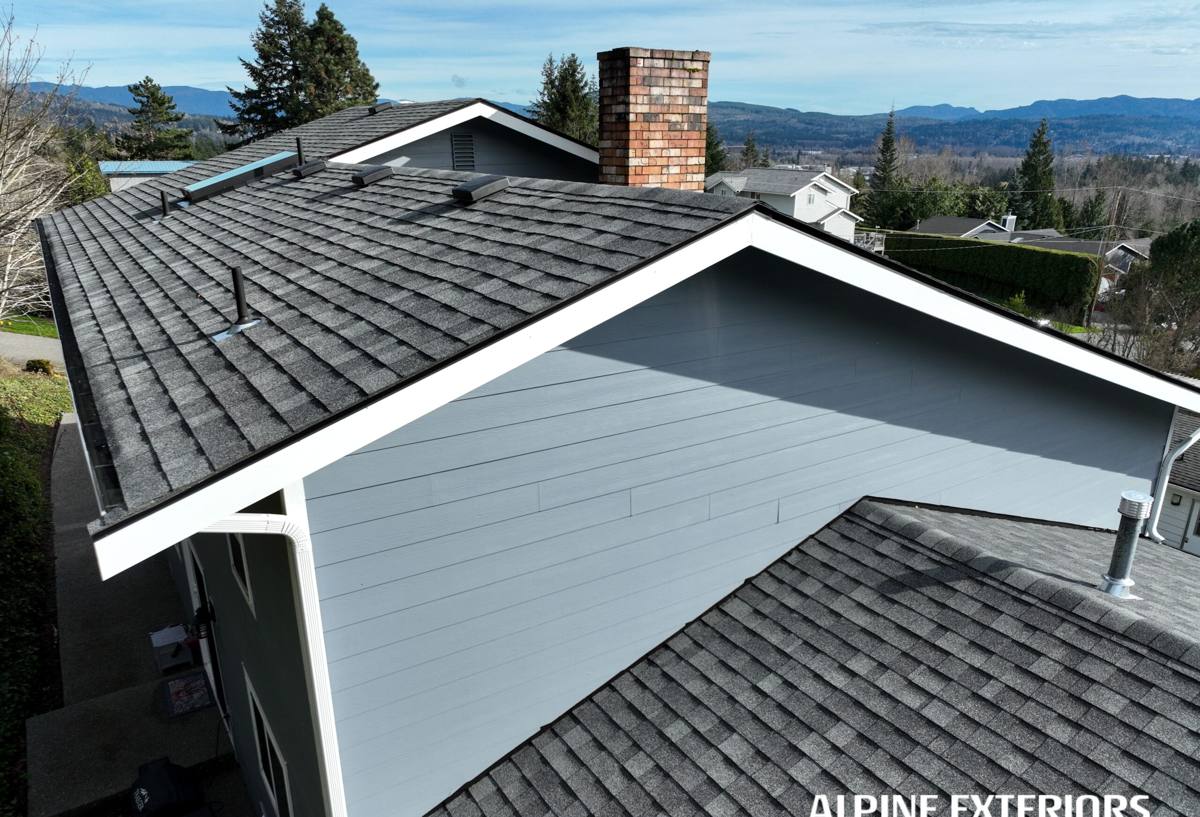
What Storms Actually Do to an Everson Roof
Wind and rain damage a roof in a handful of predictable ways, and knowing which one you're dealing with changes the repair.
Wind Damage
Strong gusts lift shingle tabs and break the seal strip that holds them flat. Sometimes shingles tear off completely and you'll find pieces in the yard. More often, the damage is subtler — a shingle looks fine from the ground but the adhesive bond underneath has failed, so the next rain drives water up under it instead of shedding over it. Repeated wind events without repair compound this, because each gust works the loosened shingle a little further.
Wind-Driven Rain
This is the damage that catches people off guard. Ordinary rain sheds off a roof because it falls straight down onto overlapping shingles. Storm-driven rain comes in at an angle, sometimes almost sideways, and it finds any gap — a lifted tab, a poorly lapped seam, a flashing edge that's pulled slightly loose — and pushes water uphill under the roof covering. This is how a roof that "looks fine" ends up with a water stain on a bedroom ceiling two days after the storm passed.
Impact and Debris Damage
Falling branches, wind-thrown debris, and hail on occasion can bruise or puncture shingles, crack ridge caps, and dent metal flashing or gutters. Some impact damage is obvious. Bruised shingles often aren't — the granule surface looks intact but the mat underneath is compromised, and that section will fail early even though it doesn't look broken today.
Moss and Moisture, Compounded
Storm damage rarely happens in isolation. A roof already carrying moss on its shaded slopes has less water resistance to begin with, because moss holds moisture against the shingle surface and works its way under tabs over time. When a storm follows on top of an already-compromised moss-affected area, the damage shows up faster and goes deeper than it would on a clean roof.
Why "It Looks Fine From the Ground" Isn't Good Enough
Most storm damage we're called out for in Everson isn't visible from the driveway. A homeowner notices a stain on a ceiling, a damp smell in the attic, or a shingle in the yard, and by the time any of those show up, water has usually already gotten past the roof covering and into the underlayment or decking. The point of a proper post-storm inspection is to catch the problem before it reaches that stage — while the fix is still a shingle and flashing repair, not a section of rotted decking.
- Lifted or missing shingle tabs, especially along ridges, edges, and valleys
- Cracked, bent, or lifted flashing around chimneys, vents, and skylights
- Granule loss showing up in gutters or at the base of downspouts
- Soft spots or slight sagging when walking the roof (a sign water has reached the deck)
- Water stains on interior ceilings or attic sheathing, even faint ones
- Debris caught in valleys or against roof penetrations, holding moisture in place
- Gutters pulled loose or overflowing from storm debris blockage
Our Storm Damage Repair Process
1. Inspection and Documentation
We start by walking the roof, not just looking at it from a ladder. We check every slope, every valley, every flashing point, and the attic side if access allows, because deck moisture and insulation staining tell us things the roof surface doesn't. We document what we find with photos, which matters both for your records and for an insurance claim if you're filing one.
2. Honest Scope — Repair or Replace
Most storm damage is a targeted repair: replacing damaged shingles, resealing or replacing flashing, addressing a specific compromised section. We tell you plainly when that's the case. We also tell you plainly when the damage is extensive enough, or the roof was old enough going in, that a full section or full roof replacement is the more honest answer — patching a roof that's past its useful life just delays a bigger bill and doesn't hold up.
3. The Repair Itself
Correct storm repair means matching the existing shingle course properly, not just gluing a patch over a gap. It means replacing underlayment where water has gotten past the shingle layer, not just covering it back up. And it means re-flashing properly at valleys, chimneys, and penetrations, since flashing failure is the source of most leaks that come back after a "repair" that only addressed the shingles.
4. Cleanup and Final Check
We clear debris from the roof and gutters, confirm drainage is working, and do a final walk to make sure nothing was missed. A roof repair that leaves a clogged valley or a loose gutter section behind isn't finished — it's just relocated the next problem.
Repair vs. Replacement: How We Decide
| Factor | Favors Repair | Favors Replacement |
|---|---|---|
| Roof age | Under roughly 10-12 years, otherwise sound | Near or past the material's expected service life |
| Extent of damage | Isolated to one slope or a handful of shingles | Spread across multiple slopes or repeated storm events |
| Deck condition | Deck is dry and solid under the damaged area | Soft, rotted, or repeatedly wetted decking found |
| Underlayment condition | Still intact elsewhere on the roof | Older felt underlayment already failing broadly |
| Shingle availability | Matching shingles are still obtainable | Discontinued product with no reasonable match |
| Storm history | First significant damage event | Recurring damage from repeated storms over the years |
We'll walk you through where your roof lands on this before recommending either option — not before we've actually inspected it.
Working With Your Insurance Claim
If your storm damage is significant enough to warrant a homeowner's insurance claim, thorough documentation matters more than almost anything else in the process. We photograph and describe the damage in detail, which gives you a clear, factual record to bring to your adjuster. We're glad to meet an adjuster on-site if that's useful, and we'll give you our honest read on the scope of repair needed regardless of what a claim does or doesn't cover — our assessment doesn't change based on insurance involvement.
One thing worth knowing going in: not every storm event or every type of damage is covered the same way policy to policy, and coverage details are between you and your insurer. What we can do is give you an accurate, documented picture of the physical damage so that conversation is grounded in facts.
Why Local Crew Experience Matters for Storm Repairs
Everson and the surrounding Whatcom County area get a specific pattern of weather — Nooksack valley wind funneling, long wet winters, and a moss season that adds moisture stress even in years without a major storm. A crew that works this area regularly recognizes the difference between fresh storm damage and pre-existing moss-related deterioration that a storm simply exposed. That distinction matters for both the repair scope and for an insurance conversation, since insurers distinguish between sudden storm damage and gradual wear.
It also matters for follow-up. Storm-chasing outfits that go door to door after a big weather event are common in this region, and some do fine work, but many aren't local and won't be reachable in a year if a repair needs a warranty check. We're here after the job the same way we were here before it.
Quick Post-Storm Checklist for Homeowners
- Walk the yard and check for shingle pieces, granules, or debris — a sign of wind damage on the roof above
- Check the attic (if accessible) for damp insulation, staining, or daylight coming through the deck
- Look at ceilings for new stains, especially near chimneys, skylights, or exterior walls
- Clear obvious debris from gutters and downspouts once it's safe to do so, without walking a wet or storm-damaged roof yourself
- Take photos of any visible exterior damage before cleanup, for insurance purposes
- Call for an inspection promptly — delayed water intrusion causes more damage the longer it sits
What a Rushed Repair Costs You Later
The most common repeat call we get isn't a roof that was never fixed — it's a roof that was patched quickly by whoever was available right after a storm, without addressing the underlying flashing or underlayment issue. A shingle gets glued down over a spot that's still letting water past the seam below it, and it looks fine until the next windstorm reopens the same path. A correct repair costs more upfront than a quick patch because it addresses the layer under the shingles, not just the shingles themselves. It also doesn't need to be paid for twice.
Get a Free, No-Pressure Estimate
If your Everson home has visible storm damage, or you just want a roof checked after a recent windstorm to catch anything before it becomes a bigger problem, we're glad to take a look. There's no pressure and no obligation — just an honest assessment of what's actually going on up there and what it would take to fix it right. Fill out the form below to schedule your free estimate.