 Ferndale Roofing
 Why Windows Near Fairhaven Take More Thought Than a Standard Install
Homes in and around Fairhaven sit close to Bellingham Bay, which means every window on the building is dealing with more than just rain. Salt-laden air moves in off the water, humidity stays high for long stretches of the year, and wind-driven rain hits west and south-facing walls directly instead of falling straight down. None of that is dramatic on its own, but it adds up over the life of a window — corroding hardware faster, breaking down seals sooner, and finding any gap in the flashing that a drier inland install would never expose.
That's the backdrop for what "custom windows" means out here. It's not just about matching a non-standard rough opening. It's about choosing materials, glass, and installation details that hold up specifically to a coastal Whatcom County climate, on a house that may be older, architecturally particular, or both.
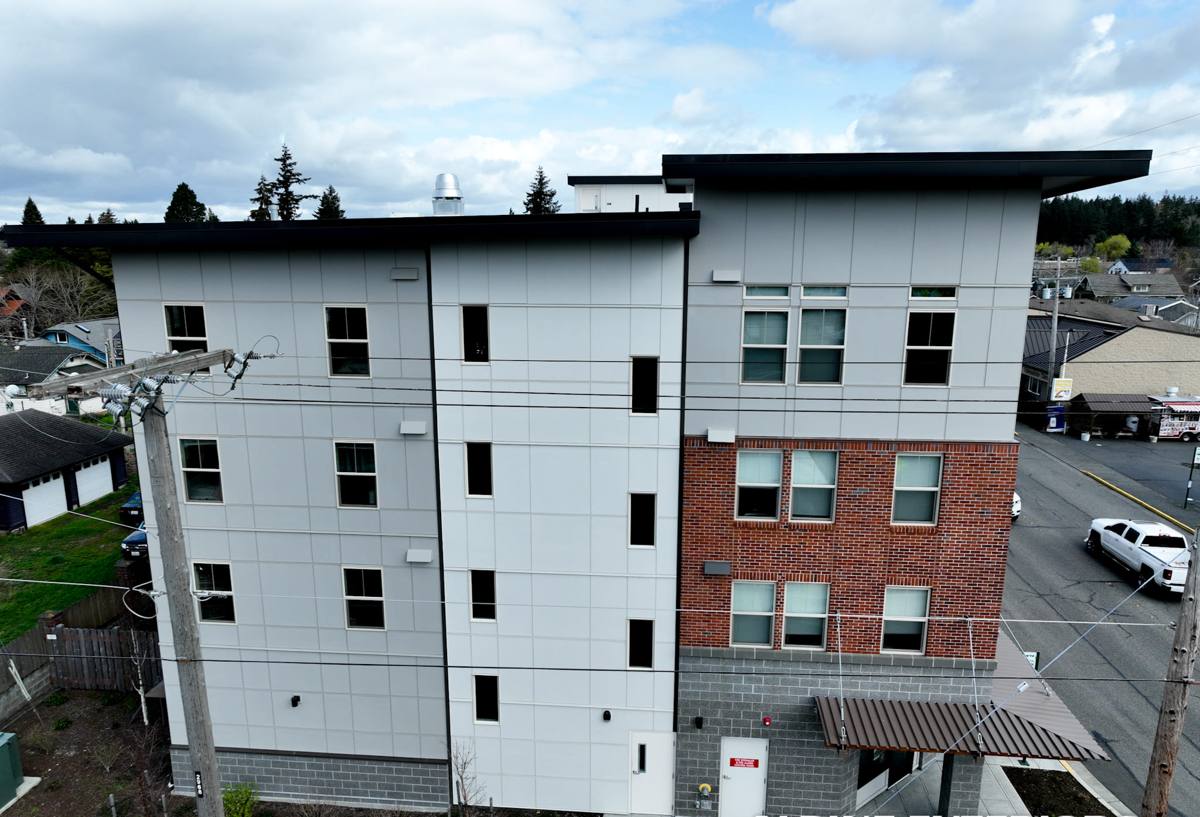
What "Custom" Actually Means for a Fairhaven Home
A lot of houses near Fairhaven predate modern window sizing standards. Older construction, additions built over the decades, and homes with distinct architectural character all tend to have openings that don't match a big-box stock size. Custom work usually comes down to a few situations:
- Original openings that are slightly out of square after decades of settling, common in older Whatcom County homes
- Non-standard shapes — arched, angled, or oversized openings that were part of the home's original design
- Matching sightlines and trim profiles on a house where mismatched windows would visibly stand out
- Replacing windows one at a time or in phases, where new units need to match existing ones already on the house
Custom doesn't have to mean expensive or exotic. Most of the time it just means taking accurate field measurements instead of assuming stock sizing, and ordering a window built to the actual opening rather than forcing the opening to fit a standard unit.
Historic and Older Homes
If your home has real age on it, there's often a balance to strike between preserving its look and getting a window that actually performs. That can mean matching a traditional grid pattern or narrow sightline on the exterior while still getting modern glass and weatherstripping on the inside. We'll walk through what's realistic for your specific house rather than pushing a one-size answer.
Frame Materials and Glass: What Holds Up in a Salt-Air, High-Rain Climate
Every frame material has trade-offs, and those trade-offs shift once you factor in salt air and near-constant moisture exposure. Here's how the common options generally compare for a Fairhaven-area install:
| Material | Moisture & Salt Air Performance | Maintenance | Typical Fit |
|---|---|---|---|
| Vinyl | Won't corrode or rot; handles humidity well | Low — occasional cleaning | Most homes; strong value |
| Fiberglass | Very stable in temperature and moisture swings; resists salt air corrosion | Low | Larger openings, homes wanting a firmer frame feel |
| Wood-clad | Interior wood needs protection from condensation; exterior cladding shields from weather | Higher — interior finish upkeep | Homes prioritizing an interior wood look |
| Aluminum | Prone to corrosion and condensation in coastal, high-humidity settings without added protection | Moderate to high | Limited use; we're selective about where we recommend it here |
For most Fairhaven-area homes, vinyl or fiberglass frames end up being the practical choice — both resist the corrosion and swelling issues that salt air and constant moisture cause in less suitable materials. We're honest about that trade-off up front rather than selling a material that looks good on paper but creates maintenance headaches two winters in.
Glass Packages Worth Considering
Glass matters as much as frame material, especially for comfort and condensation control:
- Dual-pane, Low-E glass — the standard for most Whatcom County homes; good insulation and reduces heat loss through cooler months
- Argon or krypton gas fill — adds a modest insulation boost between panes at relatively low added cost
- Triple-pane — worth discussing for homes with rooms that run cold, high street or wind noise, or west-facing rooms that take direct weather
- Tempered glass — required by code near doors, low sills, and certain window locations regardless of style
Installation Details That Actually Determine How a Window Performs
The window unit itself is only part of the equation. In a climate where driving rain regularly tests every seam on a house, how the window is installed matters just as much as what's installed. A correct job includes:
- Proper flashing integration with the existing weather-resistive barrier, so water is directed out and down rather than trapped behind the siding
- Sill pans or sloped sills that give any water that does get past the exterior a way to drain back out
- Continuous, compatible sealant at the right joints — not just a bead around the trim
- Correct shimming and squaring so the sash operates smoothly and the seal isn't stressed unevenly over time
- Interior air sealing and insulation in the gap between the frame and rough opening, which affects both comfort and condensation
This is where a lot of window problems actually originate. A quality window installed with poor flashing detail will still leak. A modest window installed correctly will often outperform it. Given how much rain this area sees over a typical year, we treat the flashing and sealing details as non-negotiable, not an afterthought.
Our Process, Start to Finish
1. On-Site Assessment and Measurement
We look at each opening individually — checking for square, existing water damage, flashing condition, and how the window ties into the surrounding siding or trim. This is also when we talk through material and glass options based on that specific wall's sun and weather exposure.
2. Recommendation and Quote
You get a clear breakdown of what's being replaced, the materials involved, and why — not just a lump sum. If a lower-cost option is genuinely a reasonable fit for a given window, we'll say so.
3. Ordering and Scheduling
Custom units take lead time to manufacture. We'll give you a realistic timeline rather than an optimistic one, and we schedule installation around weather when possible to protect the opening during the swap.
4. Removal and Installation
Old units come out, the opening gets inspected for hidden rot or damage before the new window goes in, and flashing and sealing are done to the standard described above — every window, every time.
5. Final Walkthrough
We check operation, seals, and interior finish work with you before we consider the job done, and answer any questions about care going forward.
Signs Your Current Windows Are Already Losing the Fight
Coastal moisture problems tend to show up gradually. Worth checking for:
- Fogging or condensation between the panes — a sign the seal has failed
- Soft or discolored trim and sill wood around the window
- Drafts you can feel near the frame even when the window is fully closed
- Difficulty opening, closing, or locking, which often points to a frame that's shifted or swollen
- Visible corrosion on hardware, hinges, or locks
- Musty smell or peeling paint on the interior wall near the window
Any one of these on its own isn't necessarily urgent. Several together, or a pattern showing up on more than one window, usually means it's worth a look before it turns into a bigger repair.
Living With Windows in a Marine Climate
Even a well-installed window benefits from a little seasonal attention out here. Rinsing salt residue off exterior frames a couple times a year, keeping weep holes and drainage channels clear of debris, and checking exterior caulking annually all go a long way toward getting the full lifespan out of your investment. None of it is complicated — it's just easy to forget until a problem shows up.
Why a Local Crew Matters for This Kind of Work
Window performance in this area comes down to details that are specific to this climate — how much wind-driven rain a given wall exposure actually takes, which frame materials hold up to salt air without a fight, and how flashing needs to integrate with the siding types common on homes in this part of Whatcom County. That's harder to get right from general experience alone. Working regularly on homes in and around Ferndale and the Fairhaven area means we're not guessing at how a window will hold up here — we're applying what consistently works on houses facing the same weather yours does.
If your windows are original to the house, showing early signs of wear, or you're planning a renovation that includes new openings, we're happy to take a look and give you an honest read on what your home actually needs. Reach out for a free, no-pressure estimate using the form below.